Three Generations. Meeting the evolving needs of Design in Hotels. On the anvil is a website and showroom that is hospitality-based design resource center. It will have furniture, fabric, rugs, flooring and be a one stop shop. The showroom will have, for instance, a wall of 16 chairs, or 24 all-day dining tables because at the end of the day you only need these many to select, ready to be also tweaked and adapted to individual design – a first of its kind in the country.
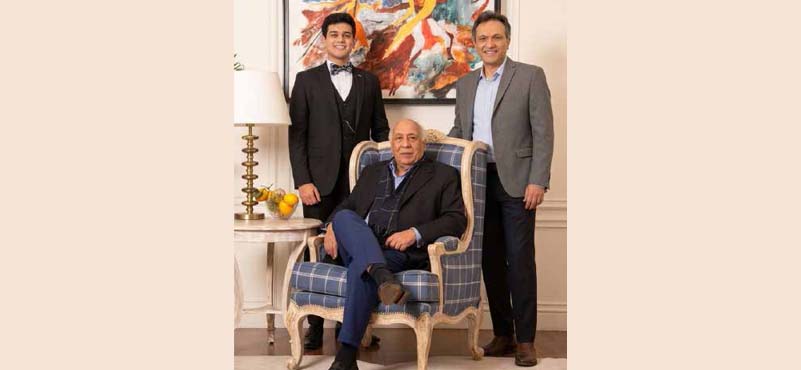
The three generations of the Anand family – Vijay, his son Ashish, and grandson, Shrey in conversation with Priyaanka Berry Idnani.
India’s hospitality sector is growing at an exponential pace across metros and tier-2 cities. The ecosystem required to design, build and execute projects at the required pace, in keeping with the industry growth, is still catching up. Enter, Vijay Anand & Associates (VAA), established in 1970, with 5 decades of experience and 3 generations of entrepreneurs, rearing to go and scale newer heights. The brand offers efficient and intelligent services that address concerns of budget, scale, timelines, and brand positioning.
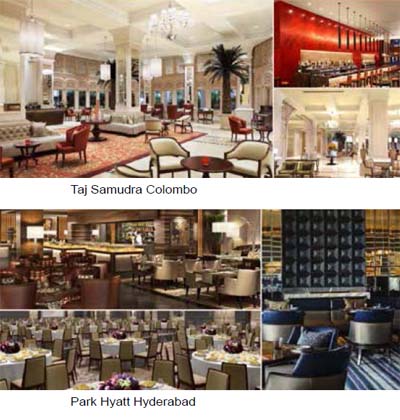 Vijay Anand recalls his first hotel project, the Akbar Hotel, at a time when interiors were an afterthought to construction. “So, our beginnings are from those days when nobody else was in the industry. There was no idea of a company that did purely interior and furniture work”, shares Vijay. This was a breakthrough starting point for VAA; followed by prestigious projects like the Ashoka Hotel and The Oberoi. The company back then, carved out a niche that would go on to define an industry, as it has evolved over time, in keeping with industry.
In 1997, his son, Ashish joined the company. An architect by education with a background of interior design in Hong Kong, he spent the first few years learning the ropes of the business. He then diversified and set up the retail division of the company, Living Spaces, in 2003. A retail furniture store on MG Road, in New Delhi. This allowed space for Ashish to focus on creating beautiful homes shaped by his global exposure and passion for design and craftsmanship. Eventually in 2000, with Living Spaces well established, he redirected his focus to the hospitality part of the business.
In an industry where demand for their services is exceptionally high and there is immense scope for growth, Shrey, the youngest of the Anand’s, now in the family business, has added new zest and vision for the decades ahead. Today, they are proudly in their 56th year.
The three generations are working towards simplifying the processes, reducing time and typical delays, and creating an experience to make hotel design and execution more streamlined and efficient without compromising on quality and design.
 “So, when we say we do hotels, it depends on what the client wants to hire us for. But as far as the gamut of services is concerned, what we will do at the most basic level, is just provide furniture to our client – like the sofas, chairs, tables, consoles – what we call movable items. Then the next job is what we call fit-out in furniture, where we will give you everything that is to do with wood or interior works. The third, is a turnkey, in which we do everything from the furniture, to the wall paneling, to the ceilings and the marble and the tile – everything. On top of that, we also do what we call design and build. Now design and build is something we have been doing for the past seven-eight years now”, shares Ashish.
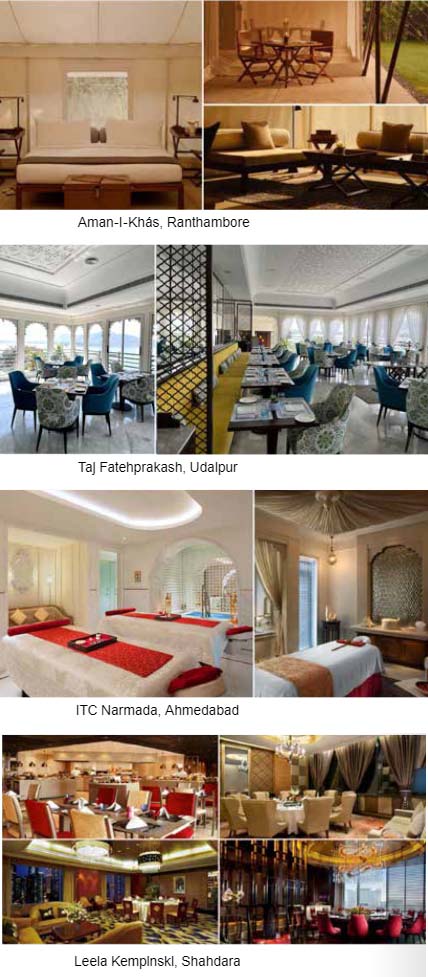
They have done a Taj hotel in Jammu, two restaurants for the Taj in Udaipur, originally a Radisson in Mysore, now becoming a Taj. They have recently signed up to do a 110 rooms Taj in Bharatpur.
In terms of production capability, they have two factories in Delhi and in 2022 after COVID, they set up an office in China with a partner. While they don’t own any factories in China, they strategically source materials that are not well done yet in India.
Ashish explains how needs vary across projects. “You have to be very clear about one thing. Design-and-build works up to say, four-star category. When we go into luxury, like the St. Regis or Aman, the design-and-build doesn’t work very well. For the simple reason that they actually want a designer that is dedicated to the project and expect that something special comes out time and time again. However, when you’re looking at a three-four star hotel, at some level, it becomes cookie cutter. In projects like that, the idea of an external designer, to some sense, becomes redundant, because there is only so much you can do when working within a budget. So, I think that market is something that we want to explore more. We are already doing this project for Taj. We’ve done four or five projects in the past. In the future, that’s definitely something we’re going to explore more deeply”.
Luxury hospitality brands on contract include Aman Resort, St. Regis, Taj and ITC. In addition to that, another segment that keeps them engaged is the small 40 key hotels in cities like Srinagar, Lucknow, and Kanpur. “They list out their requirements. We send our teams to them, fit out their rooms, and get out of the project within 60 days. This is a booming segment, equally aspirational when it comes to design and look”. Apart from India, they have done projects outside India also, most recent being in Bhutan and Sri Lanka.
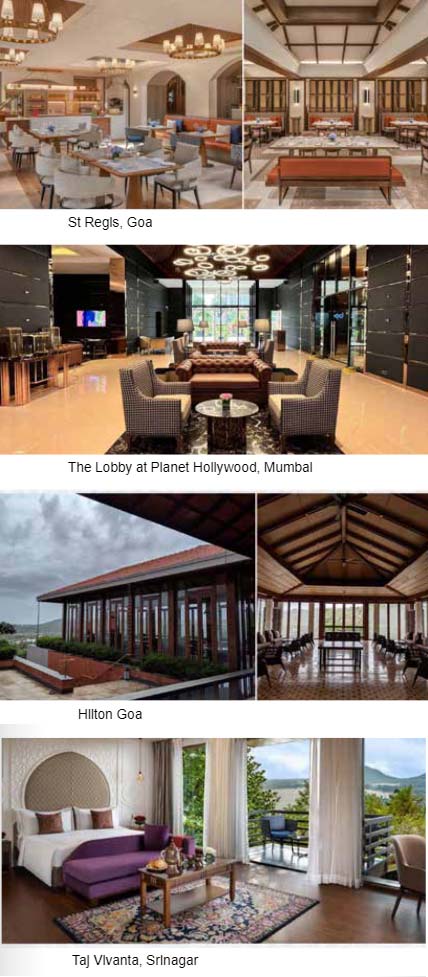 With design and aesthetics at the core, they work within budgets and constraints without compromise. “I speak to my clients when I’m doing design and build and I say to them that don’t tie me down to a budget to begin with. Let us do the design first because in today’s world, material substitution or what we call cost engineering, is a brand-new field. When the budget is a constraint, I will substitute A material for B material, which is more reasonable”, adds Ashish. When it comes to sustainability in design, Ashish cites the example of the Bharatpur property. “We try and find local craftsmen, local products, local things that we can utilize and they become part of our design”.
Poised to grow exponentially, with the right team and expertise, the focus now turns to the challenges that VAA is gearing up to address. Surprisingly in a country like India, Ashish shares “one big challenge is availability of labour. Two, is the availability of people who are skilled and actually employable with on-ground knowledge. Our best carpenters of the last 18-20 years, their children are not going into this field. Moreover, design and craftsmanship is getting highly mechanized. The challenge also is what people are learning out of schools today. Schools are not doing the job of teaching kids the skills they require to actually get out and deliver in the market”.
The third problem is that the amount of development that’s happening, this booming economy, the booming development that we are witnessing, is not finding adequate number of people to execute and deliver. Demand is more, and our ability to service that demand is less. Unless new companies come in, set up shop and start doing work at the same level, we are going to end up losing a lot of jobs to other markets like China, Malaysia, etc.
With Shrey joining the company, “the next five years is going to be a bit of hand-holding, guiding him into the business like my father did with me. Shrey is learning the business, trying to understand where the faults lie, what can be improved, what can be taken forward. And the super interesting thing that Shrey is doing is now he’s setting up another vertical”, says Ashish.
The next upcoming business vertical is exclusively for hotel furniture supply, “an extension of what 55 years has given us to now”, shares Shrey.
“We have design expertise, technical expertise, the overall know-how of how production occurs and how we can service and furnish hotels. The idea is to take generations of design, whether it’s in certain material uses, whether it’s in certain design philosophies, design styles, those come back”, says Shrey with confidence, as he and his team are collating all such products they have developed over the years, which is about 350 odd pieces!
“What we’re going to do is to offer these designs to hotels as an easier selection. Say, for example, if it’s a time-sensitive project. Where we come in is to actualize that whole vision of hospitality by providing them a strong basis where they have exactly those products that they require. This design philosophy will align with the larger philosophy of the project that can be provided within a defined timeline. Now that we have our two India facilities plus a facility in China that can assist us, it increases our production capabilities by that much. When a client sees a particular design, sees the catalogue and identifies what fits into the design, we can go ahead and order the required quantity. What we are trying to do is cut the time involved; we are aware of trends, have the right designs, offer them to hoteliers, and there we are, ready to go”.
One will be able to shop hotel furniture and accessories both from a website and in a physical showroom in New Delhi. Work is underway and expected to launch in 2-3 months.
“I don’t think there is any such option in India. It will be a hospitality-based design resource center. It will have furniture, fabric, rugs, flooring and be a one stop shop. Our showroom is going to have, for example, a wall of 16 chairs, or 24 all-day dining tables because at the end of the day you only need these many to select, ready to be also tweaked and adapted to individual design”, adds Ashish.
With this, VAA hopes to break into the smaller markets, which are really struggling with trying to find products in India or are having to go to China and source them, etc. With VAA, there is also assurance of service post sale which is not possible with overseas purchases.
Apart from this, Shrey has his plate full with other projects. “I got to work on the Aman project, which was the first project for me with the company, which was absolutely amazing. Whether it is understanding of the end-user requirement, whether it’s understanding how the designs then translate into, what is the service requirement that is communicated, is quite interesting to see”.
He is also looking after content creation and social media for Living Spaces.
The launch of the new vertical is positioned not just as a business expansion, but as a response to changing industry needs—speed, standardization, and reliability. 56 years on, the brand focuses on innovating, staying relevant in a rapidly changing design-scapes of the hotel industry in India and growth.