When the Uniform Is Assaulted, the Republic Is Tested
There are incidents that disturb a nation for a day, and there are incidents that should disturb it for years. The recent assault on Brigadier Parminder Singh Arora and his son in Southwest Delhi belongs to the second category. According to widely reported accounts, the brigadier objected to a group of men drinking inside a parked SUV. What followed was not apology, restraint, or civic embarrassment. It was violence. The reports that an FIR did not immediately follow added a second wound to the first. It was not merely a street altercation. It became a moral question for the Republic.
A brigadier is not just another citizen in public life. He is a senior commander of the Indian Army, entrusted with men, responsibility, and years of accumulated service. He has likely spent years in field areas, family separations, difficult terrain, and command appointments most civilians will never understand. If such an officer can be assaulted in civilian India by men emboldened enough to strike first and think later, then the issue is larger than one crime. It asks a painful question:
Has the instinctive respect once attached to the uniform begun to erode?
That question grows sharper when this incident is placed beside other cases that have shaken public conscience. In Patiala, Colonel Pushpinder Singh Bath and his son were allegedly assaulted by police personnel in a case that later drew intense scrutiny and a CBI investigation. In Jaipur, a serving soldier was reportedly beaten and stripped in police custody. In Belagavi, Karnataka, a soldier on leave was assaulted in a market place in an incident that drew national criticism. Each case differs in legal detail. Together, they reveal something deeper: the uniform is no longer always protected by reflexive respect.
This matters because armies run on morale as much as machinery. A nation can buy rifles, tanks, aircraft, and drones. It cannot so easily buy trust. The trust that a soldier places in his country is built slowly—through honour, fairness, and the sense that sacrifice is understood. It can be damaged quickly by humiliation.
When an officer must fight for an FIR after being assaulted, the state has failed in dignity.
From Isolated Incidents to a Disturbing Pattern
The temptation after each such episode is to dismiss it as isolated. One bad policeman. One drunken mob. One local feud. One misunderstanding.
But republics decline precisely through the misuse of the word “isolated.”
When similar episodes recur across states, institutions, and circumstances, the pattern deserves attention. The cases differ, but common threads appear:
- Emboldened aggression.
- Weak immediate deterrence.
- Procedural delay.
- Disregard for the uniform.
- Belief that influence can dilute accountability.
This should concern not only military families but every citizen.
The armed forces remain among the most trusted institutions in India because they are widely seen as disciplined, apolitical, merit-based, and reliable under stress. When such an institution’s personnel face repeated indignities in civilian life, it signals a broader coarsening of civic culture.
The problem is not that soldiers should be above law. They should never be above law.
The problem is that law must be equally swift when they are victims.
The Slow Erosion of Respect
Nations do not lose civic values in one dramatic collapse. They lose them gradually, through repeated toleration of behaviour that would once have been considered shameful.
There was a time when the presence of a soldier in uniform produced an instinctive reaction in public spaces: courtesy, distance, acknowledgement, even pride. The uniform represented discipline and sacrifice. Today, in too many places, that instinct has weakened. The uniform is increasingly treated as just another person to be challenged, insulted, delayed, extorted, or physically confronted.
Why?
- Part of the answer lies in the broader social coarsening of public life. Road rage, mob aggression, abuse of frontline officials, attacks on doctors, teachers, police, transport staff, and civic workers—all indicate a growing impatience with authority and restraint. The soldier has not been exempt from this trend.
- Another cause is the culture of impunity. Where local muscle, political connections, or institutional shielding appear stronger than accountability, aggression becomes bolder. Men who fear no consequence, fear no symbol either.
- A third reason is ignorance. Much of urban India has little direct contact with military life. Many citizens admire the armed forces abstractly but know almost nothing of postings in glacier zones, counter-insurgency duties, family separations, casualty risks, or the psychological burden of service. What is not understood is easily romanticised—and just as easily disrespected.
- Finally, there is the decline of civic education. Patriotism without discipline becomes noise. National pride without civic conduct becomes performance.
That is how respect erodes: not because people openly reject the soldier, but because they stop adjusting their behaviour in his presence.
If a nation respects its soldiers in public life, then the uniform will once again command what it should never have lost: Respect.
When the System Diminishes the Soldier
For decades, the challenge to military dignity in India has not come only from street assaults or isolated misconduct, but also from institutional neglect embedded within governance structures. Since Independence, Service Headquarters were treated as “attached offices” rather than full departments within the Ministry of Defence, leaving the armed forces with limited formal voice in policy and administration. This asymmetry became sharper through successive Central Pay Commissions, none of which included serving military representation despite repeated requests by the Service Chiefs.
The result has been recurring anomalies in pay, pensions, allowances, and status relativities vis-à-vis IAS, IPS, and Central Armed Police Forces (CAPFs). Measures such as granting automatic higher pay scales to civilian cadres such as Military Engineering Services, Border Roads, Naval Armament Services, and Armed Forces HQ Cadre without equivalent benefit to the military—were viewed within the Services as damaging to morale and rank parity. Similar resentment followed reductions in disability pension benefits and “hardship allowances” that often appeared more favourable to civilians in peace postings than soldiers in operational zones.
The deeper issue is not money alone; it is recognition. When those responsible for defending the nation remain procedurally invisible, while officials who support them enjoy clearer status and institutional leverage, friction becomes inevitable. There has also been progressive blurring of lines between the military and CAPFs in terms of rank badges, other visible symbols and of course NFU, which create false notion of superior status and precedence within the police organisations and public domain. As India moves toward the 8th Central Pay Commission era, the need is urgent: formal recognition of the armed forces within government rules, proper institutional standing for the Chief of Defence Staff and Service Chiefs, and genuine military representation in pay and policy bodies. In corridors of power, it is still the Department of Defence and not the Department of Military Affairs, which is responsible for the “…defence of India, and every part thereof” and speaks for the Services.
A nation that expects the highest sacrifice cannot continue to offer uncertain status in return.
The Hidden Cost: Morale, Recruitment, Trust
The assault of a soldier in civilian life is never confined to the scene of the incident. It travels.
- It travels to the unit mess where officers discuss what happened.
- It travels to barracks where young jawans watch the news.
- It travels to military families who already live with anxiety.
- It travels to parents deciding whether to encourage a child toward service.
- It travels to adversaries who study internal weakness.
The visible injury may be one person. The invisible injury may be national morale. Armed forces function on an ethic unlike ordinary professions. Soldiers accept that they may be sent into danger by order. They accept discomfort, secrecy, transfer, separation, and risk. In return, they expect certain moral assurances:
- that the nation values their sacrifice.
- that institutions will treat them fairly.
- that families will not be abandoned.
- that dignity will be preserved in civilian life.
If those assurances weaken repeatedly, cynicism enters quietly.
No army collapses because of one assault case. But morale can be eroded by accumulated signals of neglect.
Recruitment is affected too. A young graduate comparing careers notices more than salary. He notices status, social regard, institutional support, and family confidence. If military service appears honourable in rhetoric but vulnerable in reality, some of the best candidates may choose otherwise.
That would be a strategic loss no budget line can easily repair.
How Other Nations Make Respect Visible: Chanakya’s Warning Revisited
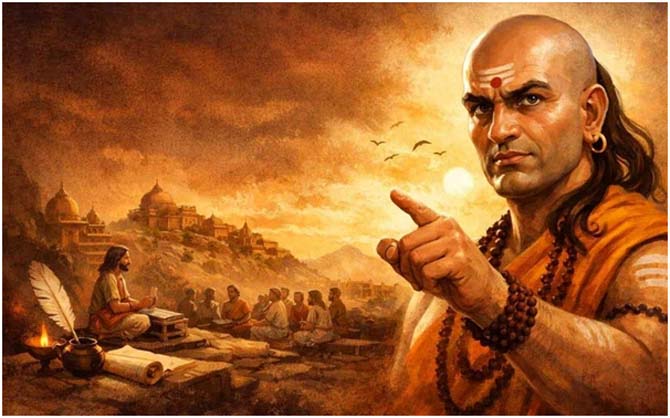
Ancient India understood what many modern societies are now forced to relearn: the strength of a state rests not only on wealth or weapons, but on the honour it gives those who defend it. Chanakya, through the wisdom of the Arthashastra, placed military power at the centre of national survival. The spirit of his teaching endures across centuries: the day a soldier must ask for his dues, dignity, or respect, the ruler begins to lose the moral right to govern.
Other nations have converted this wisdom into civic habit.
- In United States, citizens often stand, applaud, or acknowledge service personnel in airports and public gatherings. Veterans receive visible civic preference in hiring, community recognition, and social esteem.
- In United Kingdom, remembrance traditions such as the poppy campaign keep sacrifice alive in public memory.
- In Israel, military service is deeply woven into civic identity, and uniformed personnel command broad social recognition.
- In Canada, citizens line highways to salute returning soldiers.
- In many Western democracies, an assault on a serving officer would not be treated as routine street noise. It would carry symbolic seriousness.
These countries are not perfect, but they understand a profound truth: gratitude must be practiced publicly, not merely spoken ceremonially. India need not copy foreign customs, for it possesses an older and deeper tradition of honouring warriors. But it must revive that instinct.
A nation that applauds soldiers only on parade days, yet leaves them to seek justice in ordinary life, has forgotten both Chanakya and itself.
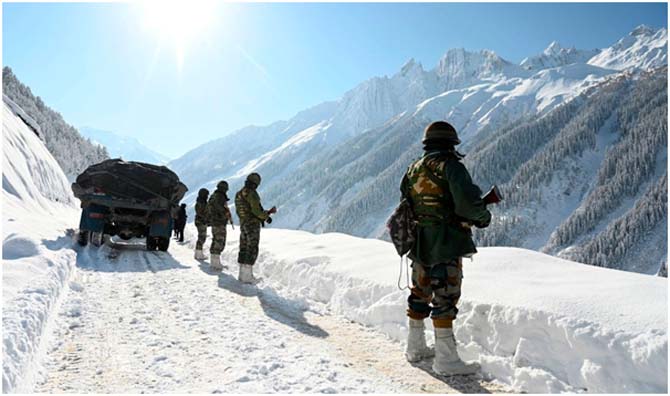
He Guards the Nation – Who Guards his Dignity at Home?
If a civilian is assaulted, the matter is one of law and order. If a serving brigadier is assaulted, the matter enters the realm of national symbolism.
Symbols are not trivial. Flags are symbols. Medals are symbols. Salutes are symbols. Uniforms are symbols. Nations live by them because symbols compress values into visible form. The brigadier’s uniform represents discipline, merit, courage, endurance, and command earned over decades. To strike such a man is not only to harm an individual. It is to show contempt for what he stands for. And when systems appear slow or hesitant in responding, the injury deepens.
The ordinary citizen may ask: why should the rank matter? Because the rank reflects service rendered to the nation. Because the officer is not carrying only his own identity. He carries the institution’s dignity in public view. Because what happens to him is watched by thousands in service. A young captain in a forward post, a jawan in Siachen, a family in a cantonment—all understand the message instantly.
If rank, service, and sacrifice do not command basic civic restraint at home, then what exactly does?
Ten Urgent Correctives for the Republic
Anger after every incident is not reform. Social media outrage is not policy. Television debates are not justice. If India wishes to restore dignity to the uniform, respect must move from emotion to institution. The answer lies not in slogans, but in systems.
These reforms are not concessions to the armed forces. They are minimum standards for a serious nation.
1. Mandatory FIR Registration in Assault Cases Involving Serving Personnel. Where a serving soldier, sailor, air warrior, or officer alleges assault, unlawful restraint, intimidation, or public humiliation, registration of a complaint must be prompt and transparent, subject to law. Delays create suspicion. Selective urgency destroys trust. No serving officer should need unit intervention, media attention, or senior pressure to obtain the first step of justice.
2. Fast-Track Investigation and Trial. Cases involving violence against armed forces personnel in civilian life should be investigated on fixed timelines and prosecuted efficiently. Justice delayed does not merely frustrate the victim—it broadcasts weakness. Swift and fair action sends a civilisational message: the Republic protects those who protect it.
3. Police Sensitisation on Dealing with Uniformed Services. The police and armed forces are not rival institutions. Both serve the same flag through different mandates. Training academies and state police systems should include modules on military rank structure, protocol awareness, handling disputes involving service personnel, and de-escalation. Many confrontations arise not from malice alone, but from ego, ignorance, or needless escalation. Professional respect can be taught.
4. Civil-Military Liaison Cells in Major Cities. Every major city should maintain a formal coordination mechanism between military stations and civil administration—police commissioners, district magistrates, veteran welfare offices, and cantonment interfaces. This allows quick resolution of disputes, support in emergencies, and smoother handling of incidents before they become crises. Great institutions should know each other before trouble begins.
5. Strict Penalties for Political or Local Interference. Nothing corrodes public confidence faster than the belief that influence can distort policing. If any accused person uses political patronage, local muscle, or pressure networks to obstruct justice in cases involving service personnel, consequences must be exemplary. India cannot afford two legal systems: one for the connected, one for the disciplined. The uniform must never stand weaker than the goon.
6. National Helpline and Ombudsman for Service Harassment Cases. Serving personnel and veterans facing harassment—whether land disputes, pension obstruction, police misconduct, intimidation, or family distress—should have access to a centralised escalation mechanism with state nodal officers. Too many soldiers fight two battles: one in service, one after service. That is unacceptable.
7. Teach Military Service in Schools and Universities. Children should know what service actually means. Not only parades and patriotic songs, but Siachen temperatures, submarine deployments, counter-insurgency fatigue, disaster rescue, long separations, and families living through uncertainty. When citizens understand sacrifice, respect becomes natural. A republic that does not teach gratitude must later enforce civility.
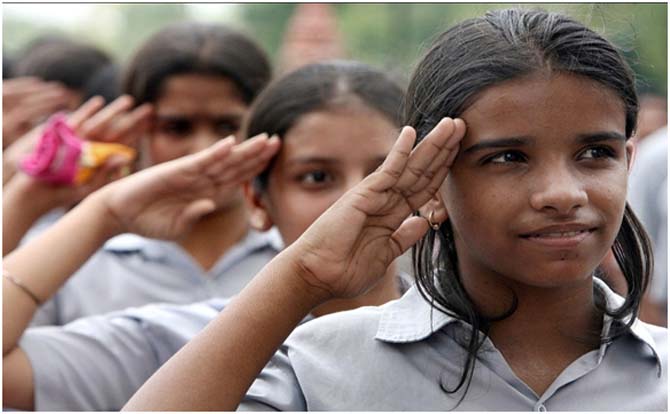
8. Public Culture of Visible Respect. This is where India can change fastest. No law can manufacture reverence, but society can normalize courtesy:
- Giving priority assistance to uniformed personnel in distress.
- Standing in silence at funerals and remembrance events.
- Civic honours for local martyrs and veterans.
- Public acknowledgement in schools, stadiums, transport hubs.
- Responsible media coverage of casualties and sacrifice.
The salute should not belong only to parade grounds.
9. Family First: Support for Widows and Dependents. The family carries the hidden burden of service. When tragedy strikes, assistance should be automatic, not procedural warfare. Single-window support for widows, education continuity for children, healthcare navigation, counselling, and time-bound benefit release must become standard practice. A nation that reveres martyrs must not tire their families.
10. Annual Parliamentary Review of Soldier and Veteran Welfare. Parliament debates defence procurement, strategy, and budgets. It should also annually debate the condition of those who serve. Status of pensions, rehabilitation, assault cases, family support, veteran health, recruitment trends, and civil-military grievance data should be tabled publicly. Respect deepens when accountability is formal.
These ten reforms do not require revolution. They require seriousness.
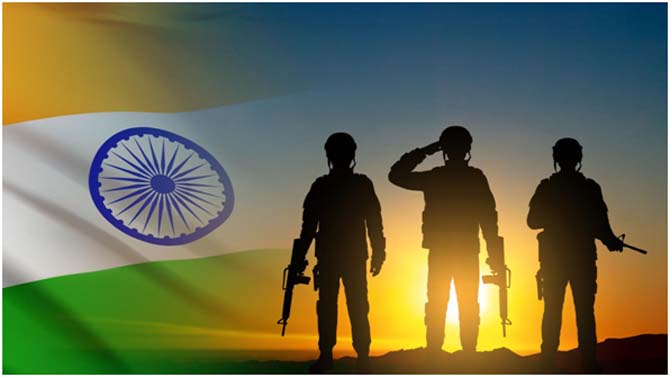
The Final Question to the Nation
India aspires to be a great power. It speaks of manufacturing, technology, infrastructure, growth, maritime reach, and strategic weight. All of these matter.
But greatness has a moral dimension.
- How does the nation treat the man in uniform when cameras are absent?
- How does the police station treat him when he is the complainant?
- How does society behave when he stands in a queue?
- How does the state respond when he is assaulted?
- How does the widow experience the system after the bugles fall silent?
The soldier asks for very little.
He accepts cold, heat, risk, transfer, discipline, separation, and uncertainty as part of duty. He misses ordinary life so others may live ordinarily. If such a person must then fear humiliation in civilian India, something profound has gone wrong.
This is where Chanakya still speaks through time: a state that neglects the dignity of its defenders weakens itself from within. Enemies test borders. History tests character.
India does not lack brave soldiers. It does not lack patriotic language. It does not lack flags, songs, and ceremonial pride.
What it must not lack is consistency of gratitude.
The answer is still within reach.
- Build systems worthy of sacrifice.
- Create habits worthy of courage.
- Teach children whom they sleep safely because of.
- Ensure that no soldier feels smaller in civilian life than he did in combat zones.
When the uniform is assaulted without consequence, the flag itself is diminished.
ABOUT THE AUTHOR

Lt Gen Rajeev Chaudhry (Retd) is a social observer and writes on contemporary national and international issues, strategic implications of infrastructure development towards national power, geo-moral dimension of international relations and leadership nuances in changing social construct.