
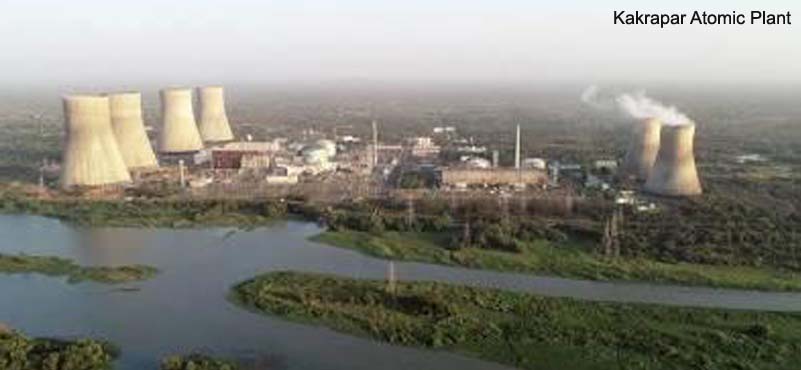
The development at Kalpakkam has created room for policy, growth, sovereignty, and strategic choice. It may not redefine global energy politics, yet, but it points to how India is no longer only adapting to systemic constraints but is also outgrowing them.
While most of the world continues to compete over scarce energy resources, India is trying to step outside the competition itself. We have seen for most of modern history and geopolitical risks how energy has dictated the terms of power. Energy has been the basis for wars, alliances, and economic structures to ensure access to it. Particularly, oil. Its effect across decades defies easy measurement. Oil has influenced who gains leverage, who sets terms, who concedes, and who pays the price.
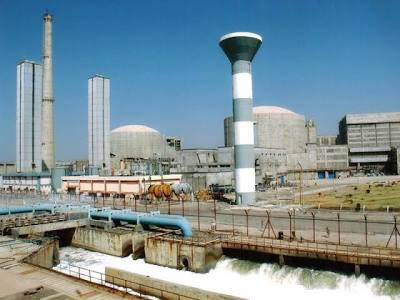
Despite significant treaties and interventions on energy transition and renewables, the world seems to run on the fragile assumption that energy is scarce. However, the start of a controlled nuclear-fission chain reaction reaching criticality at the Prototype Fast Breeder Reactor in Kalpakkam marks India’s entry into the second stage of its three-stage nuclear programme. This programme is designed to ultimately achieve a closed fuel cycle by harnessing India’s abundant thorium.
Conceived by Late Homi J. Bhabha, the three-stage nuclear programme started with the understanding that India’s domestic Uranium is limited, while Thorium reserves are substantial. What has worked so far is the principle of use what is available, build in stages, and close the fuel cycle; instead of trying to compete globally for limited fuel.
The three-stage programme started with establishing a fleet of Uranium-based Reactors and the operating experience to run them reliably. The second stage, that is, the present one, uses Fast Breeder Technology to produce more usable fuel than it consumes. The third stage aims to run on Thorium in a way to sustain clean energy production over generations. This is an unconventional approach to national infrastructure; less a response to today’s shortages and more a refusal to let scarcity dictate the policy in the long run.
From Security to Sovereignty
India, like most large economies, has spent decades thinking in terms of energy security. This usually means diversifying imports, managing diplomatic relations, risk management, and making sure that supply disruptions do not spiral into economic shocks. However, security still assumes dependence, especially in a volatile world. The nation is always, in some way, exposed.
India’s nuclear programme points towards sovereignty beyond security. While security is about managing domestic and global vulnerability, sovereignty is about reducing it to be able to take decisions in the best national interest. If and when Thorium-based systems start working at scale, India will not have to think about energy the way it currently does. India will then be able to avoid hedging between suppliers, nor will it have to worry much about external disruptions such as ongoing wars, tariff implications etc.
Legal and Regulatory Framework
India’s nuclear programme has been shaped as much by legal constraints and implications, as by scientific ones. For several decades, India’s position outside the Nuclear Non-Proliferation Treaty resulted in its effective exclusion from the global nuclear order. This exclusion extended beyond formal treaty structures to tangible constraints on access including limitations on nuclear fuel supply, advanced reactor technology, and participation in international collaboration frameworks, as widely documented by the International Atomic Energy Agency. (International Atomic Energy Agency [IAEA], n.d.).
A structural inflection point emerged with the 2005–08 civil nuclear cooperation agreements, most notably the India–United States Civil Nuclear Agreement, which culminated in a waiver granted by the Nuclear Suppliers Group in 2008. This waiver was both exceptional and consequential, enabling India to access global nuclear commerce particularly uranium imports and reactor technology, without formal accession to the NPT framework (Nuclear Suppliers Group, 2008).
However, this access was contingent upon a carefully negotiated institutional architecture. India undertook a separation of its civilian and strategic nuclear facilities, placing designated civilian reactors under safeguards pursuant to its India-specific agreement with the International Atomic Energy Agency (IAEA, 2009). In parallel, it aligned its export control systems with prevailing non-proliferation norms, harmonising domestic regulations with international expectations. The result was a form of calibrated integration; participation in the global nuclear marketplace without full treaty-based incorporation.
At the domestic level, the legal framework governing nuclear energy reflects a distinct and, at times, contested approach to risk allocation. The Civil Liability for Nuclear Damage Act, 2010 establishes a liability regime that departs from the internationally prevalent model of exclusive operator liability. Section 17(b) provides the operator with a statutory right of recourse against suppliers in specified circumstances, thereby extending potential liability exposure beyond the operator (Government of India, 2010).
This deviation has had material implications. On the one hand, it responds to domestic concerns regarding accountability and victim compensation, shaped in part by the legacy of industrial disasters such as Bhopal tragedy. On the other, it has introduced a degree of legal uncertainty for foreign suppliers, many of whom operate within jurisdictions that channel liability exclusively to the operator. This has, in practice, moderated the pace and scale of international participation in India’s nuclear energy sector (World Nuclear Association, 2023).
Overlaying this framework are India’s commitments under supplementary international instruments and export control regimes. These include its adherence to the Convention on Supplementary Compensation for Nuclear Damage, as well as its alignment with multilateral regimes such as the Missile Technology Control Regime and the Wassenaar Arrangement, as outlined by the Ministry of External Affairs.
What India is Building
The fact that the fast breeder reactor has been designed and developed domestically is not incidental. In sectors like nuclear energy, dependence is rarely neutral. Technology arrives with conditions attached. Supply chains can tighten without warning. Access, once granted, can just as easily be withdrawn.
India had recognised this early, and over time chose the harder path building inward. Institutions like the Indira Gandhi Centre for Atomic Research were not conceived as short-term projects, but as long-term bets on capability. What has changed in recent years is not the direction of that vision, but the pace and political backing behind it.
The present Government has placed renewed emphasis on nuclear energy within the broader energy mix, not just as a clean energy source, but as a strategic asset tied to long-term resilience. This is visible in the push to expand nuclear capacity, efforts to streamline regulatory processes, and a more deliberate positioning of nuclear power within the wider framework of self-reliance, often articulated through the idea of Atmanirbhar Bharat.
The Kalpakkam milestone, in that sense, is not only the culmination of decades of scientific work but also a convergence of sustained policy continuity and present-day political prioritisation. Technologies like fast breeder reactors do not scale on technical merit alone. They require regulatory clarity, financial commitment, and political patience that allows long-gestation projects to move forward without being constantly pulled into short-term cycles.
At the same time, it is worth being cautious about what comes next. Fast breeder systems remain complex. Thorium, for all its promise, is not yet a plug-and-play solution. Scaling this programme will take patience, time, capital, and continued institutional focus. The challenge is technological, administrative as well as regulatory.
For India, it would mean easing a constraint that has shaped economic decision-making for decades. Energy imports influence everything from inflation to currency stability. Reducing that dependence, even incrementally, changes the baseline from which policy operates.
More broadly, it alters how power is understood. For most countries, energy is something to be secured, negotiated, hedged, and protected. For a few, it may become something that can be generated with far less reliance on the outside world. That does not remove exposure to global shifts, but it does reduce the degree to which those shifts dictate domestic outcomes. This in its own way is leverage.
India’s nuclear programme does not promise abundance overnight, nor does it eliminate risk. But it is a positive step to ease a constraint that has shaped national choices for far too long. This shift is worth paying attention to, because if energy dependence has historically limited how countries act, even a gradual move expands what becomes possible. The development at Kalpakkam has created room for policy, growth, sovereignty, and strategic choice. It may not redefine global energy politics, yet, but it points to how India is no longer only adapting to systemic constraints but is also outgrowing them.
References
Government of India. (2010). The Civil Liability for Nuclear Damage Act, 2010.
https://www.indiacode.nic.in
International Atomic Energy Agency. (2009). Agreement between the Government of India and the IAEA for the application of safeguards to civilian nuclear facilities (INFCIRC/754). https://www.iaea.org
International Atomic Energy Agency. (n.d.). Treaty on the Non-Proliferation of Nuclear Weapons (NPT). https://www.iaea.org
Ministry of External Affairs, Government of India. (n.d.). India and export control regimes. https://mea.gov.in
Nuclear Suppliers Group. (2008). Statement on civil nuclear cooperation with India. https://www.nuclearsuppliersgroup.org
World Nuclear Association. (2023). Nuclear power in India. https://www.world-nuclear.org
ABOUT THE AUTHOR
 Bijetri Roy is a corporate and project finance lawyer, and a geopolitics enthusiast. She holds a master’s in law (LL.M Public International Law) degree from the Centre for Commercial Law Studies, Queen Mary University of London. She is Managing Director at Institute for Pioneering Insightful Research Pvt Ltd (InsPIRE), a policy and research consultancy firm.