In conversation with Vinay Dube, Founder and CEO, Akasa Air, as he shares his insights into the aviation eco-system, how the airline is building resilience, in only single direction – only going forward! Interviewed by Navin Berry.
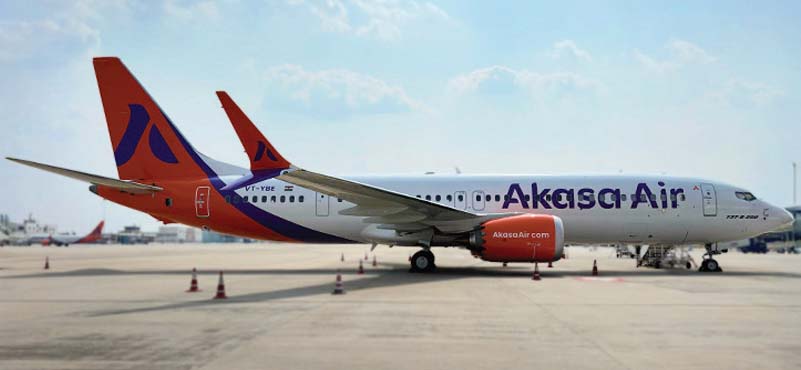
What is the canvas of your operations today? Fleet size, network, domestic and international.
 Vinay Dube: India is one of the most exciting aviation markets in the world today, and Akasa Air has been built very deliberately to participate in that long-term opportunity.
Since commencing operations in August 2022, Akasa Air has grown at a remarkable pace, emerging as one of the fastest-growing airlines in the world. From day one, our focus has been on building a resilient, efficient, and customer-centric airline, underpinned by strong governance and a long-term commitment to responsible growth.
What matters just as much as growth is how we have grown. We have consistently been among India’s most on-time airlines and have also maintained one of the lowest cancellation rates in the industry. In a market like India, where demand is expanding rapidly, it is easy to make trade-offs, but we have remained focused on reliability and customer experience while scaling.
Today, we are proud to have served over 26 million passengers, supported by a strong and passionate team of over 5,000 Akasians who are at the heart of everything we do.
Our network spans 26 domestic and seven international destinations, enabling meaningful connectivity across key markets. Our consistent on-time performance, disciplined execution, and positive customer feedback have helped us become a preferred carrier for a growing number of travellers.
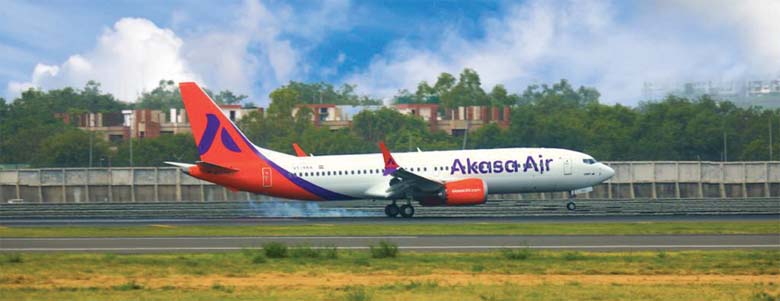
Underpinning this growth is a clearly defined fleet strategy. We have placed a firm order for 226 aircraft, with deliveries scheduled through 2032, of which 38 have already been inducted. This gives us a steady and predictable path to scale, allowing us to grow in a measured way without compromising on reliability or customer experience.
There is also nothing we are building at Akasa that is short-term in nature. Every decision we take is with the intent of creating a durable airline that can serve India for generations.
Our admission into IATA, following IOSA certification, is an important milestone in that journey, reinforcing our commitment to global safety and operating standards.
We are still early in the journey, but we believe we are building something that is both relevant to India today and resilient for the long term.
In less than five years, you have achieved many milestones with a quiet and determined resolve. How do you see your corporate goals, defining such moments, and what has been the philosophy of the airline?
Vinay Dube: I look at the journey so far with a sense of pride and purpose, and certainly some satisfaction, but equally with a clear recognition that there is a lot more to be done. In both life and business, you can always do better, and that mindset keeps you grounded.
From the outset, we were very clear about the fundamentals we wanted to build Akasa on. First, you must have a genuinely competitive cost structure. Second, you need to capitalise the airline adequately, because this is a business that will test you through cycles you cannot always predict. And third, you have to build a strong, professional organisation, surround yourself with capable people, put in place clear governance, and then empower teams to execute with discipline and accountability.
Everything we have done at Akasa reflects these principles: discipline over impulse, structure over speed, and long-term resilience over short-term optics.
To be able to deliver this consistently through ups and downs, culture becomes a real differentiator. We have been very deliberate about building a strong culture at Akasa, and I believe that is one of our sustainable advantages. There is, of course, a culture of safety and a culture of service, both of which are driven by rigorous training, hiring, and well-defined operating procedures. But equally important, and often overlooked, is building a genuinely employee-centric culture. When your people feel respected, empowered, and aligned with the purpose, the outcomes tend to follow.
At the same time, our ambition is clear. We are building Akasa to be an airline that serves generations to come. That confidence comes from staying anchored to three non-negotiables: cost leadership, high-quality service, and a deeply embedded safety culture, all supported by strong capitalisation and professional management.
The milestones are important, but for us, they are really markers along a much longer journey.
You are competing with two big boys on the scene! Few would dare to do the impossible, but you are carving your own path. How do you see this niche going forward?
Vinay Dube: I don’t really see aviation as a winner-takes-all business. In any healthy ecosystem, different players can coexist and thrive if they are disciplined about what they do. If you go to the jungles of West Africa, where you find gorillas (metaphorically, the 800 pound gorilla), you also find plenty of smaller animals thriving alongside them. Aviation markets work in a similar way. India’s aviation sector is large and still growing rapidly, which means there is room for multiple well-run airlines.
For us, the focus has never been on reacting to competitors. Our focus is on the fundamentals: building India’s leading cost structure, running a reliable operation, and creating an airline that is dependable, kind and empathetic in how it serves customers. If you get those fundamentals right consistently, the rest tends to follow.
Globally, there are plenty of examples that reinforce this idea. In the U.S., for instance, four of the five most profitable airlines had, on average, less than 3% market share over the decade that preceded Covid. That tells you profitability and sustainability are not always about being the biggest; they are about being disciplined and clear about your strategy.
India is a large and dynamic aviation market with significant headroom for growth. Our approach is to stay focused on our customers, our cost structure, and our people. If we execute well on those priorities, the airline will naturally continue to grow, almost irrespective of what our competitors do.
Five years from now, what would be your status?
Vinay Dube: We are just over three years into our journey, but our plans are well thought through and anchored in the long term. The intent is to build an airline that is here to stay, one that can serve generations of travellers.
Over the next five years, you will see continued, steady growth. Our fleet expansion is well planned, with a clear line of sight on deliveries, and that will naturally translate into a broader and more meaningful network.
Based on our planned delivery schedule we believe we will be one of the top 30 largest airlines in the world five years from now.
On the network side, we do see international flying becoming a larger part of the mix over time. Today, we believe the market is moving towards a 60:40 balance between domestic and international, and we will align with that direction. Having said that, we are not dogmatic about these ratios, whether it is 75:25 or 70:30, we will follow where demand leads us.
It is important to ensure that we remain well-capitalised at all times. This is a cyclical business, and financial strength gives you the ability to navigate uncertainty and continue investing through different phases. If we continue to execute the way we have over the past few years, we should be in a position to be IPO-ready within the next two to five years, but the larger priority is to build a fundamentally strong business.
Beyond the numbers, what I would really like to see is Akasa build a strong, almost cult-like following, where the brand becomes synonymous with being dependable, warm, and consistent. That, ultimately, is a reflection of getting the basics right, day after day.
Equally important for us is what this journey means for our people. We have grown to 5000+ employees and over the past few years, we have seen meaningful career progression across the organisation, with many of our early team members taking on larger roles and responsibilities as the airline has scaled. We have been deliberate about creating opportunities for internal growth, building capability through training, and ensuring that merit and performance are recognised. As we grow, this will remain a priority, to build not just a strong airline, but also a place where people can build long, fulfilling careers.
 Your growth models as compared to existing concepts like sell and lease aircraft, single aircraft types of operation, corporate financing, etc.
Vinay Dube: For us, the growth model is really an outcome of the choices we have made on fundamentals. It starts with the fleet. Our decision to build Akasa around a single aircraft type, the Boeing 737 MAX, is very deliberate. We are the first airline in India to have an entire next generation fleet. The aircraft provides the lowest seat-mile costs for a single-aisle airplane as well as high dispatch reliability and enhanced passenger experience. It offers excellent economics, reducing fuel use and emissions compared to the airplanes it replaces, supporting our mission to become an environmentally progressive company. In an industry where a large part of the cost base is dollar-denominated and exposed to volatility in fuel and exchange rates, efficiency is not optional; it is foundational.
Equally, operating a homogeneous fleet reduces complexity across the system. It simplifies training, maintenance, and operations, and plays an important role in delivering the kind of reliability we aspire to.
For us, being dependable is a core part of the brand, and these structural choices enable that. The other important aspect is discipline in how we manage capacity. We are not opportunistic in the way we induct or deploy aircraft, whether it is adding short-term capacity during peak demand through leases or parking aircraft during softer periods. We have chosen a steadier, more predictable approach to fleet induction and utilisation. It may not always maximise short-term gains, but it builds long-term stability.
Across financing as well, the philosophy remains the same: be prudent, stay well-capitalised, and avoid decisions that optimise for the near term at the cost of resilience.
In the end, these are not isolated decisions. They come together to create a cost structure and operating model that is consistent, efficient, and built to withstand cycles.
How well capitalised are your operations? More funds in the offing?
Vinay Dube: For us, this is quite simple. One of the few things that is absolutely non-negotiable is the desire to always be well-capitalised. That is the foundation on which everything else rests. Aviation is a cyclical and capital-intensive business. You will inevitably face volatility, whether it is fuel prices, currency movements, or external disruptions. The only way to navigate that consistently is to ensure that your balance sheet is strong before you chase scale.
We have been fortunate in the quality of investors who have backed Akasa from the very beginning. The late Rakesh Jhunjhunwala brought not just capital, but a long-term mindset. Similarly, investors like Premji Invest, the Ranjan Pai family, and 360 ONE Asset are all aligned with building a durable business over time.
These are partners who bring both patience and perspective, and in many ways, they make us better as an organisation.
Our philosophy has always been clear: we would rather own a smaller share of a very strong, well-built company than optimise for ownership in the short term. If you build a fundamentally sound, multi-billion- dollar business, value creation follows naturally. As we look ahead, we will continue to ensure that the airline remains adequately capitalised at every stage of its growth, in a way that strengthens the business for the long term.
How did the new FDTL rules affect you? How is your pilot-to-aircraft ratio panning out?
Vinay Dube: From our standpoint, the starting point is always very clear – when the regulator sets a framework, the first step is to comply. We have a very professional regulator, and we believe in engaging constructively while ensuring full adherence.
At Akasa, we are fundamentally a planning-led organisation. We prefer to anticipate and prepare rather than react. Our work towards the revised FDTL norms began well in advance with coordinated efforts across flight operations, crew planning, rostering, and commercial teams.
Importantly, we planned on the assumption that there would be no exemptions. That mindset ensures readiness rather than conditional compliance. Planning at Akasa is always anchored in both a customer-first and employee-first approach, because safety, well-being, and experience are closely linked. As a result, we were fully compliant from day one, without compromising either customer experience or employee well-being. It also reinforced our belief that disciplined planning is critical to building a stable, reliable operation.
Today, we have around 775 pilots on strength, all of whom are actively flying and accruing hours. That buffer gives us the ability to absorb training cycles, weather disruptions, aircraft inductions, and regulatory requirements without compromising reliability or customer experience. Importantly, it also allows us to operate with greater schedule integrity and on-time performance, which are core to building trust with customers and partners.
You said you were looking at 40% of your network as becoming international? Would you bring in some new city pairs? How about code sharing? With which airline and on which routes?
Vinay Dube: Our network strategy has been consistent from the outset. It is guided by disciplined, thoughtful expansion rather than opportunistic growth.
At a broader level, we believe that strong air connectivity is a key enabler of economic growth. In India, that means not just serving metro markets but also building meaningful links between metros and Tier 2 and Tier 3 cities. We have been very focused on creating a network that is both wide and deep, connecting key hubs while also addressing underserved routes where there is clear, unmet demand. As we expand, the focus is not just on adding destinations, but on building a coherent and efficient network. Every route we launch is the outcome of careful demand assessment and fleet deployment. We are also very pragmatic in our approach. If a route works, we scale it; if it doesn’t, we are willing to pivot quickly. That flexibility is important in a fast-evolving market like India.
On international operations, we are seeing strong momentum. Today, around 25% of our capacity is already deployed on international routes, which is a significant milestone for a relatively young airline. Over time, we do see this moving towards a higher share, potentially around 40%, driven by demand patterns. But again, we will follow the market rather than force a predefined outcome.
Partnerships are an important part of our international strategy. We have a codeshare agreement with Etihad Airways, which allows us to operate flights to Abu Dhabi from cities like Ahmedabad and Bengaluru while also providing customers with seamless onward connectivity. We see this partnership continuing to deepen over time.
More broadly, we see interline and codeshare partnerships evolving over time. As we continue to build scale and depth in our own network, we will become a more meaningful partner for other global airlines.
Overall, the approach is simple: build depth domestically, expand internationally in a calibrated manner, and create a network that is sustainable, flexible, and aligned with where demand is headed.
How is the Gulf crisis playing out for you? How much is fuel a part of your overall cost? How are you planning for this emergency? Does being small relatively help you?
Vinay Dube: The starting point for us is always safety. We continue to undertake ongoing assessments of the situation in the Middle East, and based on that, we have been progressively restoring select services in the region. Our focus throughout has been on ensuring the safety of our passengers and employees, while managing disruptions with resilience, professionalism, and empathy.
In that context, we have been able to deliver strong outcomes. Today, we have restored around 55% of our Middle East operations, which is among the highest in the Indian aviation ecosystem. Importantly, we have maintained a 100% track record of operating flights on the routes we chose to serve in the region. That consistency reflects the discipline in both our planning and execution.
Our approach has been deliberately conservative. We have taken measured decisions, but once taken, we have executed them with consistency. Transparent communication with passengers has also been a key focus, and that has been well appreciated.
From an industry standpoint, fuel is a significant component of operating costs, and recent geopolitical developments have led to a sharp increase in aviation turbine fuel prices. That has an impact across the sector, not just for us. In response, like most airlines, we have introduced a calibrated fuel surcharge. This is applied in a measured way, depending on sector length, and is something we will continue to review as the situation evolves. At the same time, we remain focused on maintaining operational efficiency and offering reliable, affordable travel to our customers.
In terms of planning, this is where discipline becomes important. We have always operated with the assumption that external shocks, whether fuel, currency, or geopolitical, are part of the business. Adequate capital and efficient planning are what allow an airline to withstand these inevitable cycles without compromising on safety or reliability.
We are building an airline in a world of uncertainty, with a clear focus on being well-capitalised and maintaining a strong cost structure. While foreign exchange movements, fuel prices, and demand volatility do have an impact, we believe that disciplined execution allows you to manage through them.
Ultimately, our focus remains unchanged: cost leadership, service excellence, employee centricity, and a strong safety culture. If we stay anchored to these, we are well-positioned to navigate periods like this.
How is the ecosystem developing for Akasa? With new airports in Delhi and Mumbai, how do you plan to utilise these? Would creating new hubs be a new plan as distinct from others? Like using the new Guwahati airport as a hub for new routes in that region, both domestic and overseas?
Vinay Dube: The broader aviation ecosystem in India is evolving very positively. One of the most encouraging aspects is the scale and intent behind airport infrastructure development. Airports are not just physical assets; they are economic multipliers, and every large aviation market globally has scaled on the back of capacity that stays ahead of demand.
In India, we are seeing exactly that. The number of operational airports has expanded significantly over the past decade, and there is a clear vision to continue building capacity in a way that makes aviation more inclusive, accessible, and geographically distributed. That kind of systemic capacity creation is critical for the next phase of growth.
Developments like Navi Mumbai International Airport and Noida International Airport are particularly important. They don’t just add incremental capacity; they fundamentally change how key metro regions operate. Mumbai, for instance, moves from being capacity-constrained to growth-enabled, while Delhi benefits from a more distributed model that reduces concentration risk. This gives airlines the ability to plan with far greater predictability.
For Akasa, this creates opportunity, but our approach remains consistent. We are not building a traditional hub-and-spoke model in the conventional sense, nor are we attached to any one geography as a “hub” in the way legacy carriers might be. Our focus is on building a network that is efficient, flexible, and responsive to demand.
If certain airports, whether in the Northeast, like Guwahati, or elsewhere, offer the right combination of demand, connectivity, and operational efficiency, we will naturally build depth there. But it will be an outcome of disciplined network planning, not a predetermined hub strategy.
Ultimately, improved infrastructure, whether through new airports, better air traffic management, or more efficient passenger processing, benefits the entire ecosystem. For us, it simply expands the canvas on which we can build a reliable, well-connected airline.