
A sustainable Plan for Wildlife Tourism remains an unfulfilled need. Many years ago, Hilderic Friend, botany master at the Diocesan Boys School, Naini Tal in his Preface to ‘The Flowers and their Story’ affirmed, “… young people are born with a love of Nature. By the development of this taste the joy and usefulness of life may be greatly increased.”
True, but for descriptive clarity the high priest of ornithology Dr Salim Ali is unmatched, par example, “A bird has been described as a ‘Feathered Biped’. This description is apt and precise, and can apply to no other animal.” Holistically, from the overall Indian tourism product standpoint, the master plan would transcend this confine, becoming the apex national layout with wildlife tourism positioned as a key subset.
The demand echelon of a Wildlife Tourism Plan will need to tread carefully across overtourism ripples bracketed on infrastructure constraints. The supply spectrum, on the other hand, must grapple with unsparing habitat fragmentation, bio-diversity and species loss caused by climate change, inconsiderate ‘development’ and irreversible environmental damage, that unleash severe negative impact across local community livelihoods and traditional ways of life.
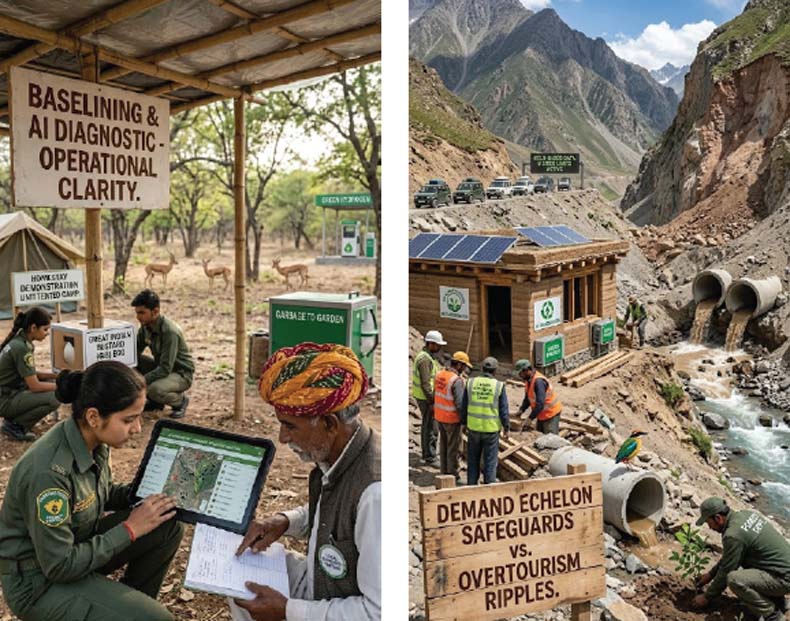
In this matrix must fit reputations, sometimes larger than life, dependant on the relative strength of rod, gun, camera or narrative. Which is why our apex predator, demonised as ‘man-eater’, lay on the brink of extinction till its principal habitat was re-named, paradoxically, after its principal antagonist. Hence, the first element in Park etiquette is a pre-arrival brief. Visitors must realise that their primary interface will in all probability involve insect and birdlife, supplemented perhaps by the herbivorous quadruped and, only with luck, the carnivore. Operational clarity may need glancing at early natural heritage legislation such as the Sarais Act and the Indian Forests Act, apart from nomenclature, rendered for purists in Latin. But what’s in a name? Thus, the Indian Pitta (Pitta brachyura), colourful harbinger of both breeding season and monsoon across India is not to be confused with Pitta Bread proffered at virtually every Brit vend.
India’s position in this context is illustrated by five recent instances, with mixed visitor learnings.
First, after ten years last month, a 15-day old Great Indian Bustard (GIB) fertile egg was delicately road transported 770 km from the Sam captive breeding centre in Jaisalmer District, Rajasthan to Naliya in Kachchh District, Gujarat for innovative ‘jump start’ incubation and hatched. Hereon, the scenario remains precarious, there being only 150 GIBs in the wild in India, mainly Rajasthan, severely threatened by predatory hunting, habitat loss and now also collision with power cable grids.
Second, our notable Project Cheetah launched in September 2022 at Kuno National Park, Madhya Pradesh saw Mukhi, India’s first native-born cheetah (after being long extinct!) turn three… with five cubs to boot… ensured by dedicated, skilled park and project personnel. Evidently, the original South African-Namibian cheetah combo took to the Indian grasslands. Nevertheless, instances of injury remain, due primarily to high-speed chases, collision or territorial fights.
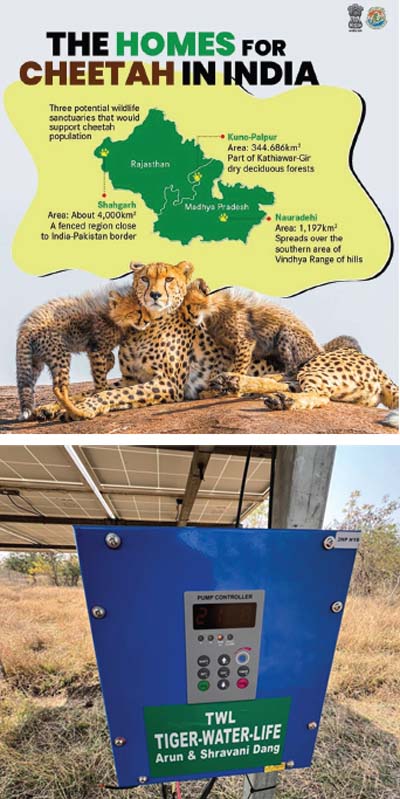 Third, more worrisome, is habitat entanglement, the case in point being a Kuno cheetah straying 25 days to the Ghatigaon Wildlife Sanctuary, marked for GIB conservation within Sonchiriya sanctuary zone, bang on the Agra-Mumbai NH hit-and-run axis.
Fourth, it is true that National Geographic had listed our Suru Valley in Ladakh among the world’s 25 best destinations to visit in 2025, renowned for stunning mountain landscapes, rich natural and cultural heritage. Everything moved apace until last month’s avalanche hurled roadside debris, snow and ice in quantum multiples at the mouth of the Zoji La, our principal Himalaya-Karakoram gateway on the Srinagar-Leh road. The road is now clear.
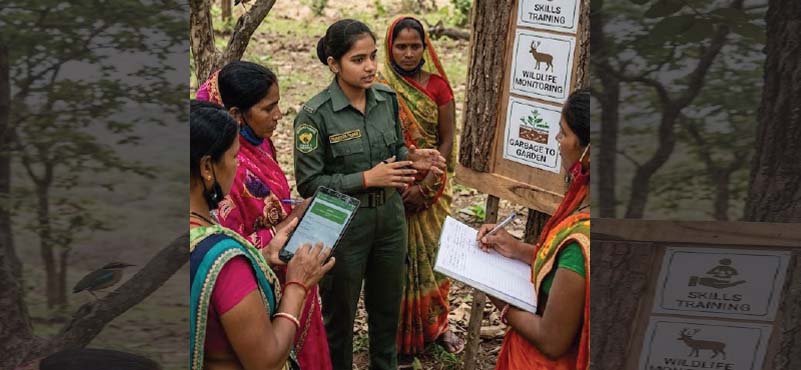
Fifth, a true heart-warmer… forest guard Anita Chaudhary patrols the Shergah Sanctuary in Baran (Rajasthan), home to the leopard, sloth bear, hyena, chinkara and sambhar, supplemented by her notes on bee hives and termite hills… so deep is her understanding of the forest, fearlessly embattling poachers and illegal miners.
But hope bashes on, buoyed by the resilient visitor continuing to peer round the corner, much as tourism honchos articulate renewed attempts to halt and reverse biodiversity loss by 2030. Thus, on the global stage, the Nature Positive Tourism Partnership consisting of UN Tourism, the World Travel & Tourism Council and the Sustainable Hospitality Alliance, had addressed world leaders in October 2024 at the UN Biodiversity Summit (COP16) in Cali, Colombia. Premonition? Not quite perhaps… denoting a double hard sell, transforming intent to action. And soon enough, centre-stage at ITB Berlin earlier this year, Tourism & Culture Minister Mr Gajendra Singh Shekhawat re-affirmed allowing 100% FDI for global investors via automatic route on par with investment in infrastructure.
Developing the Wildlife Tourism Plan
Several views exist on the structure and content of tourism plans. One common factor is the need to partner principal stakeholders globally (local community participation upfront), together with key demand and supply side indicators, to create a reliable Baseline for a two-part Work Plan, namely:
- ‘Software’ Work Plan (primacy for employable skill development, MSMEs, Women);
- ‘Hardware’ Work Plan (for hard infrastructure, using traditional material, styles, expertise).
The Plan will target, in particular:
- Strengthening fragile habitats unable to leverage visitor footprint;
- Overtourism, with finite visitor entry & revenue for main, lean and shoulder seasons;
- Shift from merely numerical to yield based data;
- Destination management.
 Plan Baseline priorities:
- Site asset listing to prepare baseline AI diagnostic, enabling forensic situation analysis;
- Survey of India 1:25000 non-grid contour sheets;
- Signage and guiding kit;
- Pre departure/arrival briefs;
- Legal framework orientation;
- Data reliability;
- Waste management;
- Operational norms/checklists for accommodation types e.g. homestays, tented camps;
- Scientific, monitorable indices descaling homilies of pious intent viz pledges, CSR et al;
Growth slowdown due geopolitical turbulence, climate change & viral contagion, denting:
- Destination image
- Consumers’ needs
- Domestic livelihoods
- Visitor<>local adjustment
Plan Parameters
For the Plan, two sustainable development parameters, namely Energy and Tourism, may be used to illustrate content depth and variety required. There are other important parameters viz host communities, animal & plant species, altitude, forest types, treeline, grass-line, snowline, drainage basins, topsoil and geomorphology that impact grazing radius and prey base. Similarly, a greater electricity laden energy matrix will result just as the Earth’s electricity demand surges twice as much as overall energy demand in the last ten years, a third of this due to China and projected to upswing further due to national and international targets for net zero emissions.
The tourism sector provides answers to several sustainable development issues. However, a workable Wild Life Tourism Plan requires Safeguards with committed finance to combat:
- Habitat fragmentation;
- Apex and downstream species’ prey base and hunting radius constriction;
- Gene pool, indigenous-exotic plant/animal species conflict.
Local Community and Faith’s Fulsome Participation Across Work Plans
The participatory aspect is a core fundamental, aligned with a Tourism Vertical possessing four principal components:
- Heritage Tourism.
- Homestay (Ref: National Strategy for Rural Homestays – Initiative qua Atmanirbhar Bharat).
- Destination Management Organisations.
- Tourism Calendar.
Supervision, Monitoring and Evaluation
Work Plan Implementation, Monitoring & Evaluation will be overseen by the PMB with Plan partners, themselves trained in sustainable development, community participatory governance, basic English (lingua franca worldwide), hygiene, sanitation and cleanliness. Besides, the focus must include:
- Waste management: Obiter dicta: Waste is not waste till it is wasted;
- Likewise, ‘Garbage to Garden’ organic recycling uses thermophilic bacteria;
- Automated composting converts wet organic waste to compost rich in different nutrients;
- From AI to Big Data, digital skills are vital to competitiveness in this rapidly evolving sector;
- Site managements must evaluate Workplans’ monthly output/outcome/supply/value chains;
- Green Hydrogen… guiding light to de-carbonisation.
World Heritage Sites and Ramsar Sites
- Drawing product and market advantage from India’s present 43 World Heritage Sites (35 cultural,
- Seven natural, one mixed) and 80 Ramsar Sites (wetlands of international importance), each
- Endowed with tourism equity, a pilot site shortlist will track asset listing for baselining and wildlife tourism plan formulation.
ABOUT THE AUTHOR

Sudhir Sahi is a Delhi-based UN Tourism and environment specialist. Formerly with Air India, he has been associated with Indian Mountaineering Foundation, authored research papers on environment and tourism.