What is Feels Recalling your Learning, How Do you See Going Forward
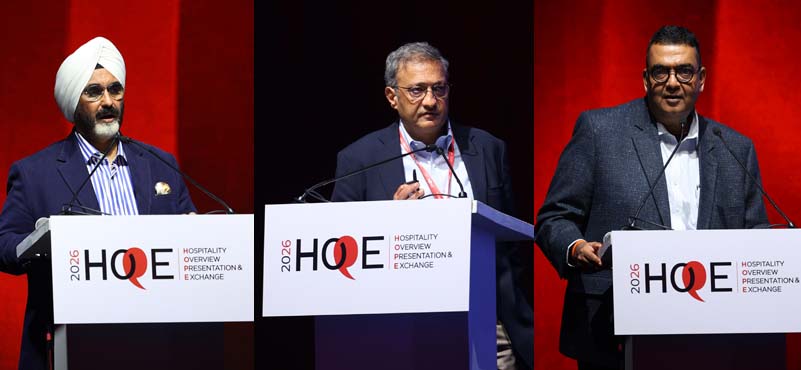
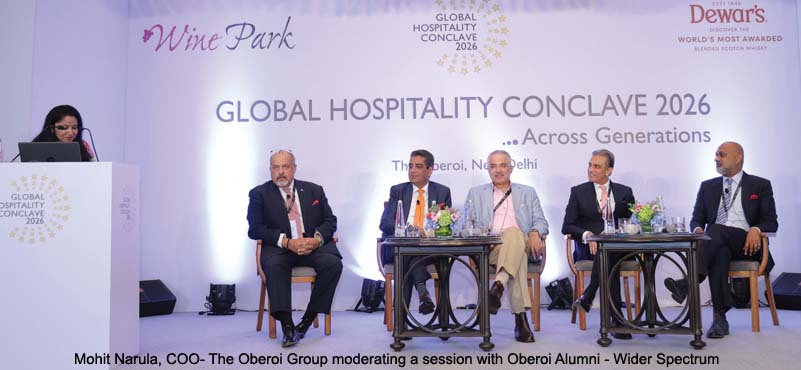
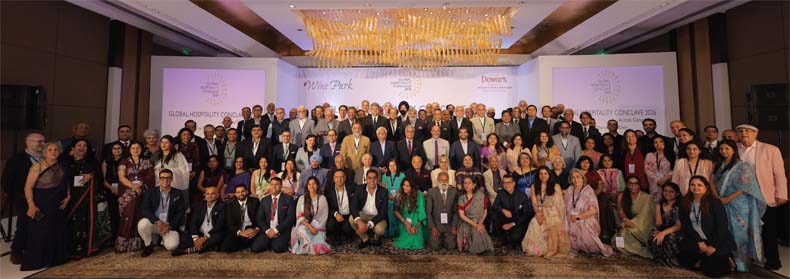
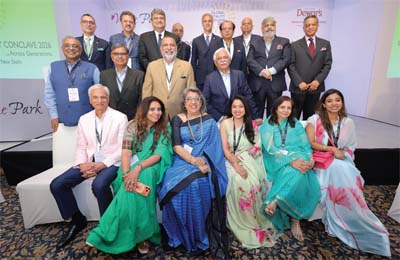
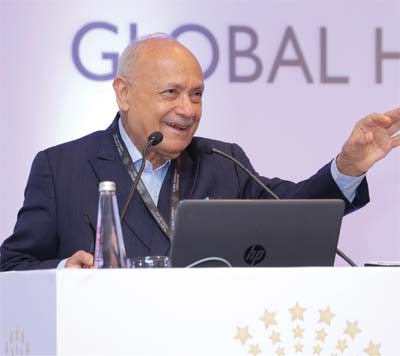
In a free-wheeling conversation, moderated amidst some lighter moments, as only Mohit Nirula could handle, the current CEO, Oberoi Group, was taking a group of alumni back into time. Their initial years with The Oberoi, what learning they took with them and how do they see the hotel group scaling today, like never before. These are selected excerpts, not the entire conversation, abridged for reasons of space. Participants included: Kiran Andicot, Senior Vice President, South Asia, at Marriott International, Inc; Devendra Bharma, Chief Executive Officer – Jio World Centre; Ribhu Chatterjee, General Manager at the York by Swiss-Belhotel, Australia; Amitabh Rai, CEO Luxury, Accor and Mohit Nirula, CEO, The Oberoi Group (moderator).
Debu Bharma: I have to push back a little bit. So, Mohit, I think you did pretty much what I am doing now. Moved out from core hospitality into the world of real estate, senior living, etc. So, I now run a similar business. But the business is run by a certain base or a foundation.
I think we were all youngsters who joined the school. There was (then) Arun Aggarwal sitting here, Mr. P. G. Mathew, who I’ve seen after God knows how many years. Vijay Wanchoo. These are the people who really taught us the world of hoteliering. And I think the base really started here, where you started understanding the business, you started understanding people, you started understanding detailing, quality, excellence, etc. So pretty much, I think I’ve just carried these learnings over the years into the business that I’m in now.
I don’t think it’s hugely different from what we do as hoteliers. But I think you just have to have the ability to unlearn a little bit and then relearn as quickly as possible and that’s what I tried doing. While our business is almost a few centres or six businesses, so there’s a convention exhibition business, there’s a culture centre, there’s a mall or a retail space. We are setting up residences, and we have a club, associated with it. So, when it came to convention and exhibition business, I date back to my learnings.
I was a youngster at the Oberoi Grand in Calcutta. That’s where I started my career, under this gentleman on my right. I was the youngest banquet manager over there. He was quite a driver, actually quite a tyrant in those days. But anyway, so that was the grounding, you just learn the hard way and I think you just have to then remember all that and then bring it to whichever assignment is important to you.
So, as I see it, the transition, while it’s been seamless, I always believe that it’s just a question of being able to unlearn, learn again. And sometimes just sit back quietly and hear the subject experts who throw a lot of things at you and have the ability to ask them, I don’t understand this, so teach me, especially the theoretical business, I didn’t know it at all. Today I feel, yeah, I know a bit about that part of the world as well. The rest is similar to what we’ve pretty much, I think, learned all our lives.
Mohit Nirula: Coming to Amitabh, every organization is a reflection of the culture that is unique to it. What I see with you and your group that’s come together, all of you are in Accor, which has its own culture. All of you were in Marriott, which has its own culture. But all of you started from The Oberoi, which has its own culture. How do you go about subsuming all that you’ve learned, or gained and become this new culture with your flavor to it?
Amitabh Rai: So yes, you’re right. We all started in Oberoi. We went to Marriott. We’re now with Accor, and building an absolutely new venture, a very, very exciting venture. And I think what we’re trying to kind of create there is what I would like to call, a three -part of the heart culture.
And I’ll tell you what three parts of a heart. And the first part is what we call the warrior’s heart, which is you never give up. You get hit, you get up, you go, you continue. You just don’t give up. This you got from Oberoi.
You learned it a bit more in Marriott. So that’s the warrior’s heart. The second part of the heart is the service heart. You know, the compassion, the empathy, the ability to put other people first, to care about others, whether it’s your team, whether it’s your guests, whether it’s your partners, always putting other people first. That’s the service heart.
Which again, learnt a huge amount at the Oberoi. Learned it further again at Marriott and I think the last part what I strongly believe, is going to be the key, is what we call the child’s heart. Which is the ability to have fun, irrespective of how much ever the stress, you should be able to have fun, which I think I learned a lot and only at the Oberoi because we always were bonded, you always had demanding bosses and you always had Mr. Oberoi, and yet you always had fun. That’s the culture we’re trying to incorporate now into our new job.
Mohit Nirula: Coming to Kiran. This man runs a portfolio which is 10x the size of our company. And many times, I kind of look at you and I say, how do you do it? So, the question is, how do you do it?
Kiran Andicot: Like we said, you can leave Oberoi, but Oberoi doesn’t leave you. To answer your question, you only have those same 24 hours. It’s about ruthless prioritization. Knowing what moves the needle, but more than that, it’s building a team that you can enable and empower. Rest all is just about scale. So, it’s pretty much the same as long as you have the systems in place.
Mohit Nirula: We’ll start with you, Debu. And the question is, it’s a very cozy environment at the Oberoi Hotels. Everybody knows everybody. When you stepped out, and I know you went to DLF first and then to Jio. At some stage, you might have come across something which kind of made you say, God, this is not like Oberois.
 Debu Bharma: At every step I said that, I guess. We spent our lives with the Oberoi group. It’s been so much a part of us. It still is, I think. So when you step out, the first thing you start doing is comparing when it comes to the manager, the leadership. We have all been part of The Oberoi School, we think the same, we deliver the same, we understand each other’s body language, etc.
The moment you step out into another world there are mismatches and that’s really where the disconnect or discomfort starts. So, on many an occasion I went through those things. But that’s when you have to just try and shut one chapter and then get into another one, just to try and remain relevant in that one. Otherwise, if you just end up constantly comparing, I don’t think that’s the right way to run a business.
Mohit Nirula: I must here acknowledge Kiran has helped me with some of the questions, so since you gave me this one, can you answer this one?
Kiran Andicott: Well, it hit me the first month that I left Oberoi, in the first morning meeting in my new organization that I shall not name. It’s not my current organization. And the difference was stark. And I was I was a bit disillusioned. I was, you know, at that stage when you leave Oberoi and go, you left your comfort zone. That’s what you started with. And then you’re starting to think whether you made the right decision. And then you adapt and your learning is different.

Ribhu Chatterjee: Look, I have worked for five or six organizations. I think the basic hotelier or the concept of hospitality doesn’t change wherever you are. People change. But each hotel has a jargon. I guess the first thing I want to say is that if you come out of the Oberoi school, or what’s it called, learning and development. Now we’ll see how they, it never leaves you.
And whether you’re inside or outside, that part stays. And a very strong part of that, you can feel in this room today, that the camaraderie, even of people I have never met, they will come up to you and say, I remember you, you know, like somebody came and told me. You are from Oberoi Grand. People still talk about you. I don’t know a soul in Oberoi Grand today. I went this time to have a look and I found out that the hotel was shut for renovation.
It’s a great thing to learn about. But yeah, it never leaves you. But some things like in Oberoi, we were taught that quality is quality. And the first thing which stuck me when I left was that we are in the hotel to make money. So sometimes you compromise with quality. No, that’s not how it works. If something is bad, you fix it, and then you earn more money. That is The Oberoi. Other places, cut some corners here and there so that your bank remains full.
It’s a big difference, big difference. But then look, that’s a turning curve.
But again, coming back to quality, it never leaves you. If you have it, it doesn’t matter irrespective of small company, big company, you still will deliver that. And you will still find the dirt in a place where nobody else can find the dirt. So, they’ll ask you, well, how did you see that? No, we have been taught to see that. That’s what I want to say.
Quality never leaves you.
Amitabh Rai: When I left the Oberoi, after my first 20 years, I actually became an entrepreneur. When I opened my first restaurant, everybody told me, they said, what are you doing? I mean, you’re spending way more than it’s feasible to kind of recover from one. And I just thought it has to represent what I kind of bring.
I mean, you know, my lineage. But having said that, I still remember, I’ll tell you how I realized one day that I was no longer at the Oberoi. A couple of months down the line, my phone rang and it said, Mr. PRS Oberoi, he was calling. And instinctively, with the phone, you stand up. And I was expecting the first question would be, Amitabh, where are you? That was normally what would go first. But it was, Amitabh, how are you? And I said, well, I mean, then I realized I am not. And I’m no longer in the company. I’m out of the company at the moment. So that was an ‘aha’ moment.
Mohit Nirula: At the Oberoi group and all of us when we were younger, or even as we got senior with the company, we knew what we had to do. And you could call it being dictatorial. You could call it being directed.
You could call it being everybody having the same vision. But we knew what we had to do and deliver. As you go out of the Oberoi group, suddenly the same of what needs to be done and delivered transitions from you being directed to you having to do the directing. How have you adapted to that?
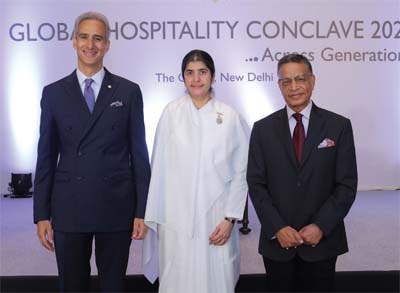
Debu Bharma: I think one part was the direction from Mr. Oberoi. And I think the great part about the organization was it empowers you to run your own business as long as you deliver to customers, whether it was business or guest calls, et cetera. When you move out, there is a direction. In that, you have to meander a little carefully, but make your own point across. And I think I’ve realized that when the leadership on the other side starts looking at you, being able to take the initiatives, doing the right thing for the job, I think they’ll start stepping back and giving you that much more. So, it’s just a question of balancing it a bit initially. Once you, like I said, the core is from here. And I think the core was so solid, I think that’s really what made you a good student. That’s what I practiced.
Mohit Nirula: So how many years were you there?
????: 18.
Mohit Nirula: So you already had a fairly strong foundation. How did you make this transition?
Kiran: So, I was just thinking about it. It’s more a natural progression, which, for instance, if I’d stayed back with the Oberoi, I would say it’s more a function of where you are in your career rather than pre – Oberoi and post – Oberoi.
Ribhu Chatterjee: I think the way I looked at it was, a lot of people tried to copy the OCLD as it is called today. We were always in, it’s horrible, it sounds arrogant, but we were always in demand, we were always being headhunted and that was a good feeling. And I think when you went to the next job, obviously this umbrella is missing and this system that we had this natural progression with badges and based on your merit and what you get was missing and now all of a sudden, you’ve reached this other place. I think the way I handled it was, believe it or not, why would I be headhunted if they didn’t want me for what I am?
Why should I change? Because that’s not what they are buying. They come to me, offer me a higher salary quite a few times over to do a certain job because they have heard that I am good at what I do.
So it was fairly easy once you understood to try and stick to your policy, you have to make slight changes to do it to their cultures and whatever. But I think it’s pretty easy that people didn’t want you to change. I mean, look at everybody where they are today. Everybody is on high places.
And everybody has been either headhunted or on their knowingly or unknowingly, because they were good. So I guess we have to believe in itself. And that’s what this association gave us, that we don’t need to change. We need to be true to who we are.
Amitabh Rai: For me, I had no choice. I had to start giving directions because, like I said, I’m a new student. But during the period, of course, when I worked closely with the senior leadership of Oberoi, understanding the reasons for those directions, understanding the reasons for those decisions was very critical for me in my learning, specifically as I ventured out on my own, to be able to implement those and to be able to learn and improve.
Mohit Nirula: You know, and this question was suggested to me when I was asking myself how much will be directed and of course how much was there to give clarity on the deliverables. And my sense is, from the times that I was here before, the boundaries were very clear and you had to play within those boundaries. And now that I’ve come back, and here I must give, I told you about my first bosses, I must tell you about my latest ones.
Now, even the boundaries are for us to define. And the entire company is coming to grips with the fact that you are no longer restricted by what you thought were boundaries. And therefore, very much like that Pavlovian syndrome of ‘I shall not cross this line’ because people have stopped even trying to push that line. So, the culture shift that is going on within our organization is the fact that the boundaries can now also be defined by yourself.
So, I think it takes a lot of bravery to be able to do that. So, when somebody was saying that we are a startup, actually we, the Oberoi group at this point in time, is probably at its inflection point. We are a 92-year-old company with a proud legacy made by so many in this room, but with the attitude of a startup.
I will now switch gears because all of you have been proud members of this fraternity. Like I said, all of you have contributed to the company to be where the company is today. And we are now going to embark on an expansion which takes us to double our size in the next six years. It’s never happened. And it is going to happen. And as people who are proud of what you’ve created, I’ll start with you, Kiran.
If I were to ask you, please give us advice on what to remain truly focused on as we go on this journey, what would your advice to your company be? What I’ve learned is that what you learn when you’re outside, is many times more different than what you learn when you’re inside. I’m not saying better or whatever, but definitely different. So your advice will be sought with sincerity and welcomed with sincerity.
Kiran Andicot: That’s an interesting one. And it feels odd giving this advice, having learned and started from there. But I would say protect the core values. I would say protecting the core values because scale is easy, culture is not. And that is something, even in Marriott, as we’ve grown, that’s been one of the cornerstones of how we get to expand and endeavor. I mean, it’s not easy, we’ve not always succeeded, but if there was one piece of advice, that’s what I would say, that do not lose the core with scale.
Debu Bharma: Yeah, that’s extremely important. I’ve seen some of the organizations which have scaled up very fast the last some years. They’ve deviated from their core values. So that’s a critical trend. At the same time, I think there’s a bit more risk -taking ability, I think, to the organization. We’ve been very, very careful what we’ve done. It’s remarkable how in the last couple of years, and the announcements that one reads about, and you just now said the activities will double up, is actually very, very encouraging, I must say. It didn’t happen for so many, so many years, but the fact that it’s happening at this scale. But if we can just build in a little more risk-taking ability, that’s what many of the organizations are doing on the outside. If you’re excessively careful, we delay things. And I just feel that’s one, from the outside, I think we should do that.
Ribhu Chatterjee: I think I agree with what he said. There is definitely something that defines Oberois. Even today, we have a small gang of about six or eight of us in Sydney. And there’s a gang, similar sized gang of Taj, slightly bigger. And when we meet, there’s this very friendly rivalry where the general consensus is, if I may say it in Hindi, ‘Oberoi wala mein kuch baat hain’.
With expansion, risk -taking, AI, moving with the times, going with IT, you have to find a way as a team, to my mind, to not lose that. Scaling up only has an issue when you lose sight of what you said is core value. And you don’t want to lose that.
So, you don’t want to lose that. And we are doing something right. And what we are doing, we don’t know because we all learned the same way of culture in the school. So don’t lose that. The school is very important.
Amitabh Rai: As Mr. PRS Oberoi would say, you may not be the biggest but you want to be the best. You can still be the best even if you double. I think like Gaurav mentioned earlier today, when it comes to the NS4 brands, I’ll give you a personal example. We opened the Hoxton in Bangalore. Hoxton, the founder owner, is Sachin Pasricha and they have their own CEO. They have their own COO, the brand. To release a general manager’s post, vacancy post, you know, on social media, on LinkedIn, I had to get approval from the CEO of the brand.
They have grown in four years from 15 hotels to 100 but maintaining the sanctity and the core values of each brand individually. So, it’s not that it cannot be done. But I think you need right people at the right place. You need a team. You need a team dedicated to looking after these aspects. And I think it’s achievable.