The Museum as a Cathedral of Stasis
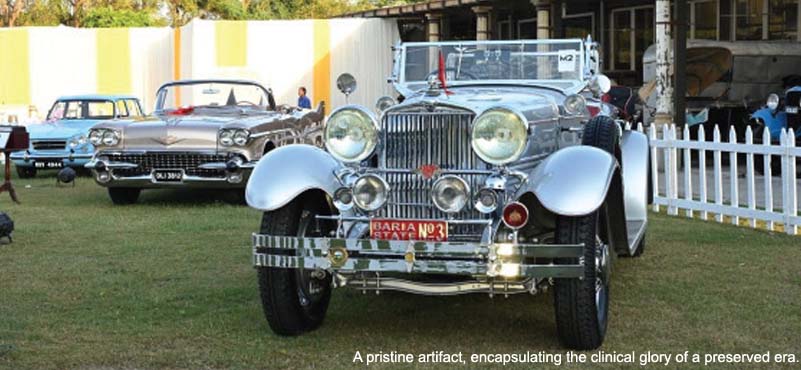
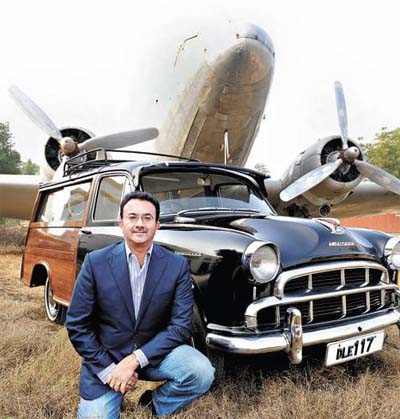
In the climate-controlled halls of the Diljeet Titus Museum, history is not dead; it is suspended. To walk through these corridors is to enter a cathedral of material culture, where relics are entombed in glass or anchored to limestone floors: silent, sterile, and stationary. In this meticulously curated environment, the visitor is taught to observe from a respectful, safe distance. We examine the gleaming hoods, the unblemished leather, and the architectural geometry of a 1930s chassis, but we are rarely invited to inhabit the ghosts of their past. The museum, in its noble quest to preserve, inadvertently creates a pause, a beautiful stasis where the object is stripped of its road-dust and its pulse, leaving behind the clinical glory of a frozen era.
Activating the Living Archive
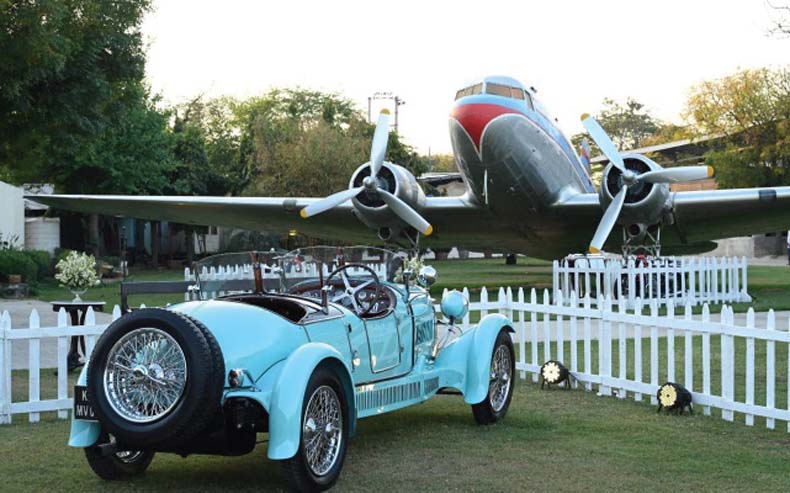
But this heritage was never meant to become merely a monologue. The vintage automobile, by its very nature, is an object of motion, of wind, of transit, and of human ambition. It was never intended to be a dead speech delivered from a pulpit of limestone and glass. It was meant to be a conversation, a rhythm, a riot of memory. The concept of a Living Archive—a term rooted in contemporary conservation theory which prioritizes the activation of heritage through practice—does not challenge the museum’s existence. Rather, it audaciously challenges the paralysis that sets in when we stop telling the stories behind the steel.
It suggests that the past is not just a relic to be observed but a pulse to be felt and a story to be experienced. In this landmark collaboration between the Diljeet Titus Museum and Dr. Navina Jafa’s Sair-e-Motorcar, we witness a resurrection — a total immersion where the machine and the muse finally meet.
Breaking the Silence of the Absent Object
When we stand before a 1930s Stutz or a regal Rolls-Royce in this sanctuary, we are conditioned to listen to the silence it radiates. We receive a sermon delivered from behind the invisible barrier of “do not touch”. The archival plaque tells us what it was, when it was forged, and which aristocrat once claimed it. These are facts, but they are dry; they are the skeletal remains of a once vibrant social history. The soul of the machine remains sequestered in its own perfection, locked away by the very preservation that keeps it beautiful.
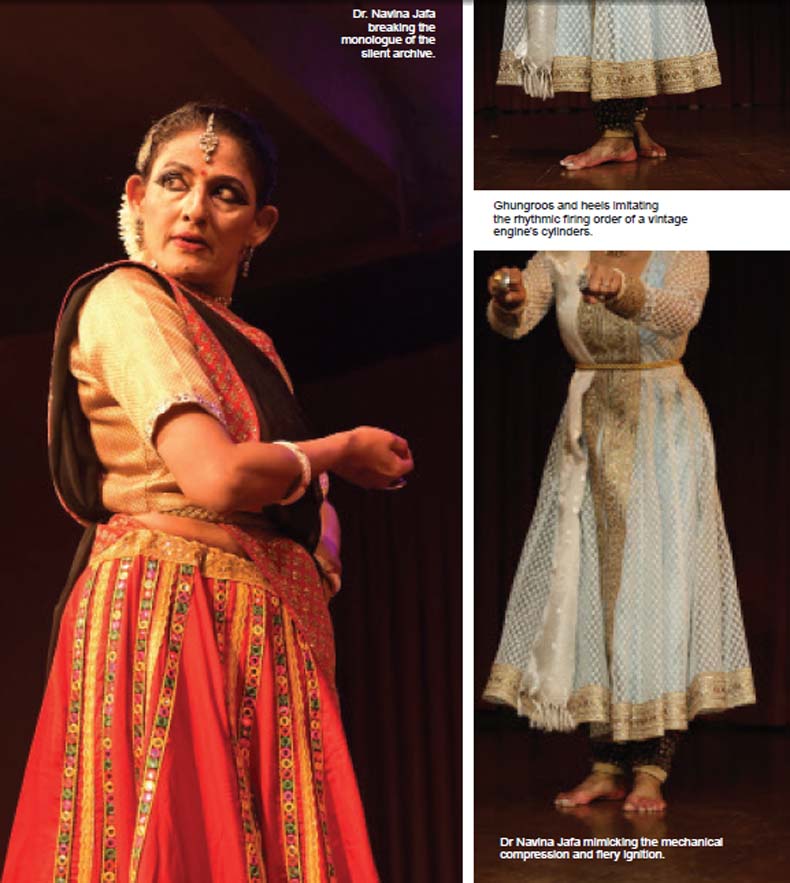
Heritage, in its truest form, is a visceral, shifting dialogue between the artisan who hammered the steel a century ago and the spectator who gazes upon it today. To look at these machines is to initiate a debate with time itself. We look into the polished chrome and expect to see our own reflection, but through Dr. Jafa’s performative intervention, we begin to see the reflections of those who came before the drivers navigating monsoon nights in 1945, the mechanics whose grease still lingers in spirit beneath the bonnet, and the visionaries of a nascent Indian modernity. When ‘Sair-e-Motorcar’ takes the stage, it breaks the monologue. It doesn’t replace the museum; it gives the archive a voice, turning a silent collection into a vocal participant in our contemporary lives.
A Riot of Memory: From Look-at-Me to Walk-with-Me
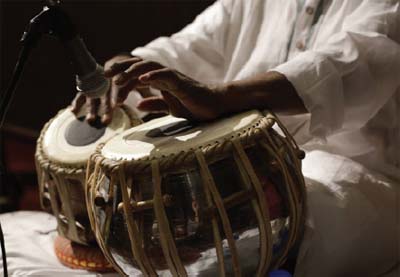
If the museum is the sanctuary, the performance is the heartbeat. The Diljeet Titus collection stands as a vital archive of material culture—a record of a social evolution that moved forward while the cars stayed behind. There is a secret percussion hidden within these vintage vehicles. It is found in the staccato thrum of a dormant engine; a mechanical heartbeat that has been waiting for decades to find its echo. This is the rhythm that the ‘Living Archive’ seeks to ignite. It is the syncopation of the past meeting the present in a flurry of movement and narrative. And then, there is the riot. Memory is rarely polite; it is not the sanitized, dust-free version of events found in textbooks. A ‘riot of memory’ is an unruly upheaval—the phantom smell of burnt oil and the defiant roar of an era that refuses to be forgotten.
 Within the framework of this collaboration, we did not just look at cars; we reclaimed the spirit of an era. The production successfully transitions the audience from the ‘Look-at-Me’ model—the traditional, passive observation of the Absent Object—to a ‘Walk-with-Me’ model of living history. By using the body as a gateway, Jafa ensures the spectator is no longer a tourist, but a participant in the machine’s lineage. The performance acts as a bridge, allowing the observer to cross into the void left by the automobile’s original world. The machine becomes the catalyst for a total immersion into the Indian past, a resurrection in real time where the metal finds its rhythm, not by returning to the road, but by finding a home in the dancer’s movement.
To understand the Diljeet Titus collection is to look past the chrome, the leather, and the internal combustion engine. As art historians, we do not merely see a vehicle; we see a sculptural record of social history. These vintage automobiles are vital archives of material culture, witnesses to the tectonic shift from the horse-drawn carriage to the roaring machinery of the early twentieth century. This transition mirrored India’s own journey, from the opulence of princely states to the gritty determination of a nation finding its own feet. Each fender and radiator tells a story of identity in flux.
Each car in the Titus collection is a masterclass in industrial aestheticism. They are the heavyweights of history: the Rolls-Royces that once carried Maharajas through dust-blown plains, and the Packards that signaled the arrival of a new, globalized elite. Yet, within the silent walls of a museum, they are often relegated to the status of the Absent Object. In the discourse of museum studies and material culture, this refers to an item that is physically present but semiotically absent because it has been hollowed of its original utility and social noise. They are sculptures without a stage, their engines silenced and their stories sequestered. The challenge for the modern researcher is how to unlock these narratives without damaging the physical sanctity of the archive.
The Kinetic Translation: Bone, Bell And Steel
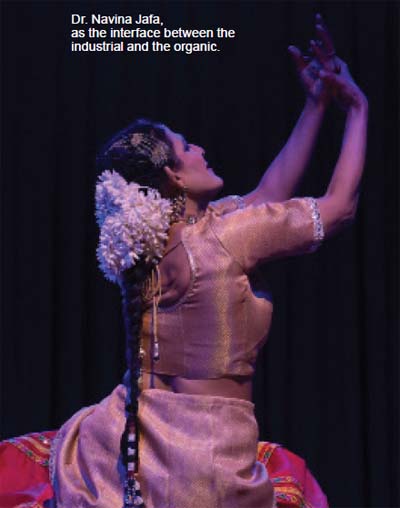
This is when the body acts as a gateway to the intangible. The central crisis of the Absent Automobile is that it remains a body without a soul—a magnificent shell of steel that has forgotten how to move, exiled from the very roads it was built to conquer. To bridge the void left by this historical displacement, the spectator does not turn a physical key or prime a carburetor; one turns to the human body as the ultimate interface. In the performative landscape of Sair-e-Motorcar, Dr. Navina Jafa initiates a kinetic translation, where the heavy, dormant energy of the Diljeet Titus archive is carried from the floor of the museum and breathed into the boards of the stage. This is not a mere demonstration of history; it is a profound metamorphosis of the material into the ethereal.
In this production, the performer becomes the interface between the industrial and the organic. We often think of the machine and the dancer as opposites: cold, unyielding iron versus fluid, warm muscle. Yet, Jafa finds the shared pulse between them. The rhythmic precision of Kathak footwork — the sharp, percussive tatkar does— more than accompany the story; it mimics the mechanical heart of a vintage engine. The rapid-fire strikes of the dancer’s heels become the pistons of a 1930s chassis firing in rhythmic succession. The chakkars, those dizzying, centrifugal pirouettes that define the Kathak vocabulary, trace the spinning of wheels across the dusty Grand Trunk Road, reclaiming the motion stolen when the car was parked for the final time.
This translation is best witnessed when Jafa stages an encounter with a specific artifact. When the dancer circles the 1932 Rolls-Royce, her ghungroos strike the floor in a rhythm that echoes the firing order of the car’s cylinders. Her gat-bhav (gestural storytelling) does more than describe a shape; her arms trace the sweeping, aerodynamic curves of the fenders as if the air itself has solidified into metal. Through this physical interaction, the Absent Automobile is no longer a ghost we lament; it is a presence we inhabit.
This transition dissolves the static observation that has long governed our relationship with Indian heritage. We are no longer passive spectators peering at a curated artifact from behind a velvet rope; we are invited into a form of immersive storytelling that bypasses the intellect and strikes the senses. When the performance begins, the physical distance mandated by the museum’s glass cases evaporates. We are no longer merely looking at a polished chassis; we are invited to feel the phantom wind of a 1940s Delhi evening as it might have whipped past an open cabriolet.
Sensory Envelopment and Intangible Heritage
Through the medium of the performer, the dry, academic text of a museum plaque is replaced by a living, breathing soundscape. We begin to hear the hushed, urgent whispers of drivers waiting in the long shadows of Lutyens’ bungalows, the crystalline laughter of passengers who have long since vanished into the slipstream of time, and the low, defiant roar of a society shifting its gears toward a new century. This is sensory envelopment in its most literal sense. By utilizing ‘Intangible Cultural Heritage’ —a framework recognized by UNESCO to protect the living expressions of a culture—the production ensures that the stories held within the Titus collection are not just told, but ‘unlocked.’ Performance becomes a vital conservation tool.
The dancer’s body acts as the machinery of memory, providing the engine and the movement where the physical object is stationary. By the time the final bell falls silent on the stage, the observer realizes that the soul of the machine was never in the gasoline or the gears. It was in the human narratives that swirled around it: the journeys taken, the secrets kept behind leather curtains, and the sheer, rebellious joy of motion. Through this bridge of bone and bell, the Absent Object finds its home once more, proving that while the metal may be anchored to the museum floor, the heritage it represents is still very much in flight.
A New Template for Cultural Memory
The symbiotic relationship explored in Sair-e-Motorcar is a rare atmospheric event in the Indian cultural landscape. In our traditional intellectual life, art and history are almost always kept in separate, airtight silos: one reserved for the emotional impulses of the heart, the other for the sterile, analytical rigor of the head. We are taught to appreciate the beauty of a gesture in one hall and the provenance of an artifact in another, but we are rarely shown the umbilical cord that connects the two. However, when viewed through a multidisciplinary lens, the significance of this collaboration becomes impossible to ignore. It is not just a performance; it is a structural critique of how we curate our national memory.
In this production, the material culture of the automobile is subjected to a performative interrogation. We witness the rigid, mechanical iconography of the machine translated into the fluid, gestural vocabulary of the dancer. It is a multidisciplinary symphony where the hierarchy of the museum is dismantled. This is further enriched by a rare musical confluence, where the rhythmic sensibilities of the Delhi, Jaipur, and Moradabad Gharanas converge to provide the acoustic soul of the performance.
Here, the machine acts as the silent witness; the Kathak becomes the kinetic energy—the literal mechanism that releases the tension held in the steel, and the Dastangoi provides the narrative arc that makes the metal meaningful. Ultimately, this approach offers a new template for both art history and heritage tourism, suggesting that the future of the archive lies in immersive storytelling.
ABOUT THE AUTHOR
 Shah Kulsum Shaikh is an Art Historian and Gold Medalist from Jamia Millia Islamia whose research focuses on the historiography of marginalized narratives and the mechanics of the performative archive. Currently an independent curator and researcher based in Delhi, she contributes critical commentary on the socio-political evolution of style and the politics of cultural memory.