The River That Becomes a Road
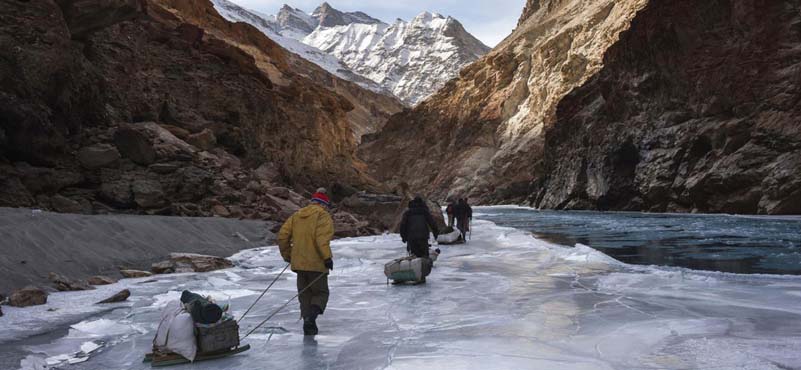
In the dead of winter, when the world retreats indoors, the Zanskar River does something extraordinary—it turns into a road. I remember my first step onto the frozen expanse during the Chadar Trek. Beneath my boots lay a river still flowing, silent yet alive, concealed under a fragile sheet of ice.
There is a peculiar kind of silence here—not emptiness, but density. It presses against your ears, amplifying the rhythm of your breath, the crunch of ice, the distant crack that reminds you this road is temporary, conditional. For centuries, this frozen river was not adventure—it was survival. A lifeline connecting Zanskar to the outside world when snow sealed all mountain passes. Today, it draws trekkers seeking thrill, yet it continues to whisper an older truth: in Zanskar, nature decides the terms of human movement.
But even as you walk, you sense a change. Somewhere beyond these cliffs, roads are being carved, tunnels planned. The river, once the only road, may soon become just a memory.
Zanskar Valley: Geography of Solitude
The Zanskar Valley is less a destination and more a condition of existence.
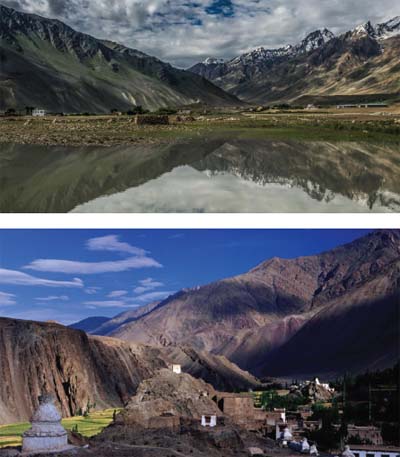
Hemmed in by towering ranges, it remains cut off for nearly half the year. Winter here is not a season; it is an occupation. In summer, the valley reveals its stark beauty—ochre mountains, glacial rivers, and a sky so vast it seems to humble thought itself. Villages cling to life along narrow strips of cultivable land, where barley fields ripple briefly before the cold reclaims dominion.
Isolation here has not merely shaped geography; it has sculpted culture. Time moves differently. Urgency dissolves. The modern world arrives in fragments—patchy networks, occasional vehicles, whispered news from Leh. And yet, that isolation—once absolute—is beginning to loosen. Roads inch closer. Connectivity improves. The question lingers: when distance disappears, what happens to a place defined by it?
 Padum: The Pulse in the Silence
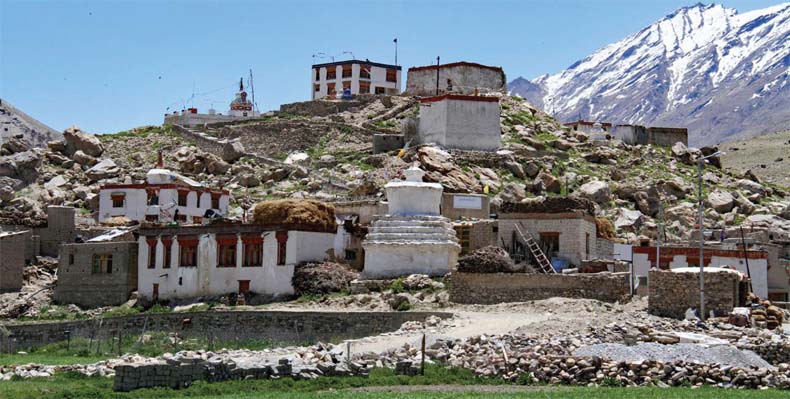
At the heart of this vast stillness lies Padum—a town that feels less like an urban centre and more like a pause in the mountains.
Padum is where Zanskar gathers itself. Monks, traders, children in uniform, travellers—paths converge here before dispersing again into silence. I remember sitting in a small teahouse, watching conversations unfold slowly, unhurried by clocks.
There is a subtle tension in Padum today. Satellite dishes rise above traditional homes. Motorcycles line dusty streets. Young people speak of opportunities beyond the valley, their aspirations shaped as much by Instagram as by inheritance. And yet, beneath these changes, the old rhythm persists. Prayer flags flutter. Monasteries observe their rituals. The town breathes in two times simultaneously—the ancient and the emerging.
Karsha: Where Silence Finds Form
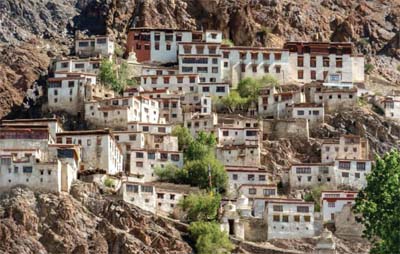
Perched above the valley like a quiet sentinel stands Karsha Monastery—the largest monastic complex in Zanskar.
The climb up is steep, but what awaits is not grandeur in the conventional sense. It is something subtler: a stillness that feels inhabited. Inside dimly lit halls, butter lamps flicker, and chants resonate not loudly, but deeply. From the terrace, the valley stretches endlessly—a reminder of how small human concerns appear against such vastness. And yet, this is where meaning is constructed, patiently, ritual by ritual.
In a region defined by isolation, monasteries like Karsha are not just spiritual centres; they are anchors of continuity. They hold memory in a landscape where everything else feels transient.
Kuru & Karziak: Lives at the Edge
Beyond Padum, beyond even the familiar routes, lie villages like Kuru and Karziak—names that rarely appear on maps, yet hold the essence of Zanskar.
Life here is elemental. Houses built of mud and stone. Fields carved out with effort. Winters endured with preparation and patience. Survival is not a concept; it is a daily practice.
I recall a conversation with a villager who spoke of winters when the world disappears for months. “We don’t wait for help,” he said simply. “We become our own help.” And yet, change has arrived here too. Roads are approaching. Younger generations are leaving—for education, for opportunity, for a different life. The village stands at a quiet crossroads: continuity or departure.
In these hamlets, you realise something profound—Zanskar is not remote because it lacks connection. It is remote because it has, until now, chosen a different relationship with the world.
The river that becomes a road…
The valley that resists time…
The town that balances two worlds…
The monastery that holds silence…
The villages that endure…
Zanskar is not one story—it is many, unfolding slowly.
The Chadar Trek: Walking Between Worlds
To walk the Chadar Trek is to inhabit a space between certainty and surrender.
By day, the river gleams like polished glass, reflecting cliffs that rise like ancient guardians. By night, it transforms into something more intimate—campfires flicker against ice walls, and the sky descends, heavy with stars. You begin to feel not like a visitor, but like a fleeting presence in a world that does not require you.
Each step is a negotiation. The ice shifts, breathes, sometimes fractures with a sound that travels straight into your bones. And yet, there is trust—not in the ice, but in the act of walking itself. Long before it became an “experience,” this was a passage of necessity. Traders, villagers, monks—all moved across this frozen artery, carrying not just goods, but stories, resilience, and faith.
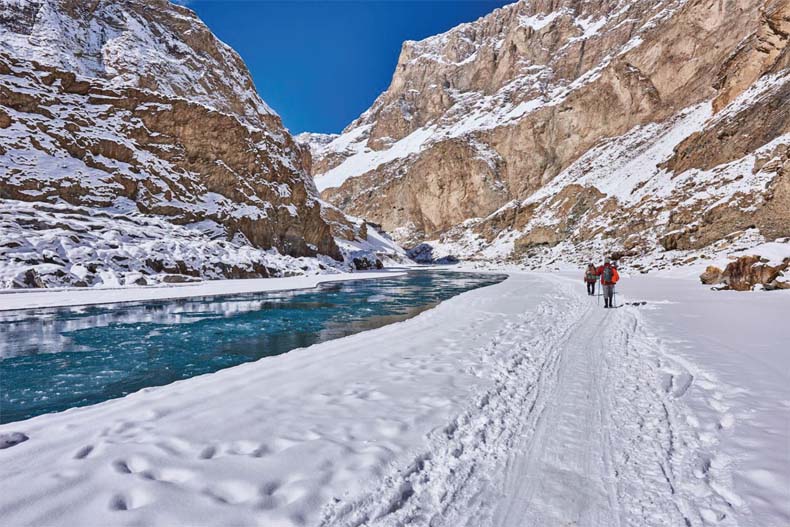
Now, as winters grow less predictable, the Chadar feels more fragile. The river still becomes a road—but for how long? And if it ceases to, what part of Zanskar’s memory melts with it?
Shinkun La: Where Mountains Yield to Resolve
High above the valley, where wind speaks louder than words, lies Shinkun La.
High above the valley, where wind speaks louder than words, lies Shinkun La—a gateway long ruled by snow, silence, and distance.
For generations, passes like this dictated Zanskar’s rhythm. They opened briefly in summer, then closed with winter’s first authority. Movement was seasonal, uncertainty constant, and remoteness woven into daily life. Yet Shinkun La now stands at the threshold of transformation.
I had the privilege of being the first Director General Border Roads to traverse the full Nimu–Padum–Darcha incomplete Road and take stock of a route that had lived for decades in maps, surveys, and determined ambition. What appeared on paper as a road was still, in many stretches, an unfinished promise.
The alignment from Darcha to Shinkun La, onward to Padum and beyond was widened, while bridges were upgraded to Class 70 capacity, ready to bear the full weight of modern logistics and possibility. In 2022 came a moment both practical and symbolic: for the first time, fully loaded roadway buses crossed Shinkun La from Lahaul and Spiti into Padum. That single movement of wheels across the pass linked 137 villages of Lahaul-Spiti with 36 villages of Zanskar, bringing communities closer that mountains had kept apart for generations.
Another unfinished thread remained—the difficult 30-kilometre stretch from Niraq to Chilling. Once connected, the route ceased to be a fragmented aspiration and became a continuous reality. Such progress demanded more than engineering: men and machinery were relocated, resources regrouped, and execution unified under one Chief Engineer across terrain that punishes hesitation.
Alongside the road came an even larger vision—the Shinkun La Tunnel, with planning completed and work commenced in 2024. Expected around 2028, it is set to be the world’s highest road tunnel situated at 15855 feet, promising year-round passage where winter once imposed silence.
It is easy to call this progress, and in many ways it is. Roads bring medicine before nightfall, classrooms within reach, markets closer, families together. Yet in Zanskar, roads are never merely roads.
They are promises kept.
Distances shortened.
Winters answered.
And proof that sometimes, even mountains yield to resolve.
In Zanskar, roads are not built on earth alone. They are built against altitude, weather, time, and doubt.
 Tourism: Footsteps on Fragile Ground
The first time you arrive in Zanskar, it feels untouched — as if the land has not yet learned the language of crowds.
But footprints multiply. Roads extend. Engines replace footsteps. What was once reached with effort becomes accessible with ease. Tourism arrives gently at first—curious, respectful, almost reverential. And then, gradually, it gathers weight.
There is a paradox here. To experience Zanskar is to be transformed by it. And yet, the more it is experienced, the more it risks being transformed itself. The mountains endure, but the silences shift. Plastic finds its way into valleys. Traditions adapt, sometimes quietly, sometimes reluctantly.
And still, there is hope—not in resisting tourism, but in reshaping it. To arrive lightly. To listen more than speak. To leave less behind than one carries within. Perhaps the true journey to Zanskar is not about reaching it—but about learning how to be in it.
The Soul of Zanskar
On my last morning in Zanskar, I returned to the river.
It was no longer frozen. Water flowed freely now, carrying with it the memory of winter, of footsteps, of stories etched briefly onto ice. The same river, yet entirely different. And that, perhaps, is Zanskar. Not a place fixed in time, but a place that reveals itself differently to those who arrive with patience. It does not announce its beauty. It unfolds it—slowly, almost reluctantly.
You come here expecting landscapes, and you leave carrying silence.
Not the absence of sound, but a presence—something that lingers long after you have returned to noise. A recalibration. A reminder. That there are still places where the world has not hurried itself into exhaustion. Where distance is not inconvenience, but depth. Where the journey is not measured in kilometres, but in awareness.
And as roads reach further, as the valley opens, one hopes that Zanskar will not lose this essence—that it will remain, in some quiet way, untouched at its core. Because in the end, Zanskar is not something you visit. It is something you learn to hear.
In Zanskar, the loudest sound you hear is your own existence.
ABOUT THE AUTHOR
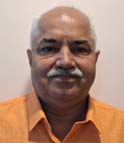
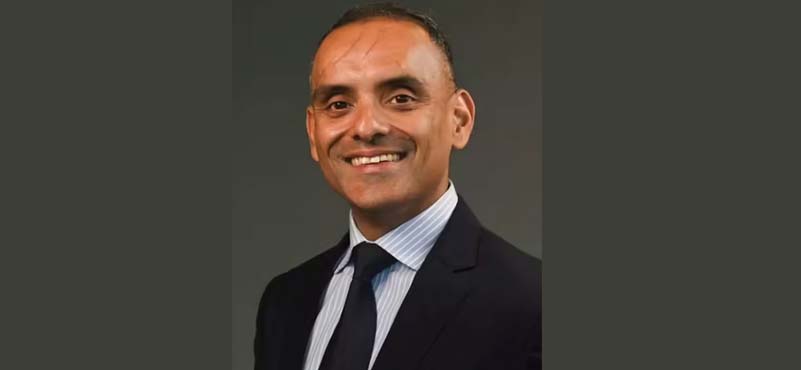
Lt Gen Rajeev Chaudhry (Retd) is a social observer and writes on contemporary national and international issues, strategic implications of infrastructure development towards national power, geo-moral dimension of international relations and leadership nuances in changing social construct.