
The Promise and the Betrayal
For generations, India has offered its youth a simple bargain: work hard, study harder, compete honestly, and success will follow. This belief has become one of the defining pillars of modern India. Parents sacrifice comfort, students endure years of relentless preparation, and entire families pin their hopes on examinations that promise a better future.
This is the meritocratic promise.
In his influential book The Tyranny of Merit, Michael Sandel argues that modern societies increasingly believe that success is earned entirely through talent and effort. While this may appear fair, it carries a hidden danger. Those who succeed often come to believe they deserve all their rewards, while those who fail are left to assume they deserve their disappointments. Meritocracy, Sandel warns, creates not only winners and losers, but also a hierarchy of dignity.
India today faces an even deeper challenge. The question is no longer whether merit should matter. The question is whether millions of young Indians still believe that merit alone matters.
India’s Great Meritocratic Experiment
Independent India sought to build a society where birth would not determine destiny. Education became the principal instrument of social mobility. Institutions such as the IITs, IIMs, AIIMS and the Civil Services emerged as symbols of a new Republic where talent and hard work could overcome inherited disadvantages.
For millions of Indians, meritocracy represented the most democratic promise of the nation. A farmer’s son could become a scientist. A clerk’s daughter could become a civil servant. Success was not guaranteed, but opportunity appeared open.
Few countries worship merit with the intensity found in India. Academic achievement is celebrated not merely as personal success but as family honour and social advancement. Examinations have become gateways to aspiration.
Yet every promise carries a shadow.
The Exam Nation
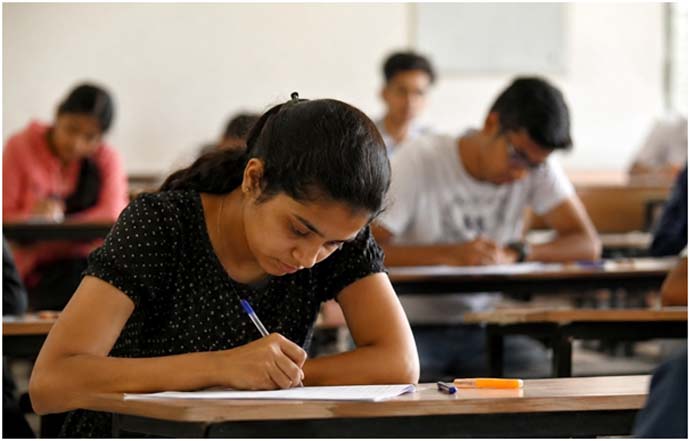
India has gradually transformed itself into an exam-centric society. Childhood increasingly revolves around rankings, coaching classes, mock tests and cut-off marks. Entire cities thrive on the dreams of students preparing for competitive examinations.
In this environment, marks cease to be mere indicators of performance. They become measures of personal worth.
A teenager’s score often determines how relatives, neighbours and even the student himself evaluates his future. Success brings admiration. Failure brings self-doubt. The pressure is immense because the stakes are perceived as life-defining.
Sandel’s critique becomes particularly relevant here. When achievement becomes the primary measure of human value, success breeds superiority and failure breeds humiliation. Society begins to confuse accomplishment with worthiness.
This burden falls most heavily on the young.
When the System Appears Unfair
Meritocracy survives only as long as people believe the competition is fair.
This is why examination controversies create such profound public anger. The issue is not merely administrative failure; it is moral failure. The controversy surrounding the NEET examination and allegations of paper leaks shook the confidence of countless students who had spent years preparing for one of the country’s toughest examinations. For them, the issue was not simply a question paper. It was a question of trust.
Similarly, recurring controversies over evaluation methods, moderation policies, answer-sheet assessments and examination processes have fuelled anxieties among students and parents alike. Whether every grievance is justified is less important than the growing perception that outcomes are not always transparent.
The pain of failure is easier to bear than the suspicion of unfairness.
When students begin to wonder whether effort can be nullified by manipulation, procedural errors or systemic weaknesses, the moral foundation of meritocracy begins to crack.
The Reservation Debate and the Crisis of Perception
No discussion of merit in India can avoid the subject of reservations.
Reservations were introduced as a constitutional mechanism to address centuries of social exclusion and structural disadvantage. They remain one of the Republic’s most significant instruments of social justice and have enabled the advancement of many historically marginalised communities.
At the same time, a growing number of general-category students perceive opportunities as becoming increasingly scarce. In highly competitive examinations and educational institutions, many feel that the space available through open competition continues to shrink.
Whether these perceptions are entirely justified or not is beside the point. Perceptions shape public trust.
The challenge is that merit and justice are increasingly being presented as opposing principles when, in reality, a stable society requires both. Social justice cannot succeed if large sections feel permanently excluded. Equally, merit cannot flourish if historical inequalities are ignored.
A mature democracy must find ways to pursue fairness without creating lasting resentment.
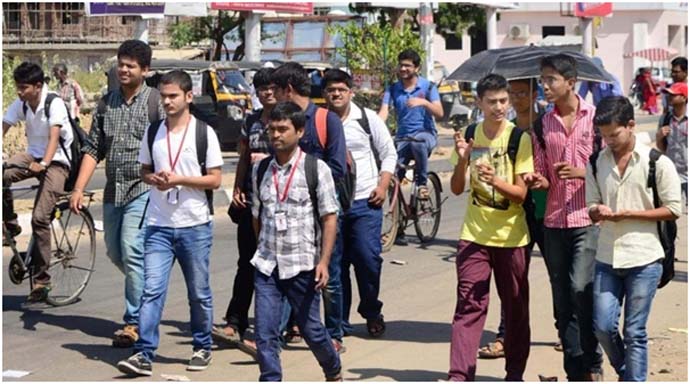
The Gen Z Dilemma
No generation has lived under greater scrutiny than Gen Z.
Previous generations competed with classmates and neighbours. Today’s youth compete with an entire nation. Every examination rank is instantly visible. Every success story is amplified. Every failure feels public.
Social media has intensified comparison to unprecedented levels. Young people are constantly exposed to curated images of achievement, wealth and success. The result is a culture of relentless benchmarking. At the same time, trust in institutions appears increasingly fragile. Examination controversies, shrinking opportunities and fierce competition have created an atmosphere of uncertainty.
The modern student faces three simultaneous burdens: the pressure to excel, the pressure to compare, and the pressure to trust a system that sometimes appears imperfect. Many young Indians no longer fear failure alone. They fear doing everything right and still falling short.
The consequences are visible in rising anxiety, burnout and a growing sense of exhaustion among students who often feel trapped in an endless cycle of competition.
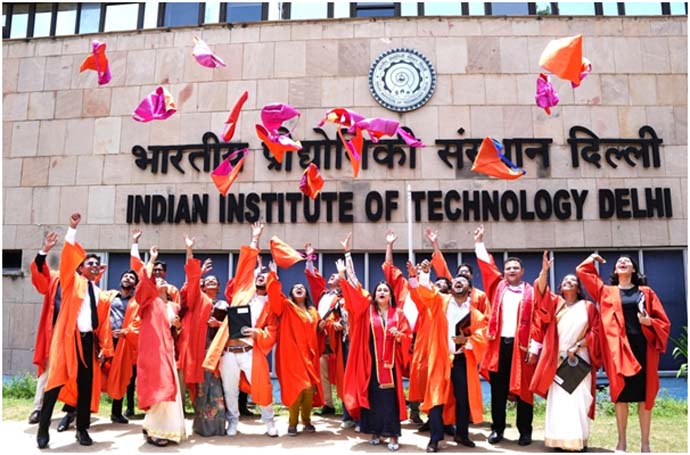
The New Aristocracy of Credentials
India has largely rejected the aristocracy of birth. Yet a new hierarchy may be emerging.
The old hierarchy asked, “Who were your parents?”
The new hierarchy asks, “Which college did you attend?”
Elite educational institutions increasingly function as markers of status. Access to quality schools, expensive coaching, urban advantages and English-language proficiency often creates significant head starts that are rarely acknowledged.
As a result, credentials become social badges. Those who possess them enjoy prestige, networks and opportunities. Those who do not often feel invisible. Sandel’s warning is particularly relevant here. The danger of meritocracy is not merely inequality. It is the tendency of successful people to believe that their success is entirely self-made.
In reality, talent is never the sole explanation. Family support, teachers, institutions, social stability, timing and even luck play significant roles.
Humility is often the missing ingredient in discussions of merit.
What This Means for the Next Generation
The future will make today’s debates even more complex.
Artificial intelligence, automation and rapid technological change are reshaping the nature of work. Many careers that dominate current aspirations may evolve dramatically over the coming decades.
The qualities most needed in the future may not be those measured by traditional examinations alone. Creativity, adaptability, emotional intelligence, collaboration and resilience may become as important as academic achievement. A society that defines merit too narrowly risks overlooking vast reservoirs of human potential.
Not every valuable contribution can be captured by a rank, a score or a certificate.

Rebuilding Trust in Merit
India does not need less meritocracy. It needs better meritocracy.
- The first requirement is absolute integrity in examinations. Every paper leak, procedural lapse or evaluation controversy damages public confidence far beyond the immediate incident.
- Second, transparency must become a non-negotiable principle. Students should clearly understand how decisions are made and how outcomes are determined.
- Third, India needs an honest and respectful conversation about balancing social justice with social cohesion. Neither objective can be sacrificed without consequences.
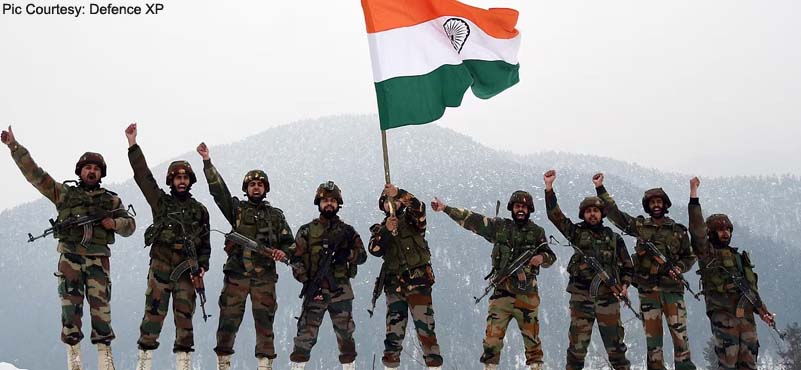
- Fourth, society must broaden its definition of merit. Skilled workers, entrepreneurs, innovators, soldiers, nurses, artisans and countless others contribute enormously to national life. A healthy society respects excellence in all forms.
- Finally, success must be accompanied by humility. No individual succeeds entirely alone. Every achievement rests upon foundations built by family, community and society.
A Republic Cannot Run on Resentment
Meritocracy was meant to unite India around a noble principle: that effort and ability should matter more than birth. It remains one of the most powerful ideas shaping modern India.
Yet meritocracy can endure only when people trust the system that administers it. When examinations lose credibility, when opportunities appear increasingly scarce, and when large numbers of young citizens feel excluded from the promise of advancement, merit itself begins to lose legitimacy.
Every year, millions of young Indians enter examination halls carrying more than admit cards. They carry HOPE – the hope that effort matters, that rules are fair, and that the future remains open. A nation may disappoint its youth many times; it cannot afford to extinguish that hope.
The challenge before India is not merely to reward talent. It is to restore trust.
For a Republic can survive competition, disappointment and even inequality. What it cannot endure indefinitely is a generation that stops believing the game is fair.
ABOUT THE AUTHOR

Lt Gen Rajeev Chaudhry (Retd) is a social observer and writes on contemporary national and international issues, strategic implications of infrastructure development towards national power, geo-moral dimension of international relations and leadership nuances in changing social construct.