Some hotels need no loyalty programme, no brand flag, and no introduction. This is what they have in common and what the rest of us can learn from them
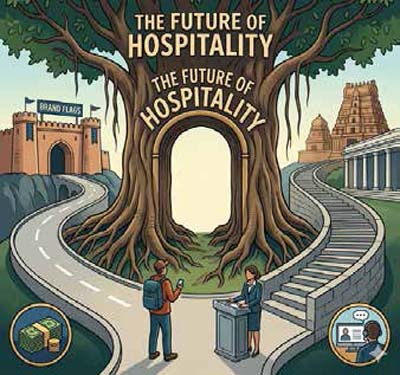
There is a question that sits underneath a lot of conversations I have in this industry, and it rarely gets asked directly. It is this: if you had the right location, the right product vision, and the willingness to invest in building something that was genuinely distinctive would you still reach for a brand flag?
Most people, in my experience, say yes, almost reflexively. The brand feels like safety, it solves the distribution problem. It gives lenders and investors something familiar to underwrite. It provides a ready-made operating playbook. These are not imaginary advantages, and I have spent the earlier pieces in this series examining exactly what chains offer, why the economics of brand affiliation work the way they do, and what owners are actually buying when they sign a contracting agreement.
 The Evidence That Prompted the Question
My interest in this topic was sharpened by time spent around properties that had no business performing the way they do, by the logic of conventional hospitality theory. No loyalty programme, no global reservations system, no brand-driven marketing budget and yet, consistently, the best independent hotels in India command ARR that sit at or near the top of their competitive sets ahead of properties that opened with hundreds of crores in capital and the full backing of a domestic / global chain.
Few of the examples I got from the Fraternity are below
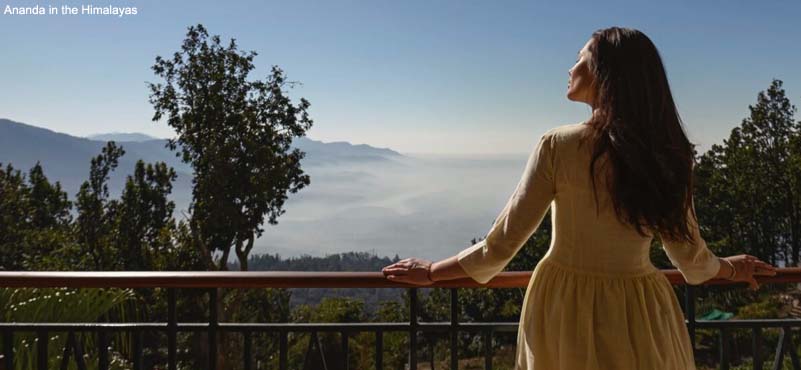
- Ananda in the Himalayas – Rishikesh, Uttarakhand
A destination wellness retreat in the Gharwal foothills, built within a maharaja’s palace estate. Its positioning as one of Asia’s leading destination spas draws an international guest profile that actively seeks it out, often months in advance. Direct booking is structurally strong precisely because no competing property offers the same combination of setting, programme, and heritage.
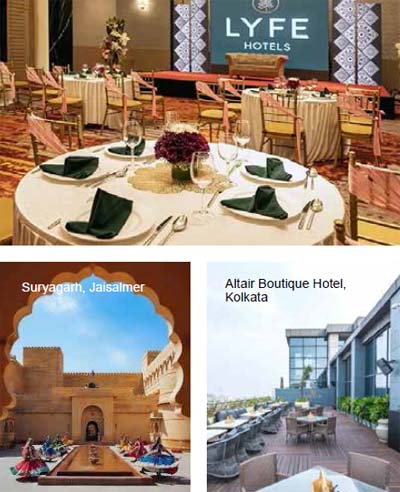
- Suryagarh – Jaisalmer, Rajasthan
 A fort-palace hotel anchored in one of India’s most distinctive leisure destinations. The property’s architecture and the irreplaceability of the Jaisalmer setting give it a demand pull that no brand flag could manufacture. Guests travelling to Jaisalmer are not brand-loyal in the conventional sense they are destination-loyal, and Suryagarh has positioned itself as the destination’s finest expression.
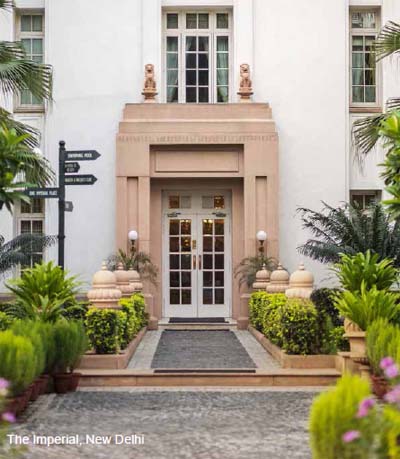
- The Imperial – New Delhi
The oldest and most instructive case in this collection. A 1931 independent that consistently leads Delhi’s market on ARR, sustained by physical irreplaceability the art collection, the architecture, the morning light in the 1911 Restaurant and a location that places it at the heart of the capital’s institutional and diplomatic life.
- Altair Boutique Hotel – Kolkata
A well-conceived urban boutique in a city whose hospitality market remains underleveraged relative to its cultural significance. Altair’s positioning in the boutique segment is clear, but like most urban independents in secondary markets, it operates in an environment where direct booking capability is still developing and OTA channels remain dominant for discovery.
- T24 Residency – Mumbai
A mid-scale independent operating in India’s most competitive hotel market. Mumbai’s density of branded supply creates real distribution headwinds for unaffiliated properties. T24 illustrates the tension at the centre of this discussion: a quality product with a clear identity, operating in a market where the case for brand distribution is at its strongest.
- Lyfe – Bhubaneswar, Odisha
A lifestyle-positioned independent in an emerging market city where hospitality infrastructure is still forming. Lyfe represents a generation of Indian independents attempting to build distinctive brand identities in cities that international chains have not yet fully penetrated an opportunity, but one where OTA dependency is currently the default.
 The Divide That Matters Most
Looking across these properties, the most important distinction is not between those with heritage assets and those without though that matters. It is between those that have built genuine direct booking capability and those that have, in effect, simply replaced a chain’s distribution with OTA distribution. The economic consequences of that distinction are significant.
The independent hotel that relies on OTAs has not freed itself from distribution dependency. It has merely changed the counterparty and often at a higher cost.
The hotels that make the genuine case for independence are the ones that have invested in the full infrastructure of direct bookings: a well-functioning, conversion-optimised website; a clear rate advantage for guests who book direct; a CRM capability that allows the hotel to follow up, re-engage, and build the kind of guest relationship that creates loyalty.
This is not a small investment, and it is not one that every independent hotel can justify. The economics depend heavily on the property’s position and price point. For a heritage resort drawing international guests at premium rates, the return on direct booking infrastructure is substantial. For a mid-scale urban independent competing in a price-sensitive market, it may be harder to build the margin for that investment when OTA commission is already eating a quarter of room revenue.
What Makes the Difference
Three factors, more than any others, determine whether an independent hotel can build sustainable competitive advantage without a brand flag.
The first is physical irreplaceability. A hotel that occupies a genuinely distinctive position architecturally, historically, or in terms of setting carries an intrinsic demand pull that no amount of marketing can manufacture from a blank-canvas property. When guests seek out a place specifically because of what it is rather than what brand it carries, the direct booking conversation becomes much simpler. The challenge, and the opportunity, for developers and owners is to ask honestly whether the asset they are building or operating has that quality or whether they are simply hoping that taste and design can substitute for the kind of rootedness that takes decades to accumulate.
The second is narrative depth. The independents that perform best at direct bookings have a story that guests want to participate in. This is not brand storytelling in the marketing sense. It is a genuine identity rooted in a place, a history, a philosophy, or an approach to hospitality that is specific enough to be sought out and experienced, rather than generic enough to be substituted. The Imperial’s story is particular to 1931 New Delhi and the Blomfield commission and the decades of political and cultural life that have passed through its corridors. It cannot be replicated, that irreplicability is its most valuable asset.
The third is location within structural demand. Hotels that sit inside genuinely high-demand destinations – Metro CBD area, Airports, Jaisalmer, Rishikesh, Goa or at culturally significant urban addresses carry a natural advantage. The destination itself generates search intent. Guests arrive at the category before they arrive at the hotel, which makes the hotel’s job of converting that intent into a direct booking significantly easier than it is for a property in a market where the hotel itself has to create the reason to visit.
A brand is a guarantee of sameness. An independent icon is a guarantee of character. The best independent hotels have learned that character, not consistency, is what guests will pay a premium for.
None of this should be read as an argument that independence is always the right choice, or that OTA dependency is a failure of ambition rather than a rational response to market conditions. For most hotels in most markets particularly mid-scale and limited-service properties in competitive urban environments brand affiliation provides genuine commercial value that would be difficult and expensive to replicate independently. The franchise fee is not always a tax on margin. Sometimes it is a fair price for demand that the owner genuinely could not generate alone.
The Question This Leaves Open
The series started with a structural question: what do hotel chains actually sell, and who is it worth buying from? It ends with a more personal one, directed at owners, developers, and operators who are at the beginning of a project or at a decision point in an existing one.
You may be sitting on a location with genuine character a heritage building in a city whose story is still being told, a leisure site in a destination that has not yet been fully expressed, an urban address in a market where the supply is mediocre and the demand is patient. The conventional answer is to find the right brand and sign the agreement and let the system do its work. That answer is often correct, but it is worth knowing, before you commit to it, that there is another path one that is harder to walk, requires more deliberate investment, and carries more execution risk but that, in the right conditions, can produce something the chains cannot offer their owners: a hotel that belongs entirely to its place, and to the people who built it.
ABOUT THE AUTHOR
 Nikhil Shah, CFA is based in Mumbai, with two decades of experience spanning hospitality investment, banking, private equity, and capital raising, he leads the transaction advisory and investment strategy arm in a leading consultancy firm.