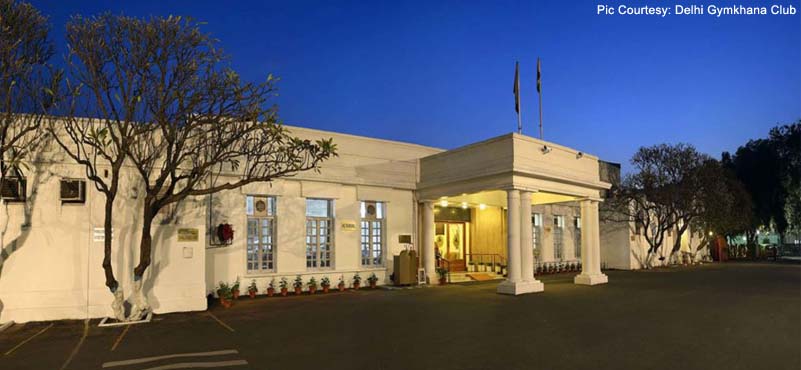
The government’s notice to the Delhi Gymkhana Club — that it faces closure and repossession of its premises by early June — should not be read merely as a legal or administrative confrontation. It is part of a much larger historical pattern visible across societies that have undergone political, economic, and cultural transformation. Institutions created for one era eventually confront the realities of another.
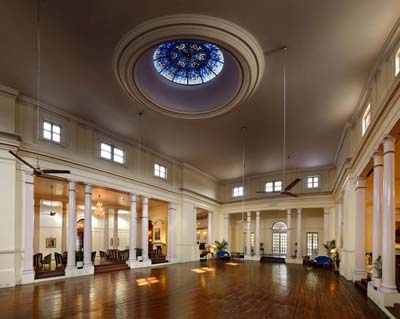
The Delhi Gymkhana Club was born in the late colonial period as a club primarily for senior military officers and civil servants of the Raj. Even after Independence, it retained much of that administrative and bureaucratic ethos. Membership structures, legacy pathways, and social codes reflected a particular vision of elite India. For decades this seemed natural. But India has changed dramatically. Economic power has dispersed. The private sector has risen. New entrepreneurial classes have emerged. Younger Indians increasingly view inherited privilege with skepticism, even when they admire history, architecture, and institutional continuity.
The challenge facing the DGC is therefore not unique. Similar transitions have unfolded across India and beyond.
The Bangalore Club, founded in 1868 as a colonial institution that famously excluded Indians for decades, gradually transformed after Independence into a far more representative urban club reflecting Bangalore’s evolution from cantonment town to technology capital. While preserving its heritage architecture and sporting culture, it broadened its membership to include business leaders, professionals, scientists, and entrepreneurs. The transition was gradual rather than revolutionary — continuity without institutional rupture. Mumbai’s Willingdon Sports Club and Bombay Gymkhana faced comparable pressures over membership transparency and relevance, and survived by investing in sports facilities, youth programmes, and modernization that preserved their legitimacy beyond social exclusivity alone.
But perhaps the most unexpected parallel comes not from London or New York, but from cities closer to home. In early twentieth-century Los Angeles, Jewish entrepreneurs and studio founders excluded from old Anglo-American clubs built their own institutions — Hillcrest Country Club among them — that eventually became more dynamic and influential than the establishments that had shut them out. The old Pall Mall clubs in London, once tied to aristocracy and empire, had to broaden membership and social relevance or risk slow decline into nostalgia. New York’s Union Club faced similar pressures as finance, media, and technology reshaped American elites. In each case, the institutions that survived did so by evolving rather than insisting on permanence.
And then there is Lahore. A city shaped by the trauma of Partition is now revisiting its own layered urban past. Under initiatives associated with Punjab Chief Minister Maryam Nawaz and the Lahore Heritage Areas Revival project, proposals have emerged to restore several pre-Partition names across the city, including Krishan Nagar, Jain Mandir Chowk, Dharampura, and Lakshmi Chowk. Whether every proposal is implemented matters less than the symbolism. Lahore appears to be acknowledging that cities become richer, not poorer, when they accept the complexity of their historical inheritance. Ironically, while parts of South Asia spent decades renaming and erasing older layers of identity, Lahore now seems to recognise that heritage itself can be a source of cultural confidence and urban renewal.
Delhi too has always reinvented itself. Shahjahanabad, Lutyens’ Delhi, post-Partition refugee Delhi, liberalisation-era Delhi, and today’s NCR metropolis are all different cities layered upon one another. The present controversy should therefore be viewed not as a terminal crisis, but as an opportunity.
One practical approach would be for the government and the club to negotiate a structured transition period — perhaps ten years — during which the existing institution continues functioning while a long-term relocation and renewal strategy is developed collaboratively. This would avoid the appearance of abrupt institutional destruction while acknowledging the political and public pressures surrounding the current arrangement.
Alternative sites deserve serious evaluation. A Ridge location within Delhi would face overwhelming ecological and legal barriers given forest protections. More realistic possibilities include the southern NCR belt, the Gurgaon-Aravalli edge, Sohna, or Manesar. A hybrid model is also worth exploring: preservation of certain heritage functions at the current Lutyens address while a larger modern sporting, cultural, and recreational campus is developed elsewhere.
The financial dimension has received insufficient attention. Reports suggest the club holds reserves approaching Rs 200 crores, though audited figures should be confirmed publicly. If accurate, this is a substantial starting corpus — though financial capacity alone resolves neither the governance questions nor the political legitimacy deficit that has accumulated over decades. What is needed alongside capital is a genuine rethinking of institutional purpose. A reinvention campaign framed not as the preservation of privilege but as the preservation of heritage combined with public-minded modernisation could attract philanthropic and private-sector support of a kind unimaginable a generation ago — sporting academies, cultural endowments, performing arts facilities, environmental stewardship, youth programmes.
Such a process would also create an opportunity to revisit membership structures that critics — including some long-standing members — acknowledge have damaged the institution’s public standing. Legacy pathways, opacity in admissions, and excessively exclusionary practices may once have reinforced prestige; in contemporary India they increasingly produce the opposite: resentment and perceived irrelevance.
The Bangalore experience is instructive here. Clubs that navigated social transition most successfully retained standards and institutional culture while gradually widening participation and redefining prestige around contribution and civic relevance rather than lineage alone. The most resilient institutions proved to be those capable of balancing continuity with openness.
The real question is therefore not whether Delhi Gymkhana survives at its present address. Institutions everywhere eventually outgrow their original geography. The more important question is whether the club can evolve from being seen as a relic of colonial-bureaucratic exclusivity into something that reflects the confidence, pluralism, and openness of modern India — while still preserving standards, traditions, and historical continuity.
The most constructive immediate step, however, would be a formal moratorium on any abrupt transition while the path forward is mapped out. An enforced closure in June would serve no one well — not the government, not the membership, and not the broader public interest in orderly institutional reform. Prolonged legal proceedings, almost certain to follow any precipitate action, would consume years of energy and goodwill on all sides while resolving nothing of substance. A declared standstill — with both parties committing to good-faith negotiations within a defined timeframe — would allow the existing club to continue functioning, preserve the physical and institutional fabric worth preserving, and create the conditions under which government and club leadership can together determine the most intelligent way forward. Animus is easy to generate and difficult to undo. A moratorium would be the more statesmanlike choice.’
History suggests that institutions willing to reinvent themselves often emerge stronger. Those that mistake permanence for entitlement usually do not. Some middle path that suggests a better understanding of the dynamics of change underway would provide the solutions.
ABOUT THE AUTHOR
 Kanwarjit Singh is a physician working in the biotech sector in Southern California. Prior to that he worked at McKinsey and the Gates Foundation and has degrees in Physics from St Stephen’s College, Delhi, Economics from Oxford, Business from MIT and Medicine from Columbia.