

The conflict around Iran and the resulting instability across West Asia are beginning to produce consequences far beyond geopolitics and energy markets. One of the sectors now feeling the impact most visibly is Indian travel and tourism. Yet, while international aviation and outbound travel are facing increasing pressure, an equally important counter-trend is emerging within India itself: domestic tourism and leisure hospitality appear to be benefiting from the disruption.
The immediate impact of the conflict has been on aviation economics. Indian airlines are uniquely vulnerable because of geography. Flights from India to Europe, the UK and North America depend heavily on westbound corridors across Pakistan, Iran, Iraq and the Gulf region. Restrictions over Pakistani airspace had already increased operational complexity for Indian carriers in recent years. The present instability around Iran and parts of West Asia has compounded those difficulties further.
 The result has been longer flying times, increased fuel burn and sharply rising operational costs. According to aviation industry estimates, fuel accounts for nearly 35–40 percent of airline operating expenses in India. Even moderate increases in crude oil prices therefore have a significant impact on airline profitability. Concerns over possible disruptions in the Strait of Hormuz — through which nearly a fifth of the world’s oil supply passes — have pushed oil markets into renewed volatility, placing additional pressure on Aviation Turbine Fuel (ATF) prices.
At the same time, rerouting of international flights has become increasingly common. Flights that previously took the most direct western corridors are now often required to take longer routes to avoid sensitive airspace. This increases flight duration, crew costs, aircraft utilization pressures, and schedule inefficiencies.
For airlines, this is not a minor issue. A one-to-two-hour increase on long-haul routes can materially affect profitability and aircraft productivity. The impact, however, is uneven across Indian carriers.
Air India, with its long-haul international network and wide-body fleet of Boeing 777s, Boeing 787s and Airbus A350s, faces significant exposure because a large share of its strategy depends on westbound global connectivity. Routes to Europe, North America and major international transit sectors are particularly sensitive to geopolitical disruption.
IndiGo, on the other hand, while operationally affected on international routes, retains a major cushion because of its overwhelming dominance in India’s domestic aviation market. A large share of IndiGo’s revenues continues to come from domestic sectors, which remain largely insulated from Middle Eastern airspace disruptions.
Yet the larger story may lie not in airline balance sheets alone, but in changing traveller behaviour. Some of it is influenced by external and global factors, also perhaps more than equally, changes in priorities and attitudes to travel, week-ends and corporate compulsions that demand you cannot stay away from office for long periods.
 According to travel industry estimates cited in recent reports, outbound travel demand from India on certain affected sectors has softened by roughly 15–20 percent year-on-year. International airfares to Europe and some long-haul destinations have risen sharply due to fuel costs, rerouting and capacity constraints. In some premium categories, travel industry executives report Europe-bound itineraries costing nearly double earlier levels in select cases.
This does not mean Indians have stopped travelling. India’s outbound tourism market remains fundamentally strong, having crossed an estimated 33 million outbound trips in 2025. However, there are increasing signs that travel patterns are changing.
The first visible trend is a shift toward “essential” outbound travel. Categories such as business travel, education, visiting friends and relatives (VFR), migration-linked travel, and critical family movement appear to be holding up better than purely discretionary leisure travel.
At the same time, many travellers are reassessing the value proposition of overseas holidays amid rising costs, visa uncertainty, long flying times and geopolitical anxiety.
This is where Indian tourism, read domestic, appears to be benefiting.
India’s domestic travel ecosystem has matured dramatically over the past decade. Luxury resorts, experiential stays, palace hotels, wellness tourism, wildlife lodges and premium hospitality offerings have expanded significantly. Better highways, regional airports and stronger domestic aviation connectivity have further improved accessibility.
The economic difference between domestic and overseas travel has become increasingly important. A family holiday to Europe today may cost anywhere between ₹6 lakh and ₹15 lakh depending on destination and travel style. In contrast, the same expenditure could finance multiple premium domestic holidays across India.
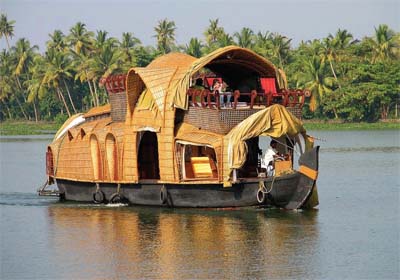 Travel and hospitality operators increasingly believe that this is creating a substitution effect. Instead of one expensive overseas trip annually, travellers may now choose several shorter domestic breaks luxury stays in Rajasthan, wellness retreats in Uttarakhand, wildlife tourism in Madhya Pradesh, Himalayan holidays, coastal tourism in Goa and Kerala, or experiential travel across the Northeast.
The hotel sector is already reflecting signs of this shift.
Industry forecasts indicate that India’s premium hotel occupancy levels are expected to remain strong in FY26, with occupancies projected around 72–74 percent in several major leisure markets. Average Daily Rates (ADRs) continue to hold firm or rise in many destinations because demand growth is still outpacing premium room supply in several leisure circuits.
Importantly, pricing resilience itself has become a major indicator. Hotels typically discount aggressively when demand weakens. Instead, many Indian leisure destinations continue to maintain high room rates, particularly during weekends and holiday periods.
The strongest beneficiaries appear to be experiential luxury resorts, heritage properties, wellness tourism, drive-to destinations, and premium domestic leisure circuits.
Hill destinations such as Mussoorie, Manali and Munnar continue to report strong seasonal demand. Rajasthan’s palace hotels, luxury wildlife lodges and wellness retreats across northern and southern India have also benefited from rising domestic experiential travel. In recent years, the availability of ultra deluxe properties in remote areas has created a lifestyle statement in their own merit. Over recent years, created their own benchmarking quotients, as also befitting adequate bragging rights in social circles.
There are, however, important exceptions. Hotels heavily dependent on inbound international tourism or global corporate movement remain more vulnerable. Certain gateway city hotels and international business destinations continue to face pressure from softer global travel demand and rising international airfares. But in resort destinations, it is otherwise. Though, relatively speaking, staycations as a segment that developed during covid, lessened in recent years, may witness yet another revival. City or metro hotels may begin promoting these again.
Nevertheless, the larger trend appears increasingly clear. India’s domestic traveller is becoming the central economic driver of the country’s tourism ecosystem.
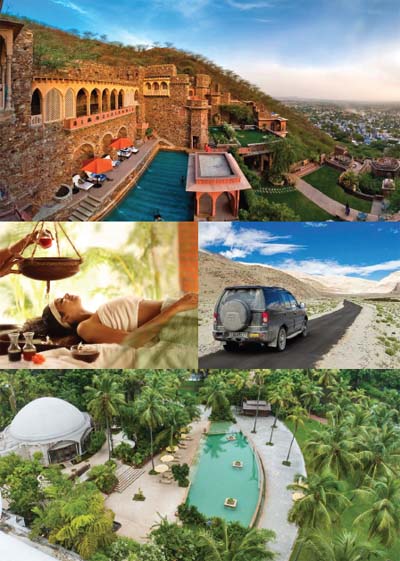 This marks a major structural transformation. Historically, a significant share of discretionary Indian tourism spending flowed overseas. Today, geopolitical instability, expensive air travel and changing traveller psychology may be encouraging a larger portion of that expenditure to remain within India itself.
This is already in place, some of it, even as the Indian Prime Minister exhorted Indians to reduce their overseas travel, in an effort to cut spending in precious foreign exchange. This in itself will dampen immediate demand for foreign travel, unless of course if the war in the Middle East comes to a stop. But many observers suggest the cost of fuel is likely to stay high for longer.
India may now be entering a phase where domestic tourism is no longer merely a substitute for international travel, but an aspirational and premium category in its own right.
Ironically, a geopolitical conflict thousands of kilometres away may end up accelerating one of the biggest long-term opportunities for Indian tourism: persuading Indians to travel more extensively within their own country.
There is need for caution, again, and here pricing will remain critical. If only such stays became more reasonable, with hoteliers resisting any urge to charge more and more, in the belief that the market can withstand them, it may prove short sighted. If they want this moment in time to turn the tide, the memory of these trips, the fallout effect, must be such that demand only increases. This trend towards exploring domestic must spread over a larger base of Indians, stay trending for years to come. Because only then, this trend will stay and not disappear once the war clouds fade away. Any tendency towards exploitation will in all likelihood kill the golden goose that is laying the golden egg.
These times are a far cry from a few decades ago, even perhaps 10 or 15 years back, when infrastructure was minimal. In fact, road travel was the last mode of transport on any mind. It is the most convenient, manageable in terms of cost, gives flexibility in timings, with plenty of stops midway. This segment alone has given rise to resort driven holidays that have emerged as destinations unto themselves. While you may wish to enjoy a Mussoorie vacation, it is in fact the JW Resort that is an exclusive and inclusive destination that is being visited. Such travel does not even visualise any sightseeing in the hill station; it is just a drive to the resort and back. Same is with visits to Goa, as another instance. The holidaymakers from Delhi and North India are not going traditional sightseeing – just a small share will visit Old Goa or elsewhere. It is just the resorts, the ‘hotspots’ which are the newly opened eateries, bars and lounges.
Some of it will stay, as the new normal. These numbers, too, will steadily grow. Alongside, such travels must be promoted with responsible behaviour, responsible tourism. For, that would be the other new cause of worry! It all depends upon us. We make it or break it. It rests upon us.