“There are strategic attacks that have led directly to peace, but these are the minority. Most of them only lead up to the point where their remaining strength is just enough to maintain a defence and wait for peace.”
— Carl von Clausewitz, On War
Stillborn Talks
Pakistan has been at the forefront of facilitating the peace talks. But the fact is that it lacks the heft to even bring the two negotiators to the peace table let alone enforce peace.
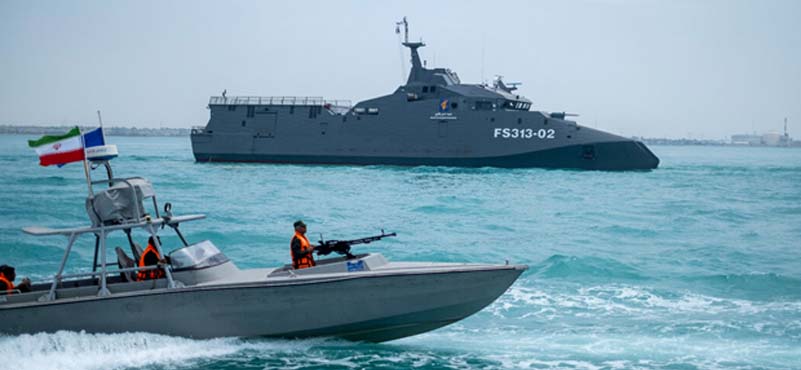
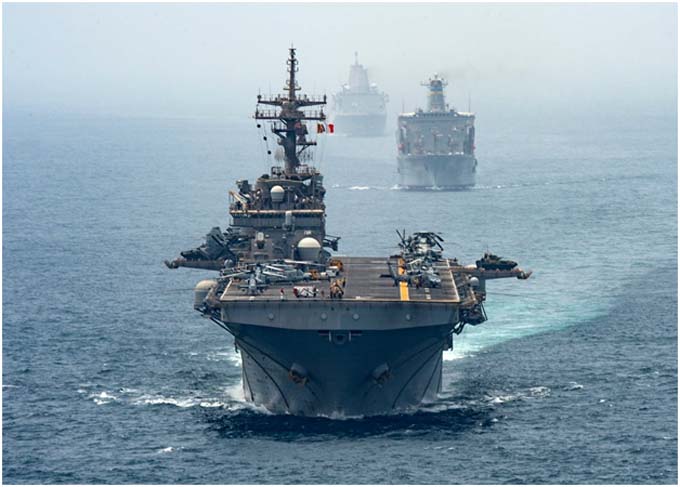
The second round of talks between Iran and the US remain stillborn. The Iranian Foreign Minister left Islamabad on 25 April 2026 and the US negotiating team did not even leave the US. The situation remains frozen, though the ceasefire remains in place. Iran has effectively closed the Strait of Hormuz, while the US in retaliation has established a naval blockade in the Gulf. Principally, both are wrong as they interfere with control of so called ‘global commons.’
President Donald Trump remains averse to negotiating, and the bulk of his communications are threats in ‘Capitals,’ in the form of posts on X. However, publicly insulting the adversary is not the best way to go into talks.
The substance and secrecy of negotiations have been fundamentally altered by the speed of social media. There is now an oscillation between escalation and diplomacy which is changing by the hour and is influencing prices of commodities, values of currencies and graphs of stock indexes worldwide, India being no exception.
The US demands focused on the three pillars of Iran’s security, its nuclear ambitions, missile programme, which now also includes drones, and regional proxies. Iran’s position remains more circumscribed. It has apparently signaled willingness to limit enrichment temporarily, reduce stockpiles, and accept international monitoring in exchange for sanctions relief and unfreezing of its accounts. Missile forces and regional relationships were not on the table. Further, a second war in the middle of talks also made it imperative for Iran to demand a guaranteed, comprehensive non-aggression pact.
Another sticking point has now been added. The issue of the US naval blockade of Hormuz. While a ceasefire is essential to the extent that bombing has stopped, but the blockade and closing of the Strait of Hormuz under relevant International Law provisions is an act of war. Iran has not accepted the cease fire stating that if the blockade of the Straits of Hormuz remains, there will be no negotiations.
The moot question is, how long can the blockade be sustained? Iran believes, and has stated this in so many words, that it can outlast pressure. There is a parallel in Afghanistan where the Taliban was able to absorb pain and then turned time into a strategic asset.
Unfortunately, time is not a solution, and it is a path towards deeper instability, as the Straits of Hormuz, are not a highway within a country in a remote mountainous region, but a critical artery for the flow of global energy and a geopolitical lever of influence.
The world is being faced by three conflicts presently but all wars are not fought alike. The Ukraine War has been on for over four years, while the war in Gaza and Lebanon has been in place for over two years. Both are bloody but yet ineffective in their own ways. Israel has failed to eliminate the threat on its borders, as both the Hamas and Hezbollah, though weakened, retain their grip.
In comparison the present Iran War is barely completing two months. The impact of the closure of the Strait of Hormuz and the widening of the conflict by engaging targets in the Gulf have led to devastating ripples across the globe.
Kinetic Peace
Trump, by himself, is also the problem. Nobody knows what he really wants, as his statements are constantly changing. On 01 March he declared on ‘Truth’ that Iran would be “hit so hard they won’t recognise what’s left of their sand.” While on 03 March he said that “honestly, a little bombing never hurt anybody.” Then on 07 March he announced that “the only thing Iran understands is strength, and we have the biggest, most beautiful bombs, believe me.”
By mid-March, he had oscillated between threatening to destroy an entire civilisation, and praising the Iranian drones by saying “very good too and fast and deadly”. When asked by a reporter on 20 March whether the US was at war, he replied, “It depends what your definition of war is. Also, I never said war. I said kinetic peace. Great phrase. Someone give me credit.”
Early April 2026, occupied the President in the rescue operations of the downed American pilot and Weapon Systems Officer, which was then followed by the declaration of a two-week ceasefire.
The rare art of constantly changing statements within minutes has left everyone confused. Yet there is another dimension and that is with regard to rhetoric and oratory skills being witnessed. They lack sophistication, the words are offensive and the tone is belligerent. To quote Donald Trump on Easter; “open the fuc. strait, you crazy bastard or you’ll be living in hell – JUST WATCH.”
“Woe to the land that’s governed by a child.”
Shakespeare ‘Richard III’
Iran
The fact is that Iran has now been attacked twice, both times in the middle of ongoing talks. Before the war began, Iran was negotiating, but also preparing for conflict. Its war preparations had four interconnected strategies: dispersal and delegation (mosaic defence); succession redundancies to offset the impact of decapitation strikes; horizontal escalation to raise the cost of war by attacking the Gulf States; and blocking the Strait of Hormuz, thereby raising the cost of war.
Iran took the pain of decapitation and degradation strikes. Dispersal allowed it to increase the survivability of its missiles and drones for counter attacks and delegation meant that their Commanders could operate without being in constant contact with the top leadership and had pre-delegated orders of how to respond.
Survivability strategies, as is now known, also rely on deeply-buried production and firing sites.
Another aspect, which has now come to light, is Iran’s enhanced satellite-based ISR and targeting capability. According to an April 2026 Financial Times investigation, a private Chinese firm, Earth Eye Co, allegedly sold a high-resolution TEE-01B satellite to Iran in late 2024. It was this satellite that was used to monitor US military installations across the Middle East, both before and after the strikes in early 2026. The Chinese Foreign Ministry, however denied the report, calling it untrue. What is clear is that Iran’s targeting in this war has been far more accurate and effective than in June 2025.
Who Won the War
The next round of talks everyone was speculating about is not happening for the moment. Neither is the world’s energy flowing.
US is basking under the glory of an outright victory and crushing defeat of Iran. Iran does not think so. Who is going to blink first to say that the rising cost of conflict is unbearable, and we are ready for peace. If only one feels the cost is unbearable, while the other retains the capacity to sustain losses, the stronger will press for surrender. If both believe they hold the stronger hand, neither will concede.
‘Faw Syndrome’ is a term used by Iranian-American scholar Arash Reisinez. The roots go back to the Iran-Iraq war plan to capture the Faw Peninsula during Operation Valfajr-8, on 09 February 1986. It reflects the inability to translate military gains into diplomatic advantage. Instead, victory led Iranian leaders to believe that Iraq’s total defeat was within reach. The result: no diplomatic gain, and the war ended with UN Security Council Resolution 598. This is the problem of the ‘culminating point of victory’ Clausewitz discussed at length in Book VI of ‘On War.’
Are Iran and the US overplaying their hands. Today, the Strait of Hormuz may be caught in the same trap.
The key question is whether the space Iran has created through its kinetic responses can be translated into diplomatic gains: sanctions relief and a guaranteed end to hostilities. That circles back to what Iran could concede, and to what extent.
Where Does India Fit into This Matrix
India is not solely reliant on Iranian oil and gas; however, India remains highly vulnerable to Iranian geopolitical actions. The catch is, that roughly 50% of India’s crude oil and nearly all its LPG from the gulf, transits through the Strait of Hormuz. A continued blockade of the strait does not support India’s national interests.
India enjoys strategic relations with all the principal actors such as the US, Israel and Iran. It has excellent relations with the Gulf States, where there is a large Indian diaspora present, and with whom it has trade relations. In other words, it enjoys a measure of trust across the board, and more importantly its own interests are suffering due to the conflict. It possesses sufficient military capability and nuclear deterrence to command respect.
As stated in so many words, continued war is not an option, but who will blink first. Both sides have dug in their heels, and expect the other to back down. In such a situation, the time is ripe for India to make the right kind of noise. Silence is also no longer an option.
India presently holds the BRICS Chair for the year 2026. In addition to the original members, Brazil, Russia, India and China, BRICS now comprises of South Africa, Egypt, Ethiopia, Iran and United Arab Emirates. Since the Hormuz blockade affects all the BRICS members either directly or indirectly, this is the right moment for India to issue a strong statement on behalf of BRICS, to USA, Israel and Iran, to restore status quo of Hormuz. Such a statement would be perceived as an appropriate stand by a responsible nation, across the world. Many more may have wanted to take the same stand, but for obvious reasons have failed to do so. However, once such a statement is issued, there is bound to be a positive response, and some others may be emboldened to take the same stand. This may exert the right amount of pressure on USA, Israel and Iran, to end the conflict, all of whom, want to put an end to the bloodshed, but just don’t know how to. None of the players want to be seen as having backed down on their own, but would be happy to do so, at the slightest legitimate alibi.
While China remains reluctant to enter the fray directly, it too has deep links with the region and the blockade of the Gulf is impacting China since it is amongst the largest buyers of crude from this region. In fact, China receives 90% of Iranian Crude as per reports. Therefore, such an initiative would be welcomed by China, as it would not be confronting USA directly, but safely from behind the BRICS shield.
In this era of complex and intertwined interdependence both India and China need to focus on their aligned interests regarding reopening of the Straits of Hormuz. India holding the reins of BRICS is in a unique position not only to tell the US that ‘this is not an era for war,’ but also act in concert with BRICS and pressurise both Iran and US regarding lifting the ‘dual blockade’ and allowing the free flow of energy and goods.
Conclusion
What the ongoing conflicts have demonstrated is the notion of victory. Both Russia and Israel focused on total victory, and the adversary paid the price by humanitarian losses, but till date winning victory to guarantee total security has been unachievable. In all three ongoing conflicts overwhelming military power differential has not been the solution.
The consequences of resumption of hostilities are terrifying both for their humanitarian and economic costs. Logic dictates that both sides resolve the issues without inflicting more destruction in a face-saving compromise.
India now needs to seize the moment and along with other BRICS members, pressurise both US and Iran to open the Strait. India fits this role perfectly. It’s allegiance with the US cannot be at the cost of its people. In the end what matters is that national interests must override all other issues, even if one has to momentarily befriend an enemy. The answer lies in taking a combined resolute diplomatic stand. Many iron fists in a velvet gloves.
ABOUT THE AUTHOR
 Maj Gen VK Singh, VSM was commissioned into The Scinde Horse in Dec 1983. The officer has commanded an Independent Recce Sqn in the desert sector, and has the distinction of being the first Armoured Corps Officer to command an Assam Rifles Battalion in Counter Insurgency Operations in Manipur and Nagaland, as well as the first General Cadre Officer to command a Strategic Forces Brigade. He then commanded 12 Infantry Division (RAPID) in Western Sector. The General is a fourth generation army officer.
 Major General Jagatbir Singh was commissioned into 18 Cavalry in December 1981. During his 38 years of service in the Army he has held various command, staff and instructional appointments and served in varied terrains in the country. He has served in a United Nations Peace Keeping Mission as a Military Observer in Iraq and Kuwait. He has been an instructor to Indian Military Academy and the Defence Services Staff College, Wellington. He is a prolific writer in defence & national security and adept at public speaking.