There is considerable debate happening, often in hushed tones. That India is not being promoted in overseas markets. That India is lagging behind its competitors in attracting the global tourism dollar. Nothing secret about it, Indian tourism’s marketing share this year in the annual budget is a meagre Rs. 3 crores, with an understood provision that when you need money, ask for it. Domestic tourism has in the meanwhile, become the mainstay for all the infrastructure that we have built. Impressive additions that have withstood the pressures of many a challenge, including the recent wars in Ukraine and the Middle East. This too, will pass, and market we will, sooner or later.
What could be a marketing plan for Indian inbound tourism?
The last major milestone advertising that was initiated, possibly in the post effect of 9/11, when the Incredible India campaign was conceived, launched with much fanfare, and equally if not more, with overwhelming success.
Some of the success was it overrated? In sheer numbers, perhaps. The growth was phenomenal, especially seen from the worst year when 9/11 had made its impact. But in its overall outreach, its impact has been under-estimated – it was phenomenal. It changed the way Indian tourism was marketed. It had marketing tools never seen before. It changed the way India was perceived. India became a destination to be reckoned with, in terms of strategy and penetration in generating markets. In sheer marketing sense, India was for the first time seen as a serious challenger for market share. In global presence, a formidable advertising campaign denotes seriousness of a country’s endeavour. The world wakes up, realises you are serious, takes notice. You become the talk and subject of serious consideration among the travel agent community worldwide.
 What is the big change that has happened between then, and now; what is that one big assumption that stands altered in India’s landscape, as far as travel and tourism is concerned, between then and now, that one significant difference which can and does, gives us that larger bandwidth, a larger scope for action and therefore a wider canvas equally to get more results.
If you were able to achieve X result then, we should be able to achieve 20 times X, if not 50 times X now. That single big difference is infrastructure, not only in the quantity but also the quality in terms of infrastructure that affects travel and tourism across the country.
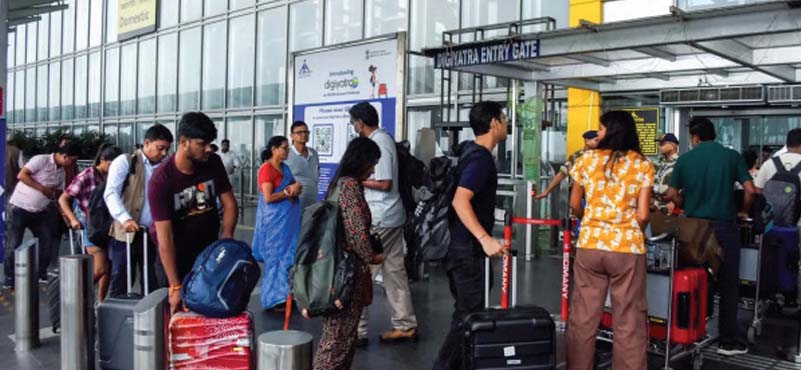
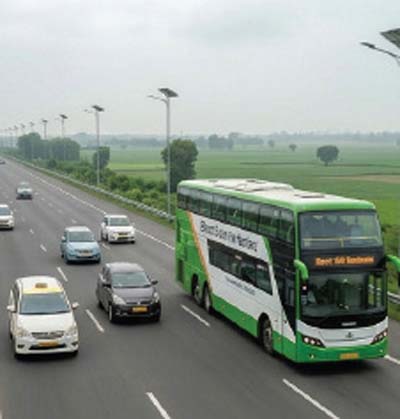
We have now significantly more airports, more internal connectivity by air, by road and also by private transport, in terms of taxi services for hire or self-drive. Numerous smaller cities are now connected, with more frequency in air services, new destinations are accessible, those with unique discoveries waiting to be explored, and brought onto the national consciousness. New city pairs in air services give direct connectivity, without having to spend numerous extra hours.
Take road connectivity, for instance between Delhi and Agra, Delhi and Jaipur – these have improved substantially, with all the last mile convenience. Much of the highway infrastructure has found a new lease of life for road travel. Imagine a highway from Delhi to Lucknow and onto Ayodhya, in just under ten hours. The hills, too, find road distances shorter and more fun, than dreaded adventure that tourists were not looking forward to.
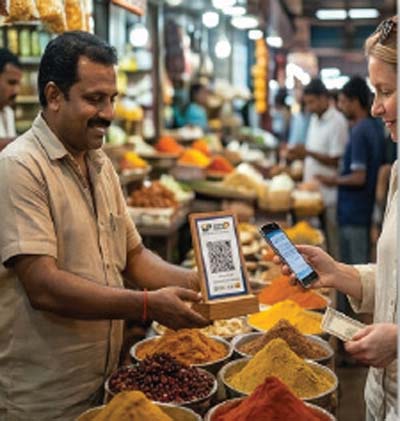
Of course, much of this has happened for the economy, not for tourism alone. But tourism is the natural gainer. Like, for instance, in mobile connectivity or ease in communications on email, social media and direct whatsapp connections. The same is truer for making payments. Just connect your bank account with any of the current payment systems on your mobile. You do not need to change your currency. Infrastructure in terms of travel, communications and making payments.
 Not to overlook accommodation across the country. The best part is that luxury has become even more luxurious, experiential has become noticed and fits the India product most appropriately, as India is best for experiences of a thousand kind, but also the vast middle level hotels, both branded and un-branded, that provide clean and comfortable places to stay. Destinations that were typically frowned upon, like small pilgrim towns, have now a range of hotels available.
India now has more tourism products but these have yet to get noticed and put onto the national map, for both domestic and international. The time is now, for them.
What is true for international, must first hold true for domestic. Because, we must now recognise that domestic is the base and international is the creamy layer.
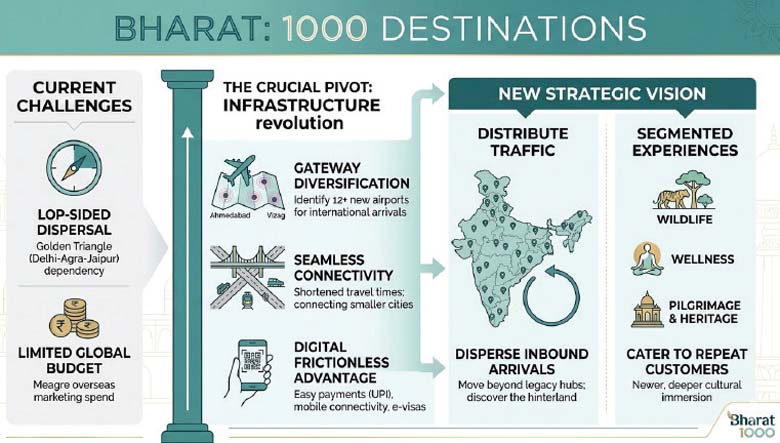
India’s dispersal of incoming tourists has remained lopsided, or one sided. Numerous tracts have yet to see the volumes they should have.
Let the present numbers continue the way they have been. There is no need to disturb them. But we must look for a new plan that provides additionality, incremental gains for inbound and domestic. A marketing plan that enhances the fruits of tourism to be dispersed across the hinterland, not just a few, like the Golden Triangle around Delhi-Agra-Jaipur. The last, incidentally, is jaded and repeat customers of India are forever looking for newer experiences.
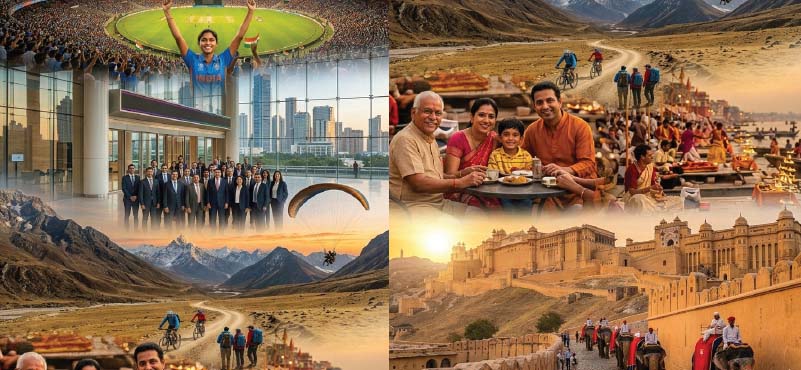
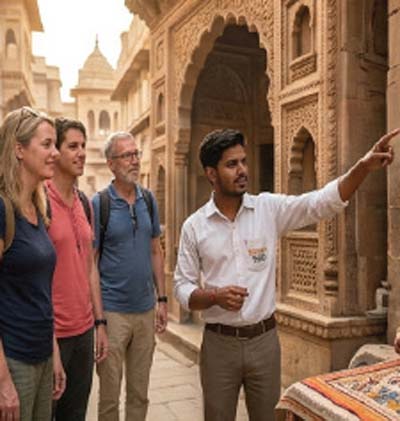 Inbound tourism must enhance the visitor’s understanding of India, its history, culture and heritage. It must induce a greater awareness of Indian-ness, manifested in a thousand destinations across our country.
Any new marketing of Destination India, must have the following ingredients:
- Enhance, provide additionality, incrementally increase the India offering.
- Disperse foreign arrivals across the length and breadth of the country.
- Make the tourism experience spread across our heritage and culture.
Fortunately, we are in a position to do so, now, even allowing the star role for two gateways, namely Delhi and Mumbai. Both have a new international airport that would provide that basic ingredient to start with – additionality.
Even otherwise, we must identify a dozen additional airports that must be offered for new generation of travellers. Let us look around the map of India. North, South, East, West and the heartland. Two additional international airports with clearly defined goals of growth. Exact cities can change but for starters, let us say Jaipur and Varanasi in the North, Bhubaneswar and Guwahati in the East, Ahmedabad and Nagpur in the West and Bhopal and Hyderabad in the centre; Vizag in the South.
Airlines wanting to increase their frequencies, new airlines wanting to start operations must have a right of way to fly into these new gateways. Criteria can be spelt out clearly stating the goals and aspirations. Our own airlines are free just as much but should not object and ask for more time for them to grow before they are subjected to competition. Not on these additional flights.
 Not all these cities/airports would be equally successful, but given the possibility and probability of their diversity between themselves. None of them would prove failures. The degree of success would be different.
Just imagine. Ahmedabad, especially now that it is the chosen city for the Commonwealth Games in 2030, and said to be the contender for the Olympic Games in 2036,
Going down South, Mopa Goa should obviously get documented as an international gateway; in the heart of India, Bhopal has been for long overlooked, for its proximity to wildlife, religious tourism and rich history. There is Guwahati, which has a new terminal building recently inaugurated and said to become the game changer for the North East.
Vishakapatnam has grown immensely in stature and relevance to the East, and awaits international recognition. Not to forget Bhubaneshwar, which has also gone relatively unnoticed despite its claims to have become a global sports centre.
The above is only a teaser of an idea, not a marketing plan. Suffice it to say, it meets national objectives, will correct past imbalances and also project India as a resurging destination.
And then, finally, finally, what’s in a name, you might ask? What should this campaign be called? Incredible India 2.0? Not to my mind. For all its past success, it is equally important to move on, and not just to hand onto to past successes. We need modern day ones, ones that we can look forward to, at least for the next ten years.
My vote would be for a simple message. From India to Bharat: 1000 Destinations.
ABOUT THE AUTHOR
 Navin Berry, Editor, CS Conversations, over five decades has edited publications like CityScan, India Debates and Travel Trends Today. He is the founder of SATTE, India’s first inbound tourism mart, biggest in Asia.
Blogs at: https://www.csconversations.in/nb-blogs