The Attack
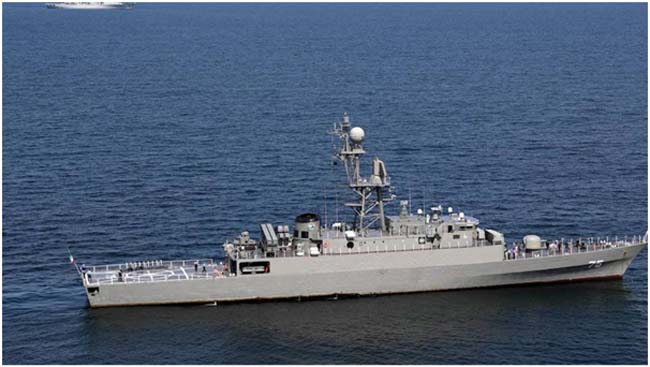
In the early hours of 04 March 2026, a Mark-48 heavyweight torpedo hit the Iranian Naval Ship IRIS Dena beneath her keel. The ship was in international waters about 20 nautical miles South West of Galle, Sri Lanka. She was on her return voyage to Iran after participating in MILAN 2026, a multinational naval exercise hosted by the Indian Navy at Visakhapatnam. She was supposedly unarmed at the time of the attack.
IRIS Dena reportedly had 180 crew members on board of whom 87 were confirmed dead of which 84 bodies have been recovered and have/are being repatriated to Iran by Sri Lanka, while another 32 were rescued. 61 crew members, remain missing till date. The vessel was approximately 1,700 nautical miles from Iran’s nearest coastline and over 1,350 nautical miles from the nearest active theatre of Operation Epic Fury.
Almost immediately, IRIS Dena transmitted a distress call, triggering large-scale search-and-rescue (SAR) operations involving the Sri Lankan Navy, Coast Guard, and Air Force, as well as Indian assets. Although they arrived quickly, the vessel reportedly sank within two to three minutes of the torpedo’s impact.
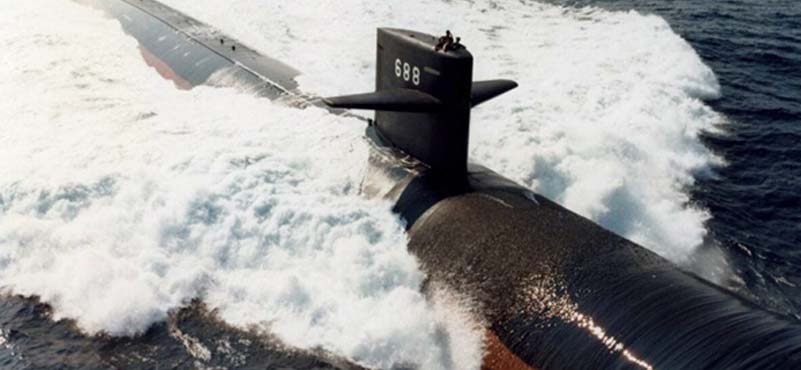
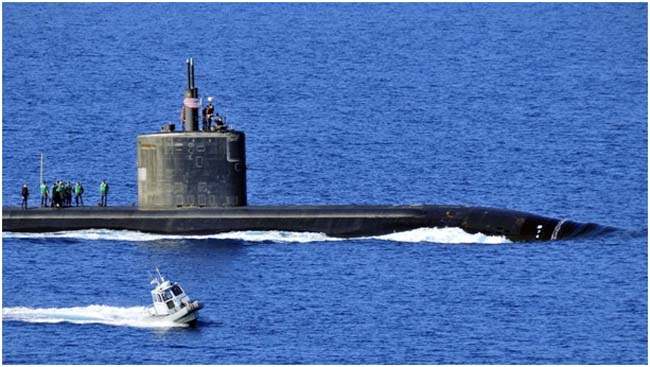
The submarine that sank her has been identified by CBS News, citing multiple officials, as USS Charlotte, a Los Angeles-class attack submarine, which left the area without conducting search and rescue operations. It is reported that the Mark-48 torpedo used had a warhead of about 650 pounds of high explosive, capable of snapping a ship in two. Video footage suggests the submarine may have fired from 3-4 km away, around 05:08 local time. The Sri Lankan Navy recovered survivors and bodies from the water.
The sinking of IRIS Dena following a multinational exercise, in a neutral state’s EEZ has sounded the death of the rules-based order.
Pete Hegseth’s Remarks
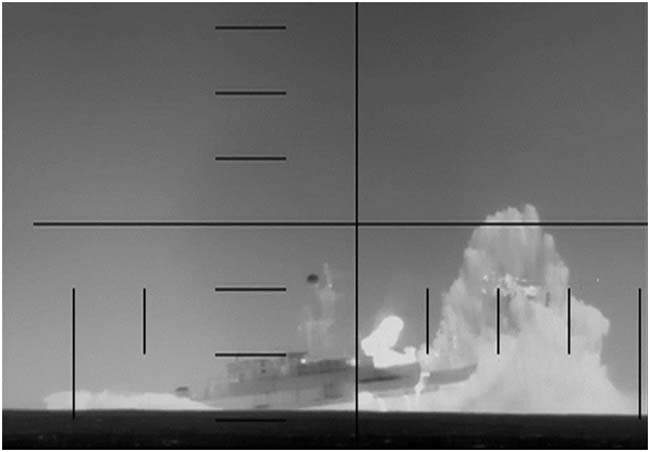
Pete Hegseth, the US Defence Secretary, confirmed the strike at a Pentagon briefing, releasing black-and-white footage of a Mark-48 torpedo hitting the frigate’s stern. “An American submarine sank an Iranian warship that thought it was safe in international waters,” he said. “Quiet death.”
He was describing the torpedo strike. But was he also hinting at the “death” of the rules-based international order that the Western powers spent 80 years constructing post-World War II, and now appear to be dismantling?
What “quiet death” reveals is not a military assessment but a doctrine: The US feels they can do this, anywhere, to anyone, and frame it as dominance rather than law.
Incidentally, independent polls conducted after the strikes on Iran, showed roughly 60% of US citizens opposed the strikes on Iran. Support was concentrated almost entirely among MAGA Republicans, whose backing has spurred the policies of President Donald Trump.
The Pattern Is Disturbing
On Thursday, 26 February 2026, Iranian and American negotiators concluded what Iran’s Foreign Minister, Abbas Araghchi, described as the most intense rounds of talks, and agreed to reconvene in Vienna, the following week. Both sides said progress had been made. The bombs fell two days later.
Omani Foreign Minister, Sayyid Badr bin Hamad Albu, who had brokered months of diplomatic dialogue, stated that “active and serious negotiations” had been destroyed. The Member of International Atomic Energy Agency’s (IAEA) had stated publicly, and on the record, that the agency had found no proof of an active Iranian nuclear weapons programme, a position consistent with US intelligence assessments.
Iran was bombed while it was negotiating and its Supreme Leader was killed.
Hours later, on 28 February, a missile struck the Shajareh Tayyebeh Girls’ Elementary School in Minab, in Hormozgan Province. As per reports, between 165 and 180 people were killed. The majority were girls aged seven to twelve.
The school had been separated from an adjacent Islamic Revolutionary Guard Corps (IRGC) base, by a wall, built between 2013 and 2016. Al Jazeera’s independent investigation concluded that, only two explanations are consistent with the evidence: either the coalition relied on a targeting database more than a decade out of date, constituting grave negligence, and reckless disregard for civilian life, or the strike was deliberate, intended to inflict maximum societal shock.
UNESCO condemned it. The UN Secretary-General condemned it. The Pentagon did not respond to requests for comment.
Five days later, IRIS Dena was struck during transit. These are not three separate incidents. They are three expressions of a truth that when rules become inconvenient, they are set aside.
The Laws of Naval Warfare
The San Remo Manual, on the laws of naval warfare, which the US cited for four decades against Iranian conduct in the Persian Gulf, requires neutral state notification, precaution before attack, and verified military necessity. Sri Lanka received no warning. The IRIS Dena reportedly carried no ordnance. No alternative to sinking her was attempted or explained.
When the USS Charlotte fired and departed without conducting search and rescue operations, it was a violation to the Geneva Convention which requires parties to a maritime engagement to search for and collect the wounded, sick, and shipwrecked.
Article 18 of the 1949 Convention (II) for the Amelioration of the Condition of Wounded, Sick and Shipwrecked Members of Armed Forces at Sea (Geneva Convention II), to which both Iran and the United States are Party, provides:
After each engagement, Parties to the conflict shall, without delay, take all possible measures to search for and collect the shipwrecked, wounded, and sick, to protect them against pillage and ill-treatment, to ensure their adequate care, and to search for the dead and prevent their being despoiled.
The Sri Lanka Navy, carried out those operations. The US did not attempt to argue that the conditions for lawful conduct had been met. It simply felt it did not need to.
For 80 years, the rules-based order rested on a claim: that powerful states had accepted constraints on their behaviour and would enforce those same constraints on others. But what these incidents suggest is that the claim was always conditional. When the most powerful actor in the system decides those constraints no longer apply to itself, there is no enforcement mechanism, no appeal, no remedy. The UN built on a foundation of the veto by the World War II victors remains impotent.
The fact is the world’s legal order, with its rules, is inherently incapable of regulating war, the distinctive feature of which is precisely the absence of law.
During the Falklands War of 1982, the British nuclear submarine HMS Conqueror, torpedoed the Argentine cruiser ARA General Belgrano, outside the declared exclusion zone established by Britain around the Falkland Islands. The sinking triggered international debate similar to what we witness today. Critics argued the cruiser was sailing away from the combat zone, and posed no immediate threat; Britain maintained that any Argentine warship remained a valid military target during wartime.
The Indian Connection
Just because the ship was in the Indian Ocean, does not mean that it was in India. The Indian Ocean is far too vast, for India to be able to monitor every single activity in the ocean. India is not responsible for the US sinking an Iranian warship. The ship had come to India for MILAN 2026, and left safely after completing the exercise. The ship was in international waters. Contrary to what is circulating, the ship was almost certainly armed as that is a standard practice. India was not responsible for, or party to, the attack on IRIS Dena by the US. India’s conscience is clean.
Conclusion
Former Naval Chief Admiral Arun Prakash, said the sinking was “senseless and inflammatory.” While former Foreign Secretary Kanwal Sibal, stated that the US had “ignored India’s sensitivities, as the ship was in these waters because of India’s invitation.”
India’s International Fleet Review (IFR) 2026, drew warships from 74 nations. Every navy attending such exercises will now wonder whether participation in such an exercise could expose them to US submarine operations, if their country happens to be at war with Washington.
The answer, established by precedent on 04 March 2026, as per Brahma Chellaney, is stark: “attending exercises may not guarantee safety once they sail away.” While Commodore Uday Bhaskar said “Whatever the awkward diplomatic optics for India, the incident ultimately illustrates the reach of American undersea warfare.” He stated that “Control of the oceans rests with those who wield the most advanced surveillance and underwater ordnance capabilities” and warned that the US will continue to use this capability “unilaterally.”
Esmaeil Baqaei, the Spokesperson of the Ministry of Foreign Affairs of Iran, called the action by the US a “war crime” and in violation of international laws further underlining that the Iranian people would not forget it.
While Iran’s Foreign Minister Abbas Araghchi, called the sinking an “atrocity at sea” and said the US would “bitterly regret” the attack.
In military terms, the strike is less about the destruction of a single ship and more about establishing maritime dominance and deterrence. However, strategy rarely exists in isolation from political consequences. The location of the attack-close to the waters of Sri Lanka and along vital shipping routes in the Indian Ocean, has raised concerns about the geographical expansion of the conflict. Until recently, most confrontations between Iran and its adversaries were concentrated around the Persian Gulf, the Levant, and the Red Sea.
This is not a rules-based order. It is a power order: unilateral, unaccountable, and now openly acknowledged as such by the people running it. The Second Geneva Convention, the San Remo Manual, the UN Charter, and the diplomatic conventions that protect negotiations in progress all applied, clearly, to the events of the past ten days. None of them were observed. None of them were argued against. They were simply set aside.
There are somethings which are beyond rules, charters, conventions, or manuals. These revolve around humanity. Are we not as humans, programmed differently to the rest of the species that have set foot on this earth? You cannot be wargaming, exercising, attending dinners, partying together, for over ten days, as the best of friends, and then suddenly on the eleventh day deliver a stab on the back. There may be a war on, but yes, this was not ethical, this was a cowardly act. This was another et tu Brutus moment.
Sometimes a seemingly small event like sinking an Iranian frigate speaks volumes about bigger things. There is a message for the world.
Do not think you are safe. I will hit whom I please, as I please, where I please, and when I please. So, do as I please, or I will make you do as I please.
Right, as the world goes, is only in question between equals in power, while the strong do what they can, and the weak suffer what they must.
Thucydides ‘History of the Peloponnesian War’
ABOUT THE AUTHOR
 Maj Gen VK Singh, VSM was commissioned into The Scinde Horse in Dec 1983. The officer has commanded an Independent Recce Sqn in the desert sector, and has the distinction of being the first Armoured Corps Officer to command an Assam Rifles Battalion in Counter Insurgency Operations in Manipur and Nagaland, as well as the first General Cadre Officer to command a Strategic Forces Brigade. He then commanded 12 Infantry Division (RAPID) in Western Sector. The General is a fourth generation army officer.
 Major General Jagatbir Singh was commissioned into 18 Cavalry in December 1981. During his 38 years of service in the Army he has held various command, staff and instructional appointments and served in varied terrains in the country. He has served in a United Nations Peace Keeping Mission as a Military Observer in Iraq and Kuwait. He has been an instructor to Indian Military Academy and the Defence Services Staff College, Wellington. He is a prolific writer in defence & national security and adept at public speaking.