
A recent LinkedIn discussion, initiated by Professor Francesco Moscone of Brunel University London, sparked my interest in this topic. The conversation drew on research by Professor Giuseppe Arbia of the Catholic University of the Sacred Heart, Rome, and generated a thoughtful exchange on how artificial intelligence (AI) is reshaping language and communication. This article expands upon those observations, examining the subject through a broader interdisciplinary and social lens.
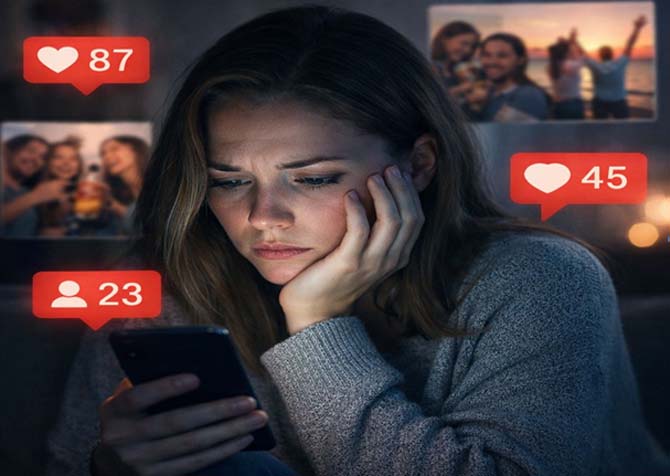
FOMO—the nagging conviction that a better life is happening somewhere else—now defines our psychological, social, and economic landscape. It dictates how we navigate everything from our careers and relationships to everyday lifestyle choices, both online and off. A basic question lies underneath: Am I in the right place, at the right time, doing the right thing?
The famous Socratic insight, often rendered as “I know that I know nothing,” originates from Plato’s account of Socrates in the Apology: “I do not think that I know what I do not know.” This observation underscores intellectual humility and the recognition of the limits of one’s knowledge. A similar awareness is relevant to understanding FOMO. Although contemporary discussions tend to associate FOMO primarily with social media, its origins are far deeper. The phenomenon reflects enduring psychological needs for belonging, achievement, and social comparison, as well as behavioural biases that long predate the digital age. What has changed is the scale and intensity of these influences. Smartphones, ubiquitous connectivity, algorithm-driven content, and the constant visibility of others’ curated achievements have significantly amplified these tendencies. As a result, FOMO has become a multidimensional force that reaches well beyond the digital realm. It shapes personal decisions, career choices, consumption patterns, investment behaviour, and social relationships. At the organisational level, it can influence strategic decisions and resource allocation, while at the systemic level, it can affect market dynamics, public discourse, and policy outcomes. Contemporary FOMO, therefore, operates simultaneously at individual, organisational, and societal levels, carrying important implications for mental well-being, productivity, financial stability, and public policy.
Psychological Foundations and Behavioural Dynamics
The roots of this feeling lie in the Self-Determination Theory. It shows that humans have three core psychological needs: autonomy (feeling in control), competence (feeling capable), and relatedness (feeling like we belong). When people perceive their choices to be constrained, their abilities underutilised, or their social connections fragile, they become sensitive to cues that others are living more rewarding lives. FOMO is, in part, the emotional residue of unmet autonomy, competence, and belonging.
Humans also naturally construct “what if” scenarios. Counterfactual thinking and anticipated regret increase as visible options multiply. When every scroll reveals alternative careers, relationships, destinations, or portfolios, individuals feel that every decision excludes countless other possibilities. Behavioural economics shows that loss aversion and scarcity heuristics further sharpen this sensitivity: the pain of “losing” a potential opportunity, however ill-defined, can outweigh the perceived gain from committing to a present choice.
Closely related are FOBO (Fear of Better Options) and the maximiser–satisficer distinction. Barry Schwartz and others have documented that maximisers — those who strive to identify the best option — search more exhaustively and evaluate more alternatives, yet report lower satisfaction and higher regret than satisficers, who settle once a reasonable threshold is met. FOBO can thus be understood as a chronic maximiser stance: the anxiety that any commitment might close off an even better alternative.

JOMO — choosing stillness over constant stimulation and finding fulfilment in simplicity.
Social comparison theory completes this psychological picture. In a world where others’ achievements, assets, and experiences are constantly visible, individuals benchmark themselves not against objective standards, but against curated highlights. This persistent upward comparison is strongly associated with lower subjective well-being, higher envy, and self-doubt. FOMO is therefore not merely fear of missing an event; it is fear of missing a life trajectory that seems, from the outside, superior.
Digital Architecture and the Economics of Attention
FOMO’s modern acceleration is inseparable from the architecture of the digital economy. Social platforms are designed to maximise engagement, not well-being. Algorithms surface content that is novel, emotionally charged, or socially salient, thereby amplifying moments that trigger comparison — promotions, vacations, luxury consumption, peak experiences, and aestheticised lifestyles.
Social platforms have turned our attention and need for approval into concrete numbers—likes, views, follower counts, and streaks. In the digital economy, these metrics act as a new kind of social currency, forcing users to constantly check in just to stay relevant and keep up with trends.
Recent work finds a bidirectional relationship between FOMO and social media fatigue among college students: FOMO drives heavier use, which in turn generates exhaustion, yet the same exhaustion feeds back into FOMO as users worry about disengaging.
The digital world forces us into a state of endless decision-making.Every notification presents a new option; every recommendation suggests a potentially better video, article, or opportunity. This constant jumping around burns us out and triggers decision fatigue. We end up scraping the surface of everything and committing nothing. Over time, this constant task-switching destroys our ability to focus deeply or sustain attention on what matters.
Individual Consequences: Mental Health, Cognition, and Economic Behaviour
An increasing volume of research highlights the severe negative consequences associated with FOMO. Studies consistently link it to a wave of mental and physical health issues, including anxiety, depression, poor sleep, and lower life satisfaction, alongside dropping grades and risky behaviours. Individuals with high FOMO are more likely to report unhealthy lifestyles, feelings of social exclusion, and difficulties in sustaining attention.

Recent research on digital working environments shows FOMO is a key risk factor for employee mental health. A study from the University of Nottingham finds that employees worried about missing important information and overloaded by digital communication are more likely to suffer stress and burnout. The combination of informational FOMO and information overload thus creates a “dark side” of connectivity: workers remain perpetually reachable but psychologically drained. Cognitively, FOMO contributes to fragmented attention and reduced capacity for deep, focused work. Frequent task-switching and persistent monitoring of multiple channels impose switching costs that degrade productivity and learning. Behaviourally, it encourages short-termism: impulsive purchases driven by flash sales and influencers, frequent job hopping in search of “dream roles,” and reluctance to make long-term commitments such as specialised training or relationship investment.
There is also a financial dimension. In markets, FOMO frequently manifests as overtrading and herd behaviour, particularly among retail investors. Analyses of the 2021 “meme stock” episode show how social media narratives and online communities fostered intense FOMO, prompting investors to chase surging prices in stocks such as GameStop and AMC, often without regard to fundamentals. More recent work links FOMO directly to speculative trading in volatile assets, suggesting that fear of missing rapid gains can distort risk perception and investment horizons.
Organisational and Workplace Implications
FOMO does not stop at the office door. Organisations increasingly confront their own version of FOMO — a perceived need to be in every market, adopt every new technology, join every partnership, or launch multiple overlapping initiatives. This “strategic FOMO” can produce initiative overload, fragmented focus, and slower execution.
At the employee level, “workplace FOMO” revolves around anxiety about missing important information, meetings, or opportunities for recognition. A study by Budnick, Rogers, and Barber, which developed a Workplace FOMO Scale, finds that while some informational vigilance can be motivating, high workplace FOMO is associated with poorer sleep, higher stress, and reduced well-being, especially in always-connected digital environments. The organisational result is an explosion of meetings, cc’d emails, and chat channels that few dare to ignore. The costs are subtle but significant in terms of time diverted to redundant or low-value meetings; constant context switching, which reduces effective output; project volatility, as teams pivot frequently in response to external trends or internal fads; and diminished learning, because initiatives are abandoned before lessons can be consolidated.
Within firms, FOMO can also distort innovation. In the rush to “not miss the next big thing,” companies spread resources thinly across many pilots rather than committing sufficiently to a few promising bets. The proliferation of vanity metrics — app downloads, followers, impressions — can obscure the absence of genuine value creation.
Historical, Cultural, and Philosophical Perspectives
FOMO is, however, not purely a modern invention. Long before smartphones, literature, religion, and philosophy warned against restless comparison and envy. Traditional proverbs such as “the grass is always greener on the other side” or “everybody loves his neighbour’s wife” capture the tendency to idealise others’ circumstances while underestimating their hidden trade-offs. There is an inherent asymmetry in the “why me?” syndrome. When people do well, they believe they deserve it richly; when they do badly, they invariably ask why me? The classic case of Arthur Ashe, the famous lawn tennis player, who contracted AIDS in the process of a blood transfusion, immediately comes to mind. Such examples can easily be multiplied, but the fundamental difference is that Ashe never asked why me. This is the basic attitude all of us need to imbibe, and it is clearly the way to go. But this is easier said than done, and Ashe’s attitude remains an exception – an extraordinary one, at that!
Stoic thinkers emphasised the need to distinguish what lies within one’s control from what does not — an antidote to externally driven anxiety. Buddhist teachings highlighted the suffering generated by craving and attachment, while Ecclesiastes famously described the futility of endlessly “chasing the wind.” These traditions converge on a common insight: an existence anchored in constant comparison and insatiable desire undermines tranquillity and meaning. The cultural setting- what Victorian thinker Matthew Arnold called “the man and the milieu” and, well over a century later, TS Eliot characterised it as “tradition and individual talent” – shapes how FOMO is experienced. In more individualistic societies, FOMO may focus on personal achievement and consumption; in more collectivist settings, it may centre on social obligations, group participation, and reputation. Cross-cultural research increasingly finds that the triggers and expressions of FOMO vary with norms, expectations, and patterns of social media use, although the underlying anxiety is widely shared.
References to FOMO in Urdu Poetry and Sanskrit Literature
I was fortunate to grow up in an academic environment that nurtured intellectual curiosity and a deep respect for scholarship. My father, Dr. D. D. Sharma, who acquired his PhD in Linguistics from the University of Edinburgh in 1966, served for over three decades as Professor and Head of the Department of English at leading institutions in India and abroad. Being raised in a family where teaching, research, and intellectual inquiry were integral to everyday life profoundly influenced my academic interests. Having chosen to pursue humanities and social sciences from Class IX onwards, I developed an enduring fascination with language, literature, and culture, particularly in English, Hindi, Sanskrit, and Urdu. This multidisciplinary linguistic exposure shaped my intellectual outlook and fostered a lifelong interest in the study of communication, ideas, and human expression.
While the modern concept of FOMO is rooted in contemporary psychology and social media culture, its underlying emotions—restlessness, regret, longing, comparison, and anxiety over missed opportunities—have been explored for centuries in both Urdu poetry and Sanskrit literature. Urdu poets often captured the anguish of unfulfilled desires, the pain of being absent from moments of love or companionship, and the yearning for experiences beyond one’s reach. Similarly, Sanskrit texts reflected on human attachment, desire, dissatisfaction, and the perpetual search for fulfilment.

The following verses capture themes closely related to FOMO. For example, Mirza Ghalib wrote simply but eloquently, “हज़ारों ख़्वाहिशें ऐसी कि हर ख़्वाहिश पे दम निकले, बहुत निकले मेरे अरमान लेकिन फिर भी कम निकले।”
Translation: Human desires are endless. Even after fulfilling many aspirations, dissatisfaction remains.
This is perhaps the most powerful poetic expression of the psychology underlying FOMO. Similarly, Nida Fazli wrote philosophically, “दुनिया जिसे कहते हैं जादू का खिलौना है, मिल जाए तो मिट्टी है, खो जाए तो सोना है।”
Translation: We undervalue what we possess and idealise what we miss—a classic manifestation of FOMO.
This has been a recurring theme in the age-old Sanskrit language and literature. For, the Holy Book Bhagavad Gita (2.70) justifiably held, “आपूर्यमाणमचलप्रतिष्ठं समुद्रमापः प्रविशन्ति यद्वत्। तद्वत्कामा यं प्रविशन्ति सर्वे स शान्तिमाप्नोति न कामकामी॥”
Translation: Just as rivers enter the ocean without disturbing it, the person who remains undisturbed by endless desires attains peace, not one who constantly chases them.
This is a timeless antidote to FOMO. In India, that is Bharat, most Hindus have grown up with the eternal and universal wisdom of the Gita, as enshrined in this Shloka from Bhagavad Gita (2.47), “कर्मण्येवाधिकारस्ते मा फलेषु कदाचन।”
Translation: Work is thy duty; fruit is not thy reward.
FOMO arises when attention shifts from one’s path to others’ achievements. Another shloka, which comes to mind is from Bhaja Govindam, “मा कुरु धनजनयौवनगर्वं हरति निमेषात्कालः सर्वम्।”
Translation: Do not be proud of wealth, status, or youth; time removes all instantaneously.
The increasing pursuit of material riches, beauty or fame is ultimately futile. Together, these extracts from Urdu and Sanskrit meaningfully capture the paradox of FOMO: human desires are infinite, but peace comes not from satisfying every desire, rather from mastering the desire for more. Thus, although the term FOMO is modern, the underlying emotions are timeless, leading to a sense of déjà vu and a feeling of “plus ça change, plus c’est la même chose” (Jean-Baptiste Alphonse Karr, Les Guêpes, 1849), meaning the more it changes, the more it’s the same thing. Urdu poetry illuminates the emotional and existential dimensions of missing out, while Sanskrit literature offers philosophical insights into transcending such anxieties through detachment, contentment, and self-realisation. Together, these traditions reveal that the fear of missing out is not merely a digital-age phenomenon but a recurring aspect of the human condition.
JOMO, digital detox, and emerging remedies
In response to pervasive FOMO, the notion of JOMO — the Joy of Missing Out — has gained traction. JOMO reframes absence not as loss, but as a deliberate choice: the satisfaction of aligning one’s time and attention with intrinsic values rather than external signals. This aligns closely with the satisficer strategy: defining clear standards, making timely decisions, and refusing to re-evaluate endlessly.
Evidence suggests that deliberate disengagement can yield real benefits. A recent meta-analytic review of digital detox interventions finds that structured breaks from digital devices can improve attention, reduce stress, and enhance self-reflection and eudaimonic well-being. A large randomised controlled trial reported that participants who halved their daily smartphone use over two weeks experienced improved attention span, better mood, and higher overall well-being, with many also reporting more time for family, exercise, and nature. These findings indicate that moderate, regular digital “fasts”, such as disabling non-essential notifications, setting phone-free periods, or relocating certain apps to a laptop, can produce meaningful gains without requiring a total exit from the digital world.
Policy, Regulation, and Public Health Dimensions
Given FOMO’s connections to mental health, productivity, and financial behaviour, it has become relevant to policymakers and regulators also. Four key domains stand out.
First, mental health and public health. With rising evidence tying FOMO to anxiety, depression, poor sleep, and unhealthy habits, it is time that digital-age stressors become a core component of mental health strategies, particularly for younger generations. School and university curricula can incorporate media literacy that explicitly addresses curated realities, highlight-reel bias, and the neuropsychology of notifications.
Second, workplace regulation and guidance. As FOMO intersects with information overload to drive burnout, organisations and regulators can encourage norms around the right to disconnect, reasonable limits on after-hours communication, and clear guidelines for digital availability. Such measures aim not to reduce productivity but to preserve sustainable engagement and reduce the hidden costs of constant vigilance.
Third, consumer and platform regulation. Transparency around algorithmic amplification and notification design is critical. There is a case for nudges that default users into healthier digital patterns — batched notifications, gentle friction for infinite scrolling, and meaningful controls over recommendation systems. Informed consent should extend beyond privacy to attention and cognitive load.
Fourth, financial market oversight. Studies linking FOMO to speculative trading and meme-stock manias highlight the need for robust disclosure norms around social-media-driven investment advice and trading platforms that gamify participation. Cooling-off periods for certain high-risk trades, improved investor education on volatility and drawdowns, and monitoring of retail flow concentrations can help mitigate systemic risk.
Measurement and Research Agenda
To move from diagnosis to effective management, FOMO must be measured and analysed systematically. At the individual level, researchers employ FOMO scales alongside indicators such as time on social media, number of platforms used, frequency of late-night checking, sleep duration, perceived social support, and mental health indices. At work, tools like the Workplace FOMO Scale quantify anxiety about missing information and opportunities, and link these to health and motivation outcomes.
Potential organisational indicators include meeting hours per employee, overlap of meeting attendance, number of concurrent projects, project completion rates, internal job transitions, and metrics of deep-work time versus reactive time. At the macro level, FOMO’s impact might be explored through data on labour mobility, volatility of retail trading in specific asset classes, uptake of short-lived consumer trends, and temporal clustering of speculative episodes.
Several research gaps remain. These gaps require distinguishing causality from correlation between social media use, FOMO, and negative outcomes; understanding heterogeneous effects across age, gender, socio-economic status, and culture; evaluating which digital detox and JOMO-oriented interventions yield durable, scalable benefits; and modelling how FOMO-driven behaviour aggregates into macroeconomic and financial outcomes.
Connecting the Dots
Clarity begins with a single question: what are we prepared to forego? FOMO is far more than an individual annoyance; it’s baked into modern life. It starts as a psychological response to unmet needs, is amplified by our behavioural biases, and is hyper-charged by the design of digital platforms. While it appears on the surface as personal anxiety, distraction, and second-guessing, it ripples outward—fueling workplace burnout, corporate initiative overload, economic bubbles, and volatile public policy. The antidote is not withdrawal from the modern world, but clarity.
At the individual level, this means articulating values and constraints, setting satisficing thresholds, and practising JOMO — the deliberate joy of standing apart from the ceaseless race for comparative validation. At the organisational level, it implies sharper strategic focus, protecting attention, and a shift away from vanity metrics towards meaningful outcomes. At the policy level, it calls for a new generation of digital, workplace, and financial regulations that recognise attention and mental health as critical resources.
The real question isn’t whether we’re missing out; it’s what we’re willing to miss. And that answer depends on what we truly value. Reframing our choices in these terms may be the most practical way to convert a culture of fear of missing out into one of joy in purposeful engagement. Quantifying this metric and monitoring it closely is by no means easy and would require mid-course correction as and when necessary. We watch evolving developments warily.
ABOUT THE AUTHOR
 Dr. Manoranjan Sharma is Chief Economist, Infomerics, India. With a brilliant academic record, he has over 250 publications and six books. His views have been cited in the Associated Press, New York; Dow Jones, New York; International Herald Tribune, New York; Wall Street Journal, New York.