Political independence was achieved in 1947. Mental independence remains a work in progress.
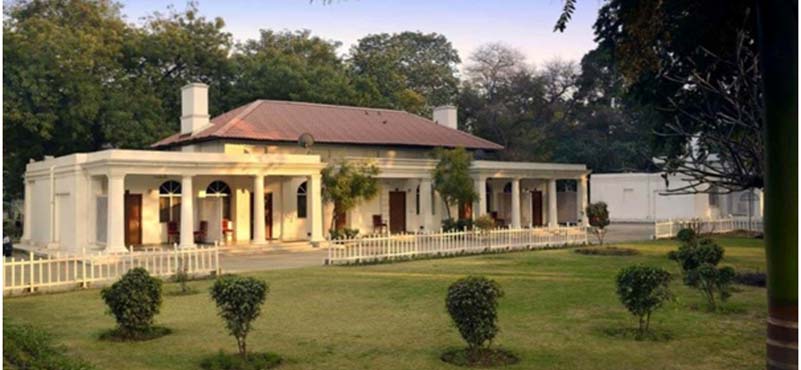
The recent debate surrounding the Delhi Gymkhana Club and the government’s efforts to reclaim prime public land has reignited an uncomfortable but necessary national conversation. Why do institutions created to serve a colonial elite continue to enjoy privileged status in democratic India nearly eight decades after Independence? More importantly, why do many Indians continue to regard these institutions as symbols of prestige rather than relics of an unequal past?
The issue extends far beyond a single club in Lutyens’ Delhi. Across the country, colonial-era gymkhanas, exclusive clubs and elite social establishments continue to occupy some of the most valuable urban land in India. Their survival raises questions not merely about property rights or lease agreements but about something much deeper—the unfinished project of mental decolonisation.
Empires rarely survive through military power alone. Their greatest success lies in shaping institutions, attitudes, aspirations and hierarchies that continue to command legitimacy long after the empire itself has vanished. The British left India nearly eight decades ago, but many of the structures and mindsets they created remain embedded in our public life. Some have survived because they adapted. Others have survived because independent India never seriously questioned them.
The challenge before New Bharat is therefore not merely administrative or legal. It is civilisational.
Colonial Institutions: The Architecture of Exclusivity
The British did not create institutions to serve India. They created institutions to govern India.
The colonial state was built upon separation. There were separate residential zones, separate recreational spaces, separate social circles and separate privileges. Gymkhana clubs, Civil Lines and exclusive residential enclaves were designed to distinguish rulers from the ruled. Access was restricted. Membership was selective. The message was clear: power belonged to a small privileged class.
After Independence, ownership patterns changed and racial barriers disappeared. Yet many of these institutions retained their essential character. The exclusivity remained. The privileges remained. The social prestige remained.
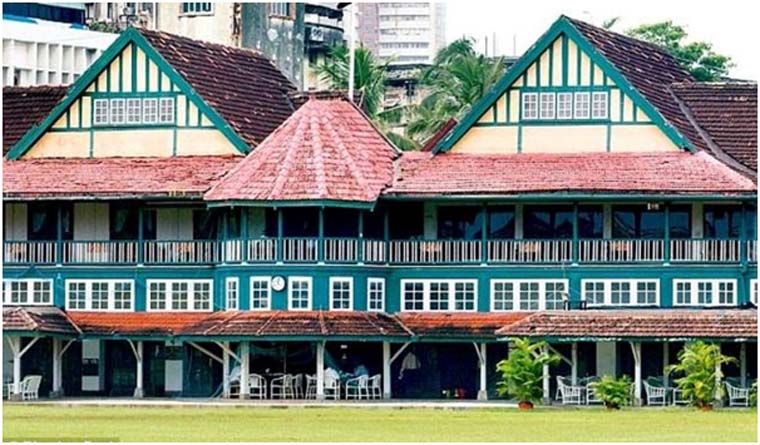
The Delhi Gymkhana Club became one such symbol. So did the Bombay Gymkhana and numerous similar establishments across the country. Their membership may now be overwhelmingly Indian, but the culture of exclusivity that defined them during the colonial era often survives in modified form.
This is not an argument against preserving heritage. Historic buildings deserve protection. Architectural legacy deserves conservation. But preserving a building is not the same as preserving the social hierarchy it once represented.
The question is therefore straightforward. Should public land and public resources continue to support institutions whose defining feature remains exclusivity rather than public service?
A democratic republic must eventually confront that question.
Colonial Attitudes: The Empire Within
The British Empire rested on a simple but powerful assumption: some people were born to rule and others were born to obey.
Independent India inherited many of the attitudes cultivated under colonial rule. Excessive deference to authority, obsession with official status, fascination with titles and designations, preference for foreign validation and social distance between governing elites and ordinary citizens all reflect habits that colonial rule encouraged.
Many Indians continue to judge individuals less by competence and more by proximity to power. The culture of VIP privilege, special access and social hierarchy owes as much to colonial inheritance as to contemporary politics.
The colonial state produced subjects. A republic requires citizens. The distinction is profound. Subjects seek permission. Citizens demand accountability. Subjects accept hierarchy as natural. Citizens recognise equality as a right. Subjects look upward for approval. Citizens look inward for confidence.
Mental decolonisation begins when a society stops measuring worth through inherited hierarchies and starts valuing merit, contribution and character.
The challenge is not simply to remove colonial symbols but to dismantle colonial habits of thinking.
When Indians Became More British Than the British
One of the most enduring legacies of colonialism is elite mimicry.
The British created a social model that many colonised societies came to admire. Certain accents became prestigious. Certain lifestyles became aspirational. Certain institutions became markers of status. Exclusivity itself became a symbol of success.
After Independence, sections of India’s elite inherited not only the institutions but also the aspirations associated with them.
The rulers changed. The social script remained remarkably similar.
What had once been clubs for colonial administrators gradually became clubs for political, bureaucratic, corporate and social elites. The language changed. The membership changed. The underlying idea often did not.
This phenomenon is not unique to India. Across former colonies, local elites frequently adopted the habits and symbols of former rulers. Yet in a civilisation as ancient and self-confident as India, such imitation is particularly paradoxical.
India does not lack civilisational depth. It does not lack intellectual traditions. It does not lack cultural confidence. Yet too often, status continues to be measured through inherited colonial markers rather than indigenous achievement.
The continued prestige attached to many colonial-era institutions reflects a deeper psychological reality. Exclusivity has become confused with excellence.
A confident civilisation does not need borrowed symbols to validate its worth. It creates standards of its own.
Why Colonial Symbols Survive
If colonial rule ended long ago, why do so many colonial symbols continue to endure? The answer is simple. Institutions survive when they continue to serve contemporary interests.
Colonial-era clubs and gymkhanas retain influence because they provide prestige, networking opportunities and social capital. Membership itself often becomes a status symbol. Scarcity enhances perceived value. Exclusivity creates desirability.
At the same time, there exists a tendency to romanticise colonial heritage. Historic buildings, manicured lawns and nostalgic traditions often create an aura of sophistication that discourages critical scrutiny.
But heritage and privilege are not the same thing. A colonial building may deserve preservation. A colonial hierarchy does not. This distinction is critical.
India must preserve its historical memory. Erasing history is neither desirable nor possible. Yet preserving history should not become an excuse for perpetuating unequal access to public resources.
New Bharat must learn to differentiate between conserving the past and being captive to it. One honours history. The other prevents progress.
The Question of Public Land and Public Purpose
The debate surrounding the Delhi Gymkhana Club has brought into focus a larger national question: should colonial-era leases continue indefinitely without periodic reassessment?
Every lease involving public land should ultimately be evaluated through a simple principle—public purpose.
Does the institution serve a broad public interest? Does it justify the continued allocation of valuable public assets? Does it contribute to society in a manner proportionate to the privileges it enjoys?
These are legitimate questions in any democracy. The objective is not punishment. Nor is it historical revenge. It is accountability. The significance of this debate has now extended beyond Delhi.
Following developments in the national capital, the Maharashtra Government has initiated scrutiny of Mumbai’s elite gymkhanas, including the Bombay Gymkhana and several prominent clubs located along Marine Drive. The review reportedly includes examination of colonial-era leases, rental obligations, compliance issues and commercial utilisation of government-leased land.
The scale of the issue is noteworthy. Studies indicate that elite clubs and gymkhanas occupy approximately 664 acres of land across Mumbai—nearly one-fifth of the city’s total open spaces. This is particularly striking in a metropolis where citizens have access to only a fraction of the open space available in most global cities.
If Delhi Gymkhana represents the colonial legacy of power, Bombay Gymkhana represents the colonial legacy of privilege.
The debate therefore becomes national in scope. Similar questions may eventually arise in relation to colonial-era clubs, gymkhanas and institutions across other cities.
Reclaiming Indian Confidence
Mental decolonisation does not mean rejecting everything Western. Nor does it require symbolic gestures or emotional rhetoric. It requires confidence.
True confidence emerges when a nation no longer seeks validation from former rulers, inherited hierarchies or borrowed symbols of prestige.
India’s confidence should rest on stronger foundations—its civilisational continuity, intellectual traditions, scientific achievements, entrepreneurial dynamism, democratic resilience and cultural self-assurance.
A nation that produced the Upanishads, built thriving maritime networks, developed sophisticated systems of governance and today aspires to become a leading global power does not need colonial relics to define its identity.
The goal is not isolation from the world. The goal is engagement with the world from a position of self-respect.
Nations that are secure in their identity preserve history without becoming prisoners of it. They celebrate heritage without perpetuating privilege. They modernise without losing confidence in themselves.
That is the balance India must achieve.
The Last Battle for Freedom
Political freedom is won once. Mental freedom must be won repeatedly by every generation.
The struggle against colonialism did not end on 15 August 1947. It merely changed form. The battlefield shifted from territory to psychology, from governance to attitudes, from institutions to self-perception.
The debate over Gymkhana clubs, colonial-era leases and public land is therefore not fundamentally about buildings. It is about the kind of nation India wishes to become.
New Bharat cannot be built upon hierarchies designed for an empire. A republic derives legitimacy from citizens, not exclusivity; from public purpose, not privilege; from confidence, not imitation.
The British Empire departed long ago. The final challenge before India is whether the colonial mindset is prepared to leave with it.
Political independence is achieved once. Mental independence must be achieved repeatedly.
ABOUT THE AUTHOR

Lt Gen Rajeev Chaudhry (Retd) is a social observer and writes on contemporary national and international issues, strategic implications of infrastructure development towards national power, geo-moral dimension of international relations and leadership nuances in changing social construct.