
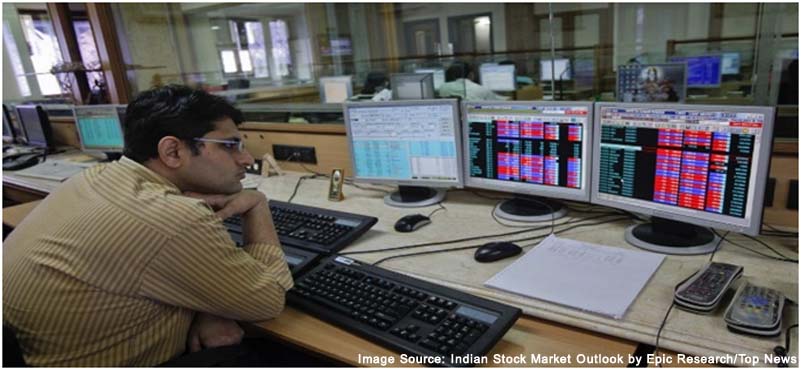
“Price is what you pay; value is what you get”.
Financial markets have often been described as the closest approximation to human psychology translated into numbers. They are driven not merely by corporate earnings and macroeconomic indicators, but also by sentiment, expectations, fear, optimism and, increasingly, by global geopolitical developments. At the best of times, the stock market is difficult to read. At the worst of times, it appears almost inscrutable, with sharp oscillations reflecting the perpetual struggle between bulls and bears.
The year 2026 has confronted investors with one of the most challenging global environments in recent memory. The Russia–Ukraine conflict, escalating tensions involving Iran, Israel and the United States, disruptions to shipping lanes, persistent energy uncertainty and widening geoeconomic fragmentation have combined to produce choppy markets and heightened volatility. Central banks face a difficult balancing act as they try to control inflation without stalling economic growth. This ongoing policy uncertainty has periodically triggered volatility across equity, bond, and commodity markets.
When policy positions shift too frequently, strength can begin to resemble instability. Negotiation becomes less a game of chess than a guessing game, with markets struggling to distinguish strategy from impulse. There may indeed be a method in this turbulence, but it is increasingly obscured by the theatrics surrounding it. Unlike Hamlet’s carefully staged madness, however, this contemporary “theatre of the absurd” carries consequences that are neither theatrical nor easily contained.
Table 1: Geopolitical Risks and Their Potential Impact Across Sectors
| Global Event | Likely Market Impact | Market Outperformers | Underperformers |
| Iran–Israel/US Conflict | Higher crude oil prices and volatility | Oil & Gas Producers | Aviation, Paints, Logistics |
| Russia–Ukraine War | Supply-chain disruptions and commodity inflation | Defence, Fertilizers | Manufacturing dependent on imports |
| Rising US Interest Rates | FII outflows and stronger US dollar | Export-oriented IT Companies | Rate-sensitive sectors |
| Global Recession | Weak export demand | Domestic Consumption Stocks | IT, Metals, Exporters |
| Stable Geopolitical Environment | Increased risk appetite | Broad Market | Safe-haven Assets |
Historically, such an environment would have been expected to trigger a prolonged slump in emerging-market equities. Yet Indian equities have shown remarkable resilience. Although bouts of volatility have occurred, benchmark indices have repeatedly rebounded, underscoring growing investor confidence in India’s macroeconomic fundamentals and the increasing maturity and depth of its financial markets.
This resilience has sparked debate among economists, policymakers and market participants. Is the Indian market becoming structurally stronger? Have domestic investors fundamentally altered the dynamics of capital markets? Can corporate earnings continue to support elevated valuations despite global uncertainty? More importantly, what should investors expect over the medium term? There are no easy answers. But these questions assume contextual significance because India today occupies a unique position in the global economy. With GDP growth expected to remain among the fastest in the world, a rapidly expanding middle class, increasing formalisation of the economy, large-scale infrastructure investments and an accelerating digital transformation, India continues to attract global attention despite intermittent foreign portfolio outflows.
“Stick with me, baby; I’ll take you places!”
The stock market is rarely governed by simple explanations; it’s journey is marked by peaks and troughs, booms and downturns, exuberance and volatility. Market movements reflect the interplay of several forces: macroeconomic conditions, the performance of individual industries and companies, global perceptions of an economy’s strength and sustainability, and the flow of capital from Foreign Institutional Investors (FIIs), Domestic Institutional Investors (DIIs) and, increasingly, retail investors.
Table 2: Domestic Investors vs Foreign Institutional Investors
| Parameter | Domestic Institutional Investors (DIIs) | Foreign Institutional Investors (FIIs) |
| Investment Horizon | Long-term | Medium to Short-term |
| Source of Funds | Mutual Funds, SIPs, Insurance, Pension Funds | Global Asset Managers, Hedge Funds, Sovereign Funds |
| Reaction to Global Events | Relatively Stable | Highly Sensitive |
| Market Influence | Stabilizes Markets | Can Trigger Short-term Volatility |
| Investment Strategy | Fundamental and Long-term | Global Asset Allocation Driven |
When economic and corporate prospects are favourable, optimism can lift the broader market and propel individual stocks to stratospheric heights. As President John F. Kennedy famously observed, “A rising tide lifts all boats.” Yet market gyrations are driven by more than fundamentals. Sentiment and perceptions often exert an equally powerful influence, and it’s important to learn from evolving circumstances. As a couplet goes,
“फर्क बहुत है तुम्हारी और हमारी तालीम में,
तुमने उस्तादों से सीखा है और हमने हालातों से।”
English translation: There is a big difference between your education and ours: you learned from great teachers, while we learned from circumstances.
Investor Sentiment: An Invisible Force
Investor sentiment reflects expectations—sometimes rational, often speculative—about the future value of financial assets. A stock’s intrinsic value depends on a range of factors, including projected earnings, growth prospects, the broader market environment, financial statements, cash flows, discounted cash-flow analysis and peer comparisons.
Yet translating these variables into investment decisions is far from straightforward. Sound value investing requires moving beyond candlestick patterns and short-term market noise to undertake a granular assessment of a company’s balance sheet, competitive position, risks and long-term growth potential. Markets are basically shaped by constant interaction of economic fundamentals and human psychology.
Investors also must guard against excessive optimism and froth. Markets have an uncanny ability to surprise both pessimists and optimists — a “googly” can come anytime, a la Shane Warne. As legendary investor Benjamin Graham famously observed, “In the short run, the market is a voting machine, but in the long run, it is a weighing machine”. Short-term price movements are often dominated by sentiment, while long-term returns depend upon the strength of economic fundamentals and corporate performance.
It is worthwhile examining three critical questions confronting investors today: first, why has the Nifty 50 remained remarkably resilient despite war-related uncertainties and rising crude oil prices? Second, under what conditions could foreign institutional investors (FIIs) return as sustained buyers of Indian equities? Finally, can India’s information technology (IT) sector continue to provide meaningful support to market performance amid a changing global technology landscape? These dynamics matter to institutional and retail investors alike — the millions now investing via SIPs, mutual funds and retirement savings. The answers lie in the interplay of fundamentals, geopolitics, monetary policy and investor behaviour.
Table 3: Drivers of FII Inflows into India
| Factor | Positive Outcome for FIIs |
| US Federal Reserve Rate Cuts | Higher allocations to emerging markets |
| Weaker US Dollar | Improved returns on Indian assets |
| Lower Global Bond Yields | Greater attractiveness of equities |
| Strong Indian GDP Growth | Better long-term earnings prospects |
| Attractive Market Valuations | Improved risk-reward ratio |
| Stable Government Policies | Higher investor confidence |
| Strong Corporate Earnings | Increased institutional investments |
Nifty 50’s Remarkable Resilience Amid War and Rising Oil Prices
The Nifty 50’s recent ability to withstand intensifying geopolitical friction and climbing crude oil prices highlights a structural shift in the Indian equity market. Historically, a major oil importer like India would face severe financial pressure during energy spikes, as high crude prices typically trigger inflation, balloon the current account deficit, strain public finances, and squeeze corporate profit margins. However, the Indian market has consistently broken from these traditional economic expectations.
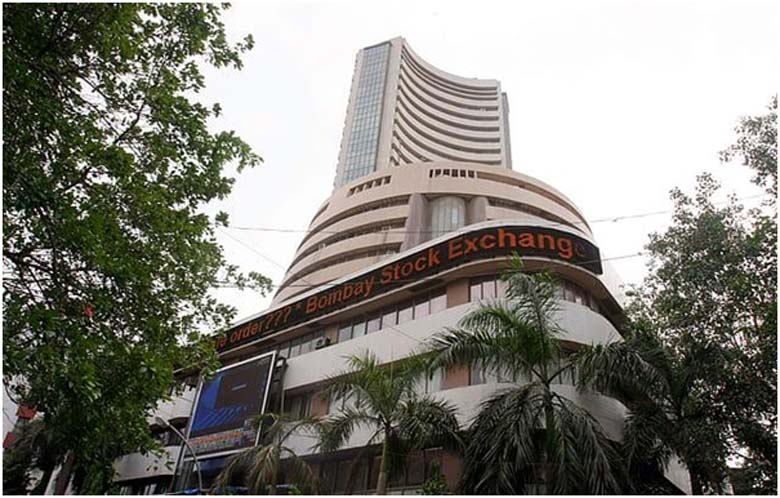
Three forces underpin this resilience — sound macro fundamentals, deepening domestic institutional participation, and steady corporate earnings. Foremost among these is India’s macroeconomic stability. As I have repeatedly demonstrated in over a dozen papers-if not more – and several books, viz., India’s Transforming Financial Sector, Dynamics of Indian Banking, and Indian Economic Policies and Data, India continues to remain one of the world’s fastest-growing major economies, with GDP growth expected to remain in the range of approximately 6.5–7 % over the medium term. Inflation, while occasionally elevated due to food price shocks, has remained broadly within the RBI’s tolerance band, allowing monetary policy to retain credibility. Political stability and policy continuity have further strengthened investor confidence by providing greater certainty regarding strong domestic liquidity, infrastructure spending, manufacturing incentives and fiscal consolidation.
Table 4: Key Factors Supporting the Resilience of the Indian Stock Market
| Factor | Impact on the Stock Market | Key Beneficiaries |
| Strong GDP Growth | Sustains corporate earnings and investor confidence | Banking, Capital Goods, Consumption |
| Controlled Inflation | Supports consumer spending and stable interest rates | FMCG, Retail, Automobiles |
| Domestic Institutional Flows | Offsets FII selling and reduces volatility | Large-cap and Mid-cap Stocks |
| Healthy Corporate Balance Sheets | Enhances profitability during economic shocks | Banking, Manufacturing, IT |
| Government Infrastructure Spending | Boosts economic activity and corporate revenues | Infrastructure, Cement, Engineering |
| Digital Transformation | Improves productivity and long-term competitiveness | IT, Telecom, Digital Services |
Defying the Odds
Unlike many EMEs that are vulnerable to external shocks, India today possesses significantly stronger macroeconomic buffers. Foreign exchange reserves stood at US$675.16 billion for the week ended July 10, 2026- among the highest globally- providing considerable protection against external volatility. The RBI’s Financial Stability Report (FSR) (July 2026) shows that asset quality of SCBs improved further in March 2026, with the GNPA ratio declining to a multi-decadal low of 1.8% and the NNPA ratio falling to 0.4%. The improvement in asset quality was broad-based across bank groups. Macro stress test results indicate that the banking system remains well-positioned to absorb potential shocks, with aggregate capital ratios projected to remain comfortably above regulatory thresholds even under hypothetical adverse scenarios. Non-banking financial companies (NBFCs) remain financially sound, supported by strong capitalisation, healthy profitability, and improving asset quality. The insurance sector continues to maintain solvency well above regulatory requirements. Corporate balance sheets have also improved following years of deleveraging, enabling companies to absorb temporary increases in input costs more effectively.
The second pillar is the rise of domestic institutional investors. Rising participation via mutual funds, insurance, pension funds and retirement savings over the past decade marks one of the most significant structural shifts in India’s capital markets.

According to the Association of Mutual Funds in India (AMFI), monthly Systematic Investment Plan (SIP) contribution surged from ₹3,122 Crore in April 2016 to ₹31,781 Crore in June 2026— nearly a 10x growth in 10 years. The all-time peak was ₹32,087 Crore in March 2026. These statistics reflect a fundamental shift in how middle-class India saves and invests. India’s SIP AUM grew from under ₹1 Lakh Crore in 2016 to over ₹17.70 Lakh Crore in 2026 — a remarkable decade of growth. The only year SIP collections declined was FY 2020-21 (₹96,080 Cr vs ₹1,00,084 Cr in FY20) — a 4% fall driven by COVID-19 disruptions and market panic. All other years have been higher than the previous without exception –clearly onwards and upwards.
Table 5: Progressively Rising Month-wise SIP Contribution from FY 2016-17
| Month | FY27 | FY26 | FY25 | FY24 | FY23 | FY22 | FY21 | FY20 | FY19 | FY18 | FY17 |
|---|---|---|---|---|---|---|---|---|---|---|---|
| April | 31,115 | 26,632 | 20,371 | 13,728 | 11,863 | 8,596 | 8,376 | 8,238 | 6,690 | 4,269 | 3,122 |
| May | 30,954 | 26,688 | 20,904 | 14,749 | 12,286 | 8,819 | 8,123 | 8,183 | 7,304 | 4,584 | 3,189 |
| June | 31,781 | 27,269 | 21,262 | 14,734 | 12,276 | 9,156 | 7,917 | 8,122 | 7,554 | 4,744 | 3,310 |
| July | — | 28,464 | 23,332 | 15,245 | 12,140 | 9,609 | 7,831 | 8,324 | 7,554 | 4,947 | 3,334 |
| August | — | 28,265 | 23,547 | 15,814 | 12,693 | 9,923 | 7,792 | 8,231 | 7,658 | 5,206 | 3,497 |
| September | — | 29,361 | 24,509 | 16,042 | 12,976 | 10,351 | 7,788 | 8,263 | 7,727 | 5,516 | 3,698 |
| October | — | 29,529 | 25,323 | 16,928 | 13,041 | 10,519 | 7,800 | 8,246 | 7,985 | 5,621 | 3,434 |
| November | — | 29,445 | 25,320 | 17,073 | 13,306 | 11,005 | 7,302 | 8,273 | 7,985 | 5,893 | 3,884 |
| December | — | 31,002 | 26,459 | 17,610 | 13,573 | 11,305 | 8,418 | 8,518 | 8,022 | 6,222 | 3,973 |
| January | — | 31,002 | 26,400 | 18,838 | 13,856 | 11,517 | 8,023 | 8,532 | 8,064 | 6,644 | 4,095 |
| February | — | 29,845 | 25,999 | 19,187 | 13,686 | 11,438 | 7,528 | 8,513 | 8,095 | 6,425 | 4,050 |
| March | — | 32,087 | 25,926 | 19,271 | 14,276 | 12,328 | 9,182 | 8,641 | 8,055 | 7,119 | 4,335 |
| FY Total | 93,850* | 3,49,589 | 2,89,352 | 1,99,219 | 1,55,972 | 1,24,566 | 96,080 | 1,00,084 | 92,693 | 67,190 | 43,921 |
Source: AMFI, Monthly Reports.
Accordingly, the Indian equity markets are no longer overwhelmingly dependent on foreign institutional investors (FIIs) for liquidity and direction — a paradigm shift from the situation that existed a decade ago. Today, DIIs frequently offset large FII outflows, reducing market volatility and enhancing stability. This structural shift reflects rising financial literacy, greater household participation in capital markets, increasing digital access to investment platforms and the gradual movement of household savings from physical assets such as gold and real estate towards financial assets. The growing depth of domestic capital has fundamentally altered the character of the Indian stock market. Rather than reacting disproportionately to episodic global uncertainty, markets increasingly distinguish between temporary external shocks and long-term domestic fundamentals.
Table 6: Outlook for Major Market Sectors
| Sector | Near-term Outlook | Key Growth Drivers |
| Banking & Financial Services | Positive | Credit Growth, Digital Banking |
| IT | Moderately Positive | AI, Cloud Computing, Digital Transformation |
| Pharmaceuticals | Positive | Global Demand, Healthcare Spending |
| Capital Goods | Strong | Infrastructure Investments |
| Defence | Strong | Higher Government Spending |
| FMCG | Stable | Rising Rural Demand |
| Automobiles | Positive | Premiumization, EV Adoption |
| Renewable Energy | Strong | Energy Transition Policies |
The third pillar is robust corporate earnings. Despite rising costs and geopolitical uncertainty, Indian companies have remained efficient — investing in digitisation, automation, supply chain optimisation and energy efficiency to shore up margins and sustain profitability.
Furthermore, several sectors benefit from a depreciating rupee. Export-oriented industries such as IT, pharmaceuticals and specialised manufacturing derive a substantial portion of their revenues from overseas markets. Currency depreciation enhances their rupee-denominated earnings, partially offsetting the negative effects of higher imported energy costs.
India’s diversified market composition also contributes to resilience. Unlike economies heavily dependent on a single sector, India’s benchmark indices comprise financial services, technology, pharmaceuticals, consumer goods, automobiles, infrastructure, telecommunications and industrial companies. This diversification reduces the market’s overall vulnerability to sector-specific shocks.
Geopolitical Crises-The Challenge and the Response
History offers an important perspective. Financial markets have repeatedly recovered from geopolitical crises once uncertainty begins to recede. During the Gulf War, the Iraq conflict, the Crimea crisis and more recent confrontations, markets initially reacted sharply but stabilised as investors reassessed the longer-term economic consequences. Often, market corrections proved far shorter than the conflicts themselves. As the saying goes, “Faint heart never won a fair lady.” Shakespeare captured this enduring truth in Measure for Measure (1623): “Our doubts are traitors and make us lose the good we oft might win, by fearing to attempt.” The same psychological insight underpinned Mountain Dew’s iconic “Darr Ke Aage Jeet Hai” campaign: fear is universal, but victory lies beyond it. For investors too, courage, patience and perspective often prove more rewarding than panic.
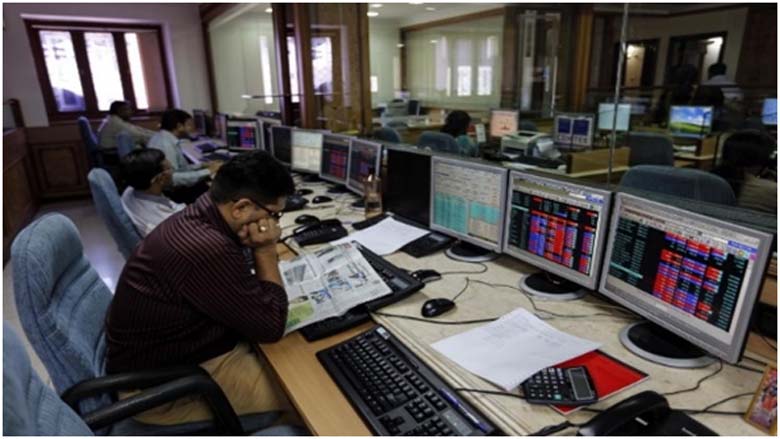
As I maintained in my previous articles (viz., “India stock rally is no rocket science. Here’s why”, The Economic Times, Feb 03, 2024; “Aspects of Stock Market Volatility in India”, Infomerics Ratings, December 2, 2024; “Roller Coaster Stock Market Ride: Staying the Course”, CS Conversations, December 2024), geopolitical events often generate sharp but temporary market corrections. Once investors gain greater clarity regarding the likely trajectory of hostilities, commodity prices and policy responses, market volatility typically subsides, and attention returns to earnings, growth and valuations.
The IMF supports this thesis. Gita Gopinath, former First DMD of the IMF, pointed out that the disruptive effects of global shocks on emerging market economies (EMEs) have become significantly more muted than in earlier decades because many countries have strengthened their macroeconomic policy frameworks, improved financial regulation and accumulated stronger external buffers. Nevertheless, investors should not become complacent. There are disconcerting issues, such as escalating geopolitical conflicts, global economic slowdown, delayed US Fed rate cuts, inflationary pressures, sharp FII outflows, and currency volatility.
Table 7: Historical Market Response to Geopolitical Crises
| Event | Initial Market Reaction | Long-term Outcome |
| Gulf War (1990–91) | Sharp Correction | Recovery after oil prices stabilised |
| Iraq War (2003) | Temporary Volatility | Strong Global Equity Rally |
| Global Financial Crisis (2008) | Severe Market Crash | Multi-year Bull Market Followed |
| COVID-19 Pandemic (2020) | Historic Sell-off | Record Recovery Driven by Liquidity |
| Russia–Ukraine War (2022) | Commodity Price Surge | Markets Recovered as Supply Chains Adjusted |
| Middle East Tensions (2024–25) | Elevated Volatility | Markets Focused on Earnings and Economic Growth |
Geopolitical risks remain inherently unpredictable. A prolonged disruption to global energy supplies or a sustained surge in crude oil prices could eventually weigh on inflation, corporate profitability and consumer demand. Financial markets, therefore, remain vulnerable to unexpected developments. For long-term investors, however, market volatility should be viewed through a different lens. Short-term fluctuations are an inevitable feature of equity investing rather than a reason for panic. Nobel Laureate Paul Samuelson captured this philosophy memorably when he remarked: “Investing should be more like watching paint dry or watching grass grow. If you want excitement, take $800 and go to Las Vegas”. His pithy observation remains relevant today.
Pathway to the Future
The capital market does not progress linearly in a unidirectional manner. Despite choppy data and negative shocks, the stock market direction over the long haul is positive. Should this trend persist, the power of enduring compounding could take Sensex to higher levels. But as Ben Graham said, “the individual investor should act consistently as an investor and not as a speculator”.
Successful investing is built less on predicting every market movement than on patience, discipline and a steadfast focus on long-term wealth creation. In an age of geopolitical uncertainty and rapid-fire news cycles, these qualities are perhaps an investor’s greatest competitive advantage. To err is human; the future remains a closed book. Yet we can peer into it by studying data, connecting the dots, discerning patterns and drawing informed inferences. Long-range plans, however, can quickly become obsolete. Rather than attempting to anticipate all eventualities, investors should identify the assumptions underpinning their strategy, monitor signals indicating whether those assumptions remain valid, and make timely course corrections. The objective is not to predict every turn of the market, but to adapt intelligently as circumstances change.
Concentrating investments in a few stocks or sectors and leveraging them heavily can be a mixed blessing. Being overweight on a few scrips may generate spectacular gains, but the same concentration can inflict devastating losses when markets turn. The pursuit of quick profits, especially through excessive leverage, can therefore undermine long-term wealth creation. Diversification across sectors and asset classes remains essential to mitigate concentration risk, since different investments respond differently to market shocks. Sound long-term investing rests on staying invested to harness compounding, using SIPs to average purchase costs across market cycles, and focusing on fundamentals, as sustained earnings growth ultimately drives stock prices. Investors should avoid emotional decisions, particularly panic selling, and resist attempts to time the market. Patience and time in the market generally outperform impulsive market timing.
Will Foreign Investors Turn Net Buyers?
FIIs, or Foreign Portfolio Investors (FPIs), have historically played a pivotal role in shaping the direction of Indian equity markets. Their investment decisions often influence market sentiment, liquidity and valuations, particularly in large-cap stocks. However, the relationship between FII flows and market performance has undergone a significant transformation over the past decade as domestic institutional investors have emerged as an increasingly powerful counterbalance.
The current global investment environment is characterised by volatility, uncertainty, complexity and ambiguity—the now familiar acronym VUCA aptly captures the challenges confronting investors. Persistent geopolitical tensions, elevated interest rates in advanced economies, concerns over global growth and fluctuating commodity prices have encouraged investors to adopt a more cautious approach towards emerging markets.
Against this backdrop, foreign capital is more likely to return to Indian equities gradually than in a sudden surge. The process will probably unfold in stages: first, a moderation in outflows, followed by selective inflows and, eventually, sustained capital allocation as global financial conditions become more favourable. The pace of this recovery is a function of several external factors, primarily the monetary policy stance of the US Federal Reserve.
When US interest rates remain elevated, global investors tend to favour dollar-denominated assets offering attractive risk-adjusted returns. Higher US Treasury yields consequently diminish the relative appeal of emerging-market equities and can trigger capital outflows from countries such as India. Conversely, clearer signals of monetary easing by the Federal Reserve could weaken the dollar, lower global bond yields and encourage investors to seek higher returns in emerging markets. Historically, periods of declining US interest rates have often been associated with stronger capital flows into Asian equities, including India.
Currency dynamics also impact the stock market. A softer dollar generally improves the attractiveness of emerging market assets, while reducing pressure on local currencies. This creates favourable conditions for renewed foreign portfolio investment. However, global factors alone are insufficient. India must continue to demonstrate superior domestic economic performance to attract sustained foreign investment.
India’s growth story remains compelling. Robust GDP growth, increasing manufacturing competitiveness, rising public capital expenditure, improvements in logistics infrastructure and the growing integration of India into global supply chains have strengthened the long-term investment case. Corporate profitability also critically determines foreign investor sentiment. Over the past several years, Indian companies have generally delivered healthy earnings growth despite multiple external shocks, including the pandemic, supply-chain disruptions, inflationary pressures and geopolitical conflicts. Strong balance sheets, improving return on equity and disciplined capital allocation have enhanced the quality of corporate earnings.
Cause for Concern, Not for Alarm
Valuations, however, deserve careful consideration. The flip side is that for much of the post-pandemic period, Indian equities traded at a significant premium to other emerging markets. Greed is good, as Gordon Gekko said in the film Wall Street (1987). While this premium reflected India’s superior growth prospects and institutional stability, it also prompted some foreign investors to reduce exposure, particularly when global liquidity conditions tightened. Recent market corrections have moderated valuation excesses, reducing what former US Federal Reserve Chairman Alan Greenspan famously described as “irrational exuberance”. A more reasonable valuation environment improves the risk-reward equation for foreign investors and increases the likelihood of renewed allocations to Indian equities. The increasing confidence generated by DIIs is also significant.
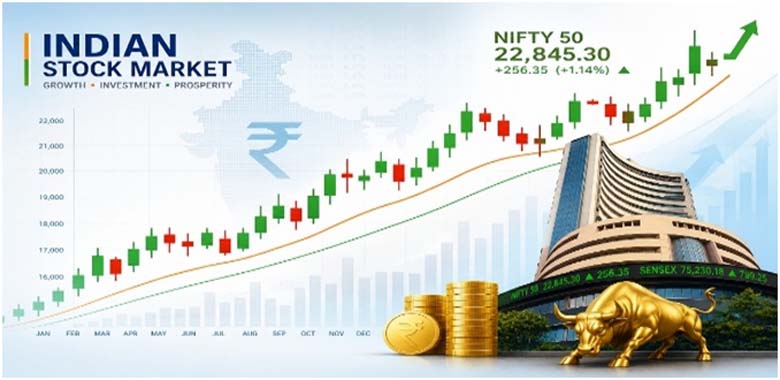
The remarkable growth of SIPs, pension funds, insurance companies and retail mutual fund investments has demonstrated that Indian markets are no longer excessively dependent on foreign capital. During episodes of significant FII selling, DIIs with deep pockets have repeatedly absorbed supply, limited market declines and improved liquidity.
Ironically, this growing domestic resilience may itself attract additional foreign investment. Investors generally prefer markets that exhibit stability during periods of stress, and India’s ability to withstand external shocks has enhanced its reputation among global asset managers. Should foreign investors return meaningfully, they are likely to focus on sectors that combine earnings visibility with long-term structural growth. Financial services remain attractive because of expanding credit demand and improving asset quality. Capital goods and infrastructure companies continue to benefit from sustained government investment in roads, railways, defence and urban development. The power sector is supported by rising electricity demand, renewable energy investments and grid modernisation, while select consumer-oriented businesses stand to gain from rising disposable incomes and expanding middle-class consumption.
A volatile stock market demands patience. Foreign capital flows are inherently cyclical, shifting with global economic forces India cannot control. Investors shouldn’t mistake temporary pullbacks by foreign institutions for a breakdown in India’s long-term growth story. As Warren Buffett has often observed, successful investing requires the ability to remain patient when others are driven by short-term sentiment. The eventual return of foreign capital is likely to reward investors who remain focused on long-term fundamentals rather than transient market noise.
IT Earnings and Near-Term Support for the Market
India’s IT sector is unique in India’s equity markets. Accounting for a significant weight in benchmark indices, leading IT companies not only influence overall market performance but also serve as important indicators of global business confidence. In the near term, however, IT earnings are likely to provide selective rather than broad-based support to the market.
The sector continues to benefit from powerful long-term structural drivers. Across industries, businesses are accelerating investments in digital transformation, cloud computing, cybersecurity, artificial intelligence (AI), automation and data analytics. These technologies have shifted from being optional productivity enhancements to strategic necessities for companies seeking to remain competitive. AI represents the next major growth frontier. Generative AI, machine learning and intelligent automation are transforming enterprise operations, customer engagement and software development. Indian IT companies have responded by investing aggressively in AI capabilities, strategic partnerships and workforce reskilling to meet evolving client requirements. This ongoing technology transition creates opportunities for sustained revenue growth over the coming decade.
Moreover, India’s IT industry continues to benefit from substantial competitive advantages, including a highly skilled talent pool, cost-efficient service delivery, globally integrated delivery models and decades of experience in managing complex digital transformation projects. The rapid expansion of Global Capability Centres (GCCs) has further strengthened this ecosystem. An increasing number of multinational corporations (MNCs) are establishing advanced technology, engineering, research and innovation centres across Indian cities, reflecting growing confidence in India’s talent and digital capabilities. Strong order books in cloud computing, cybersecurity, enterprise applications and artificial intelligence provide an important buffer against cyclical weakness in discretionary technology spending.
The financial strength of leading Indian IT companies is another important source of resilience. Most large firms maintain largely debt-free balance sheets, substantial cash reserves, consistent dividend payouts and robust free cash flow generation. These attributes make them relatively defensive investments during periods of economic uncertainty. Nevertheless, several headwinds continue to temper near-term optimism. Many global clients remain cautious about discretionary technology spending amid concerns regarding economic growth in North America and Europe. Budget approvals have become slower, project timelines have lengthened, and pricing pressures have intensified as corporations seek greater efficiency from technology vendors.
Recent FII de-risking has also disproportionately affected technology stocks, partly reflecting concerns regarding global demand and elevated valuations. Consequently, while IT companies are expected to deliver steady earnings growth, they may function more as defensive earnings anchors than as catalysts for a broad-based market rally in the immediate future. Instead, leadership is likely to remain diversified across sectors. Financial services, manufacturing, capital goods, defence, infrastructure, pharmaceuticals, telecommunications and consumer businesses all possess strong structural growth drivers that reduce excessive dependence on any single sector. This diversification is one of the Indian equity market’s greatest strengths. Unlike earlier decades, when a handful of sectors drove performance, today’s market runs on multiple engines of growth simultaneously.
Conclusion
The Indian stock market stands at a fascinating crossroads. Investors must contend with an exceptionally uncertain global environment, characterised by geopolitical conflict, energy price volatility, shifting monetary policies and increasing geoeconomic fragmentation. Yet India’s domestic economic fundamentals remain among the strongest in the world, providing a powerful counterweight to external turbulence. The resilience of the Nifty 50 despite repeated global shocks is not accidental but the outcome of a structural transformation of the Indian economy and financial system. Strong macroeconomic management, healthier corporate balance sheets, deepening domestic capital markets and sustained household participation through systematic investments have fundamentally altered the market’s capacity to absorb external volatility.
While FIIs may continue to adjust their allocations in response to evolving global conditions, their influence is no longer as overwhelming as it once was. Domestic investors have emerged as a stabilising force, providing the market with a level of resilience largely absent in previous decades. Similarly, although the IT sector may not single-handedly drive the next leg of the market rally, its robust balance sheets, strong digital transformation pipeline and leadership in AI position it as a reliable pillar of long-term market performance. Combined with sustained growth across financial services, manufacturing, infrastructure, pharmaceuticals and consumption, the broader market has multiple avenues for expansion.
Over time, markets have absorbed wars, recessions, financial crises and episodes of political turmoil and moved forward. Periods of volatility are unavoidable, but they rarely persist indefinitely. In the long run, wealth creation has tended to reward investors who stay disciplined, maintain diversification and exercise patience. As Benjamin Graham sagaciously observed, “The individual investor should act consistently as an investor and not as a speculator”. In today’s uncertain world, that timeless advice is perhaps more relevant than ever. The mysterious ways of the stock market will continue to test conviction and temperament, but for investors anchored in sound fundamentals and a long-term perspective, periods of uncertainty often present not reasons for despair but opportunities for enduring wealth creation.
In bracing for tomorrow, the focus should remain firmly on long-term wealth creation rather than short-term market timing. This requires thoughtful asset allocation aligned with an individual’s investment horizon, risk tolerance, and return expectations, along with a preference for quality assets and the discipline to remain invested through market cycles. As Carlos Slim Helú aptly observed, “With a good perspective on history, we can have a better understanding of the past and present, and thus a clear vision of the future.”
Financial literacy and investor awareness can be strengthened through education, access to reliable information and a continuing willingness to learn. A deeper understanding of markets can, in turn, contribute to the development of a broader and more resilient capital market. In an ever-changing investment landscape, individuals should budget carefully, build an adequate emergency fund to avoid distressed selling during market downturns, and cultivate the patience essential for long-term wealth creation.
ABOUT THE AUTHOR
 Dr. Manoranjan Sharma is Chief Economist, Infomerics, India. With a brilliant academic record, he has over 250 publications and six books. His views have been cited in the Associated Press, New York; Dow Jones, New York; International Herald Tribune, New York; Wall Street Journal, New York.