
Introduction
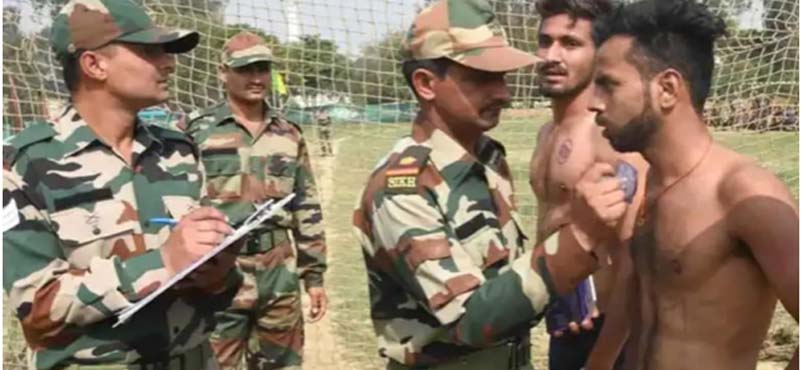
On 04 November 2026, the Chief of Defence Staff, General NS Raja Subramani announced a major update to the Agnipath scheme. The Union Cabinet approved a two-year extension, termed as the ‘Second Tour of Duty,’ for Agniveers recruited under the Agnipath scheme, extending the service tenure of Agniveers by two additional years, and creating a pathway for all Agniveers to be eventually absorbed into the Indian Defence Forces.
The changes were announced as the initial batch of 24,400 Agniveers was nearing the end of their four-year service term, with as many as 75% of the batch, or 18,300 personnel, set to leave the three-Armed Forces. The first batch of Agniveers from the Navy was set to leave on 21 November, the first Air Force batch on 25 December and the Army on 31 December.
This decision provides outgoing personnel with an extended timeline to showcase their performance, gain specialized skills and pursue permanent enrolment in the regular cadre based on merit. This follows the Armed Forces’ recommendations after they assessed how the scheme performed in its first four years.
The Scheme
The Agnipath scheme, launched on June 2022, initially recruited personnel for a four-year term with 25 percent retention eligibility based on merit. The scheme faced criticism for the short service duration and employment uncertainty.
Under the revised changes, 25 percent of Agniveers will be enrolled into the regular Armed Forces on merit after their initial four-year tenure. The remaining 75 per cent will have the option of extending their service by two years on a voluntary basis. At the end of six years, all Agniveers will be offered the chance to enroll as regular soldiers, subject to their willingness and the prescribed selection criteria laid down by the Services. The criteria will probably include medical, physical fitness, professional competence and discipline.
The extension includes higher remuneration, an enhanced Seva Nidhi package and cumulative seniority benefits. There are issues that need clarity which include the seniority and pensionable service of those retained after extension. These will no doubt be addressed.
The modifications to the scheme will also address certain ‘career uncertainties’ at the individual level as well as ensure that the sudden shortfall of trained manpower at a unit level does not take place. This will benefit continuity and operational readiness.
Changing Character of War
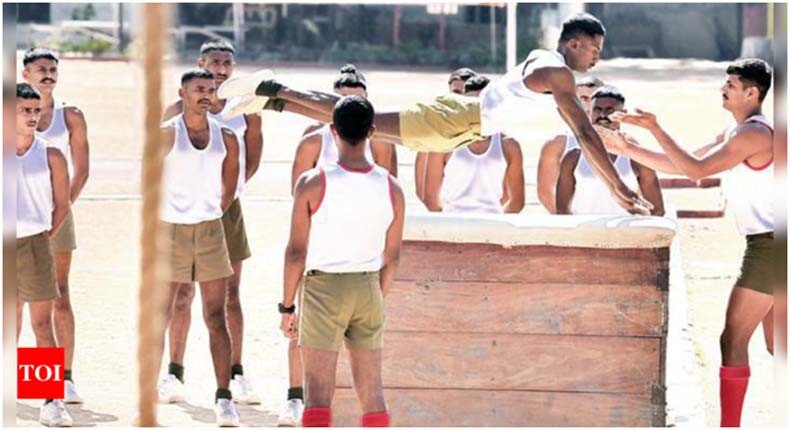
The character of modern warfare is undergoing fundamental transformation, driven by rapid technological advancements and the increasing convergence of operations across land, air, maritime, space, cyber and cognitive domains.
Future conflicts will demand not merely the possession of advanced military technologies but the ability to rapidly absorb, integrate and effectively employ them in a complex and contested operational environment. In this context, recruitment into the defence forces present both opportunities and challenges for the Indian Army’s technological transformation, and preparedness for Multi-Domain Operations (MDO).
Our recruitment guidelines must be modified to induct a fresh breed of soldiers who belong to a digitally aware and technologically adaptable generation of Indians, who provide an important human resource advantage in an era where technology is becoming central to battlefield effectiveness. Their familiarity with digital platforms, interconnected systems and emerging technologies can facilitate faster learning and adaptation. This assumes particular significance as the Indian Army progressively inducts unmanned and autonomous systems, artificial intelligence, advanced surveillance equipment, electronic warfare capabilities and network-enabled command and control systems. The recruited soldiers must contribute towards the cause and not be worrying about their retention.
Objective Assessment
What exactly was wrong with the previous recruitment system? Yes, there was a cost involved, but National Security surely doesn’t come for free. So, was this experiment really worth it? Could it not have been better to say that, though we made a sincere endeavour to try out the new scheme, however, we came to the conclusion that the previous system of recruitment was better? In the kind of hostile environment existing on India’s borders, is it worth trying these experiments with the Armed Forces? If needed, there are other agencies where such experiments could have been validated. The fact is that military reforms must be examined based on their outcomes not intentions.
A Cosmopolitan Fauj. Consequent to this latest decision of granting two-year extension to the non-selected Agniveers, every unit will have the following kind of soldiers. Those recruited prior to 2022, who are well trained and form the back bone of the unit. Then the selected 25% Agniveers, who will now be proceeding for their basic training and trade training (more applicable to technical arms and equipment intensive units). Next the 75% who are serving their two-year extension with different terms and conditions of service. Finally, the newly inducted Agniveers, who are unsure of their future. Is such an environment really conducive for a unit that may be called upon for active combat at short notice? The 75% fauj will bear a grudge against the officers and others, as they were not selected in the 25% quota. The fresh batch will not be touched as they lack proper training. The original pre-Agniveer lot will always feel that they are making up for the deficiencies of the Agniveers and are under constant stress. These differing sentiments among the jawans would break the homogeneity of the unit. All this could be avoided by going back to the old recruitment system.
A Younger Profile. It was argued that the defence forces needed a younger profile. Were the defence forces ever facing a youth crunch? Weren’t the previous recruits enrolled young enough? Yes, they were, and there was never any criticality. The fact is that young soldiers are never tasked on independent missions. It takes time to become part of the team, to become battleworthy. No Commander, at any level, will risk assigning/taking young inexperienced recruits on an important mission. Such teams comprise of a mix of mature, battle-hardened seniors, along with some youngsters, who are thus trained to take on future missions. Therefore, youth is not paramount, along with youth you need experience, maturity, and training. It takes many years to make a soldier, a soldier. An Agniveer straight out of six months training is still far from being useful as a soldier, he needs many more years of hardening, training and experience.
A Class within a Class. Unit cohesion, is a battle-winning factor. This comes through trust, bonding, common purpose, subordination of self-interest, and complete identification with each other. Are we not creating two classes within a well-knit cohesive outfit? For example, let us take a counter insurgency operation. The company commander is selecting a team for a mission, and he, amongst others, happens to select two Agniveers who are on two-year extension period. He has inadvertently created two classes within the team, one who will be entitled to full family pension in case they are a casualty in the operation, and the other whose family will get a one-time grant. This is bound to lead to disgruntlement which is totally undesirable in any organisation. There are also many other facets, like salary or leave entitlement, which will create a class within a class. When soldiers are performing the same task and are exposed to the same amount of risk, then why should service benefits vary? Such unwanted divisions are not conducive to troops morale and motivation, which are the bedrock of fighting formations.
All India all Class. The Indian Army has traditionally had fixed class units. Subsequent raisings were based on All India all Class concept. Since the Agniveer scheme was launched, many North Indian aspirants, who were previously hard core optees for the defence forces, began to search for other options. This led to shortfall in certain fixed class units.
While selecting a fighting force, one should look at what’s best for the nation. A single class unit has a certain cultural homogeneity that bonds members into a fighting unit, and creates the esprit de corps that, is hard to explain and can only be experienced, especially in warlike situations. The regimental war cry is enough to stir such emotions, that even life means nothing thereafter. There are so many examples. We all have heard of the Sikhs of Saragarhi, and the Ahirs of Resang La, who willingly laid down their lives, for the name of their kom and unit.
For example, there is a huge deficiency of Sikh recruits which is a setback, because time and again the Sikhs have proved themselves as one of the most formidable fighters. How will we fill the vacancies? Are we tinkering with a well-established, time-tested system? Will all future recruitment now be on an All India All Class basis? Is that good for the Army?
Duties and Postings. The employment of Agniveers is restricted to parent battalions and regiments. Agniveers cannot be posted to Rastriya Rifles Battalions because of their inadequate service and training. Similar would be the case of Extra Regimental Employment. Thus, there will be the availability of a higher number of relatively inexperienced individuals within the battalions, who will have to shoulder the responsibilities of handling complex battle systems. This would have its own implications.
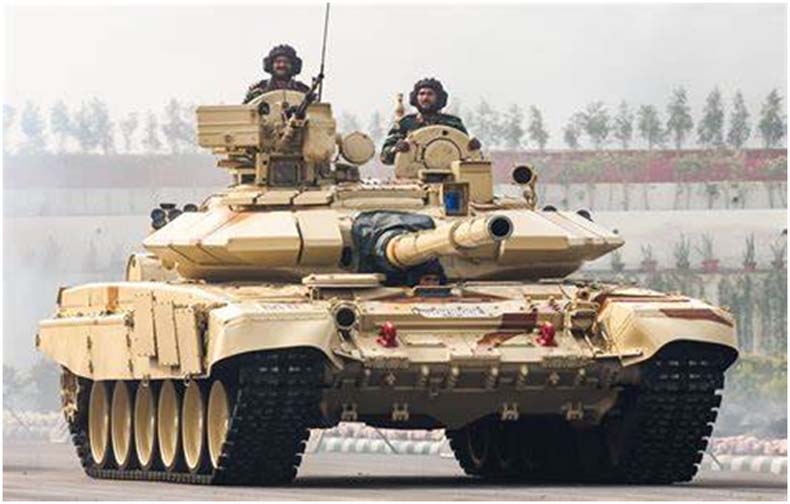
Equipment Intensive Regiments. The short training period of six months of Agniveers has had its own implications. Some arms like the Armoured Corps, Mechanised Infantry, Artillery etc., are highly equipment intensive. In normal course, recruits allotted to these arms undergo close to two years training, before joining the regiments. Even thereafter, they are put through recruit cadres to get them to understand the unit culture, improve physical and technical skills, and only then, are inducted onto actual equipment, as spare crews. Such recruits spend years, on, on job training, before being upgraded to the main crew list. In the present case of 25% Agniveers will be headed for further training, balance 75% will be waiting for two years before their future is certain. Thus, there will be a perpetual pool of young inexperienced crews with varying motivation levels. The shortage of trained fighting troops, who are the foundation, the backbone of equipment intensive regiments, may challenge the very ability of the regiment to undertake operations.
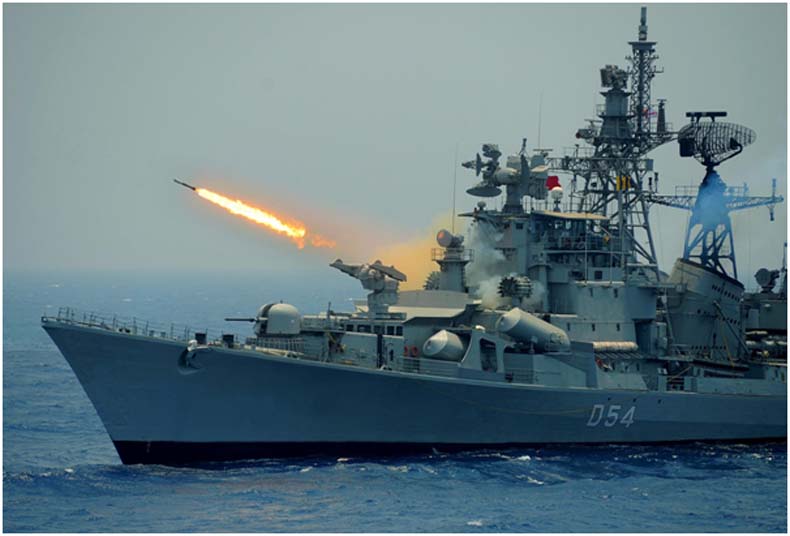
When it comes to the Navy and the Air Force, their manpower needs are far more technical. These Services will find it hard to employ the short-term contractual soldiers fruitfully, putting additional pressure on the permanent ones, and resulting in lower operational serviceability of modern weapons and platforms.
Quality of Intake. The ‘fauj’ was considered one of the most prized jobs in many states, and was a key social determinant in rural or semi-urban localities. The uncertainty created by the Agnipath scheme has shaken the pride and prestige associated earlier with a job in the Armed Forces.
The military profession is not just another job but a calling where individuals stand ready to sacrifice all, in service to the nation. Soldiers view themselves as fulfilling a higher purpose and are proud members of a profession built on values like honour, loyalty, integrity, self-sacrifice, and brotherhood. All this, because they know, that if anything happens to them, their families will be looked after. With the Agnipath announcement the entire sense of enthusiasm had diminished. Now the defence forces are no longer the desired option. The young men need job security. Only reversion to status quo can restore the situation satisfactorily.
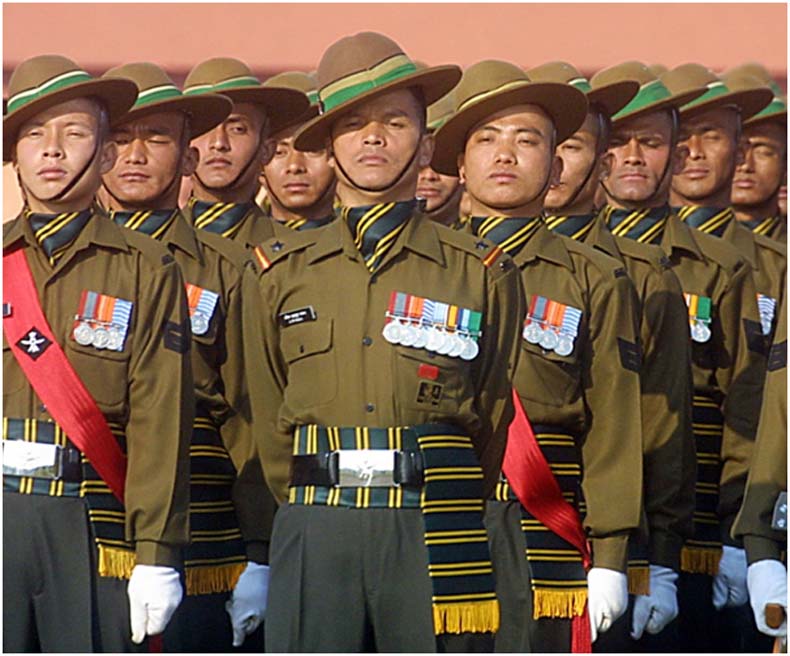
Ayo Gorkhali: The Recruitment from Nepal
The Indian Army has seven Gorkha Regiments, which comprise 39 Battalions, with roughly 32,000 Nepalese serving in these units. The Gorkha soldiers provide a very strong link to the age-old friendly ties between Nepal and India. The Gorkhas have sacrificed their lives for the security of India. Nepalese Gorkha recruitment into the Indian Army was discontinued in 2020.
The Government may consider re-introduction of Nepalese recruitment.
Conclusion
The Government has taken an important decision based on the feedback from units and a thorough evaluation of the scheme. However, it is neither here nor there. Since the shortcomings have been well identified, the time is right to go back to the previous system with some modifications.
A higher threshold of educational qualifications is warranted for specific arms and services. To make this attractive more direct enrolment as Junior Commissioned Officers is proposed, with adequate career progression avenues.
The rank and file who are recruited should concentrate on their training and professional growth. Their social status and pride of being soldiers, or a soldier’s mother/father, husband or wife needs to be restored.
We require a competent, well trained, and highly motivated military. The Nation must take pride in their military. With the confidence that a billion plus Indians are behind them, the soldier will never let the Nation down.
ABOUT THE AUTHOR
 Major General VK Singh, VSM (Retd) was commissioned into The Scinde Horse in December 1983. An alumnus of St Columba’s School, and St Stephens College, the General is a fourth-generation army officer.