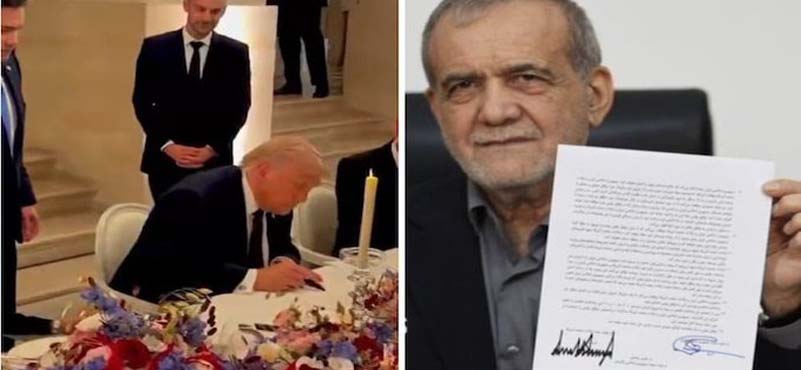
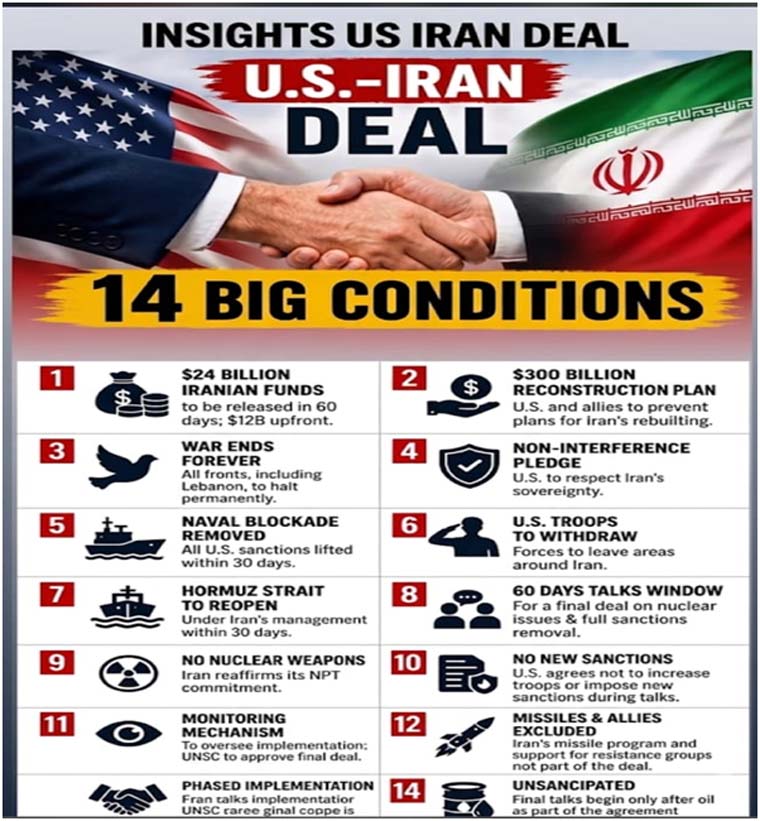
The fourteen-point digital accord signed by the United States and Iran in Switzerland this week will undoubtedly be celebrated as a diplomatic success. The immediate reasons are obvious. The guns have fallen silent, the Strait of Hormuz is open, oil markets have steadied, and the prospect of a wider war in the Middle East has receded. Yet the agreement’s real significance lies elsewhere. It marks the moment when two determined adversaries accepted a truth that had become increasingly difficult to ignore: further escalation offered no clear path to victory for either side.
Much of the commentary on the crisis has centred on comparisons with Vietnam. The analogy is attractive because Vietnam remains America’s most enduring reminder that military superiority does not guarantee strategic success. However, the obsession with historical parallels risks obscuring what actually happened. Iran was never going to become another Vietnam. There was no appetite in Washington for a large-scale ground war, nor was there any realistic prospect of American forces being trapped in a prolonged occupation of Iranian territory.
The more relevant question is not whether Iran became America’s Vietnam. It is whether the crisis has exposed the growing limits of coercive power in a world that is becoming increasingly resistant to it.
From Washington, the campaign demonstrated extraordinary military capability. Intelligence penetration was impressive; senior Iranian figures were eliminated, strategic facilities were targeted, and the United States once again showcased technological advantages that remain unmatched. Yet military operations do not exist in a vacuum. Their purpose is to achieve political objectives. Judged by that standard, the picture becomes considerably more complex. The agreement itself tells the story.
If Iran had been strategically defeated, there would have been no discussion of sanctions relief, oil export waivers, access to frozen assets, or a 60-day negotiating framework leading towards a broader settlement. Equally, if the United States had failed, there would have been no renewed commitments to nuclear restraint, no international oversight mechanisms, and no guarantees regarding maritime security. The document is neither an American diktat nor an Iranian triumph. It is the product of two states recognising that the costs of continuing the confrontation were beginning to outweigh the benefits.
That conclusion warrants closer attention because it reveals much about the changing character of international power. For decades, the United States has relied on a combination of military superiority, economic sanctions and diplomatic influence to shape adversaries’ behaviour. In many cases, the approach worked. Iran, however, spent years preparing for precisely such pressure. Rather than attempting to match American power conventionally, it developed a strategy centred on endurance, disruption and escalation management. Missiles, drones, cyber capabilities and a network of regional partners were designed not to win a war outright but to complicate decision-making for a stronger opponent.
The recent crisis demonstrated that this approach has become increasingly effective. Iran absorbed significant military punishment while retaining the capacity to create instability across multiple domains. The ability to threaten maritime traffic, influence energy markets, and activate regional partners ensured that any confrontation would have consequences that extended far beyond Iranian territory.
This is where the Swiss accord becomes strategically important. It was not signed because either side suddenly discovered mutual trust. It was signed because both sides reached the same conclusion. Washington could impose costs but could not confidently define an acceptable political end state through military pressure alone. Tehran could endure and retaliate but could not ignore the economic consequences of a prolonged confrontation. The agreement emerged from that shared recognition.
The provision attracting the least attention may ultimately prove the most consequential. The commitment to restore normal passage through the Strait of Hormuz underscores a reality that military planners often understand better than politicians. Geography retains a stubborn ability to shape outcomes. Nearly a fifth of the world’s traded oil passes through that narrow corridor. The longer the crisis continued, the greater the risk that energy security, rather than military objectives, would begin to dictate strategic decisions. In the end, economic realities imposed limits that neither missiles nor sanctions could overcome.
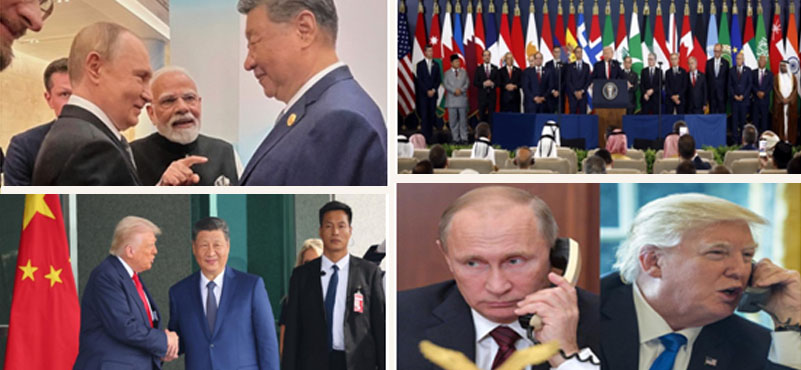
The Swiss accord exposed an uncomfortable reality for Washington: military dominance no longer guarantees strategic compliance. The United States remains the world’s pre-eminent military power, yet it is also managing challenges from Russia in Europe, China in the Indo-Pacific and instability across the Middle East. The issue is no longer capability. It is capacity. Every deployment carries an opportunity cost. Every regional crisis competes for finite political attention, military resources and industrial output.
China is likely to study the Iranian episode with particular interest. Beijing will not focus solely on the military exchanges. It will examine how quickly a regional confrontation drew American attention and resources at a time when Washington’s principal strategic focus is supposed to be in the Indo-Pacific. Great powers rarely decline because of a single defeat. More often, they find that managing multiple commitments simultaneously becomes increasingly difficult.
For India, the implications are both immediate and long-term. The most obvious benefit is stability. Millions of Indians live and work across West Asia, and a significant share of India’s energy imports passes through the Gulf. Any prolonged disruption would have affected inflation, growth and economic planning. The reopening of Hormuz and the reduction of regional tensions therefore represent tangible gains for New Delhi.
Yet the broader lesson is about strategy rather than economics. India has consistently resisted pressure to view the world through rigid alliance structures. Its relationships with the United States, Israel, the Gulf states and Iran have often seemed contradictory to outside observers. Recent events suggest the opposite. In an era of fragmented geopolitics, the ability to engage multiple centres of power without becoming dependent on any one of them is emerging as a strategic advantage rather than a liability.
The conflict also offered a preview of the battlespace that will increasingly define future wars. Drones, precision missiles, cyber operations, satellite-enabled targeting and information warfare shaped events throughout the crisis. The traditional distinction between front lines and rear areas blurred. For India, which faces a complex security environment stretching from the Himalayas to the Indian Ocean, the implications are hard to ignore. Military strength will remain essential, but future effectiveness will depend just as much on technological adaptation, resilience and the ability to integrate capabilities across multiple domains.
The temptation after every crisis is to identify winners and losers. Such judgements are often premature and misleading. The more important question is what the crisis revealed. The answer, in this case, is that power remains indispensable yet increasingly insufficient. The United States demonstrated its ability to strike. Iran demonstrated its ability to endure. Neither side could establish a pathway from military pressure to a clearly defined political outcome. The Swiss accord was not the product of trust, goodwill or reconciliation. It was the product of limits.
Years from now, historians may pay less attention to the missiles launched and the targets destroyed than to the agreement that followed. The fourteen-point accord will be remembered for forcing two adversaries to confront a reality that extends far beyond the Middle East. The real significance of the Swiss accord may not lie in what it says about Iran. It may lie in what it says about America. For the first time in years, Washington confronted a regional power it could punish, but not compel. That distinction will matter long after the details of the agreement are forgotten.
ABOUT THE AUTHOR
 Lieutenant General A B Shivane, is the former Strike Corps Commander and Director General of Mechanised Forces. As a scholar warrior, he has authored over 200 publications on national security and matters defence, besides four books and is an internationally renowned keynote speaker. The General was a Consultant to the Ministry of Defence (Ordnance Factory Board) post-superannuation. He was the Distinguished Fellow and held COAS Chair of Excellence at the Centre for Land Warfare Studies 2021 2022. He is also the Senior Advisor Board Member to several organisations and Think Tanks.