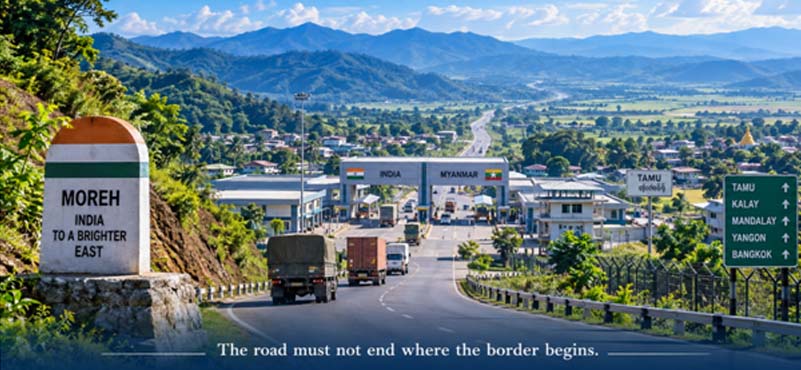

History rewards nations that arrive before others recognise the frontier
As nations race to explore the Arctic, mine the ocean floor, establish a permanent presence in outer space, and dominate the digital domain, a new strategic reality is unfolding before our eyes.
Many observers see these as separate developments. They are not. They are part of a larger geopolitical shift that has repeated itself throughout history. The great contest of the 21st century is not merely for power. It is for space. Not just territorial space, but every strategic space that can generate influence, wealth, security, and advantage. This includes:
- Oceans.
- The seabed.
- Polar regions.
- Outer space.
- Cyberspace.
- Information networks.
- Human consciousness.
The nations that identify and occupy these emerging frontiers early will shape the future. Those that arrive late will operate within frameworks established by others. The principle is timeless.
Every empty space attracts a claimant. History belongs to those who recognize strategic spaces before everyone else.
History is the Story of Occupied Spaces
History is often described as a story of wars, empires, and revolutions. In reality, it is also the story of strategic spaces being occupied before rivals recognised their value.
Great powers rarely emerged by accident. They identified opportunities invisible to others and acted decisively. Throughout history, successful states secured:
- Trade routes.
- River valleys.
- Maritime chokepoints.
- Mountain passes.
- Strategic islands.
- Commercial centres.
The objective was never territorial expansion alone. The objective was influence. Control over strategic spaces created economic opportunities, political leverage, and military advantage. The Roman Empire expanded along critical transportation networks. Maritime powers built influence through ports and sea lanes. Trading civilizations prospered by occupying commercial crossroads. The pattern remained remarkably consistent. Presence produced influence. Influence produced power. Power shaped history. Those who moved first set the rules. Those who arrived later were forced to accept them.
History rewards presence, not protest.
Territory is Not Land. It is Leverage.
States do not compete for geography simply because it exists. They compete for what geography enables.
A strategic thinker sees far more than physical space. A mountain pass is not a mountain pass. It is control over movement. A port is not merely a harbour. It is access to commerce. An island is not simply land surrounded by water. It is influence over surrounding sea lanes. A corridor is not a strip of territory. It is connectivity.
The value of geography lies in its strategic utility. Nations that understand this transform location into advantage. Nations that ignore it discover its importance only after others have occupied it. This is why geography continues to matter even in the age of artificial intelligence and digital technologies. Technology changes. Geography endures.
The difference between strategic success and strategic surprise often lies in the ability to recognise emerging value before competitors do.
The Oceans are the New Strategic Heartland
For centuries, great powers focused primarily on land. Today, the centre of gravity is steadily shifting towards the oceans.
The reasons are obvious. The seas carry:
- Global trade.
- Energy supplies.
- Industrial inputs.
- Digital connectivity.
- Strategic influence.
The overwhelming majority of international trade continues to move by sea. Every day, ships transport the resources that sustain modern economies. Energy flows through maritime routes. Supply chains depend upon maritime security. Beneath the oceans lies another often overlooked reality. Thousands of kilometres of submarine cables carry global internet traffic, financial transactions, and communications.
In many ways, the modern world functions because of infrastructure hidden beneath the sea. This explains the increasing strategic importance of the Indo-Pacific. It also explains the growing competition among major powers for maritime access, naval reach, and influence over critical sea lanes. The oceans are no longer peripheral to global affairs. They are central to them. The future economic order will be shaped as much by shipping routes as by financial centres.
The sea rewards those who sail it, not those who merely observe it.
Race for the Seabed has Already Begun
The next great resource frontier may lie thousands of metres below the ocean surface.
For decades, the deep seabed remained largely inaccessible. Today, advances in technology are changing that reality. The ocean floor contains vast reserves of Cobalt, Nickel, Manganese and rare earth elements.
These resources are becoming increasingly important for:
- Electric vehicles.
- Renewable energy systems.
- Advanced electronics.
- Artificial intelligence infrastructure.
- Defence technologies.
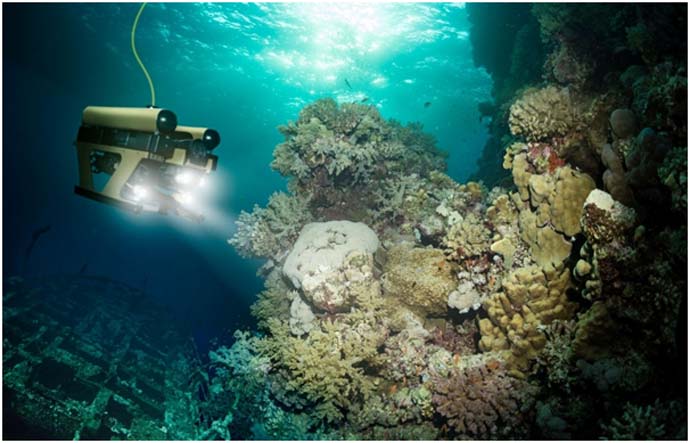
The transition to a technology-intensive economy is increasing demand for critical minerals at an unprecedented pace. As a result, the strategic importance of deep-sea exploration is rising rapidly. Nations are no longer looking at the seabed as an area of scientific curiosity alone. They are viewing it as an economic and strategic asset.
The countries investing in seabed capabilities today are positioning themselves for future industrial leadership. The next resource race may not occur on land. It may occur beneath the oceans.
The strategic map of tomorrow may be drawn beneath the waves.
The Return of the Arctic
Few regions illustrate changing strategic realities better than the Arctic.
For centuries it remained isolated, frozen, and largely ignored. Today it has become a zone of growing geopolitical interest. The reasons are significant. The Arctic offers:
- Emerging shipping routes.
- Access to natural resources.
- Energy reserves.
- Scientific opportunities.
- Strategic military positioning.
As ice coverage reduces, routes once considered impractical are becoming increasingly viable. Distances between major markets can potentially be shortened. Resource extraction may become more feasible. Strategic access is becoming more valuable.
Consequently, countries that once paid little attention to the Arctic are now developing policies, partnerships, and capabilities related to the region. The Arctic teaches a critical lesson.
Strategic spaces often become important before the world fully understands their significance. The nations that recognise this early gain a decisive advantage.
Outer Space: The New High Ground
Every age has possessed its own strategic high ground. In earlier centuries it was the hill. Then it became the sea. Today it is space.
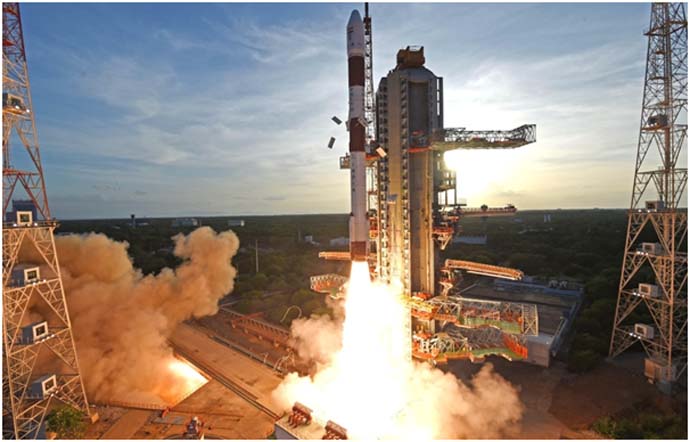
Modern civilization depends extensively on space-based infrastructure. Satellites support:
- Navigation.
- Communications.
- Banking systems.
- Weather forecasting.
- Disaster management.
- Military operations.
Without them, modern societies would struggle to function effectively. Space is no longer a scientific frontier alone. It is strategic infrastructure. The next phase may involve lunar exploration, resource extraction, space manufacturing and expanded orbital networks.
Countries investing heavily in space programmes understand that future influence will increasingly depend upon capabilities developed today. Space has become a domain where scientific achievement, economic opportunity, and national power intersect.
The highest ground in human history now lies beyond the atmosphere.
Cyberspace: The Invisible Frontier
Not all strategic spaces are physical. Some exist entirely in the digital domain.
Cyberspace has emerged as one of the most consequential frontiers of the modern age. Nations now compete for:
- Data.
- Digital infrastructure.
- Artificial intelligence.
- Technological standards.
- Information networks.
Digital systems influence economies, governance, security, and public life. A nation’s prosperity increasingly depends on its ability to secure and develop its digital ecosystem. Dependence on external technologies can create vulnerabilities. Control over digital platforms can generate influence. Ownership of data can create strategic advantages. The digital domain has become a new arena of competition.
Those who shape the rules gain leverage. Those who depend upon the systems of others become constrained by them.
The Most Important Space is the Human Mind
The decisive battles of the future may not involve armies. They may involve narratives.
The struggle for influence increasingly revolves around:
- Information.
- Perception.
- Identity.
- Public opinion.
Ideas move across borders faster than armies. Information spreads more rapidly than traditional diplomacy. Public perception influences political decisions, social cohesion, and national confidence. This has elevated the importance of strategic communication. The ability to influence thinking has become a form of power. The ability to shape narratives has become a strategic capability.
Many contemporary contests are not fought over territory. They are fought over interpretation. Influence today often precedes action tomorrow.
India’s Strategic Moment
Few countries are positioned as favourably as India.
Its geography places it at the heart of the Indian Ocean. Its technological capabilities continue to expand. Its space programme has demonstrated remarkable achievements. Its digital infrastructure is growing rapidly. Its maritime interests are increasing. India’s opportunities include:
- The Blue Economy.
- Deep-sea exploration.
- Space technologies.
- Advanced manufacturing.
- Digital leadership.
- Emerging strategic partnerships.
The challenge is not capability. The challenge is vision. History shows that rising powers distinguish themselves through their ability to identify emerging frontiers and act before others. India possesses the resources, talent, and geographic advantages required to play a leading role across multiple strategic domains. The question is whether it can translate potential into presence.
Great powers are not defined by what they own. They are defined by the spaces they choose to occupy.
Presence is Power
The defining question of the 21st century is no longer whether nations can defend existing territory. The defining question is whether they can identify the next frontier before others do.

The future will belong to nations that establish meaningful presence on land, at sea, beneath the sea, in the Arctic, in outer space, in cyberspace and in the realm of ideas.
Across centuries, technologies evolve and frontiers change. Yet one strategic principle remains remarkably constant. Every empty space attracts a claimant.
The nations that recognise this reality early will help shape the international order of the future. The others will adapt to an order created by someone else.
The choice is straightforward. Move first. Or watch others define the future.
ABOUT THE AUTHOR

Lt Gen Rajeev Chaudhry (Retd) is a social observer and writes on contemporary national and international issues, strategic implications of infrastructure development towards national power, geo-moral dimension of international relations and leadership nuances in changing social construct.