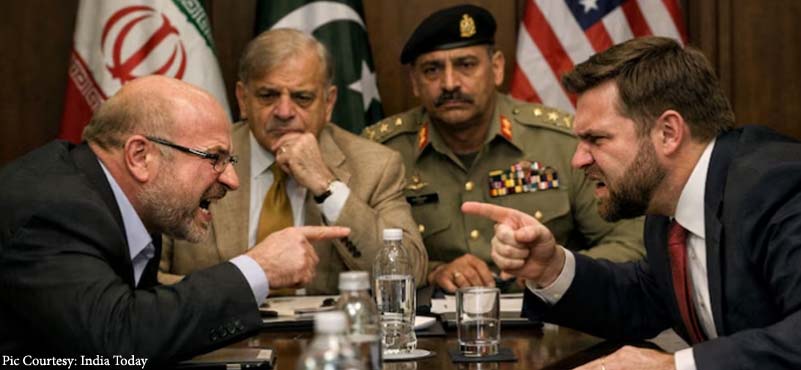
The Islamabad talks did not collapse dramatically. They simply ran out of steam. When negotiations end quietly, it usually signals that the gap isn’t about a single issue. It’s about the lack of room to adjust. Each side knows its red lines. Each also knows what it cannot concede without paying a political price at home. In such conditions, talks don’t fail because of misunderstanding. They stall because compromise feels costlier than continuing the standoff.
That is where West Asia stands now.
For years, the region operated within a tense yet workable pattern. Conflict existed, sometimes sharply, but it remained contained. Proxies absorbed pressure. Covert actions signalled intent without provoking immediate retaliation. There were unwritten limits.
Those limits have become thinner.
Recent exchanges have become more direct, more visible, and faster. When actions are openly acknowledged and quickly addressed, the space for quiet correction disappears. Every move carries weight. Every response comes faster. Control becomes harder than escalation.
The Islamabad process tried to slow that drift. It failed, but it revealed something important. Both sides came prepared, yet neither was ready to adjust. One pushed for firm limits to reduce future risk. The other resisted anything that could later restrict its options. Domestic pressures shaped both positions. Neither could shift without appearing to give ground.
The talks stalled.
What followed was equally important. Communication did not collapse. Statements remained measured. Doors were left open. That restraint in tone suggests a shared understanding that complete disengagement carries greater risk.
The two-week ceasefire reflects similar thinking. This time, all key actors, including Israel, are included. That matters. A pause that excludes a central player rarely holds. Inclusion creates at least a basic layer of shared restraint.
But this is not stability.
Each side has entered the ceasefire for its own reasons. Iran sees endurance. The United States sees risk reduction. Israel sees a pause, not an outcome. These interests overlap, but they are not common ground.
That distinction is critical.
A ceasefire holds only when stopping serves everyone better than continuing. Right now, that calculation remains fluid. A single disputed incident, a misread signal, or domestic pressure can quickly strain the arrangement.
The deeper issue remains unresolved. The relationship between Iran and Israel remains defined by distrust and competing security concerns. The pause does not change that. It only creates a narrow window.
That is where restraint comes into focus.
Restraint is often mistaken for weakness. In reality, it is a harder choice. It requires stepping back when escalation is possible and explaining that decision domestically. It also demands accepting less-than-complete outcomes.
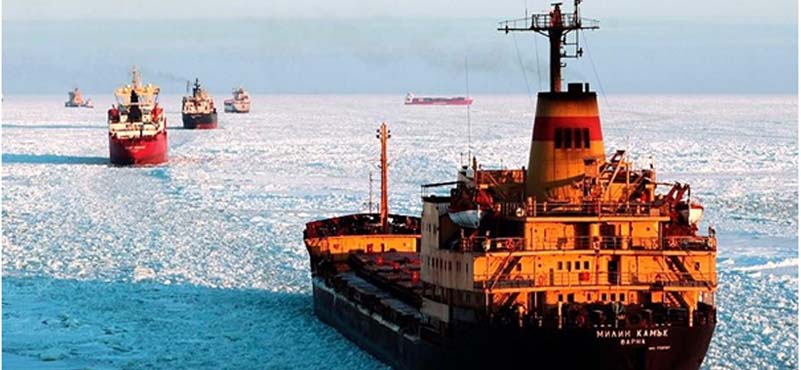
For India, the stakes are immediate. The Strait of Hormuz is central to energy flows, and any disruption affects prices and supply. India’s regional investments and partnerships also depend on stability. Balancing ties across the region while avoiding entanglement remains essential.
The period ahead will not be smooth. There may be strain and setbacks. The greater risk is not a single incident, but a gradual thinning of communication. When channels weaken, miscalculation finds space.
The Islamabad talks showed how narrow the scope for agreement exists today. The ceasefire has created a brief opening. The ceasefire has created a narrow opening. Whether it is used or wasted will shape what follows.
Restraint rarely looks like a win. It does not settle deep disputes overnight. Yet it may be the only way to prevent a tense situation from spiralling again into a global tsunami.
ABOUT THE AUTHOR
 Lieutenant General A B Shivane, is the former Strike Corps Commander and Director General of Mechanised Forces. As a scholar warrior, he has authored over 200 publications on national security and matters defence, besides four books and is an internationally renowned keynote speaker. The General was a Consultant to the Ministry of Defence (Ordnance Factory Board) post-superannuation. He was the Distinguished Fellow and held COAS Chair of Excellence at the Centre for Land Warfare Studies 2021 2022. He is also the Senior Advisor Board Member to several organisations and Think Tanks.