
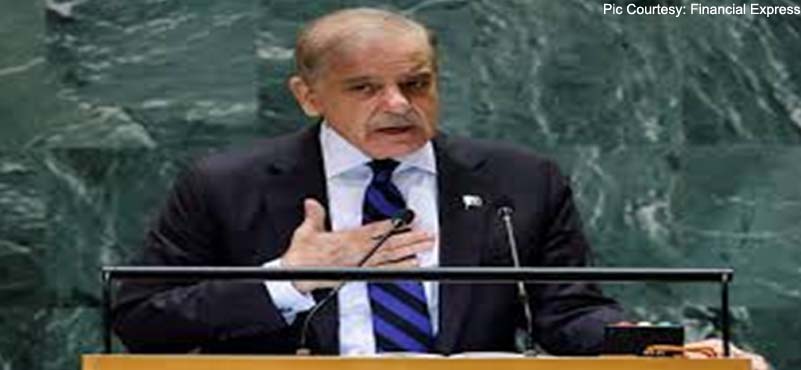
Pakistan’s PM call for “meaningful talks” with India, merits that this appeal must be looked beyond rhetoric and be examined in terms of the structural realities shaping Pakistan’s choices. It was a message framed by circumstance and not the depth of intent. As instability expands across West Asia, Pakistan’s diplomatic bandwidth is narrowing under compounded external and internal pressures. Internally, its fissures expand, and externally, all its borders are on fire. The possibility of Sindoor 2.0 continues to haunt Pakistan as its non-state actors, once its stooges, have become its own dark shadow. Economically and politically, it faces its most fragile equilibrium in decades.
Geopolitics abhors random timing. States don’t dial down rhetoric from positions of strength; they do it when the walls close in. This overture isn’t some noble pivot toward peace. It reflects strategic compression rather than strategic generosity. To miss that context is to misread the map entirely.
India’s posture sharpens this picture. Rawalpindi now confronts a deterrence landscape recalibrated with precision. Cross-border responses to provocations carry surgical intent, fusing intelligence with strike assets that leave little room for ambiguity. Doctrinal hints of measured escalation echo louder than salvos fired. The raw demonstration of capacity often looms larger in adversary minds than the blasts themselves. Credibility has tilted decisively, recasting risk equations in ways that demand adaptation. Any future iteration of Op Sindoor would likely reflect escalatory dynamics rather than repetition.
Set against this canvas, Islamabad’s call rings less like confident outreach and more like calculated damage control. It suggests a leadership seeking strategic breathing space before converging pressures harden into crisis.
Any sober assessment must grapple with Pakistan’s enduring structural riddle: dual authority in security realms. National policy has long flowed from military hierarchy, with civilians navigating channels carved by the Army Chief and its intelligence arm, ISI. Kargil happened while envoys shook hands. Mumbai bled during peace pipelines. These were not anomalies but reflections of institutional structure. These ruptures stemmed not from diplomatic clumsiness but institutional schisms, where one hand pledged while the other wielded.
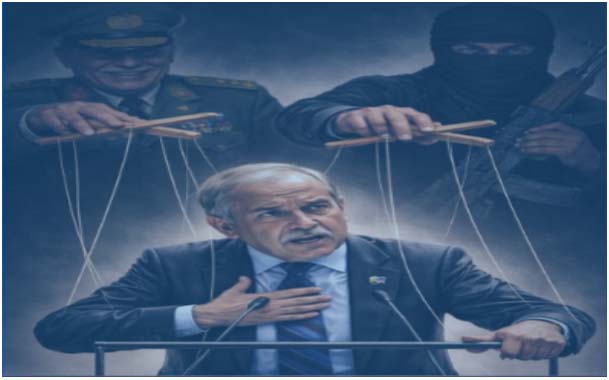
The pivot question sidesteps the desire for dialogue; nuclear neighbours thrive better parleying than posturing. Instead, probe authority: does civilian advocacy bind the security core? In strategic bargaining, delivery muscle trumps stated goodwill every time. Without explicit military alignment, agreements risk repeating earlier cycles of commitment and rupture.
India’s operational posture and statecraft highlight urgency. Punitive deep strikes mark a shift from strategic restraint to strategic assertion. What observers call the Sindoor precedent establishes not just tactical lessons but also a doctrinal evolution: provocation warrants a response, scaled appropriately to the threat. The escalation ladder shapes contemporary risk assessments in Rawalpindi. Deterrence depends more on perceived resolve than on troop numbers or warhead yields.
For New Delhi, the dilemma frames not talk’s merit but its scaffolding. Engagement gains weight only on ironclad terms. Proxy machinery requires verifiable dismantling: the closing of a camp, the cutting of funds, the gagging of recruiters, the reigning in of ideologues. Teethless proscriptions have derided former attempts; true and lasting peace hinges on milestones tracked openly, reviewed rigorously.
Accountability trails close: named perpetrators face extradition or trial, bound by calendars and courts. Military channels must sync with political ones, steadying ceasefires along the Line of Control to mute frontier sparks, yet never excusing the terror nurseries feeding them. Humanitarian knots linger too, from vanished prisoners of old wars; untying them signals a moral baseline beyond realpolitik.
India’s recalibration of its approach to the Indus Waters Treaty reflects altered security realities and cannot be delinked from broader bilateral conduct. India’s formal position on Pakistan-occupied territories, including Gilgit-Baltistan and the Shaksgam Valley arrangement with China, remains unchanged. While immediate territorial resolution is improbable, these issues cannot be permanently insulated from the security discourse. Sequencing, therefore, becomes critical: cessation of cross-border terrorism must precede movement on more complex disputes.
Islamabad’s innards merit mapping too. Urging Army inclusion in pacts bucks protocol niceties but honours power’s pulse. Exclusion courts’ fragility; stability across the border serves India’s horizon. The objective remains behavioural recalibration, not state destabilisation.
Strategic patience, laced with firm pressure, has etched incremental turns before. Windfall reversals evade marathon rivalries. Regional tempests amplify caution: West Asia’s fires and great power jostling leave South Asia scant room for unchecked flares. Crisis conduits, hotlines, and backchannels hold steady value amid public chill.
Yet ambiguity cannot cradle calm. Meaningful talks hinge on terror’s core excision. Rhetorical pivots fool none. India bargains from a fortified perch: economic momentum, modernisation strides, alliance webs. Leverage merits wise husbandry, forging habit not headlines.
Pakistan PM’s call for talks must be assessed for clarity of lasting intent, not sentiment under adverse circumstances. It does not warrant outright rejection, nor justify a blind acceptance. The present outreach comes at a time when Pakistan faces multiple external and internal challenges, and a deterrence environment less permissive than before. Further, the voice that suggests talk is not the voice that assures its intent.
If dialogue is to carry weight, the essentials must change. Infrastructure that sustains cross-border militancy has to be dismantled in practice, not merely proscribed on paper. Commitments must carry the backing of the security establishment that shapes Pakistan’s India policy. Engagement cannot rest on atmospherics. It must rest on verifiable action. Without that convergence, past cycles are likely to repeat themselves. Until then, caution is not rigidity; preparation for Op Sindoor 2.0 is prudence.
ABOUT THE AUTHOR
 Lieutenant General A B Shivane, is the former Strike Corps Commander and Director General of Mechanised Forces. As a scholar warrior, he has authored over 200 publications on national security and matters defence, besides four books and is an internationally renowned keynote speaker. The General was a Consultant to the Ministry of Defence (Ordnance Factory Board) post-superannuation. He was the Distinguished Fellow and held COAS Chair of Excellence at the Centre for Land Warfare Studies 2021 2022. He is also the Senior Advisor Board Member to several organisations and Think Tanks.