Dastardly Attack
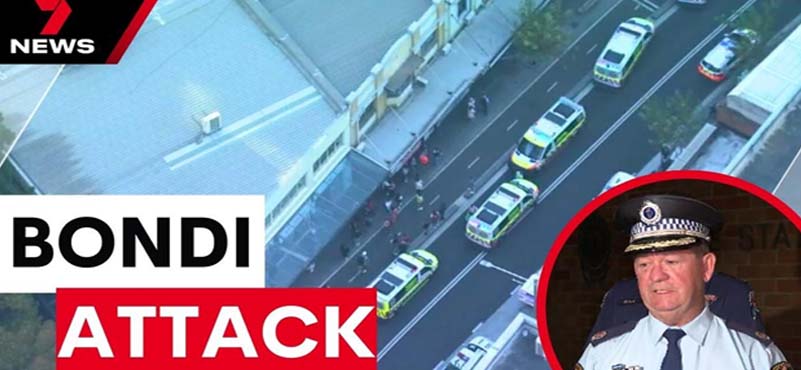
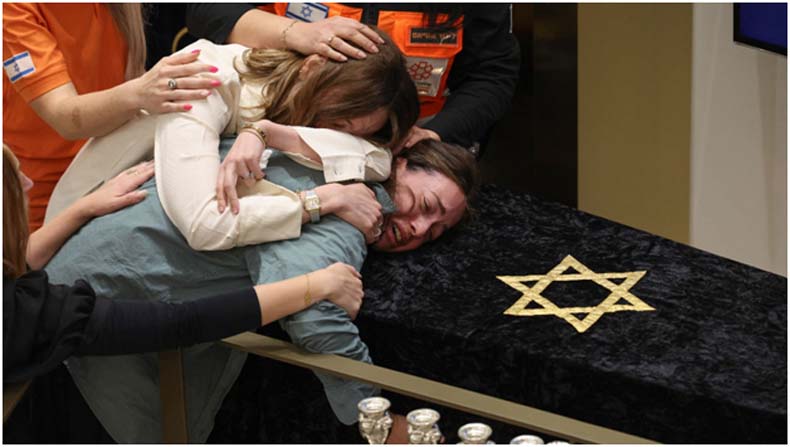
On 14 December two gunmen opened fire, killing 15 people (including children and a rabbi) and injuring twenty-two people at Sydney’s iconic Bondi Beach. The terror attack has been described as religiously motivated hatred against Jews amid rising global antisemitism linked to the ongoing Israeli assault on Gaza took place during a public Hanukkah celebration, the festival of light, celebrated with the lighting of candles. The terrorists wanted to extinguish the light.
Australia’s worst mass shooting in nearly 30 years came amid a tide of rising antisemitism globally. Bondi was confronting, brutal and deeply unsettling. It shattered the ordinary rhythms of a place that Australians associate with life, leisure, and community.
An attack of this nature does not have to be at the scale of 9/11 or 26/11, in terms of casualties. It is the motive behind the attack that counts. It is the same hatred that seeks blood. Yes, this was Australia’s 9/11.
There has been an exponential increase in harassment and intimidation against Jewish communities since the deadly 07 October 2023 attacks and the Israel-Hamas conflict. Israel’s actions over the past two years, have caused disproportionate and unacceptable suffering to civilians in Gaza while actions such as settlement-building have fueled hopelessness among Palestinians. As a fallout, law enforcement assessments have since counted almost 50 major incidents against Jewish targets worldwide.
There have been multiple warnings that without a more robust response, smaller incidents would lead to major violence. The Bondi attack is precisely what was feared would happen. Racism and antisemitism, have not receded and remain problems. Antisemitism has plagued Jews for centuries, which peaked in the Nazi Holocaust and was also visible during the Mumbai terror attack in 2008 has now once gain reared its head.
India has always condemned terrorism and in keeping with that Prime Minister Modi ‘strongly condemned the ghastly terrorist attack’ and stated “India has zero tolerance towards terrorism and supports the fight against all forms and manifestations of terrorism.”
Well Planned Operation
The attack in Bondi was a well-planned operation in contrast to the spontaneous “lone wolf” nature that usually characterises ISIS-inspired terror attacks around the globe. The two men carefully chose an open-air event, hired an Air b’n’b apartment nearby as their final preparation location, brought with them six firearms and homemade explosives, and chose a high ground overlooking the site of the gathering from which to direct their attack.
The alleged gunmen were a 50-year-old, Sajid Akram, shot by police and died on the spot, and his 24-year-old son, Naveed Akram who suffered critical injuries. As per Australian Prime Minister, Anthony Albanese, the son had first come to the attention of the Australian Security Intelligence Organisation (Asio) in October 2019. He was examined “on the basis of being associated with others.” The Director General of Asio, Mike Burgess, said one of the shooters was known to authorities, “but not in an immediate threat perspective.”
However, as per confirmed reports the duo had travelled to the Philippines in November to receive “military-style training”. Islamic state-linked networks are known to operate in the Philippines and have wielded some influence in the South of the country, primarily in the Mindano group of islands.
Time for Introspection
There will be much debate in the coming days about why the two attackers were able to buy guns. Australia’s gun laws will now come into focus, with a population of 27 million, it has more than four million registered privately-owned firearms. This estimate excludes illegal firearms.
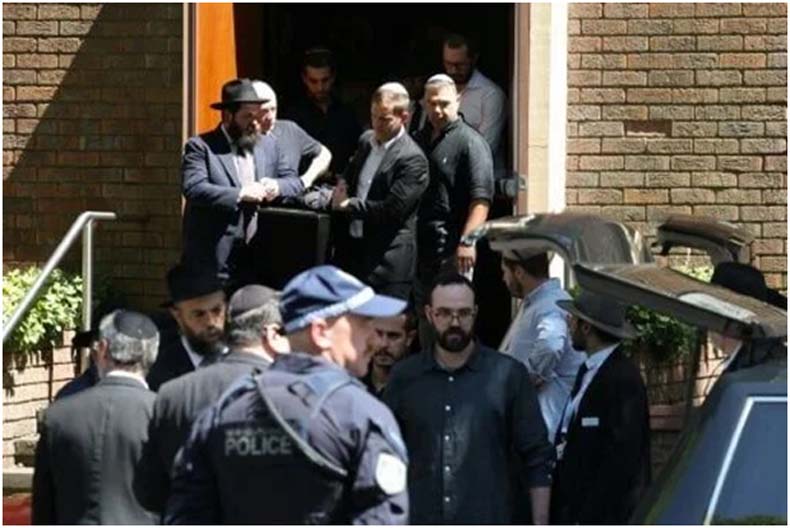
Another issue is how their shooting spree could go on for almost ten minutes and why the Australian police were so unprepared for it. There will be questions about why the Hannukah celebrations on the beach was not better protected, given the escalating risks to Australian Jews. But the main question is how to deal with those on the path to radicalization. It will not be enough for them to say that they were unaware about them.
While the overriding question after any attack is whether additional violence is imminent? There are also issues regarding accomplices and whether the attack was part of a coordinated campaign rather than an isolated act. Misclassifying terrorist attacks as just another form of violence, however, risks understating their strategic intent and societal impact and thus may lead to chances of future violence. Unfortunately, the political and moral cost of underreacting to a real follow-on threat is far higher.
Even when an attack itself is executed by only one or two individuals, it is rarely socially isolated, and it is important to ask if a broader network was implicated. Attackers often emerge from broader ideological ecosystems, informal communities, online forums, networks, or political subcultures that normalise or encourage violence.
Counterterrorism success often means fewer attacks rather than no attacks at all. Failures occur, but they are often systemic. Intelligence failures, poor information sharing, legal constraints, and resource imbalances frequently matter more than individual negligence. Serious reform requires diagnosing institutional weaknesses. It is vital to ensure that there are review mechanisms, transparency requirements, and other ways to ensure that government structures are adjusting to the threat of terrorism. The confrontation requires preparedness, vigilance, and proportionate response.
ISIS
Whether the Bondi attack was a locally-initiated terror act or part of an international state-sponsored terror campaign, holds significant consequences. The Islamic State and violent jihadist ideology continue to motivate deadly violence. As per reports the police found two Islamic State flags in the attackers’ car and footage shows one flag on the hood of the car.
Since Islamic State’s territorial defeat in Iraq and Syria, there are powers who have tended to look at this threat through the lens of a rear-view mirror. Terrorism and violent extremist threats in the world have multiplied and grown more complicated and cannot be relegated to the background.
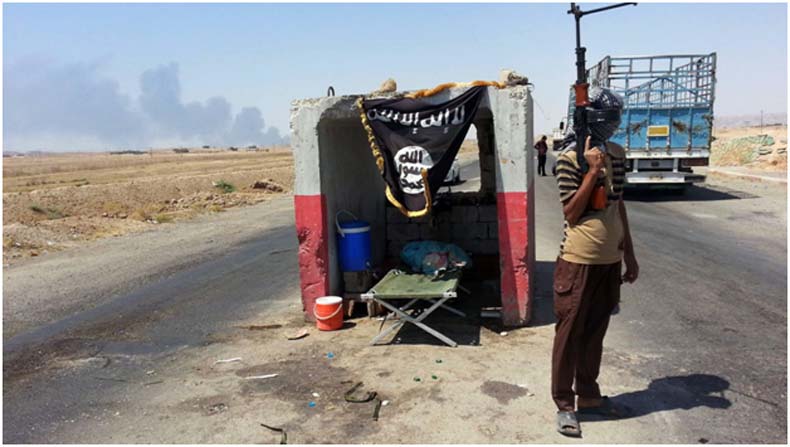
The Islamic State remains amongst the deadliest terrorist movement in the world and continues to be a powerful and persistent motivating force, expanding global influence online through its propaganda and online networks. The group traces its roots to the Al Qaeda in Iraq and for years ruled over large parts of Syria and Iraq brutally enforcing its strict interpretation of Islamic law. In 2017, it suffered major setbacks and was greatly diminished yet it consistently inspires attacks and plots, even after the defeat of its so-called caliphate. The Islamic State wants to spread its extreme form of Islam, but has adopted new tactics since the collapse of its forces and a string of other losses in the Middle East.
It is now a disparate group often operating through affiliates and sympathisers. But it has retained the ability to carry out high-profile attacks, which it claims on its Telegram channels, often posting images as part of its plan to spread terror. In fact on 12 December, two U S soldiers and a civilian interpreter were killed in Syria by a member of the Syrian security forces suspected of having affiliation to the Islamic State. It is believed that the group’s current leader is Abdulqadir Mumin, who heads the Somalia branch.
The fact is that while an attacker may be killed or caught, they represent one end of the spectrum, the more dangerous element remains. That is those who indoctrinated, trained, and motivated the terrorists. These are the people that need to be targeted because they have the ability to radicalise more members of the community.
Conclusion
While the shooting has taken place in Australia it has lessons around the globe as the global network of terror is again in focus. The footprint and expansion of terrorism have been in plain sight all along. Unfortunately, there are some countries that prefer to shoot the messengers, which clears a path for the real-life shooters to take aim and fire.
Domestic political calculations or diplomatic considerations must never hinder the launch of an effective counterterrorism campaign, which is crucial for the future of a multicultural and secular social fabric.
The absence of large-scale attacks has fostered an impression for some that the risk from terrorism has dissipated rather than evolved. As a result, counterterrorism laws increasingly came to be viewed for some not as risk-management tools, but as constraints—excessive, outdated or no longer proportionate. That complacency is itself a strategic vulnerability. There needs to be global collective action being led by the UNSC whose role is increasingly being seen as irrelevant.
Perfect security is an illusion. Demanding absolute prevention risks undermining resilience the very quality that allows societies to absorb shocks without surrendering core values. A failure of government to address community fears and concerns can undermine trust in institutions and social cohesion a goal of many terrorists. Conversely, political leadership, professional security forces institutional accountability, and societal resilience can deny terrorists their broader objectives and thereby impose order.
The fact that is that terrorism remains the “single biggest threat” not only to international peace and security, but also to development and the West cannot afford to tiptoe around the threat of terrorism which rarely conforms neatly to past templates.
The Bondi shooting should be taken as a warning, a trailer of times to come. This warning does not apply to any one country; it applies to all. As you read this, another similar operation may be under planning. Therefore, the world must pay heed, and keep the guard up, strengthen all intelligence and allied networks. Share any/all inputs across borders. Provide special protection to religious prayers/festivals, irrespective of the religion or country involved. Understand the time we live in, understand the world we live in.
ABOUT THE AUTHOR
 Maj Gen VK Singh, VSM was commissioned into The Scinde Horse in Dec 1983. The officer has commanded an Independent Recce Sqn in the desert sector, and has the distinction of being the first Armoured Corps Officer to command an Assam Rifles Battalion in Counter Insurgency Operations in Manipur and Nagaland, as well as the first General Cadre Officer to command a Strategic Forces Brigade. He then commanded 12 Infantry Division (RAPID) in Western Sector. The General is a fourth generation army officer.
 Major General Jagatbir Singh was commissioned into 18 Cavalry in December 1981. During his 38 years of service in the Army he has held various command, staff and instructional appointments and served in varied terrains in the country. He has served in a United Nations Peace Keeping Mission as a Military Observer in Iraq and Kuwait. He has been an instructor to Indian Military Academy and the Defence Services Staff College, Wellington. He is a prolific writer in defence & national security and adept at public speaking.