Introduction
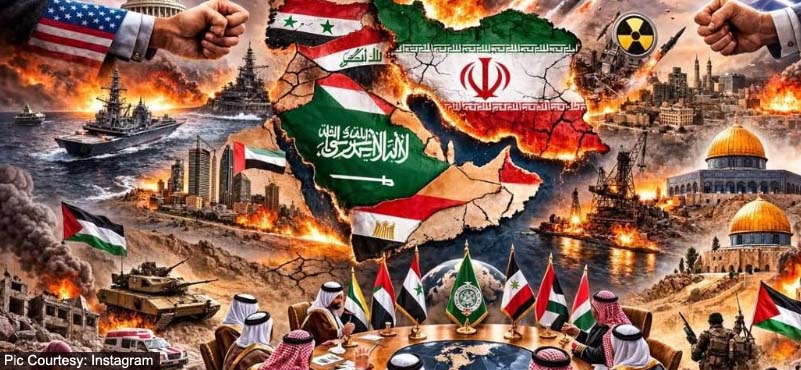
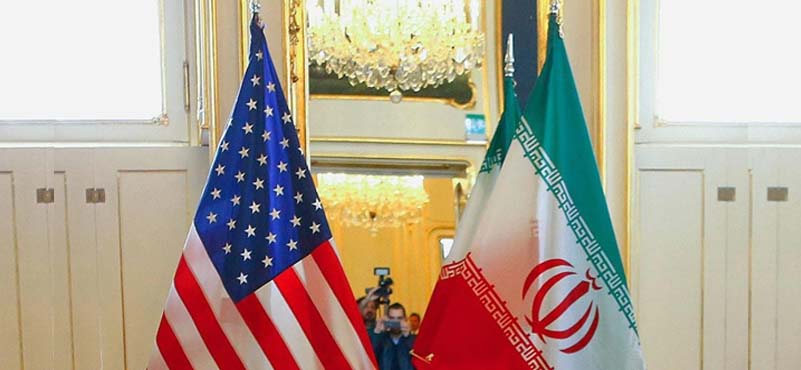
The scheduled Islamabad Peace Talks between USA and Iran began on 11 April 2026. However, within 21 hours the US and Iran delegations flew back without much to show for the negotiations. The press reaction varied while many international headlines announced a failure of the talks, others were less pessimistic. To compound matters President Trump announced a blockade of the Strait of Hormuz, hence certain observers felt the negotiations had failed. But was it a break or a breakdown? With indications that the next round is due to take place shortly it now seems that both sides are willing to talk.
Those who expected a major breakthrough within a day of talks have been disappointed, while those who saw the talks as the beginning of a long, drawn-out process were and are hopeful that the ceasefire might continue, as well as the negotiations. Indeed, there have been statements from leaders worldwide urging a continuation of the talks.
The positions, of both countries as reflected in America’s 15 points, and Iran’s 10 points, remained very far apart. Iran’s core demands included assurances of no future US/Israeli attacks on Iran and its regional allies, lifting of sanctions, unfreezing of assets, recognition of its right to enrichment and continued control of the Strait of Hormuz. US demands included firm Iranian commitments not to seek nuclear weapons, curbs on it nuclear and ballistic programmes, removal of highly enriched uranium and reopening of the Strait of Hormuz.
The talks itself which took place under the shadow of war and a trust deficit were historic as American and Iranian officials met at practically the highest level for the first time since 1979. The 21-hour marathon discussions were the most substantive talks the two sides had held in many years, and apparently covered a wide range of issues, but some sticking points left the negotiations inconclusive.
Sticking Points
There was little clarity on what the sticking points may have been, though there were hints of the same. For instance, before leaving Islamabad, Vice-President JD Vance talked about the nuclear issue saying that he had left the Iranians with an offer.
“We will see if they accept it,” he said. However, President Donald Trump in his social media posts focused on the Strait of Hormuz, and even announced a blockade on top of the blockade being imposed by the Iranians themselves. His post led to conjecture that for the Americans, the Strait is perhaps one of the sticking points.
In fact, the move to blockade all Iranian shipments in and out of the Strait of Hormuz poses a serious threat to the fragile ceasefire and may jeopardise any potential for further negotiations between the US and Iran. This escalatory action to restrict access to the critical waterway may not achieve what the US six-week military campaign failed to accomplish.
According to reports by the international media, two major sticking points have caused a deadlock in negotiations: Iran’s nuclear programme and control over the Strait of Hormuz. The US reportedly insisted on a suspension of all nuclear activities, including a ban on enrichment by Iran for at least 20 years.
Tehran has denied seeking a nuclear weapon, but is unwilling to relinquish its rights to enrichment below weapons-grade level under the Nuclear Non-Proliferation Treaty, of which it is a signatory. This issue has been a long-standing point of dispute. Further, the US has demanded that Iran surrender all its enriched uranium. While Iran has expressed reservations about America’s insistence on shipping its stockpile of fuel out of the country, which remains a central point of contention.
There is also a twist to this as President Trump had claimed that the US and Israeli bombings last June had completely destroyed Iran’s nuclear facilities, asserting that the enriched uranium was buried beneath the debris of these destroyed sites.
The restoration of free passage in the Strait of Hormuz was another contentious issue that prevented an agreement. Iran is unwilling to relinquish control over these waterways, a position unacceptable not only to the US, but also to other countries particularly those in the region which demand an open passage. These issues need to be resolved to end the war.
A third point that had nearly caused a crisis even before the talks began was the issue of a ceasefire in Lebanon, so it is possible this will remain an issue.
Factors For Talks
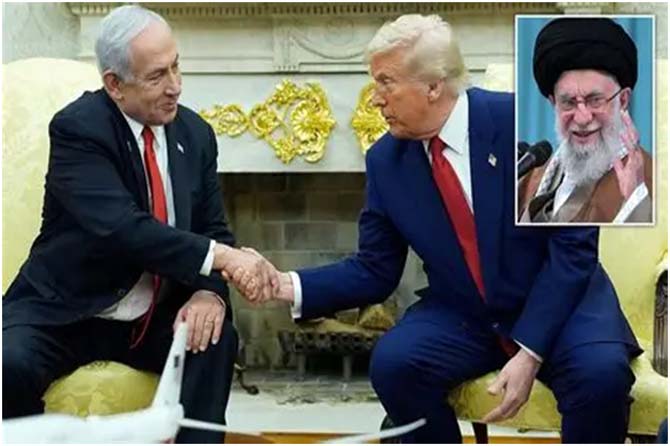
However, regardless of what transpired during the talks, none of the factors pushing Iran and the US for an end to the conflict have changed. The US still must contend with the spectre of rising oil prices and their impact on the population which may lead to an erosion in his support base in the impending midterm elections. While Iran, despite its resilience and resolve in the conflict, has to deal with sanctions, a weak economy and constant pounding by long range vectors. It may have survived an attack by the combined might of the US and Israel but it needs to focus on reconstruction.
Rationality dictates that both sides continue with the ceasefire but the desire to win concessions in the negotiations can result in providing a new lease of life to the conflict.
While the costs of renewed war remain high for both countries. At the same time, political dynamics in Washington, Tel Aviv and Tehran, and the tendency toward maximalist positioning, can once again result in a downward spiral.
Releasing of Funds
Another enduring fault line in US-Iran relations is the potential release of billions of dollars in Iranian assets frozen under years of US sanctions. With Tehran conditioning the reopening of the Strait of Hormuz and a reduction in proxy activities on sanctions relief, Washington faces a familiar strategic dilemma.
The question of unfrozen assets is not new. Under the 2015 Joint Comprehensive Plan of Action, Iran regained access to previously restricted funds, often cited at up to $150 billion. These resources provided Tehran with significant financial latitude. But rather than translating into broad-based domestic recovery, there are reports that a portion of these funds appears to have supported Iran’s network of proxies.
The fear now remains that unconditional sanctions relief could once again reinforce Iran’s external projection of power
The Reality of US Power
However, the war has thrown light on the limits of US power, as it was willing to engage in talks in a matter of weeks without having achieved any of its aims.
In recent history, what the US achieved in Afghanistan or Iraq can be debated, but in the immediate aftermath of its invasions in both countries, it was able to announce victory. There has been nothing comparable in Iran. While it is too soon to predict what will come next, as the situation is far too fluid, that the region is now going to face considerable instability and a reset in future.
The war has demonstrated that despite the massive force used by the US and Israel, to make Iran capitulate to their demands, a militarily weaker Iran displayed its resilience and resistance and was able to wage economic warfare, by controlling the Strait of Hormuz. This has shaken global energy markets and the global economy.
Iran also retained its capability to undertake retaliatory strikes against Israel and Gulf states. Further by leveraging the geometry of geography in this case the Strait of Hormuz, Iran has turned the control of energy into an economic weapon with strategic consequences.
In past conflicts in Iraq and Afghanistan, the US had tactical successes but faced strategic setbacks. This time it neither had tactical successes nor strategic gains. Its security umbrella also failed to protect its allies in the Gulf.
To quote an editorial in the Guardian; “This is a strategic defeat for the US that will resound for decades, and a clear sign of its systemic failures.” While, The Economist said, “Donald Trump is the biggest loser” in a conflict that has revealed “the shallowness of his vision for a new way of wielding American power.”
Conclusion
In hindsight it was unrealistic to expect the two opposing sides to reach a comprehensive peace deal in one sitting at the first meeting given their conflicting proposals. However, there was hope that they would at least agree to extend the ceasefire and establish a framework for further negotiations, but the talks concluded without a resolution or memorandum of understanding, with Vance claiming Iran chose “not to accept our terms.” While Iran’s Foreign Minister Abbas Araghchi stated that the two sides came within inches of an understanding, but “we encountered maximalism, shifting goalposts, and blockade.”
China has strongly condemned the US blockade of the Strait of Hormuz, labelling it “irresponsible and dangerous.” In a statement, President Xi Jinping expressed deep concern over the ongoing conflict in the Middle East, stating, “We cannot allow the world to revert to the law of the jungle.”
It, however, remains to be seen how China will respond to any interception of their shipments by the US Navy, as any use of force by the latter could trigger a wider conflict.
The blocking of the Strait of Hormuz, sets an unhealthy trend across the world. There are several geographically critical straits, for example the Malacca Strait, Palk Strait, the shallowest Sunda Strait and so on. If every country closest and in control of the strait, starts putting sanctions, disregarding the UNCLOS, there will be hell to pay in the shipping business and world trade. As the Athenian statesman Themistocles said, “He Who Controls the Oceans, Controls the World.”
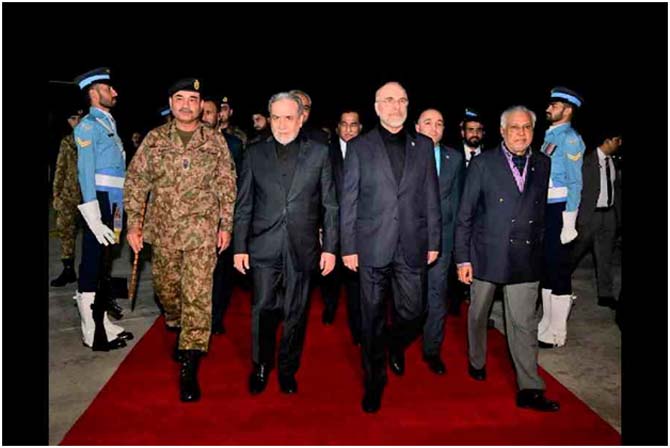
But it is now clear that despite the rigid public stand adopted by both sides, the channels of diplomacy have remained active. There is now hope that the second round of talks may pave the way for some sort of resolution. It is with this in mind that a Pakistani delegation led by General Asim Munir, landed in Tehran on 15 April carrying a new message from Washington to discuss a second round of talks.
However, in the absence of a political resolution or a military victory, the region will continue to be on edge. While there has been no breakthrough, but fortunately with the next round of talks slated to take place there has been no breakdown either.
ABOUT THE AUTHOR
 Maj Gen VK Singh, VSM was commissioned into The Scinde Horse in Dec 1983. The officer has commanded an Independent Recce Sqn in the desert sector, and has the distinction of being the first Armoured Corps Officer to command an Assam Rifles Battalion in Counter Insurgency Operations in Manipur and Nagaland, as well as the first General Cadre Officer to command a Strategic Forces Brigade. He then commanded 12 Infantry Division (RAPID) in Western Sector. The General is a fourth generation army officer.
 Major General Jagatbir Singh was commissioned into 18 Cavalry in December 1981. During his 38 years of service in the Army he has held various command, staff and instructional appointments and served in varied terrains in the country. He has served in a United Nations Peace Keeping Mission as a Military Observer in Iraq and Kuwait. He has been an instructor to Indian Military Academy and the Defence Services Staff College, Wellington. He is a prolific writer in defence & national security and adept at public speaking.