When Growth Met Gravity
The dust has finally settled on the 17th Tamil Nadu Assembly election, and the scoreboard reads like a script even the most daring Kollywood writer might have hesitated to pitch. With C. Joseph Vijay’s TVK securing a staggering 108 seats (vote share of 34.9% — higher than any debut performance by a party in TN – on April 23 polling across all 234 constituencies, with a turnout of 85.1% — the highest for a Tamil Nadu assembly election), we are witnessing more than just a debut; we are seeing a historic realignment. Vijay himself contested from two seats and won both: Perambur in North Chennai by a margin of over 38,000 votes, and Tiruchirappalli East by 27,216 votes.
It reminds me of Lord Alfred Tennyson’s immortal lines in his work Morte d’Arthur (published in 1842): “The old order changeth, yielding place to new.” But in the land of the Dravidian sun and two-leafed branches, this change, which is comparable to the rise of M. G. Ramachandran in the 1970s, isn’t just poetic; it’s a seismic economic and social recalibration- a change in voter sentiment, party dynamics, and the evolving relationship between popular culture and political power.
As Mirza Ghalib wrote eloquently,
“ऐ बुरे वक़्त ज़रा अदब से पेश आ,
क्योंकि वक़्त नहीं लगता वक़्त बदलने में।”
English translation:
O bad time, behave with respect, because it takes no time for time to change.
As I write this, Chennai is abuzz with the question ‘What next?’ TVK has momentum, but in the theatre of democracy, the final act of government formation requires a different kind of script than the campaign trail. The situation is fluid, with alliances (e.g., Congress support) being negotiated for the government formation.
Many are asking how the incumbent’s ‘growth story’ could be so decisively interrupted. The answer, as any economist who spends as much time with ghazals as they do with charts will tell you, is that progress is only as good as its perception. The state’s double-digit growth was real, but it was a lopsided momentum. While the urban corridors of Chennai and Coimbatore felt the ‘Whistle Podu’ energy of industrial expansion, the rural heartland felt the gravity of stagnant wages and the rising cost of a basic meal.
Once celebrated by his admirers as “Ilaya Thalapathy” (young commander), Vijay’s evolution to “Thalapathy” (commander) about a decade ago now appears almost prophetic. What began as a symbolic elevation within fan culture has translated into a tangible assertion of leadership in the political arena. His transition from cinema icon to political figure has not been merely cosmetic; it reflects a carefully cultivated public persona rooted in mass appeal, disciplined messaging, and strategic engagement with grassroots issues.
Leading TVK through its debut electoral contest, Vijay (like Nandamuri Taraka Rama Rao, popularly known as NTR) has accomplished what few in Indian politics have managed—converting star power into substantial political capital on the first attempt. This is one of the most significant debut performances in the history of Indian elections, challenging established parties and reshaping expectations for outsider entrants. Numerically, crossing the 100-seat mark in a 234-member assembly places TVK within striking distance of governance; symbolically, it cements Vijay’s arrival as a serious political contender rather than a celebrity experiment and marks a new era in Tamil Nadu politics, challenging the established order.
Ultimately, this election has blurred the boundaries between cinematic mythology and democratic reality. Vijay, as the next “Mudhalamaichar” (Chief Minister) has not just entered politics; he has redefined the scale and speed at which a new political force can rise, turning what might have been dismissed as a symbolic candidacy into a historic realignment of power.
Viewed in this light, this electoral verdict delivered a sharp reminder of a recurring democratic truth: there is no clean, linear correlation between economic performance and electoral success.
The explanation lies as much in persona as in politics. Social scientist Shiv Visvanathan justifiably maintains, “Vijay carries a different kind of verve. He offers a sense of fun, confidence and an aura of competence rooted in individuality and that gives him a different kind of power.”
The incumbent forgot a simple truth: People don’t vote for spreadsheets. They vote for hope, a hope based on perception, memory, emotion, and identity. Governments can post impressive macroeconomic numbers and still lose decisively if those gains fail to translate into tangible, dignified improvements in everyday life. Elections are rarely referendums on a single metric; they are composite judgments shaped by multiple, interacting forces. In this case, the result was not merely a swing but a structural disruption—a “googly” (in the land of Laxman Sivaramakrishnan, VV Kumar, and Varun Chakaravarthy) that confounded established expectations.
1. Growth vs. Lived Reality: The Distribution Deficit
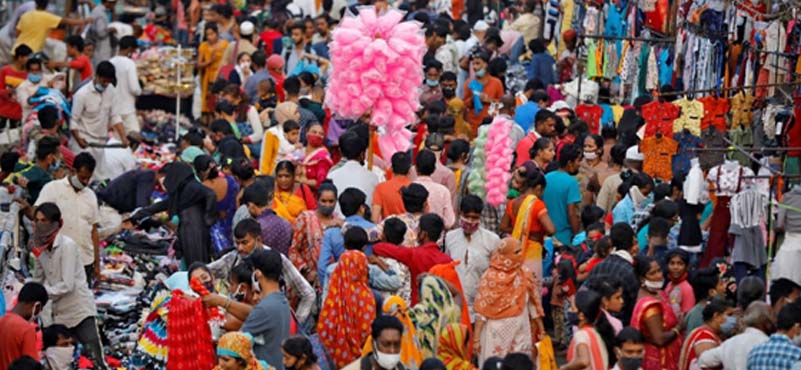
This leads us to the inevitable friction between macroeconomic success (e.g., double-digit growth and rapid industrial expansion) and the lived reality on the ground. While the dashboards showed double-digit growth, the kitchen table told a different story with uneven momentum—geographically concentrated, sectorally skewed, and socially stratified. The benefits accrued disproportionately to urban corridors and capital-intensive sectors, while large sections of the electorate experienced stagnant incomes and rising costs of living. It is the difference between a soaring GDP and the quiet frustration of a youth in Madurai who sees the glass towers rising but finds the doors to employment firmly shut. This reveals a classic paradox: GDP growth is additive, but voter satisfaction is distributive. Aggregate success can coexist with individual frustration. Elections turn on lived experience, not dashboards. When households measure progress not by policy announcements but by job security, price stability, access to services, and dignity in delivery, any disconnect becomes politically costly. Growth without inclusion breeds not gratitude but grievance.
2. Anti-Incumbency, Arrogance, and Welfare Fatigue
Tamil Nadu has long exhibited cyclical anti-incumbency, but this cycle has evolved. It is no longer triggered solely by policy failure; it is activated by perception of distance and entitlement. Reports of local-level corruption, bureaucratic opacity, and cadre high-handedness created a sense of exclusion from power. The optics of dynastic consolidation, particularly the elevation of the leadership’s next generation, reinforced the perception of a closed political system.
Simultaneously, the Dravidian welfare model, once transformative, has entered a phase of diminishing political returns. Subsidies, rations, and cash transfers have transitioned from being seen as progressive entitlements to expected baselines. When delivery is marred by delays, leakages, or humiliation at the point of access, welfare stops generating goodwill and begins generating resentment. Voters do not reward continuity when the experience of that continuity feels extractive or indifferent.
3. The “Third Force Shock”: Non-Linear Disruption
Tamil Nadu’s bipolar electoral canvas has been marked by the dominance of the Dravida Munnetra Kazhagam (DMK) and the All-India Anna Dravida Munnetra Kazhagam (AIADMK) for about five decades. In this overarching setting, the entry of Vijay and his party, TVK, did not merely split the vote; it altered the geometry of the contest. Riding on personal charisma, Vijay attracted millions of supporters to his rallies, despite allegations of poor crowd management, which caused a stampede at one such gathering in September 2025, killing 42 people. This “promise of change” was not just another spoiler; it changed the terms of the contest. In this new template of conversion of a vast fan base into a politically active cadre, particularly among youth and first-time voters, TVK transformed cultural capital into electoral energy.
Crucially, TVK shifted the narrative axis from a binary (DMK versus AIADMK) to a generational choice (continuity versus change). This reframing injected unpredictability into what had been a stable two-pole system. The result was non-linear: small shifts in vote share produced outsized effects on seat outcomes. In electoral systems, disruption is rarely proportional; it is exponential.
4. Anti-Incumbency Revisited: Performance Is Not Immunity
A critical misreading in incumbent strategy is the assumption that competent governance inoculates against anti-incumbency. Tamil Nadu’s history suggests otherwise. Fatigue accumulates not only from policy shortcomings but from prolonged exposure to the same political style. Issues like law and order, particularly crimes against women, carry disproportionate symbolic weight. They shape perceptions of state capacity and moral authority.
Anti-incumbency today is less about failure and more about erosion—of trust, of responsiveness, of perceived fairness. Even incremental deterioration, when amplified through media and social networks, can outweigh broader developmental gains. In such a disconcerting environment, incumbency becomes a liability unless constantly renewed through visible course correction.
5. Narrative Failure: Statistics vs. Storytelling
Elections are not won by data; they are won by narratives that translate data into meaning. The incumbent’s emphasis on growth metrics, infrastructure, and administrative achievements lacked emotional resonance. In contrast, the “Vijay effect” combined aspiration, authenticity, and symbolism. With a public persona unblemished by prior political baggage and a decade-long record of visible social engagement through fan networks, he had a meticulously structured 40-point manifesto that sought to directly address everyday concerns — from women’s safety and household welfare to employment, governance transparency and farmer security- Vijay embodied a story of fresh possibility.
Media amplification accelerated this narrative, projecting a sense of historical transition—a “new era.” This narrative was simple, repeatable, and emotionally charged. The incumbent’s narrative, by comparison, was technocratic and defensive. In a contest between numbers and narrative, narrative prevails because it organises how voters interpret numbers. Economic growth is a statistic; elections are stories.
6. Fragmentation of the Dravidian Base: From Binary to Mosaic
For decades, Tamil Nadu’s politics operated within a relatively stable binary framework dominated by two Dravidian poles. This equilibrium depended on cohesive vote banks, predictable caste alignments, and high efficiency in converting votes into seats. The emergence of a credible third force fractured this equilibrium.
Traditional support bases splintered, regional loyalties became fluid, and caste alignments showed signs of reconfiguration. This fragmentation reduced the incumbent’s strike rate, even where vote shares remained competitive; seat conversion suffered. In first-past-the-post systems, fragmentation punishes the incumbent disproportionately because it disrupts the arithmetic of consolidation.
7. Cadre vs. Movement: Organisational Energy as a Force Multiplier
The incumbent possessed a formidable political machine—structured, experienced, and resource-rich. However, TVK’s strength lay in something qualitatively different: movement energy. Highly motivated volunteers, driven by emotional identification with leadership rather than transactional incentives, created a campaign environment marked by enthusiasm, spontaneity, and intensity.
This distinction—machine versus movement—matters. Machines optimise efficiency; movements generate momentum. In close contests, momentum (often called “tempo” in elections in some states) can overwhelm efficiency by expanding turnout, energising undecided voters, and sustaining media attention. The incumbent’s organisational advantage was thus neutralised, and in some regions, reversed.
8. Perception of Renewal vs. Continuity of Power
A deeper undercurrent in the election was the electorate’s appetite for renewal. Even where governance outcomes were acceptable, the perception of stagnation of ideas, faces, and approaches created a demand for novelty. The challenger’s promise of generational change resonated not because it was fully articulated, but because it was symbolically powerful.
Continuity, without visible reinvention, risks being interpreted as complacency. Renewal, even when undefined, can appear as hope. In democratic politics, hope often outweighs certainty.
Conclusion: Imbalance, Not Failure, Costs Power
The result shows that governments rarely lose power simply because they underperform; more often, they lose touch with public sentiment, fail to control the narrative, weaken their coalition arithmetic, and stop renewing themselves. The incumbent delivered growth. But it lost ground in how people perceived it, in the story it told, in the cohesion of its support base, and in its emotional connection with voters.
Several simultaneous forces shape elections, and those forces rarely move in a neat, predictable line. When a disruptive new player enters the field, the narrative begins to drift, and economic gains remain unevenly distributed, the political balance can change quickly. Tamil Nadu’s verdict looks less like a rejection of performance and more like a reset of expectations. The upending of the Dravidian duopoly is a reminder that politics is rarely stable for long, and even a small shift can trigger a decisive outcome.
ABOUT THE AUTHOR
 Dr. Manoranjan Sharma is Chief Economist, Infomerics, India. With a brilliant academic record, he has over 250 publications and six books. His views have been cited in the Associated Press, New York; Dow Jones, New York; International Herald Tribune, New York; Wall Street Journal, New York.