Introduction
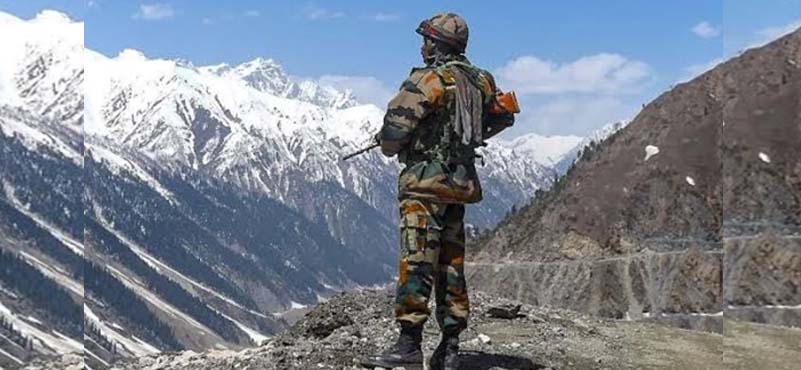
06 May 2026, marks the first anniversary of Operation Sindoor, a landmark military operation launched in response to the barbaric terrorist attack on innocent tourists in Pahalgam which originated from Pakistan and claimed 26 lives. The response wasn’t rhetoric, it was decisive, precise and just. The operation which combined precision strikes, technological capability, and coordinated action across land, air, and sea, can be termed as a ‘new normal’ in India’s military strategy.
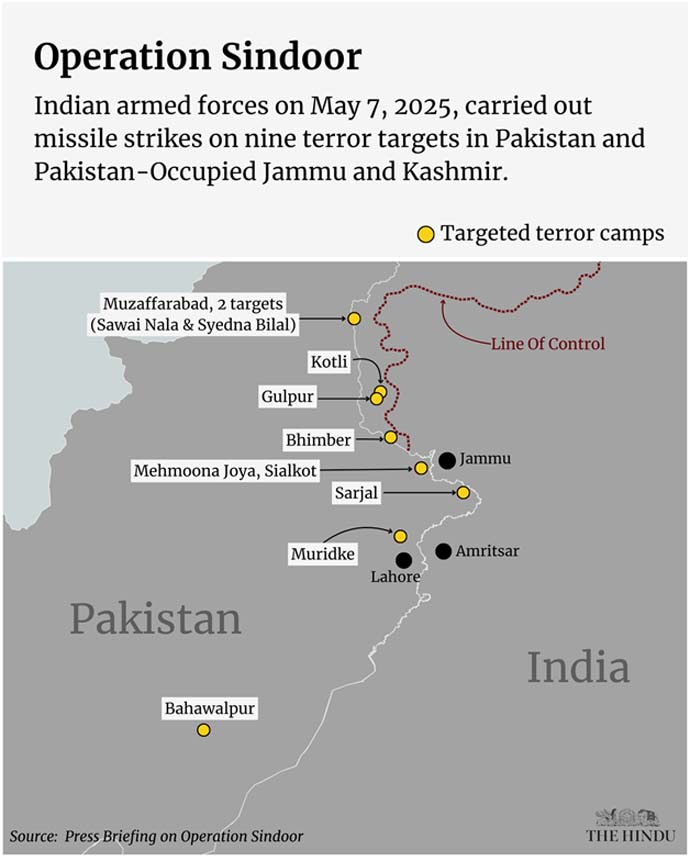
The 88-hour operation was initiated on the night of 06 -07 May 2025, targeting terror infrastructure across Pakistan, and Pakistan-occupied Jammu & Kashmir. Acting on intelligence inputs, Indian Armed Forces carried out precision strikes on nine major terrorist camps linked to groups such as Jaish-e-Mohammed, Lashkar-e-Taiba, and Hizbul Mujahideen. It was a measured act, carefully designed to avoid civilian casualties while destroying terror networks.
Following the strikes, Pakistan launched retaliatory attacks using drones, missiles, and electronic warfare systems targeting Indian military installations. However, India’s multi-layered air defence systems, including indigenous platforms, successfully neutralised those threats, preventing damage to key assets.
India responded with further targeted strikes on Pakistani airbases and military infrastructure, including facilities at Chaklala, Sargodha, and Rahimyar Khan. Within days, Pakistan’s Director General of Military Operations reached out for de-escalation, leading to a ceasefire on 10 May 2025.
India also undertook several non-military measures which had broader strategic implications and included suspension of trade ties, diplomatic actions, and placing the Indus Waters Treaty in abeyance, thereby signaling a tougher stance on cross-border terrorism.
The operation marked a shift in doctrine, as India demonstrated it is determined to respond to terrorism, regardless of the consequences of such a response and asserting that future terror attacks would be treated as acts of war, blurring the distinction between terrorist groups and their state sponsors.
Showcased Jointness
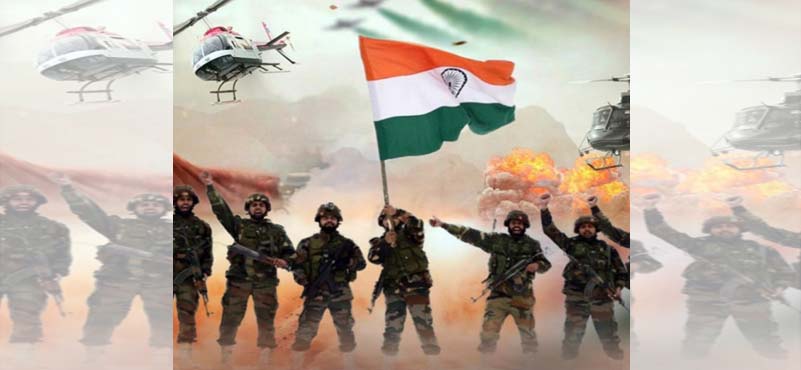
Operation Sindoor is regarded as a prime example of jointness among India’s armed forces. Joint planning at the apex level and decentralised execution at the individual service level was witnessed as India achieved its stated objectives.
The Indian Air Force executed precision airstrikes and maintained air superiority, while the Army ensured strong defensive and offensive positioning along the Line of Control. The Navy simultaneously asserted dominance in the Arabian Sea, deploying maritime assets to deter further escalation.
On the opening day of strikes, the Indian Air Force (IAF) demonstrated a credible capacity to identify and destroy terrorist-linked infrastructure in Pakistani territory, employing stand-off weapons to deliver precision strikes at speed. In the following days, operations expanded in scope, penetrating Pakistan’s air defence for the first time since the 1971 war.
Security forces, including the Border Security Force (BSF), also played a crucial role in thwarting infiltration attempts along the International Border during heightened tensions.
A defining feature of Operation Sindoor was the extensive use of indigenous defence technologies. Systems such as the Akash surface-to-air missile, integrated air command networks, drones, and electronic warfare platforms demonstrated India’s growing capabilities in modern warfare.
The operation underscored the success of initiatives aimed at defence indigenisation and “Atmanirbhar Bharat,” with domestically developed systems proving effective against advanced threats, including foreign-origin missiles and UAVs.
While losses were incurred, these must be evaluated against the scale and complexity of the mission and not simply tallied in isolation. The mere fact that the Indian Armed Forces could strike targets under defended conditions and undertake follow-on attacks demonstrates its capacity for coercive precision operations.
Lessons That Endure
Air power, once considered escalatory, has been normalized. Paired with long range precision weapons, air power presents compelling options to expand the threshold under the nuclear overhang. The short but intense conflict underscored the need for persistent intelligence, surveillance and reconnaissance (ISR). Long-range precision-guided weapons, along with the technological means to gainfully employ them, have expanded India’s options. There is no doubt that these promise speed, reach and reduce risk.
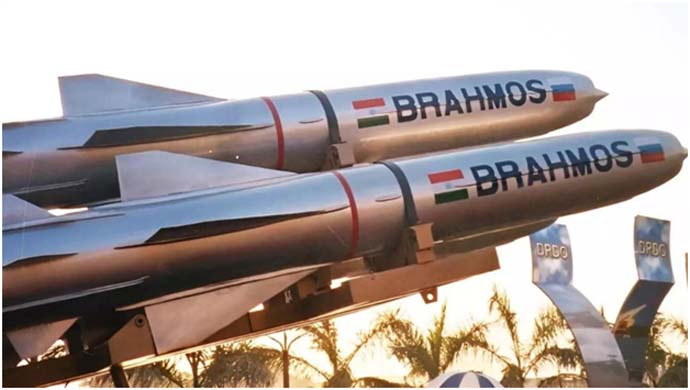
Key domestic capabilities were battle-proven during Operation Sindoor, including the BrahMos supersonic cruise missiles, a joint development with Russia; the Akash air defense system; and medium-range surface to air missile systems, among others. The Indian Army’s AD systems are connected by the Akashteer system was plugged into the IAF’s Integrated Air Command and Control System (IACCS). It integrated all its systems—Akash, Israeli Spyder, medium-range surface-to-air missile (MRSAM), and the Russian S-400 Triumf long-range AD system backed by radars and command control systems to generate a round-the-clock picture of India’s airspace. The networking of various platforms, like the integrated air defence system is a critical requirement that proved itself.
China is becoming increasingly more involved, though indirectly, through its aid to Pakistan. According to Deputy Chief of Army Staff Lieutenant General Rahul Singh, Pakistan might have been the immediate adversary, but it was backed by China and Türkiye. India-China relations are presently seeing an upward trend, but unless the border issues are resolved, relations will remain strained.
While a conflict establishes thresholds, it also reveals existing strengths, capabilities and technologies. For India, the challenge is maintaining the edge. India must build its capabilities and enhance its indigenous capacities. It also needs to streamline its Defence Acquisition Procedure (DAP) to ensure that capability development is realized in a definitive time frame.
The Escalation Ladder
Military actions were shaped to signal resolve while preserving escalatory control. Understanding this escalation pattern is essential for military planners, as future high-intensity conflicts are likely to produce pressures to expand the target set beyond the battlefield and into the economic and public domains as is being witnessed in the Iran War.
An escalation in targeting profiles and a prolonged duration of hostilities could bring industrial targets, economic infrastructure and psychological objectives into the conflict. The air defence architecture needs to address such contingencies.
This conflict illustrates that limited military engagement, under the shadow of nuclear weapons, can be calibrated provided escalation thresholds are mutually understood and objectives are clearly defined.
Clearly defined objectives provided space for punitive strikes within the escalation ladder. Drones, missiles, air defences, electronic warfare and long-range precision strikes gave more options and created space below the nuclear threshold.
The Emperor’s New Clothes
One of the lessons of the war was the battle for control of the cognitive space. Operation Sindoor can be termed as the first war fought in the digital era which includes print, visual and social media. The continuous streaming of visuals, debates and print were constantly available literally in the palm of one’s hand. It therefore became one of the most powerful tools in shaping perceptions.
The Armed Forces learning from their experience after the Balakot strikes were absolutely clear about the requirement of providing clear images of the targets engaged and destruction caused and this was provided leaving no doubt for ambiguity.
Pakistan on the other hand tried to resort to its familiar playbook, to build a narrative shield around their failures for a wider global audience and some of their statements bordered on the absurd. Nevertheless, they portrayed that a resilient Pakistan had not only withstood the blow but also gained diplomatic and perceptual ground. They portrayed themselves as a victim inspite of the fact that the terror attack was perpetuated by them. This dissonance between battlefield realities and international reporting reveals the contours of a conflict far more consequential: the battle for narrative supremacy.
Fortunately, as India began to release satellite imagery, combat footage, and technical briefings, and as independent open-source intelligence validated claims about destroyed terror infrastructure and minimal collateral damage, the credibility of Pakistan’s exaggerated assertions eroded.
Conclusion
Prime Minister Narendra Modi described Operation Sindoor as a reflection of the nation’s resolve to ensure justice and security. The operation established new red lines, emphasising swift, precise, and proportionate responses to terrorism.
Defence Minister Rajnath Singh while addressing the National Security Summit 2.0 recently said Operation Sindoor is also a symbol of this new world order. It “was a turning point that sent a message to the entire world that India is no longer the one that adheres to the old way of thinking, where terrorist attacks occur on our soil, we merely issue diplomatic statements. Under Prime Minister Modi’s leadership, our government has maintained that no terrorist activity will be tolerated under any circumstances.”
Pakistan’s use of cross border terrorism under the nuclear shadow presents a unique challenge to India’s security. Pakistan has traditionally exploited the distinction between sub-conventional (terrorism) and conventional (military) aggression and this was backed by their supposed belief that possession of nuclear weapons would deter India from retaliating at the conventional level of war. This myth has now been shattered as Operation Sindoor demonstrated that there is space between the conventional and nuclear level. Pakistan can no longer depend on nuclear threats to deter Indian conventional attacks in response to sub-conventional aggression
One year on, Operation Sindoor must be remembered as a strategic reorientation in India’s national security with regards to handling terrorism as it navigates its future trajectory. Although the kinetic actions are currently on hold, as far as India is concerned, the operations are in a state of pause. With India explicitly stating that any act of terror on Indian soil would be treated as an act of war.
The operation undoubtedly demonstrated the effectiveness of intelligence-led operations, the importance of technological readiness, and the strength of coordinated military action.
Today as we are in the midst of three global conflicts, the Ukraine War which has been raging for over four years, the war in Gaza and Lebanon which has been on for over two years and now the Iran War which is in its third month the significance of India’s achievement stands out.
India needs to prepare better. This Pakistan chapter is far from over. The next round may last longer than 88 hours, as every conflict across the world is telling us. Our planning, our stockpiles must cater for this. If there are deficiencies, (based on earlier thought processes, that all wars will be short and swift,) they must be made up, and such thoughts dispelled. Time is ripe to leave all other matters aside, India needs to build up its military capability to take on any enemy, firmly and squarely, as well as have the capability to sustain prolonged operations. There are miles to go before we sleep.
ABOUT THE AUTHOR
 Maj Gen VK Singh, VSM was commissioned into The Scinde Horse in Dec 1983. The officer has commanded an Independent Recce Sqn in the desert sector, and has the distinction of being the first Armoured Corps Officer to command an Assam Rifles Battalion in Counter Insurgency Operations in Manipur and Nagaland, as well as the first General Cadre Officer to command a Strategic Forces Brigade. He then commanded 12 Infantry Division (RAPID) in Western Sector. The General is a fourth generation army officer.
 Major General Jagatbir Singh was commissioned into 18 Cavalry in December 1981. During his 38 years of service in the Army he has held various command, staff and instructional appointments and served in varied terrains in the country. He has served in a United Nations Peace Keeping Mission as a Military Observer in Iraq and Kuwait. He has been an instructor to Indian Military Academy and the Defence Services Staff College, Wellington. He is a prolific writer in defence & national security and adept at public speaking.