Air India is presently grappling with the challenges of record financial losses, future strategy, and CEO succession. A good opportunity for everyone who leads any organization (or even a team) to reflect on the lessons for each of us.
During my teenage years, Air India was a global leader, a world-class, premium carrier – with jet-setting luxury on high-density routes like London–New York. In 1962, it became the world’s first all-jet airline, and was so well regarded around the globe that, when Singapore launched its own national airline, it chose Air India to teach them world-class service. One of our nation’s outstanding achievements, Air India was a source of immense national pride.
The Fall: From National Pride to National Crisis
The contrast with the present could hardly be more dramatic:
- First, a historic financial loss, during the Financial Year 2026 alone, of ₹22,000 crore (over $2.3 billion), and therefore set to be the single largest contributor to what is also a record loss year for Indian aviation as a whole.
- Second, the Ahmedabad crash, on the 12th of June 2025, of Air India Flight AI171 —the first fatal hull loss of a Boeing 787 since that type entered service some 15 years earlier, and the deadliest aviation disaster so far, of this decade.
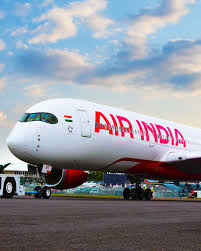 Neither catastrophe occurred in a vacuum. After many years of underinvestment and mounting losses following its ill-fated merger with Indian Airlines in 2007, Air India was sold in January 2022 to the Tata Group — its original owners. The attempted transformation, branded Vihaan.AI, was extraordinarily ambitious: an order for 470 new aircraft, rapid migration to the SAP S/4HANA system for Enterprise Resource Planning, comprehensive brand overhaul, and integration of four airlines — Air India, Vistara, Air India Express, and AIX Connect. But the “software” of any transformation — the safety culture, the service ethos, the integration of legacy employees with new hires — evidently lagged significantly behind the hardware.
The DGCA Audit: 51 Lapses Laid Bare
The airplane crash triggered a Comprehensive Special Audit by India’s Directorate General of Civil Aviation (DGCA), which identified 51 specific safety lapses. Seven of these were classified as “critical safety risks requiring immediate corrective action”, while 44 as “serious systemic failures”. Together, these fell into five categories:
- Training and competence gaps;
- Crew fatigue and rostering management;
- Operational and maintenance procedures;
- documentation and record-keeping; and,
- systemic neglect of safety management, inadequate monitoring of flight operations, and avoidance of repeated regulatory warnings.
These findings were not unique to Air India. A Parliamentary Standing Committee report published in March 2026 revealed that a broader DGCA audit of 754 aircraft across all scheduled Indian airlines between January 2025 and February 2026 identified repetitive defects in 377 of them. However, Air India stood out starkly: 191 of its 267 aircraft (70%) were flagged for repetitive deficiencies, a proportion far exceeding that of the next worst: IndiGo with 23 (6% of its fleet), and SpiceJet with 14 (21%).
An Audit Perspective versus a Management Perspective
Audits reveal rather different things from what management should learn from them. Audits identify what went wrong; management needs to ask why the organisation allowed the factors to exist in the first place. Aviation accident investigations work from the bottom up: they begin with the event — the physical facts of what the aircraft did, what the crew did, and what conditions prevailed — and only later expand outward into human, technical, and organisational factors. But systems safety sees things from the opposite direction: it is the Board that establishes what risks are prioritised, what data surfaces, and what gets escalated. Boards do not “cause” accidents, but they strongly shape whether latent risks remain invisible.
What Managers, CEOs, and Boards Should Learn
For all of us, the core lesson is to move beyond perfunctory, paper exercise-type checklist-driven processes, to focusing attention on real-time detection of anything going wrong. Safety needs to be seen as the minimum cost of an international business today. Inside our country, we may be able to get away with jugaad. In fact, some of us may have no alternative to living with that. But the world of international business focuses only on punctuality, quality, price, service, and safety. We need to stop seeing safety as a competitor to financial performance, and to see it instead as the unavoidable enabler of sustained profits.
Clearly, any new CEO alone cannot re-earn trust even with a root-and-branch transformation of management, training, and monitoring culture. Everyone must be encouraged to contribute to a “learning culture” in which concerns are expressed without fear of retaliation, mockery or marginalisation. Everyone needs to learn to shift from PR responses to structural accountability.
For the board, the lessons are most demanding. I entirely understand why it is totally predictable that there is little public evidence of the Board having taken anything to heart. But I am pretty sure that they must be focusing on the quiet governance questions: are audit findings no longer hidden in operational silos but being addressed in the boardroom? Is there quantitative proof of safety maturity? Are the new CEO’s bonuses, tenure, and review criteria tied not only to financial Key Performance Indicators but explicitly to metrics of safety, culture, customer satisfaction, training, and data quality?
However, if the incentive structure rewards air fleet expansion and passenger volume while remaining blind to systemic failures, those failures will be simply baked into the organisation’s future. What needs to be made clear internally is that Air India’s primary goal for the next two years is to be the safest and most reliable airline in India, even at the cost of slower growth. The key issue is to recognise that the status quo is indefensible, and to embrace internal transparency. If the Board does that, it can shift the entire management culture without issuing any press release about it.
The Overall Strategic Lessons
The first lesson is: large-organisation turnarounds are accomplished only by long-term capital working hand in hand with operational guardrails. Financial losses can be tolerated as part of a turnaround, but failures of operational integrity are intolerable. Independent, objective audits of operational health are needed to reveal the truth and to avoid superficially attractive progress reports by management.
Second, hardware modernisation is easier than cultural change, but it is the latter that determines whether the former works. So, transformation metrics need to prioritise indicators such as safety incident reporting, employee engagement, and customer complaint resolution.
Third, aggressive capacity expansion without corresponding operational maturity almost never reduces but rather amplifies existing flaws.
Fourth, the integration of different entities defaults all of them to the lowest standard unless there are vigorous and thorough efforts to elevate them to the highest objective by defining the target culture and ruthlessly building that by means of aligned incentives, effective procedures and, where necessary, difficult personnel decisions.
Fifth, never neglect the horizon. It is essential to foresee what might come, get ready for every substantial possibility, build requisite redundancy into the business system, and stress-test finances.
The Path Forward
Air India’s story is a reminder that corporate disasters are reduced only when suitable steps are taken through the entirety of the business system, but the whole process of restoring performance and profit can begin only if there is reflection, learning and change in the boardroom.
ABOUT THE AUTHOR
 Prabhu Guptara has decades of experience as a business consultant, and is publisher of Pippa Rann Books, UK, as well as Visiting Fellow at the Judge Business School, University of Cambridge; he keeps up with horizon technologies, and is an advisor to company Boards.