
Introduction
The history of warfare is often told through increasingly sophisticated weapons: the machine gun, tank, fighter aircraft, precision missiles, space and now AI. However, the advent of the drones on the battlefield and its ubiquitous presence shows that transformation can also follow the opposite trajectory.
For much of modern history, one of the greatest advantage’s militaries possessed over insurgencies was control of the sky. Militants could acquire rifles and explosives. With sufficient foreign support, some obtained missiles, artillery and armoured vehicles.
Possessing an Air Force required resources almost exclusively available to states. Combat aircraft cost millions of dollars, while the cost of training pilots, creating airfields, maintenance, fuel and logistics raised the economic stakes much higher. It was therefore the preserve of the powerful and rich. But with the vast range of pilotless drones the cost matrix is being altered substantially.
From Ukraine to Iran, inexpensive drones are dramatically reducing the cost of projecting military power from the air. The result is not simply another technological development in warfare. It represents a structural shift in the balance between states and those fighting them.
Barrier For Air Control Is Changing
The fundamental change is economic rather than technological. Modern combat aircraft can cost millions of dollars even before munitions, maintenance and manning are considered.
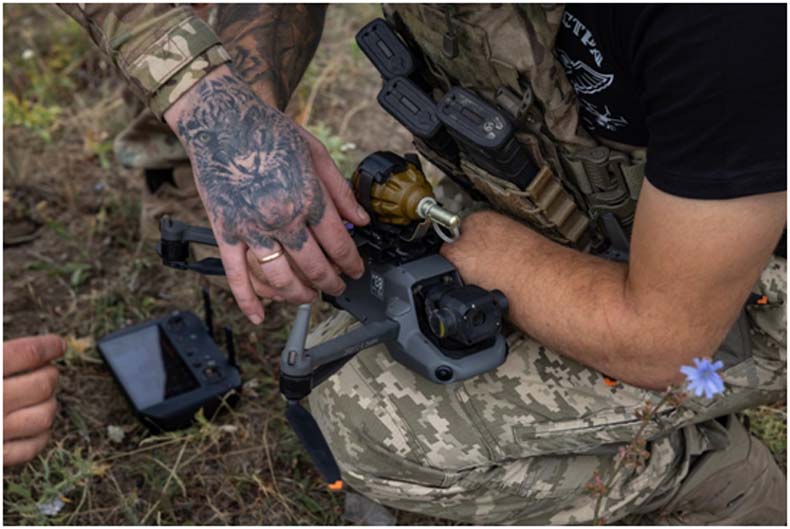
Commercial drones have altered that calculation. A relatively inexpensive unmanned aircraft equipped with a camera and modified to carry explosives can conduct surveillance or attack targets at a fraction of the traditional cost. First-person view drones can potentially destroy equipment worth hundreds or thousands of times more than the weapon used against it.
Ukraine has demonstrated the consequences at enormous scale. Drones costing relatively modest sums have been used against tanks, artillery and air defence systems as well as infrastructure worth millions. The use of drones during Operation Spiderweb is well documented and studied.
While Ukraine receives billions of dollars in military assistance and possesses a substantial industrial and technological base. Most of the actors involved in the world’s civil wars do not have those resources.
For example, in Myanmar UN investigators recently reported a growing use of aerial attacks by Myanmar’s military, including the use of relatively inexpensive technologies such as motorised paragliders and drones has made attacks harder for civilians to see coming, cutting the time people have to flee or find shelter.
The country is poor, its infrastructure has deteriorated after years of conflict and many resistance organisations operate with extremely limited resources yet various resistance and ethnic armed groups extensively use weaponised, surveillance, and first-person-view (FPV) drone. This is particularly significant because it demonstrates that the transformation of air warfare is no longer confined to technologically advanced militaries.
Democratisation of Air Power
Historically, technological superiority allowed governments to attack insurgents from positions of relative safety. Aircraft could strike bases, supply routes and their camps, while rebel forces possessed no aerial means of responding. Cheap drones erode that asymmetry.
An armed organization can now observe troop movements from above, attack military positions, disrupt logistics, threaten expensive equipment, drop weapons and supply drugs across borders without possessing anything resembling a conventional Air Force.
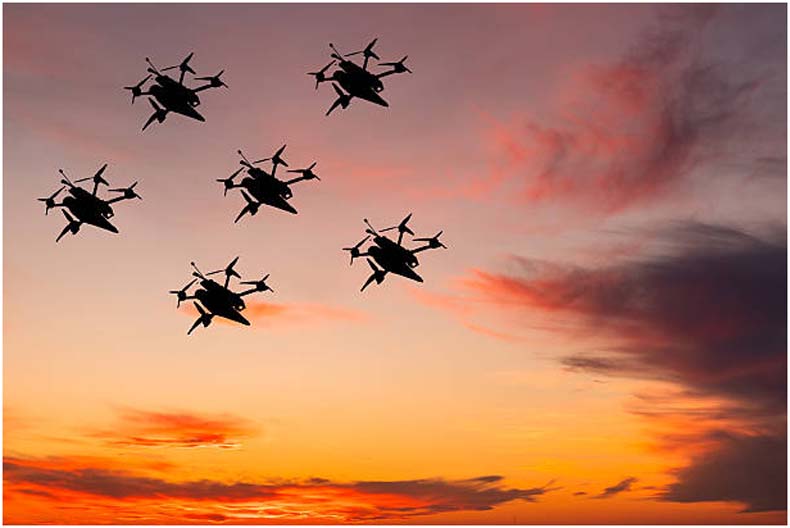
As technologies diffuse downward into conflicts involving governments, non-state actors and insurgencies the result is the democratisation of air power.
This does not mean that a commercial drone suddenly provides militants with capabilities comparable to modern air forces. Fighter aircraft can travel farther, carry vastly larger payloads and operate with levels of sophistication that cheap drones cannot replicate.
But insurgents do not need parity. They just need sufficient capability to impose costs. That distinction could fundamentally alter the dynamics of civil war.
The barrier to entry will continue falling. One consequence may be prolonged conflicts. Insurgency either ends politically or when one side establishes overwhelming military superiority or due to the superiority of population support. Cheap technology complicates these pathways.
When aircraft and munitions are scarce and costly, targets are prioritised and their use is restricted. When strike capabilities from the air becomes cheap and abundant, the threshold for using them falls. As a consequence, the list of non-military targets that have become increasingly vulnerable to surveillance and attack have expanded and civilians are repeatedly bearing the consequences of the economic inversion of warfare.
The Urgent Issues
Much of the debate about autonomous weapons and military artificial intelligence remains focused on sophisticated systems developed by major powers. Yet the more immediate transformation may come from technologies that are already commercially available.
Militaries consequently need to rethink air defence. Protecting military bases alone will not be enough. Critical infrastructure, civilian facilities and urban areas may require defences against threats costing far less than the systems designed to stop them.
International arms control faces an even greater problem. Fighter aircraft and ballistic missiles can be tracked, regulated and subjected to export controls. Many drone components are also ordinary civilian products. Controlling their proliferation will therefore be extraordinarily difficult.
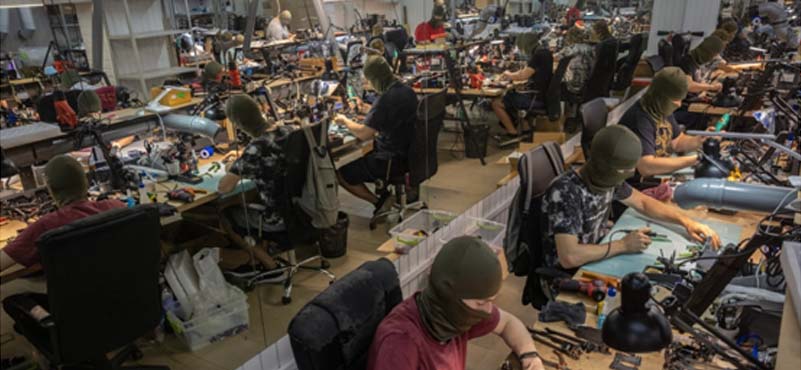
Commercial supply chains provide cameras, batteries, motors and electronic components. Software and technical knowledge circulate globally. Unlike jet engines these technologies can be manufactured in workshops instead of being restricted to specialised weapons factories. Innovation therefore occurs from the bottom up.
Air superiority is no longer the preserve of the rich and powerful. This has profound implications for future conflicts.
Quantity versus Quality
If weaker forces can continually acquire inexpensive systems capable of destroying expensive assets or disrupting offensives, nations may find it increasingly difficult to translate superior resources into decisive victories.
Traditional military platforms often require years of development and billions of dollars in investment. In comparison, many small unmanned systems can be manufactured at a fraction of the cost while performing critical missions such as surveillance, reconnaissance, communications support and precision strikes.
Intercepting a low-cost drone with a highly expensive defence system can create a significant cost imbalance therefore militaries are increasingly exploring both cheaper interception technologies and more efficient ways of neutralising large numbers of unmanned systems.
This creates a radically different cost equation. Destroying a cheap drone with a missile costing multiple times more may be tactically successful but economically unsustainable. Likewise, losing a multimillion-dollar vehicle to an inexpensive drone imposes costs far beyond the immediate battlefield damage.
The imbalance is a strategic problem. Attacking has grown cheap while the relative cost of defending has rocketed.
Non state actors do not need to replicate the sophisticated drone programmes developed by major powers. They need only adapt inexpensive technologies sufficiently to local conditions.
War has now become a contest not only of military sophistication but of manufacturing, adaptation and cost. The decisive question may increasingly be less about who possesses the best weapon and more about who can replace weapons faster and cheaper. Quantity is now competing with quality.
Conclusion
Affordable drones and improvised aircraft are dramatically reducing the cost of projecting military power from the air. The technologies reshaping warfare are becoming cheaper, easier to manufacture and available to a much wider range of actors.
Ukraine and Iran have demonstrated what inexpensive drones can accomplish in a major interstate war. What began as a conflict dominated by tanks, artillery and infantry has increasingly become a drone war. Outgunned in conventional armour and aircraft, Ukraine turned to inexpensive unmanned systems for reconnaissance and attack. The Hezbollah and Houthi’s are revealing what happens when the same reaches a civil conflict. That may ultimately prove more consequential.
Military technology advancement recently has been largely defined by increasingly sophisticated platforms: stealth aircraft, precision-guided missiles, advanced surveillance systems, highly integrated defence networks and AI. But the ongoing conflicts have highlighted how inexpensive drones can influence military operations and challenge traditional assumptions about the cost of warfare. While high-end defence systems remain essential, the growing use of low-cost drones has demonstrated that relatively simple platforms, when deployed at scale, can create significant operational impact.
Aerial combat, is being democratised by the ability of smaller nations, insurgent groups, and non-state actors being able to bypass expensive military defence systems and by converting commercial off-the-shelf devices into precision weapons.
The future of warfare is not simply becoming more technologically advanced. It is also becoming more accessible and increasingly vertical.
ABOUT THE AUTHOR
 Maj Gen VK Singh, VSM was commissioned into The Scinde Horse in Dec 1983. The officer has commanded an Independent Recce Sqn in the desert sector, and has the distinction of being the first Armoured Corps Officer to command an Assam Rifles Battalion in Counter Insurgency Operations in Manipur and Nagaland, as well as the first General Cadre Officer to command a Strategic Forces Brigade. He then commanded 12 Infantry Division (RAPID) in Western Sector. The General is a fourth generation army officer.
 Major General Jagatbir Singh was commissioned into 18 Cavalry in December 1981. During his 38 years of service in the Army he has held various command, staff and instructional appointments and served in varied terrains in the country. He has served in a United Nations Peace Keeping Mission as a Military Observer in Iraq and Kuwait. He has been an instructor to Indian Military Academy and the Defence Services Staff College, Wellington. He is a prolific writer in defence & national security and adept at public speaking.