The global order is not drifting into instability; it is breaking with its own logic. Interdependence, once treated as a source of stability, is increasingly a source of risk. Over decades, there has been a silent agreement among policymakers and economists that closer integration would reduce rivalries. Trade would unify countries, institutions would settle disagreements, and common wealth would outweigh strategic rivalry. That supposition is not eroding gradually; it is giving way under pressure, all at once.
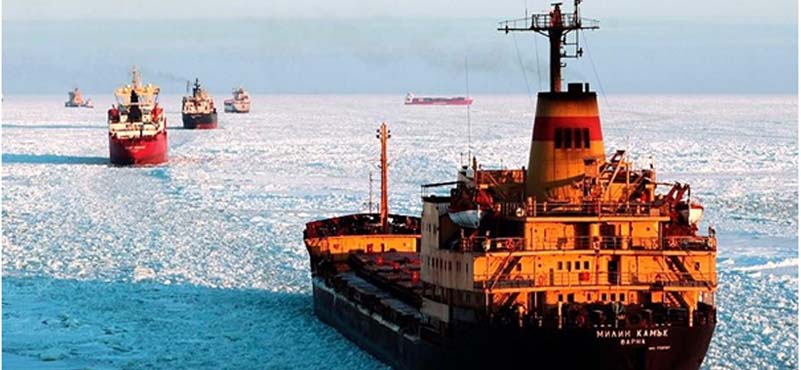
Convergence defines the present moment. Energy shocks, food insecurity, financial pressure, technological fragmentation, and geopolitical conflict cause and amplify disruptions, and an attack in one area spreads through systems at very high speed. Disruption of shipping routes due to conflict influences energy prices, which in turn causes inflation, which alters domestic politics, which, in turn, affects foreign policy decisions. This chain reaction is no longer unique. It is becoming the order of the day.
The result is a perpetually unstable system, not because it lacks rules, but because those rules no longer govern how power operates. Markets are no longer neutral spaces. Supply chains have ceased to be purely economic structures. Technology is no longer apolitical. Both have become instruments of strategic rivalry. States are increasingly willing to use economic tools for political purposes, including sanctions, export controls, and investment restrictions. The logic of globalisation has shifted from efficiency to leverage.
Dependence is being redefined as vulnerability. States are reassessing their vulnerability to foreign systems they cannot control, across the energy, financial, and essential technology sectors. This is not withdrawal; it is selective decoupling. Redundancy, diversification, and domestic capacity are replacing the old emphasis on optimisation. What emerges is a more defensive, strategically conditioned phase of globalisation.
This shift has significant consequences. It implies that the international order of the future will be less unified, more transactional and more conflictual. Competition will be unrelenting, even among economic partners. Where stability exists, it will need to be actively built rather than presupposed.
In the case of India, this change is a mixed bag of vulnerability and opportunity. Its integration into international markets exposes it to global shocks, especially in energy, technology and trade flows. Disturbances in remote areas can easily translate into strains within the nation, whether in inflation or supply. Such exposure cannot be eradicated, and any effort to completely insulate the economy would be impractical and counterproductive.
India, however, is not merely exposed to this shift; it is positioned within it. Its expansive domestic market, population size and increasing technological sophistication give it a level of internal strength that most economies lack. More to the point, its strategic position enables it to engage with a variety of power centres without being closely tied to any of them. In a fragmented system, such flexibility is a source of leverage.
The challenge is to convert structural advantage into usable power. Resilience should be viewed as a national strength. That presupposes long-term investment in manufacturing depth, energy diversification, digital infrastructure, and defence production. It also requires a balanced approach to supply chains to avoid over-reliance on a single external source. Technology sovereignty and assured, inbuilt-resilient supply chains will define Atmanirbharta.
The diplomatic dimension is equally challenging. The emerging order does not reward conformity or strategic silence. It rewards states that can navigate complexity, preserve autonomy, and benefit from competing relationships. In India’s case, it is about maintaining strategic balance while deepening partnerships where interests overlap.
The reality is hard to ignore. The world is not disintegrating. It is redefining itself on the basis of new assumptions about power, geography, risk, and control. The emerging order will be shaped by those countries that recognise this change and adapt. Those who still cling to old-time ideals of stability may be increasingly exposed to forces they never expected and are unprepared to face.
ABOUT THE AUTHOR
 Lieutenant General A B Shivane, is the former Strike Corps Commander and Director General of Mechanised Forces. As a scholar warrior, he has authored over 200 publications on national security and matters defence, besides four books and is an internationally renowned keynote speaker. The General was a Consultant to the Ministry of Defence (Ordnance Factory Board) post-superannuation. He was the Distinguished Fellow and held COAS Chair of Excellence at the Centre for Land Warfare Studies 2021 2022. He is also the Senior Advisor Board Member to several organisations and Think Tanks.