
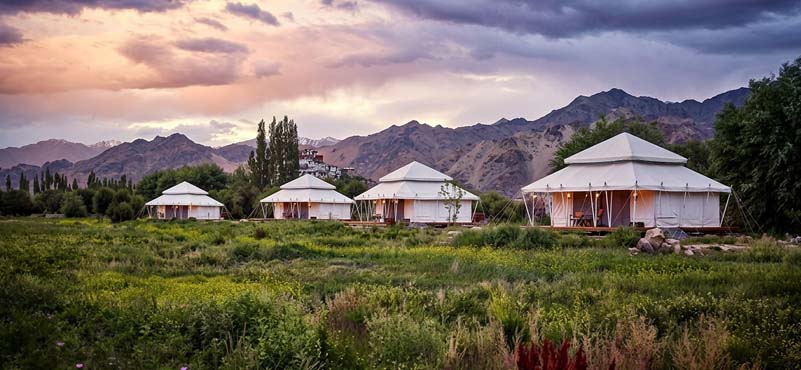
India is entering an important new phase of tourism growth but, if we think, the opportunity is simply to build more hotels, we will miss the bigger story.
The next hospitality boom will be about how we experience India.
Rising incomes, a huge domestic travel market and improving connectivity are bringing more Indians into the travel economy. At the same time, the definition of luxury is changing. For an increasingly discerning traveller, a beautiful room and a long list of amenities are no longer enough. What matters is the experience outside the room, the landscape, the food, the culture, the sense of place and ultimately, the memories created.

Co-Founder and Director, EuMo
This is particularly relevant in India because we have extraordinary diversity that cannot be replicated. From the Himalayas to the Western Ghats and the beaches of the South, from Rajasthan’s deserts to the forests of Central India and the undiscovered opportunities in the Eastern states, India does not suffer from a shortage of destinations. What we have sometimes lacked is the infrastructure, design thinking and hospitality models needed to unlock them responsibly.
That is where the next opportunity lies.
The hotel cannot be the destination anymore
For decades, much of hospitality development followed a familiar formula, find a location, acquire land, build a hotel and then create an experience around the building. I believe that model is beginning to reverse. The strongest hospitality projects of the future will start with the place, not the building.
What is unique about this landscape? What is the local culture? What materials and craft traditions belong here? What can a guest see, hear, taste or experience that they cannot find somewhere else? These questions should come before the question of how many rooms can be built.
Good hospitality design should make a guest feel that they could not have had the same experience anywhere else. Authenticity does not mean every resort needs to look traditional or imitate local architecture by putting regional motifs on walls. It is about understanding the character of a place and translating it into the way a property is planned, built and experienced.
At EuMo, this is one of the principles we believe strongly in, design has to begin with human behaviour and the context of the site. Guests experience a sequence of moments the arrival, the first view, the walk to the room, the transition between indoor and outdoor spaces, the restaurant, the landscape and the sense of privacy.
Every one of those moments contributes to the memory of the stay.
This is where behavioural thinking can make a significant difference. The position of a pathway, the scale of a space, the way light enters a room or the way a building frames a landscape can influence how people feel without them ever consciously noticing the design decision.
The best hospitality design therefore works almost invisibly. The guests simply need to feel that the place is right.
The new definition of luxury
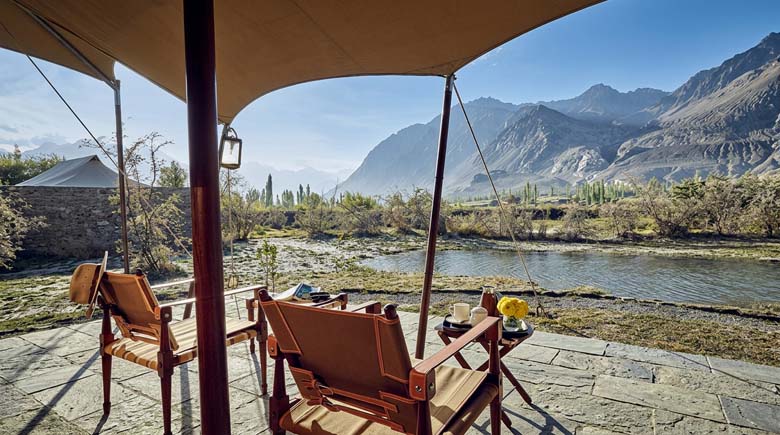
There is another important shift taking place. Luxury is becoming less about excess and more about access. Access to nature, privacy, local culture and experiences that feel personal rather than mass-produced. This helps explain the growing appeal of luxury tented camps and low-density resorts. A well-designed tent in a wilderness setting can offer something that a conventional luxury hotel cannot, proximity to nature without necessarily imposing a large permanent structure on the landscape. It is a different proposition altogether where the guest is not merely looking at nature through a hotel window. Nature becomes part of the stay.
The post-COVID period has strengthened this preference for privacy and personal space. Standalone villas, cottages and tented units can provide a greater sense of separation than traditional hotels with shared corridors and large public areas.
For developers, this also opens up an interesting question, does hospitality always have to mean a large, permanent building? I don’t think it does.
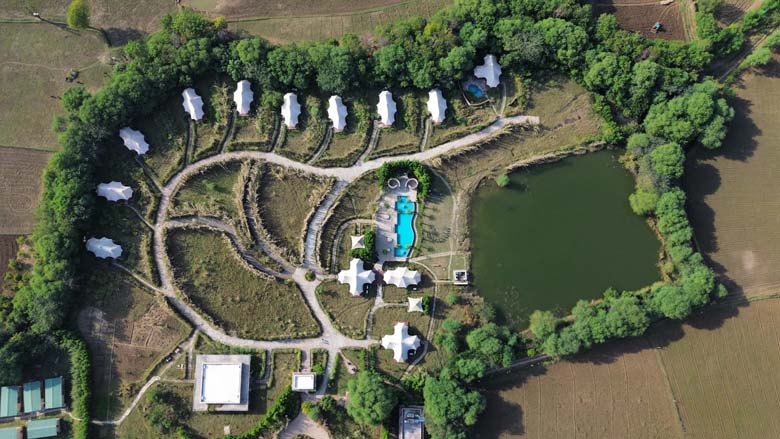
In some locations, smaller and more distributed forms of hospitality may be commercially and environmentally more appropriate.
Sustainability needs to move beyond the checkbox
The hospitality industry has talked about sustainability for years. The next step is to make it fundamental to how we design and operate properties.
Government policy is already moving in that direction. Swadesh Darshan 2.0, for example, places emphasis on sustainable and experience-based destination development, while initiatives such as Travel for LiFE are encouraging more responsible tourism.
But regulation and policy are only part of the story. The more interesting opportunity is to make sustainability part of the guest experience. Consider the potential of temporary and collapsible hospitality infrastructure.
A luxury tented camp can be designed so that guest accommodation, lounges and even furniture can be dismantled, stored and moved as seasons change. A camp operating in Ladakh during the summer could, in principle, be relocated to another part of the country during a different season. This is not an engineering solution, it represents a different philosophy of development, instead of asking how permanently we can occupy a site, we can ask how intelligently we can use it. That requires us to rethink materials, construction systems and the lifespan of hospitality assets where components need to be robust enough for repeated use but light and adaptable enough to move. They need to age well rather than simply deteriorate. This approach could be particularly powerful in environmentally sensitive destinations, where conventional permanent construction may not always be the best answer.
India has the opportunity to become a leader in this kind of low-impact hospitality by developing solutions suited to our own geography and seasons.
Infrastructure will decide where the next destinations emerge
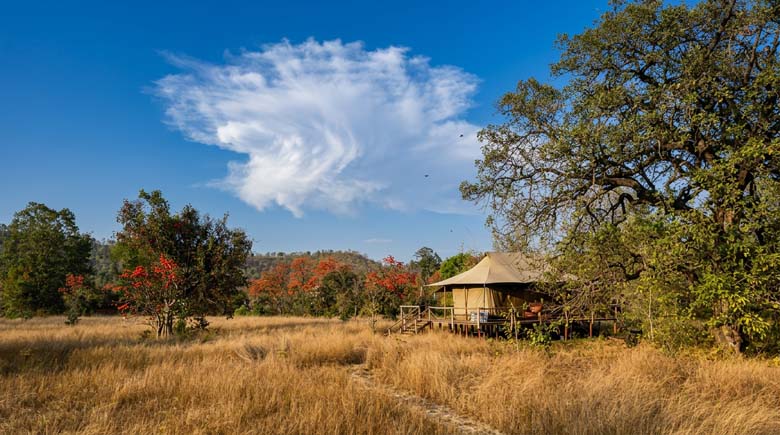
Of course, great design cannot compensate for poor infrastructure. The hospitality industry can build an exceptional resort, but the guest’s experience begins several hours before check-in. India’s improving highways, regional aviation and rail connectivity are changing the geography of tourism. Schemes such as UDAN and wider infrastructure investments are making smaller cities and remote destinations more accessible. That is critical because India’s next hospitality destinations will not necessarily be the places that dominate tourism today. Better connectivity will open up entirely new markets but connectivity is only the first step.
A destination needs good roads, reliable electricity and internet, clear signage, clean public spaces, efficient transportation and basic civic infrastructure. The journey through a destination matters almost as much as the destination itself.
We often talk about building world-class hotels. We should also be talking about building world-class destinations.
There is a direct relationship between the two.
Improve infrastructure and new destinations become viable. New hotels create employment and economic activity. Increased activity creates demand for better public infrastructure, over time, the entire ecosystem improves.
That is how a hospitality boom becomes an economic development story rather than simply a real-estate story.
India should not build another version of somewhere else
India’s tourism opportunity is sometimes discussed in terms of catching up with international hospitality markets.
I think that is the wrong ambition, we should not be trying to build another Bali, another Dubai or another European resort destination. We should be asking what the world can experience only in India.
Our competitive advantage is our subcontinental landscape, biodiversity, food, craft, history and cultural diversity. The hospitality industry needs to turn those assets into compelling experiences while protecting them from the pressures of mass tourism. That requires an approach to development which brings together architecture, landscape, behavioural science, sustainability and infrastructure from the very beginning. It also requires closer collaboration between developers, designers, government and local communities.
The opportunity is substantial. India’s growing disposable incomes and its ambition to become a $35 trillion economy by 2047 will bring more people into the travel economy. Government investment is also creating the infrastructure required to support that growth but, the real measure of success should be how many meaningful destinations it creates.
The next boom is about creating memories
The mountains, forests, beaches, deserts, rivers, villages, cities, cuisines and cultures are all here. What we need is the imagination to develop them without destroying what makes them special.
The hospitality projects that succeed in the next decade will understand this.
They will be designed around people, they will respond to the landscape rather than dominate it. They will use sustainability as a design opportunity rather than a compliance exercise. And they will be supported by infrastructure that makes the entire destination worth experiencing.
For me, that is the real opportunity for Indian hospitality.
The next boom should be about building better experiences, in better places, in a way that leaves those places better for the future.
If we get that right, our greatest hospitality asset will be India.
ABOUT THE AUTHOR
 Harkaran Singh (Gary) Grewal is Co-founder and Director of EuMo (Eureka Moment). An NID Ahmedabad alumnus, he leads spatial and experiential design across retail, hospitality and institutional projects. Blending craft, technology and precision, he creates immersive, human-centred environments that translate brand ethos into meaningful experiences.


