
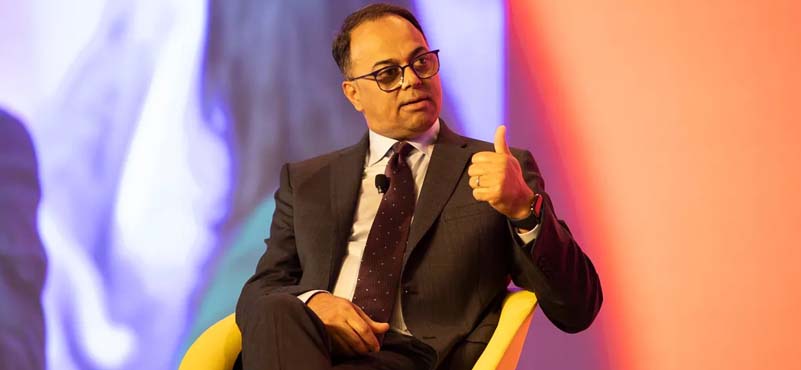
In an informal conversation with Rajeev Menon, president, Marriott International for Asia Pacific (excluding China), based in Singapore, while he was in New Delhi recently, we discover the trends in Indian hospitality, how Menon sees India’s growth story in the coming decades. Menon is Delhi born and studied in the city including at IIM, Pusa; here, he looks back upon his times, growing up with Marriott Hotels for over 25 years. Here are some of the highlights.
How do you see your years with Marriott?
So, in 2017, just coming out of the Starwood acquisition, in Asia-Pacific, ex-China, which is the region that I’m responsible for, we had 270 open hotels. Today, after pretty much eight years, nine years, we are now at 750 open hotels with a pipeline of another 400 hotels and more under construction. India of that is about 220 open hotels with 35,000 rooms and another 200 or so under construction. It has been an incredible growth story for us. I expect this to continue for decades to come.
In 2017, when you had 270 open hotels, how many did India have out of those 270?
I think India was at that stage at about 45 to 50 hotels.
So, our share, India’s share in your region has grown exponentially in these eight years. Correct. And do you see this tempo continuing?
Absolutely. Because of what growth we are experiencing in India today. So, I’ll tell you, if you look at our Marriott growth story, we have grown initially with our big luxury brands like JW Marriott, full-service hotels like Renaissance in Mumbai. And then we have, what we call a select service space, like Courtyard by Marriott, Fairfield. We brought, did a lot of research and brought Fairfield into India in 2009. And then we started growing across the country in secondary, tertiary markets.
With the deal we signed last year, where we made a small equity investment in Fern, we launched, we did the global launch of a brand called Series by Marriott. A soft brand in partnership with them. We signed that deal in May. We had to work on building technology to bring those hotels into our system, do a lot of training. They had to do some work to basically upgrade the hotels to our requirements, which is fire, life safety, and a bunch of other specific requirements.
 Taking you away now to the larger scale, perspective, and you talk about growth in Marriott hotels, 500 seems to have become some kind of a yardstick for 2030. So, the Radisson Group is saying we’ll put 500, so and so is saying we’ll put 500. How constructive or sustainable is this signing spree, which I see being talked about all over the place.
So let me give you my broad perspective, as I step away from India for a second. Since 2007, when I was sent to India to set up the office here as Area Vice President, I would go to Hong Kong, which was our Asia Pacific regional headquarters, one week every month for our review meetings and so on. In that time, that one week, I had the luxury to sit and listen to and watch what was happening all around Asia -Pacific, but more importantly China. And if you remember, China went through three decades of non-stop growth, phenomenal GDP growth. What was happening at that point in time?
Hotel industry was extremely buoyant, went through, you know, year after year of record growth and so on. The government was spending considerable amount of money on infrastructure, developing infrastructure in China from airports, roads, trains, so on. What that did, in my view, was made destinations easily accessible. And as the Chinese acquired wealth, people started to move. They are, because as humans, we are aspirational, particularly in Asia.
You can’t say today India is exactly like China. India will always be its own, right? But there are similarities. Similarity is that the government has been spending considerable amount of money on infrastructure investment.
And that is allowing, as people are acquiring wealth, that is allowing people to basically access destinations that would otherwise take 6, 7, 8, 10, 20 hours, which physically would be so difficult to get to. Now they’re getting there in two, three hours. That is driving growth to some degree.
But when you think in comparison, China today has close to about three million hotel rooms. Japan, a country of 130 million people, has 1.8 million hotel rooms. Now, inbound into Japan is very strong. They crossed 40 million last year? India, in comparison, when you start thinking about the branded inventory, is minuscule, not even at 300,000. So, the opportunity for growth is incredible.
Now, what one has to also realize is that it’s going to be a little bumpy, but it’ll go in the right direction. Because I can tell you firsthand, I’ve now been at Marriott for over 25 years and I’ve watched the industry, how it’s played out. The other thing that’s happening at the same time, which a lot of people may not talk about, while land cost still is one of the most expensive, just anywhere in the world, when you think about only 10 years ago, if somebody went to get a loan, they would generally get a minimum mortgage or maximum mortgage of 10 years. The interest rates were anywhere from 12%, 11.5%, 12%. If you were a phenomenally astute developer and had great reputation, or it was as high as 14-15% for the industry. Today, that has changed. I was sitting in a meeting recently where I heard banks are now offering close to 8% interest. You can get 15-year loans? In the Western world, you can get 25 to 30-year loans.
Now, again, there will always be bumps on the road. I genuinely believe India is going through a structural shift. Some is cyclical, some is structural. And as long as the government continues to invest heavily in the country, in infrastructure project, there is no looking back.
In your case, any other factor playing out in your favour?
And again, yes, the other piece that’s playing out, loyalty is a huge factor today in driving preference. It was only in 2019, that we combined Starwood’s SPG, Marriott Rewards, Ritz Carlton Rewards to launch Bon Voyage, right. It’s probably one of the youngest programs, but it has become super successful, largest global program in the world, with close to 275 million members.
 How is it performing in Asia?
And Asia, the membership is growing at a phenomenal pace and we are creating an ecosystem of partnerships where our loyal customers don’t have to move out, right? And they have enough distribution in any destination they go to, there is a Marriott hotel to stay at. Last year, for full year in Asia, Pacific, China, my world’s average was 74.7 or say 75 percent occupancy in our hotels which was driven by Bonvoy members. That means three out of four rooms in a hotel were occupied by Marriott Bonvoy members!
Any other downside that you see? Like I keep saying that India’s growth story is there. And if there is one enemy of ours, in this growth story going forward, it’s going to be ourselves. Yes. If we become always wary and cautious of where we can go wrong, then we won’t go wrong.
So, I suspect something like that may be happening or could happen to India’s hospitality industry. In my view there are a couple of things.
One is plain complacency. When you are in, you know, strong growth mode, you are so focused and aggressive to grow, you sometimes lose discipline, right? Now, that could mean different things in different cases. Developers could basically borrow insane amount of money, not only from public markets, but also from private markets, right? Sometimes you see the shift of doing hotels that are what I call as more a ‘return on ego’ than return on investment.
Hasn’t that lessened now?
It has absolutely 100 % lessened but still you see every kind of person, ever so often, right?
And particularly when you get into a good time situation, which India was experiencing till last year, you suddenly have these new developers coming in and they’re like, you know, I’m going to make something that’s better than anything else, right? And I often sit with them and say, that’s great, but are you building this for return on ego or return on investment, right? Because if you’re doing it purely from a face point of view, that this is my legacy, then do it. And there’s enough players who’ve got enough money, who like to do things that helps position themselves. They’re creating a legacy. But if you’re doing this because you are in the business of hotels and you want to make good return, then I suggest let’s work together and rethink the opportunity and see what we should be doing that’ll give us reasonable returns.
So that’s on one side. On our side of the business, operations, I often say COVID taught us big lessons. It’s very easy in good times to forget all about it. And what we need to do is keep reminding ourselves not to lose what we had gained during that time from a learning and not get so excited that, like I talked about the developers, that we lose discipline and go off focus and then end up in a troubled spot. Right.
So, growth needs discipline. Do you see that discipline, I mean, I’m not wanting you to be critical but what is the ground reality?
Again, you’re going to be always in a growth environment, like what India is experiencing, you are always going to see people who are pushing friendship and, you know, pushing the boundaries, and out there being super aggressive, and in some cases, losing discipline. On the other side of the spectrum, there could be people who are super concerning about being cautious. And then somewhere in the middle, where broadly the industry is, kind of taking a more cautious approach with level of optimism. Now, the way I see it, you know, we have the luxury of having been here for nearly three decades. And I have personally been involved in the India story.
So, while, yes, like anybody else, we are growing at a phenomenal pace. We also believe we’ve always been very disciplined about our growth.
When you say we, you mean Marriott? And is that the doctrine that you preach all the time to your associates and to your investors?
Absolutely. Absolutely.
I was even talking about it earlier today because, ultimately, we are the custodians of our brand or the brands that we operate right across the portfolio. We have a responsibility with the partners we work with, because we don’t own those assets. Right. So, when you think about how we grow, you can easily be a fly-by-night, come in, talk your way through with all the good presentations, sign up a bunch of deals, and five years later you’ve disappeared. What we offer to our partners, in the world of Marriott, is we are here with them – in fact, the next year will be our hundred years.
We’ve only had four CEOs, you know, the founder, during this time.
In a hundred years, only four CEOs?
The founder, if you call him the CEO, right, he was a founder. Bill Marriott, who was his son and Mr. Marriott is now 93 years old. He was CEO chairman for nearly 40 years. Then Arne Sorensen, who passed away, sadly, and now Tony, right? And if you look at our leadership team that I work with, John Toomey, who’s my head of commercial services, he just last week on the 22nd, celebrated 30 years with the company. Neeraj Govil, who you know really well, more than two decades, he’s coming up to 25 years.
And I believe the heart of Marriott’s success story is driven by the mantra, I call it, is performance and growth. If you perform exceptionally well, it creates this flywheel where the owner sees great return, they want to grow, and in most cases, they’re not looking for other partners, then they come back to you and you grow at a faster pace. So as a result, when you think about a lot of new, you know, hotel companies coming in and wanting to sign new deals, year after year, in my world, we’ve been signing record number of deals.
In India, last year, we signed well north of 12,000 hotel rooms, which was an absolute record in comparison to any international competitor by a long, long shot.
For us, over 50% of that growth, year after year after year, I mean, comes from our existing partners.
If you look at our world, consistency of leadership, and I’m talking about leadership in the company, right? Tomorrow I might not be around, but there are enough other players who’ve been in the company long enough. So, what happens for us is we’ve always worked very hard to develop our own internal talent.
And continue the same philosophy and approach?
And that’s the reason for us. I always say any time we would do a deal, we think about it from a long-term perspective.
So, you would say that to have a strong pipeline of inventory, you must have a strong pipeline of talent within your own company.
Absolutely, absolutely. And you have to deliver; you have to be the best of the best for people to want to sign up with you. Because again, we’re very clear Marriott is very focused on brand standards, our expectations from our partners, you know, are very clear and sometimes it can be a little bit more expensive. Right. But if they know that they’re going to get much better returns, then why wouldn’t they continue to invest and grow?
How would you like to sum up your impressions of the India market?
Again, I genuinely believe India is a decades long growth story.
And you think we’ve just started?
No, I don’t think we’ve just started. To be honest, I think we started a few years ago. But the structural shift that you are seeing now is this piece around infrastructure, investments, is that as the economy grows, you are seeing people acquire wealth. They are spending on experiences.
You know, think about cricket, World Cup that just happened. We announced a global partnership with ICC for the next four years.
It was a runaway success?
The number of members, people who signed up to become members and buying experiences, similarly, when you think about Grand Prix, Australia Tennis, those experiences that we create are money can’t buy experiences. And today, be it sports tourism, be it entertainment, you think about, you know, from Arijit Singh to Ed Sheeran to Taylor Swift, you name it, Indians are traveling everywhere. To experience incredible sporting or entertainment options.
Udaan 2.0, you must be familiar with? Rs 28 ,000 crores have been put aside for creation of 200 new airports and landing strips. So, when you talk about connectivity and accessibility, don’t be surprised if more cities get more accessible as we go forward?
Yes, that’s right. What we started seeing, and this goes back to Renaissance Mumbai days, when I opened the hotel. The roads to get to the hotel weren’t good enough. That was a problem. Correct. That hotel has today become a runaway success. To the point, there’s so much more built in that hotel facility and there are numerous other activities that are coming up around it.
As India has grown, any city, major city in India, in across Asia, anywhere in the world, in this three to four hour driving distance, there is incredible opportunity. If you can create hotels that are destinations, you will see phenomenal returns. Because think about it, the leisure customer today is paying so much more for a hotel room, for experiences, than a corporate customer is. The opportunity to host weddings, the opportunity to host MICE, opportunity to host vacations is incredible.
But what it points to is the dispensable rupee that people have today, because they’ve acquired enough wealth, they can say, I want to go, you know, I’m a Bonvoy member. I want to go and experience a hotel in my own city and I don’t have to get away far. I’ll just drive up, stay a night with my wife, go and have a really nice dinner, get a nice massage and spa. And off I go. And they can afford it.
Why not? Right? Those are the experiences that I see as an opportunity that India is now really moving towards. And this is where, for me, it’s a decades long story.


