The Empty Chair
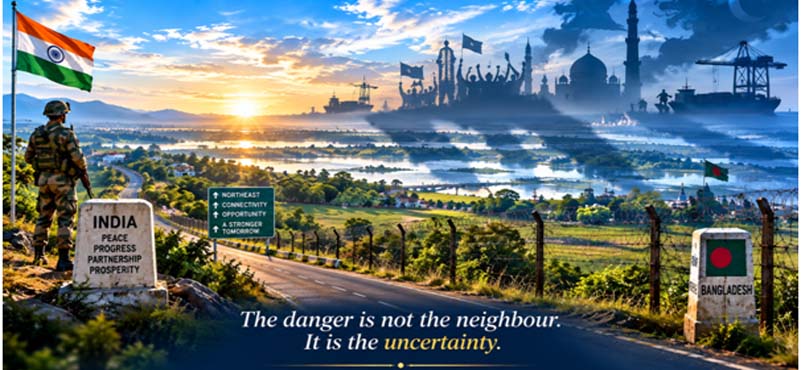
Sometimes, absence speaks more clearly than presence. When the 18th BRICS Summit assembled in New Delhi on 12–13 September 2026, Bangladesh was conspicuous by the absence of Prime Minister Tarique Rahman, despite India having extended an invitation to him as Chair of BIMSTEC; New Delhi subsequently clarified that Rahman had also separately received an invitation for a bilateral visit. BRICS has evolved into an important platform of the Global South, bringing together major powers including India, China and Russia, and the summit in New Delhi carried significance well beyond the formal agenda. For a country sharing a 4,096-kilometre border with India and occupying a pivotal position between India’s Northeast and the Bay of Bengal, the decision not to participate inevitably attracted attention.
It would be premature to conclude that Bangladesh has chosen confrontation with India, but equally naïve to dismiss the episode as diplomatic trivia. An empty chair at an international gathering can sometimes say more about a relationship than a hundred carefully drafted communiqués.
From Partnership to Reset: The New Bangladesh
The BRICS episode becomes meaningful only when placed against the transformation that has taken place inside Bangladesh since 2024. The fall of Sheikh Hasina fundamentally altered the political landscape, and the relationship that had developed between New Delhi and Dhaka over the preceding decade was suddenly deprived of one of its principal political anchors. Security cooperation, connectivity, transit, energy and economic engagement had produced substantial gains, particularly for India’s Northeast, but much of that cooperation had also become associated with the Hasina government. Her departure for India subsequently became a continuing source of friction, with Dhaka pressing New Delhi over her return.
The February 2026 election produced another decisive turn. Tarique Rahman’s BNP won 209 of the 297 seats for which results were available, while Jamaat-e-Islami secured 68, returning Bangladesh to an elected government after the upheaval that followed Hasina’s removal. The new government has spoken of improving relations with India, and Rahman himself has called for a conducive environment for better ties, but Dhaka is simultaneously seeking a more diversified foreign policy involving China, Pakistan and other powers.
The distinction India must understand is fundamental: Bangladesh has changed politically, but it has not changed geographically. India remains the country’s overwhelmingly consequential neighbour, while Bangladesh remains the most practical geographical gateway between India’s mainland and much of its Northeast. The future relationship therefore cannot be built upon nostalgia for 1971 or dependence upon one political leadership; it must be built upon institutions, mutual interests and the recognition that political change in Dhaka is permanent even when individual governments are not.
The danger for India lies not in Bangladesh asserting its sovereignty or diversifying its friendships. The danger lies in allowing legitimate strategic autonomy in Dhaka to evolve into a persistent strategic disadvantage for New Delhi.
Jamaat, Identity and the Hindu Question
The internal transformation of Bangladesh carries another dimension that India cannot ignore: the changing balance between Bengali nationalism, religious identity and political Islam. Jamaat-e-Islami, which returned to electoral politics after years of exclusion, won 68 parliamentary seats in the 2026 election, making it a significant parliamentary force even though the BNP secured a dominant majority. Its historical opposition to Bangladesh’s creation in 1971 gives its political resurgence a significance that goes beyond ordinary electoral arithmetic.
This does not mean that Bangladesh is destined to become an Islamist state, nor would such a conclusion be supported by the election result alone. The more important question is whether religiously oriented political forces will increasingly influence Bangladesh’s national identity, treatment of minorities and external outlook. That question becomes particularly sensitive when viewed alongside continuing concerns about the security of Bangladesh’s Hindu minority and other religious and ethnic communities.
Human Rights Watch reported attacks on Hindu homes in Rangpur in 2025 and continuing violations affecting minority communities, while its broader 2026 assessment described a serious challenge from mob violence and attacks on religious and ethnic minorities. For Bangladesh, protection of its citizens is fundamentally a domestic responsibility; for India, however, developments affecting Hindus across the border inevitably acquire a wider bilateral resonance because of deep historical, cultural and familial connections.
New Delhi therefore faces a delicate equation. Silence can be interpreted as indifference, while excessive public intervention can be portrayed in Bangladesh as interference. India’s wiser course is sustained diplomatic engagement that makes minority security an integral part of the bilateral conversation without allowing the issue to become a permanent source of nationalist confrontation.
China: The Strategic Multiplier
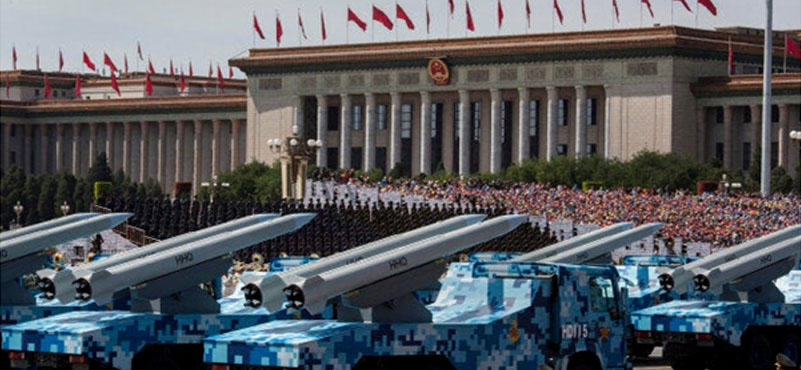
While Bangladesh is undergoing political change internally, China has been expanding its strategic space externally. Beijing’s relationship with Dhaka encompasses trade, infrastructure, investment, defence cooperation and connectivity, and the two countries agreed in June 2026 to establish a foreign-minister-level strategic dialogue while exploring a “2+2” mechanism involving diplomacy and defence. Bangladesh also reaffirmed its adherence to the One-China principle.
For India, the relevant question is not whether Bangladesh is “choosing China”. It is whether China’s expanding economic and strategic footprint is creating new strategic options in India’s immediate eastern neighbourhood. Reuters reported before Bangladesh’s 2026 election that China’s influence was expected to deepen, even while Bangladeshi analysts acknowledged that India’s geographical and economic weight made it impossible to sideline New Delhi completely.
That is the strategic reality India must work with. Beijing does not need to control Bangladesh to benefit from its geography; it merely needs Bangladesh to become increasingly useful within China’s wider South Asian and Bay of Bengal calculus.
Pakistan Returns to the East
The second external variable is Pakistan. For more than five decades, the trauma and history of 1971 kept relations between Dhaka and Islamabad under a heavy shadow. That shadow has not disappeared, but diplomacy has begun to move beyond it, and Bangladesh’s post-2024 search for diversified relationships has created space for renewed Pakistan-Bangladesh engagement. Analysts have increasingly examined this development alongside China’s expanding role in Dhaka.
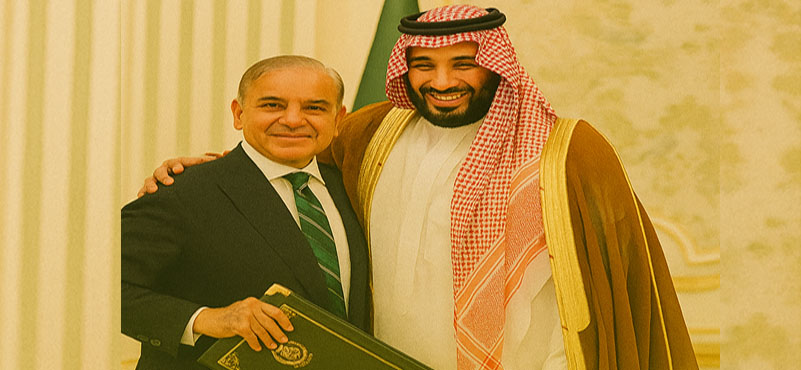
Pakistan does not possess China’s economic weight in Bangladesh, nor does it have China’s infrastructure capacity. Its significance lies elsewhere. A closer Pakistan-Bangladesh relationship could give Islamabad another diplomatic and strategic avenue in India’s Eastern neighbourhood, particularly if it develops in parallel with China’s already deep relationship with Pakistan.
There is no evidence that Bangladesh, China and Pakistan constitute a single anti-India bloc, and India should not manufacture one through its own rhetoric. Yet strategic planners must examine relationships not merely individually but in combination. China already describes its relationship with Pakistan as an “all-weather strategic cooperative partnership”, with defence, security and economic cooperation forming major components of that relationship. If Beijing’s relationship with Dhaka simultaneously deepens, India’s Western and Eastern strategic theatres could acquire a degree of interconnectedness that would demand much greater attention.
The irony of history is difficult to miss. Pakistan lost Bangladesh in 1971; it is now rediscovering Dhaka as a potential strategic relationship more than five decades later.
Can Bangladesh Become India’s Perpetual Problem?
The greatest danger may not be a hostile Bangladesh. It may be a permanently unsettled Bangladesh.
Consider the variables separately: political polarisation, ideological contestation, minority insecurity, border management, migration concerns, unresolved water questions, China, Pakistan and periodic anti-India sentiment. None of these, individually, is beyond India’s ability to manage. The problem emerges when several begin reinforcing one another, transforming occasional friction into a structural condition.
Geography makes this especially consequential. Bangladesh surrounds much of India’s Northeast, sits astride critical river systems and provides the shortest and most natural connectivity between the Northeast and the Bay of Bengal. India’s own strategic vulnerability around the Siliguri Corridor makes the stability of the wider Eastern neighbourhood particularly important. Bangladesh does not need to become India’s enemy to become India’s strategic problem; persistent instability, external strategic penetration and recurring bilateral friction could impose continuous economic, diplomatic and security costs.
That is why India must think beyond the traditional vocabulary of friendship and hostility. The real objective should be a stable, sovereign and prosperous Bangladesh whose strategic choices do not create a permanent vulnerability for India. Such an outcome would serve Bangladesh’s interests as much as India’s.
How India Should Respond
India’s response to a changing Bangladesh cannot be reduced to either friendship or firmness. Neither confrontation nor complacency will serve New Delhi. Bangladesh is a sovereign country with its own political compulsions, economic ambitions and foreign-policy choices, and India must recognise that reality without allowing respect for sovereignty to become strategic passivity. The objective should be neither to control Dhaka nor to prevent it from engaging other powers; it should be to build such depth, resilience and strategic preparedness that no political change in Bangladesh can easily turn India’s eastern neighbourhood into a permanent vulnerability.
- Engage Every Government. India must begin by accepting a basic principle of neighbourhood diplomacy: governments change, geography does not. New Delhi cannot build its Bangladesh policy around political preferences or personalities. It must engage whichever government is constitutionally in power, maintain open political channels and keep enough diplomatic space to disagree without allowing disagreement to become estrangement. The BRICS episode should therefore not trigger a retaliatory impulse. If Dhaka wishes to assert greater diplomatic autonomy, India should acknowledge that right while making clear, through sustained engagement, that proximity creates responsibilities as well as opportunities. The strongest relationship is one that survives a change of government on either side.
- Institutionalise the Relationship. The second requirement is to move the relationship from political chemistry to institutional interdependence. Trade, energy, connectivity, inland waterways, border management, water sharing and maritime cooperation must acquire a momentum of their own. The more citizens, businesses, industries and institutions on both sides benefit from the relationship, the greater the political cost of disrupting it. India should therefore pursue practical agreements even when the larger political relationship is uncomfortable. A difficult neighbour with whom there are functioning institutions is far easier to manage than a friendly neighbour whose relationship depends upon a handful of political personalities.
- Strengthen the Northeast. India must also eliminate the possibility that Bangladesh becomes a single point of strategic dependence for the Northeast. Bangladesh offers India valuable access to the Bay of Bengal and shorter connectivity routes, but strategic wisdom demands redundancy. Roads, railways, tunnels, bridges, airports, inland waterways, logistics hubs and economic corridors within India’s own Northeast must continue to be strengthened. The objective should be to transform the Northeast from a geographical vulnerability into a strategic asset, while using connectivity through Bangladesh as an additional advantage rather than an indispensable lifeline. Connectivity with Bangladesh should multiply India’s options, never limit them.
- Define the Red Lines. Engagement does not mean ambiguity about national security. India must communicate clearly that terrorism, cross-border criminal networks, serious threats to border security, hostile military activity and systematic persecution of minorities are matters that directly affect bilateral relations. Such concerns should be raised firmly but through established diplomatic and security channels, rather than converted into inflammatory public rhetoric. The treatment of Bangladesh’s Hindu minority deserves particular attention because minority security is fundamentally Bangladesh’s responsibility, but developments affecting vulnerable communities inevitably have repercussions in India. New Delhi therefore needs a policy that is neither silent nor sensationalist: quiet diplomacy where quiet diplomacy works, firmness where India’s core interests are involved.
- Build Societal Depth. Perhaps the most neglected instrument of India’s Bangladesh policy is society itself. Governments may disagree, but universities, businesses, cultural institutions, students, artists, journalists and ordinary citizens can keep relationships alive. India should widen educational exchanges, commercial partnerships, cultural engagement, tourism and professional cooperation, particularly among younger generations. The relationship cannot be allowed to become a conversation conducted only between political establishments in Delhi and Dhaka. If India is seen merely through the prism of its government, every political dispute becomes a dispute with India itself. If India is experienced through education, opportunity, commerce, culture and human connection, the relationship acquires a depth that political turbulence cannot easily erase.
- Prepare Without Provoking. Finally, India must prepare for the possibility that the Eastern strategic environment could become more complicated. Border infrastructure, surveillance, intelligence capabilities, maritime awareness, air connectivity and the military preparedness of the Northeast must remain strong. At the same time, India should avoid treating every Chinese investment, every Pakistani diplomatic contact or every disagreement with Dhaka as evidence of an emerging anti-India alignment. Overreaction can itself become a strategic liability by pushing Bangladesh further towards the very external partnerships India fears. Strategic patience is therefore not weakness; it is the ability to absorb diplomatic setbacks without surrendering long-term interests.
The Indian approach must ultimately combine all six elements: engage every government, institutionalise the relationship, strengthen the Northeast, define clear red lines, build societal depth and prepare without provoking. India cannot decide what Bangladesh becomes, but it can decide how vulnerable India will be to whatever Bangladesh becomes. That is the difference between a neighbourhood policy driven by events and a grand strategy shaped by foresight.
The Future: A Neighbour We Cannot Choose
The future of India-Bangladesh relations will probably not be defined by one dramatic diplomatic rupture. It will be shaped through a succession of smaller choices: whether Dhaka treats India as an indispensable neighbour or merely another external power, whether New Delhi treats Bangladesh as a sovereign partner or primarily through a security lens, whether China and Pakistan deepen their roles, whether Bangladesh’s political forces remain pluralistic, and whether minority security becomes a source of confidence or confrontation.
Three broad trajectories remain possible. Bangladesh can become a bridge connecting India with the wider Bay of Bengal and Southeast Asia; it can become a strategic balancer, extracting economic and diplomatic advantages from competing powers; or it can gradually become a friction zone where domestic polarisation and external competition reinforce each other. None of these outcomes is predetermined, and Bangladesh’s own political choices will remain decisive.
India cannot choose Bangladesh’s politics, dictate its foreign partnerships or alter its geography. But it can decide whether its Eastern strategy is reactive or resilient, whether its Northeast remains vulnerable or connected, and whether its relationship with Dhaka is built around personalities or institutions. The empty chair at BRICS may disappear from tomorrow’s headlines, but the larger strategic question will remain: the map may keep changing, alliances may keep shifting and governments may come and go, but the geography is not moving—and India must ensure that its most consequential Eastern neighbour never becomes its permanent strategic vulnerability.
ABOUT THE AUTHOR

Lt Gen Rajeev Chaudhry (Retd) is a social observer and writes on contemporary national and international issues, strategic implications of infrastructure development towards national power, geo-moral dimension of international relations and leadership nuances in changing social construct.