The rockets that failed in 2025–26 may tell us more about the future of spaceflight than the rockets that succeeded
A rocket standing on a launch pad represents an extraordinary achievement. Thousands of components, millions of lines of engineering calculations, sophisticated propulsion systems, guidance computers, sensors and communications systems must work together almost perfectly. And then, within minutes, everything can be decided by a valve, a seal, a wiring fault, a pressure fluctuation—or a manufacturing defect invisible to the human eye.
That is why a launch failure is not necessarily a failure of a space programme. It is often an extremely expensive lesson. The years 2025–26 have provided some of the most valuable lessons in modern rocketry. They have also demonstrated an important paradox: rockets are becoming more capable, launch frequency is increasing dramatically, and private companies are entering the business at unprecedented speed—but reliability remains brutally difficult.
In 2025, the world conducted about 329 orbital launch attempts, of which 11 were classified as failures. That means approximately 97 per cent of attempts succeeded. Is three percent failure a cause of concern? Let us examine it.
That number tells only half the story.
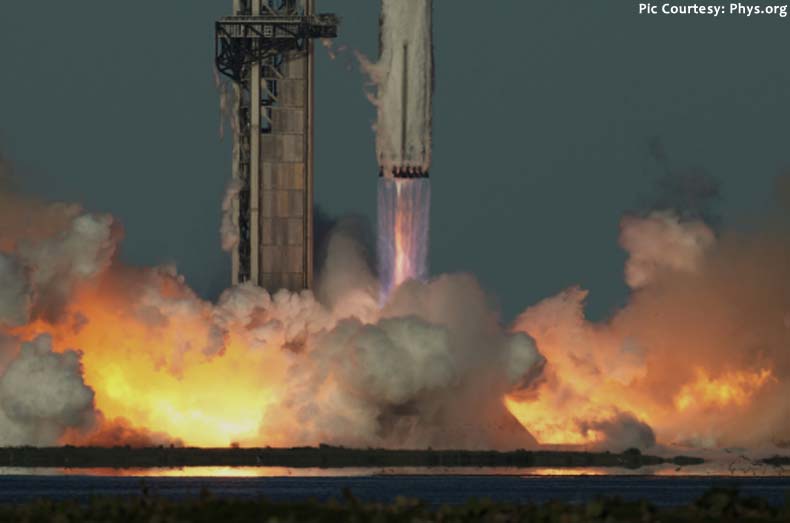
When rockets fail – these spectacular failures naturally attract the public’s attention. SpaceX’s Starship suffered three significant flight failures in 2025. Flights 7 and 8 were lost after propulsion-related problems, while Flight 9 progressed further before losing control. Investigations identified different technical issues, including problems associated with the propulsion and pressurisation systems. SpaceX subsequently redesigned hardware and continued flying. Flights 10 and 11 demonstrated significant progress. This is perhaps the most important characteristic of the new space industry: failure is increasingly being incorporated into the development process itself.
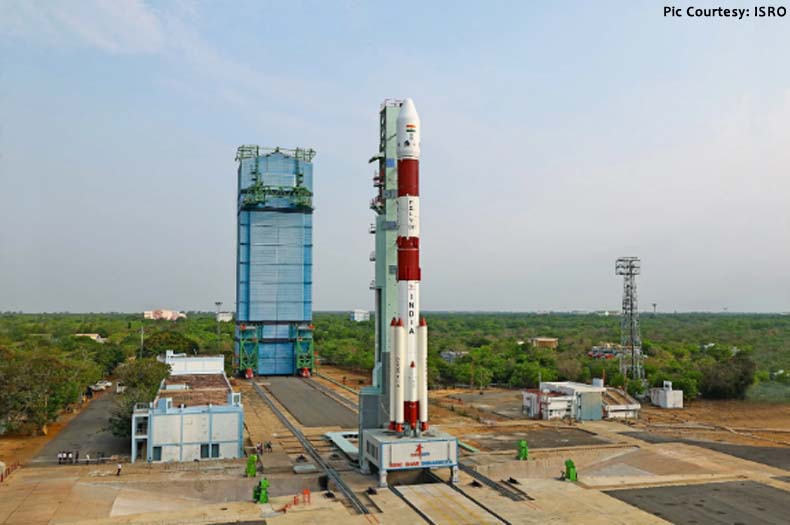
India experienced a very different but equally instructive failure. PSLV-C61, carrying EOS-09, lifted off on 18 May 2025 and performed normally through its second stage before an anomaly occurred during the third-stage solid motor operation. ISRO constituted a national-level committee and subsequently modified the HPS3 motor. Two static tests of the modified motor were successfully conducted in October and November 2025. The lesson is straightforward: even a rocket with an exceptionally long operational history cannot become complacent.
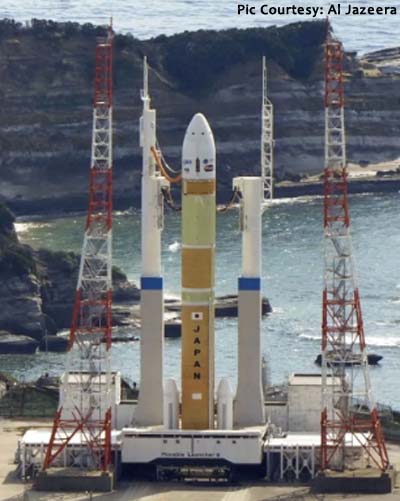
Japan’s H3 provided another reminder. In December 2025, its second-stage engine shut down prematurely while carrying the Michibiki-5 navigation satellite. This was only the second H3 failure after six consecutive successes, and an investigation followed.
Germany’s Isar Aerospace, Australia’s Gilmour Space Technologies and South Korea’s Innospace also experienced failures involving their new launch vehicles. China and Iran likewise recorded launch failures.
The common denominator was not incompetence. It was immaturity of systems being pushed towards operational reality.
2026: The lesson continues
The story did not end with 2025. India’s PSLV-C62 failed on 12 January 2026 after an anomaly near the end of its third stage. ISRO said the vehicle had performed normally until the anomaly caused a disturbance and deviation from its planned trajectory. The precise cause remained under investigation at the time of reporting.
For India, the significance was greater because this followed the PSLV-C61 failure. Two failures in India’s traditionally reliable workhorse understandably raised questions about manufacturing, quality assurance and the management of flight-proven systems.
But the lesson should not be that PSLV has suddenly become unreliable. Rather, it is that heritage hardware requires the same engineering discipline as a new rocket. A mature vehicle is not immune to a new supplier, a changed manufacturing process, a modified component or a subtle interaction between systems which are probably on a new network.
Other failures in 2026 reinforced this point.
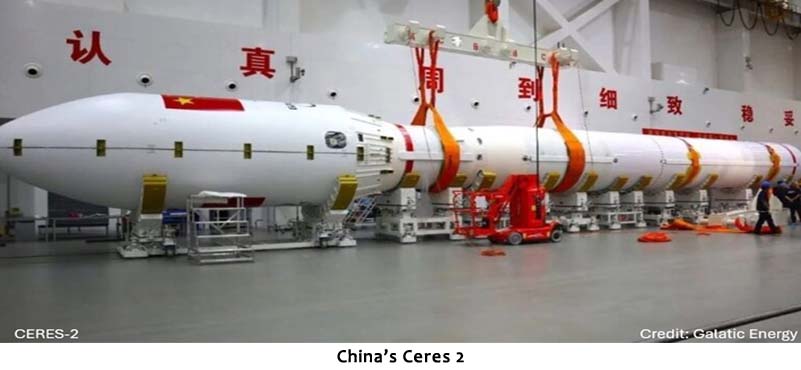
Galactic Energy’s Ceres-2 suffered a first-stage nozzle problem. Space Pioneer’s Tianlong-3 experienced a fire caused by the interaction of vented liquid oxygen and engine exhaust. Japan’s KAIROS-3 was lost after static electricity most likely disrupted a flight-safety-system link. Blue Origin’s New Glenn-3 experienced a cryogenic leak that froze a hydraulic line and reduced upper-stage engine performance. On 15 November 2026, United Launch Alliance’s Vulcan suffered its first failure, destroying all 40 Amazon LEO (Low earth Orbit) satellites. The cause is still under investigation.
These failures have something important in common: many began as small technical anomalies that cascaded into mission loss.
The real enemy: complexity
A recent study of launch failures found that propulsion remains the largest failure category. Engine faults account for about 30 per cent of failures in one long-term analysis, while propulsion failures overall are an even larger category in other datasets. Manufacturing and quality-control problems are also major contributors. The lesson is profound.
The rocket of the future is not simply an engine attached to a fuel tank. It is a flying computer, propulsion system, communications network, autonomous control system and precision manufacturing product operating simultaneously in one of the harshest environments imaginable. More technology does not automatically mean more reliability. Sometimes it means more ways to fail. We must not forget that most of the attacks in space are on software and cyber communication networks also known as CEMA (Cyber Electro-Magnetic Activity). The space is being weaponised and most of the attack vectors are soft kills that create a kill web on ground as also in the Space. This is the aspect I have brought out in my book “Taramandal Sangram – Space constellations at War”
What private companies are teaching the world
Yet the most encouraging story of 2025–26 is the rise of commercial space. SpaceX continues to demonstrate the power of high launch cadence and iterative development. Blue Origin’s New Glenn reached orbit on its first flight in January 2025. Firefly Aerospace’s Blue Ghost successfully landed on the Moon in March 2025. Rocket Lab has demonstrated the value of repeatedly flying a relatively small commercial launcher. India’s Skyroot Aerospace had a maiden launch success of rocket Vikram-1 on 18 July, placing multiple payloads into 450 Km LEO.
The lesson from these companies is not simply “move fast”. It is move fast, collect data, understand failure and redesign quickly. Traditional space programmes often followed a philosophy of building one extremely expensive vehicle and attempting to make it as close to perfect as possible before launch. Commercial space is increasingly following another philosophy: Build – Test – Fly – Fail – Investigate – Modify – Fly again.
This does not mean accepting unsafe operations. It means distinguishing between developmental failure and operational failure. A developmental rocket must be allowed to learn. An operational rocket carrying a national-security satellite, astronauts or a billion-dollar constellation must have a much higher reliability threshold.
Five lessons for India and the world
First, manufacturing quality is as important as rocket design. A brilliant design can be defeated by a poor component.
Second, test what you fly—and fly what you have tested. Ground testing must increasingly reproduce vibration, thermal, acoustic, pressure and electromagnetic conditions encountered during flight.
Third, failure investigation must be transparent and technically rigorous. The objective is not to find someone to blame. It is to ensure that the same failure cannot happen again.
Fourth, flight cadence matters. More flights produce more data, and more data produces better reliability.
Finally, space agencies and private companies must create a culture in which engineers can report bad news early. The most dangerous words in rocketry are not “we failed”. They are “we don’t know why”.
Failure is part of becoming a space power. The space race of the 20th century was largely a competition between governments. The space race of the 21st century is increasingly becoming a competition between ecosystems—governments, established aerospace companies, start-ups, universities, investors, launch providers and satellite operators.
The winners will not necessarily be those who never fail. They will be those who learn fastest from failure. For India, the message is particularly important. The country is moving from being predominantly a space-agency-driven power towards a broader national space ecosystem involving start-ups and private industry.
That transition will inevitably produce failures. They should not be feared. They should be measured, investigated, understood and converted into institutional knowledge. A rocket exploding on the launch pad or deviating from its trajectory is visible to the world. The engineering lesson hidden inside that failure is much more valuable. The ultimate test of a spacefaring nation is therefore not whether its rockets fail. It is whether the next rocket is better because the previous one did.
ABOUT THE AUTHOR
 Lt Gen PJS Pannu, PVSM,AVSM,VSM, Ph.D., is a former Deputy Chief IDS. He pioneered the raising of the Defence Space Agency. He is the founder of Space Club Of India. Chief mentor Department of Space Studies at MERI. He is Senior Advisor to SIA (India). He has authored a number of books including his latest book on Space Wars titled Taramandal Sangram – Space Constellations at War. He is a distinguished fellow at the CLAWS.