Introduction
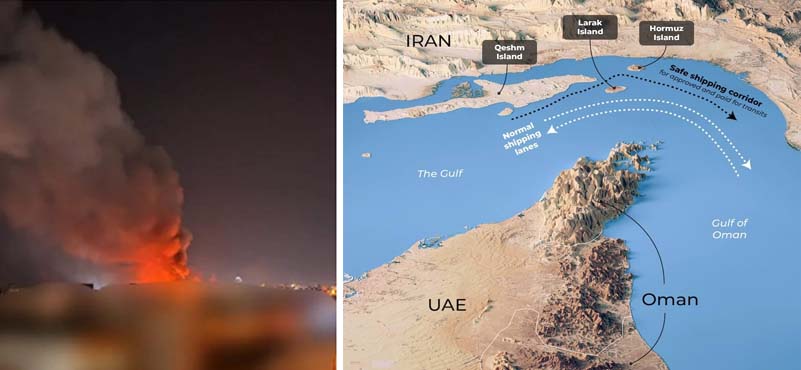
US struck two rocket launchers on Iran’s Larak Island on 30 August, apparently, after observing Iranian military personnel preparing to deploy rockets loaded with sea mines into the Strait of Hormuz.
Larak is a small Iranian island located off the coast of Bandar Abbas, is on the East of Qeshm Island and South of Hormuz Island overlooking shipping lanes at the mouth of the Strait of Hormuz; the key global shipping route that’s long been a major source of conflict since the start of the Iran war. s
US Central Command spokesperson Captain Tim Hawkins said in a statement; “I can confirm that earlier today US forces struck two Iranian launchers on Larak Island”. “He also stated that US forces were monitoring the area closely, and remain prepared to protect the free flow of commerce through this essential waterway”.
The strikes in Iran mark the first from the US in a month. Last week, Central Command Commander Admiral Brad Cooper said his forces had cleared all Iranian mines along internationally recognized transit routes in the key waterway.
“The circumstances were challenging and dangerous to say the least, but we got the job done,” is what he said in a video message posted to social media. “Bottom line, today, international shipping lanes are open and momentum is building.”
President Trump had stated on X that the US Navy had removed all mines from the strait’s main shipping lane, and Iran was notified that any new vessels attempting to place new mines would be “immediately and systematically destroyed.
Iran’s Response
As per Sina Azodi, of the Middle East Studies Program at George Washington University, Larak Island was targeted because Iran has concentrated the assets it uses to control the Strait of Hormuz there.
In retaliation Iran launched attacks on US forces stationed in Jordan. But As per reports Jordan had intercepted eight missiles, aimed at US military targets in the country. “Air defence systems intercepted eight missiles that breached the Kingdom’s airspace at dawn today, Monday,” read a statement quoting the Army’s spokesperson.
Jordan hosts about 4,000 US personnel at two main bases, Azraq and King Hussein airbase, along with drones, fighter jets and Patriot air defences. US troops have been moved there from more exposed Gulf locations because it “keeps them still in theatre but not in such a vulnerable position.
This has made Jordan a repeated target. Its bases have been hit before, and several American casualties in the war have occurred there. Later, in the day Iran launched attacks at the UAE, targeting “the areas where US helicopters and personnel are stationed at Al Minhad Base, using dozens of attack drones,” as per Iranian State TV . The Iranian Army said the strikes were in retaliation for a US attack on Larak Island in the Strait of Hormuz.
But the collateral damage has been the price of oil which has risen due to the increase in tensions.
Timing is Significant
The strike comes on the eve of the Shanghai Cooperation Organisation (SCO) Heads of Government meeting in Bishkek Kirghizstan which involves countries which account for 42% of the world’s population and 36% of world GDP, measured at purchasing power parity. Comparable metrics for the G7 are 10% and 28%. Yet the G7 meeting in France in June attracted global attention while the SCO meeting will likely attract very little.
Amongst those attending this multilateral cooperation forum are President Xi of China, President Putin of Russia and India’s Prime Minister Narendra Modi. The Iranian President Mahmoud Pezeshkian will also be present at the Summit.
Speaking before departing for Kyrgyzstan he said Tehran “is not looking for war” but will also “never sit still in the face of any aggression.” But Iran “will give a decisive response to the aggressors” if attacked, he said.
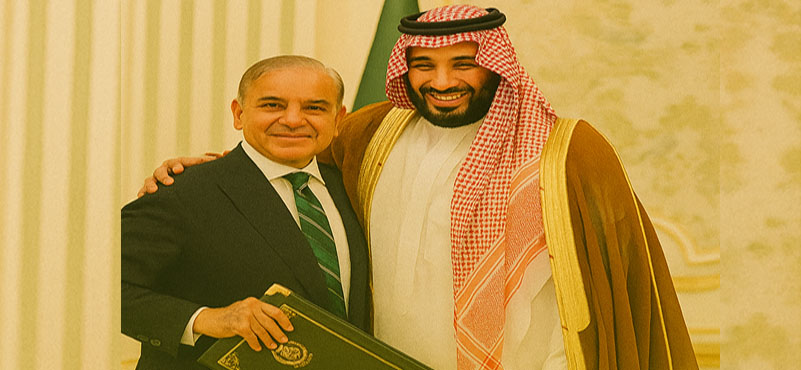
The other significant gathering is taking place in Istanbul and is the first meeting of the Strategic Political and Defence Committee, of the Makah Joint Defence Agreement. Pakistan’s Chief of Defence Forces Field Marshal Asim Munir and Foreign Minister Ishaq Dar are attending that.
Is there a message in the US timing of the attack signaling to both the SCO group as well as the members of the Makah Defence Treaty that it still calls the shots.
Iran’s retaliation is also telling as both Jordan and UAE are not part of the Makah Defence Agreement.
Conclusion
The region is no stranger to conflict. It is not the first war that the region has had to negotiate. The Iran-Iraq War in the 1980s lasted eight years this was soon followed by Iraq’s 1990 invasion of Kuwait and the US’s 2003 invasion of Iraq. Thereafter there have been attacks by proxies in Iraq, Yemen, Lebanon and Israel.
But even by its standards, the last six months have been extraordinarily difficult. Ever since 28 February countries in the region have faced cycles of drone and missile strikes against their military bases, energy infrastructure, and water desalination plants. Their airports and oil refineries have repeatedly needed to pause operations. But recently, the US has prioritised “economic warfare” over military strikes on Iran.
The Iran war is deeply unpopular with the US public, with midterm elections looming in November that could see Republican’s lose control of Congress. In a statement on 28 August, US Senator Jack Reed criticised Trump over the war.“Six months later, not a single objective has been achieved,” said Reed, the top Democrat on the Senate Armed Services Committee. “Indeed, he has weakened our position in the Middle East and the world significantly.”
Conversely, President Trump stated that; “This is a relatively little war for us. This is not a big war”. There are also reports that he is considering carrying out new strikes on Iran following hostilities. “They’re a failed nation,” he said of Iran. And later added, “That doesn’t mean we won’t smack them. We’ll see what happens.
Unfortunately, despite months of negotiations, Tehran and Washington seem poised to keep fighting on and off in an effort to wear down each other. The latest flare up marks a fresh escalation between Washington and Tehran centered on the strategic waterway, through which a major share of the world’s oil shipments normally passes.
Clearly, it’s impossible to predict how long this pendulum of escalation and negotiations will last as irrationality is dominating the conflict while the world seems to be ’comfortably numb.’
ABOUT THE AUTHOR
 Maj Gen VK Singh, VSM was commissioned into The Scinde Horse in Dec 1983. The officer has commanded an Independent Recce Sqn in the desert sector, and has the distinction of being the first Armoured Corps Officer to command an Assam Rifles Battalion in Counter Insurgency Operations in Manipur and Nagaland, as well as the first General Cadre Officer to command a Strategic Forces Brigade. He then commanded 12 Infantry Division (RAPID) in Western Sector. The General is a fourth generation army officer.
 Major General Jagatbir Singh was commissioned into 18 Cavalry in December 1981. During his 38 years of service in the Army he has held various command, staff and instructional appointments and served in varied terrains in the country. He has served in a United Nations Peace Keeping Mission as a Military Observer in Iraq and Kuwait. He has been an instructor to Indian Military Academy and the Defence Services Staff College, Wellington. He is a prolific writer in defence & national security and adept at public speaking.