

India remains among the fastest-growing major economies, supported by domestic consumption and continued public investment. Yet the picture is becoming less comfortable. Manufacturing momentum is uneven, private investment has yet to acquire sufficient breadth, and geopolitical tensions, particularly those affecting energy and trade, have exacerbated external pressures. The policy challenge, therefore, is to sustain growth without allowing external and inflationary vulnerabilities to build up.
Global Economy: Resilient but Increasingly Fragile
The global environment has become distinctly more challenging. The IMF’s July 2026 World Economic Outlook projects global growth at 3.0% in 2026 and 3.4% in 2027, below the 3.5% average of 2024–25. The World Bank is more cautious, forecasting 2.5% growth in 2026 and 2.8% in 2027. The divergent forecasts reflect the unusual uncertainty surrounding the global outlook. Growth has proved more resilient than expected, but its underlying momentum remains fragile, and the outlook is difficult to predict in an environment where volatility is the new baseline.
The Middle East conflict, energy disruptions, trade tensions and geopolitical fragmentation are weighing on the global economy. But heavy investment in AI, semiconductors and digital infrastructure provided a significant offset. Whether this technology-led investment can generate a broader and durable productivity revival is an open question.
Global trade is also losing traction. After exceptionally strong trade in 2025, partly driven by front-loading ahead of tariff changes and a surge in AI-related products, merchandise trade is expected to normalise. The WTO projects merchandise trade-volume growth of just 1.9% in 2026. Supply chains are being reorganised rather than simply being dismantled. Companies and governments are placing greater emphasis on diversification, regional production and strategic security of supply. The result may, therefore, be less a retreat from globalisation than a different form of global integration.
Inflation remains a major constraint. The IMF’s 2026 global headline-inflation forecast of 4.7% highlights the risk of stalled disinflation. Higher energy and freight costs, tariffs, supply disruptions and food-price pressures could reinforce inflationary pressures. Central banks consequently have little room for error. Easing policy too quickly could revive inflationary pressures, whereas keeping rates restrictive for too long could weaken investment, employment and consumption. The global economy has so far avoided a hard landing. But the cushion is thinner than it was a year ago, and another major energy or geopolitical shock could materially alter the outlook.
The Bundesbank’s August review reported Brent at around US$92 per barrel, roughly 29% above its pre-war level of February 2026, and stressed that a renewal or broadening of Gulf conflict could produce further supply disruptions. For India, the principal external vulnerability is energy dependence. The continuing conflict involving Iran and disruption around the Strait of Hormuz create risks for crude prices, freight costs and India’s import bill. The RBI’s August assessment identified elevated crude prices, geopolitical tensions, below-normal monsoon risks and global trade uncertainty as threats to the inflation-growth balance. But India has important buffers. Foreign-exchange reserves reached a record $729.33 billion in the week ending 21 August, providing substantial insurance against external shocks.
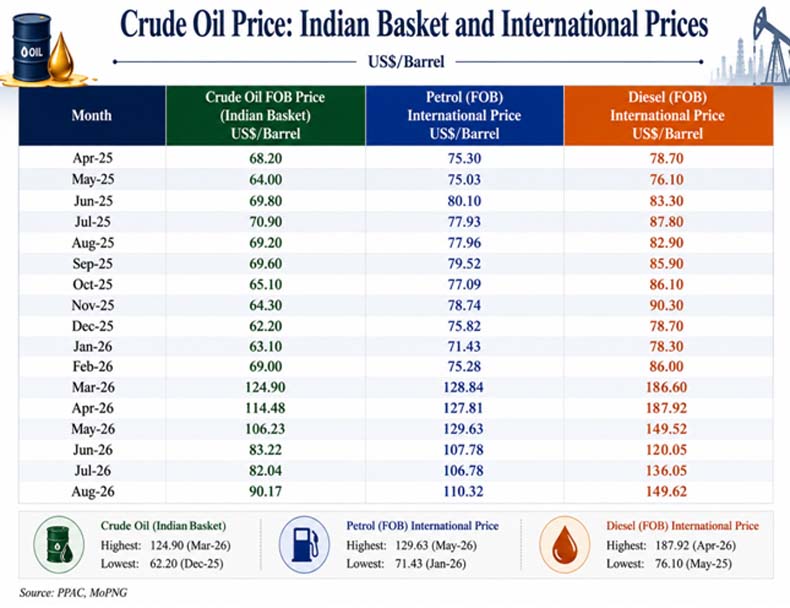
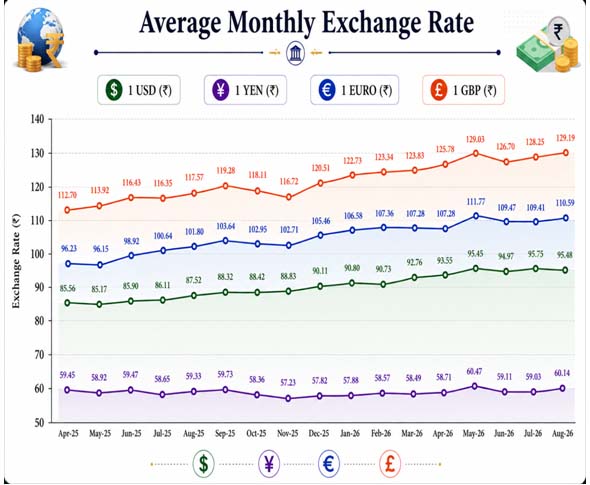
The rupee, however, remains under pressure: it was around ₹95.38 per US dollar on 28 August, despite recent support from dollar inflows and RBI liquidity measures. India is better placed than many economies to absorb an external shock, but it is far from immune to one. Its large domestic market reduces dependence on exports, but oil imports, portfolio flows, global interest rates and international trade policy remain significant transmission channels.
Growth: Strong, But Moderating
Growth momentum remains strong, although some of the reported pace reflects favourable base effects and continuing public expenditure. It remains to be seen whether this momentum can translate into a broad-based revival in private investment and employment.
India’s real GDP growth was at 7.8% year-on-year in April-June 2026. Private investment remained relatively subdued even as consumption and government expenditure provided support. The RBI in its August policy raised its FY 27 GDP growth projection to 6.7%, while retaining the repo rate at 5.25% and a neutral policy stance. This indicates confidence in domestic demand, manufacturing, services and investment despite external risks and strong medium-term growth fundamentals. The high-frequency data is sectorally uneven. Auto sales, bank credit, exports, and corporate earnings are not all moving in the same direction, suggesting the recovery remains uneven across sectors. Despite an impressive set of Q 1 numbers, risks are on the upside because of geopolitics and geo-economics.
India is the world’s fastest-growing economy
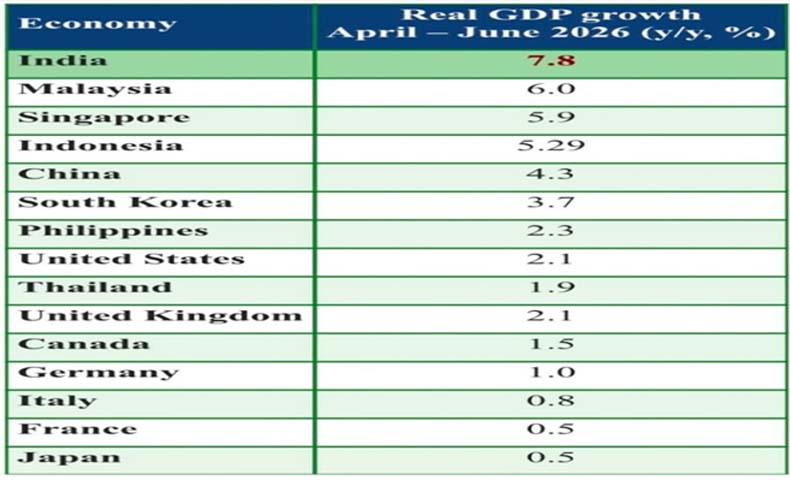
Sajid Chinoy, in an excellent article in The Indian Express, “Economy Weathered West Asia Shock. Now, Reform for Sustained Growth” (August 29, 2026), identifies three key factors underpinning India’s recent growth resilience:
- A coordinated fiscal-monetary-regulatory stimulus in 2025. The government reduced direct taxes in February and rationalised GST rates in September, while the RBI delivered an effective 150-basis-point reduction in policy rates, complemented by regulatory easing in the financial sector. Together, these measures provided a broad-based stimulus to consumption, investment and credit.
- A strengthening of non-oil exports. Non-oil exports have begun to accelerate, supported by an almost 15% depreciation in the real effective exchange rate (REER) since 2025, a reduction in US tariffs and continued resilience in global growth. The more competitive exchange rate has improved the external competitiveness of Indian goods and services, although the sustainability of this momentum will depend on productivity, logistics and market access.
- A swift policy response to the Middle East conflict. India responded quickly to the disruption caused by the West Asia crisis by diversifying its sources of energy imports. This helped avert domestic energy shortages and contained the potentially more severe economic consequences of the geopolitical shock.
Taken together, these developments help explain why the Indian economy has so far absorbed a succession of external shocks without a significant loss of overall momentum. Domestic policy support, stronger non-oil exports and a relatively quick response to the West Asia crisis have all played a role.
The HSBC Flash Composite PMI rose marginally from 54.3 in July to 54.6 in August. Services recovered, with the services PMI increasing to 54.5 from 53.3. Manufacturing, however, declined to 52.9 from 53.5, its weakest reading in roughly five years. This divergence deserves attention. Services continue to carry much of the growth burden, whereas India’s manufacturing ambitions require a sustained increase in factory output, exports, domestic supply chains and employment-intensive production. A stronger manufacturing base is essential for growth to generate jobs on the scale required.
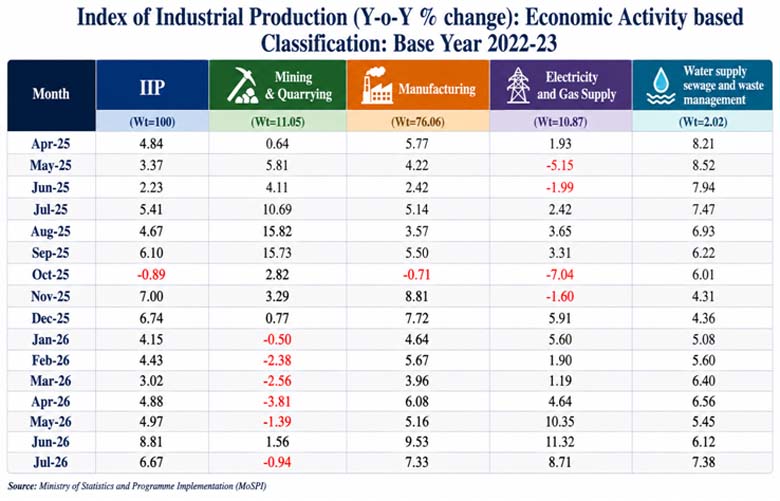
There was, nevertheless, encouraging evidence from industrial production. India’s July IIP grew 6.7%, supported particularly by manufacturing and electricity. Hence, the picture is not one of industrial contraction, but rather volatile and uneven industrial momentum.
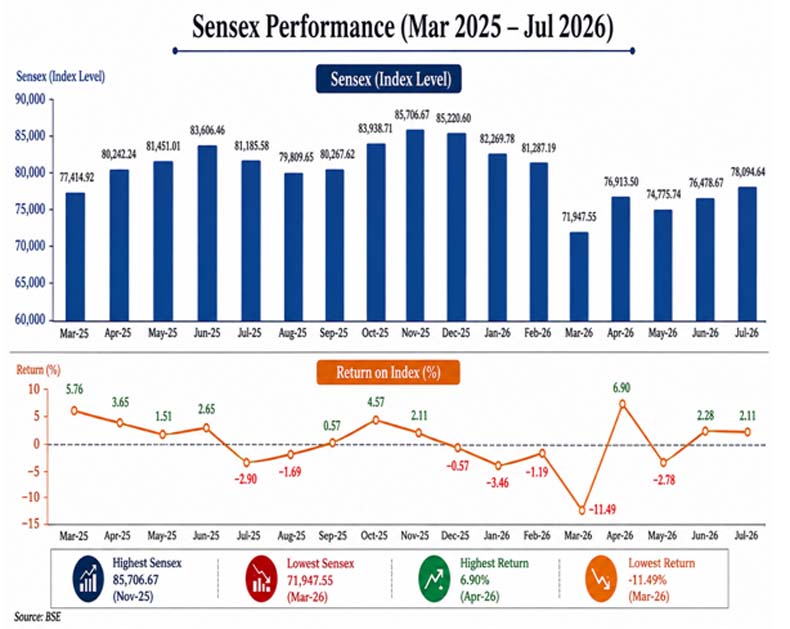
Inflation and Monetary Policy: The Emerging Constraint
With CPI inflation rising to 4.45% in July, largely reflecting firmer food and energy prices, the RBI’s policy choices have become more complex. The case for further rate cuts has weakened, even though private investment remains less vigorous than desirable. Unwinding rate hikes too quickly risks triggering another inflation cycle, yet prolonged tightness threatens an already lukewarm private capex recovery. Hence, the RBI maintained the repo rate at 5.25%, rather than providing further monetary easing. The August RBI Bulletin emphasised that the domestic economy remained resilient, but that global geopolitical and trade uncertainties were substantial. Similarly, Mythili Bhusnurmath has justifiably argued in her piece in The Economic Times (“April-June Yaay- On – Year”, September 1, 2026) that there’s a “distinct possibility of an uptick in inflation, thanks to the huge liquidity overhang on account of the better-than-expected response to RBI’s FCNR (B) Scheme”.
External Sector: From Local View to Global Operating System
The merchandise trade figures are perhaps the clearest source of concern in the latest data. India’s merchandise trade deficit widened to $31.98 billion in July, a six-month high. Imports rose to $76.22 billion, while merchandise exports reached a record $44.24 billion. Electronics imports rose more than 44% year-on-year, while gold imports also rose.
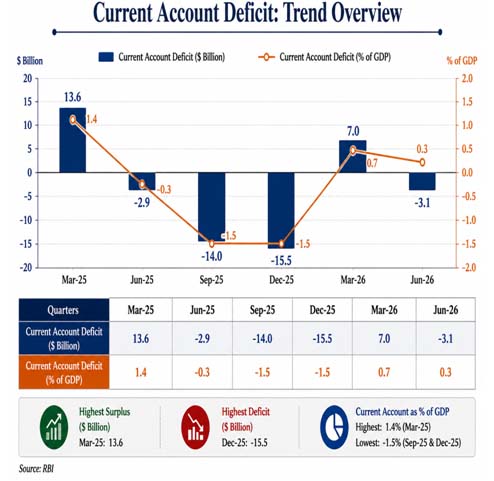
Higher imports of capital goods, machinery and components can support investment and manufacturing. But given the nature of India’s import basket, India’s import bill is relatively difficult to compress in the short run. Crude oil, electronics and several intermediate inputs remain heavily import-dependent. A rise in global prices or a weaker rupee therefore feeds fairly quickly into the country’s external balance.
Services continue to provide an important counterweight. The sector recorded a surplus of $16.95 billion in July, underscoring the contribution of IT, business services and other digitally delivered services to India’s foreign-exchange earnings.
The policy objective should be to transform the external sector from one based on services plus commodity imports into one based on competitive manufacturing, high-value services and globally integrated supply chains.
Fiscal and Financial Position-Strategic Clarity in Complexity
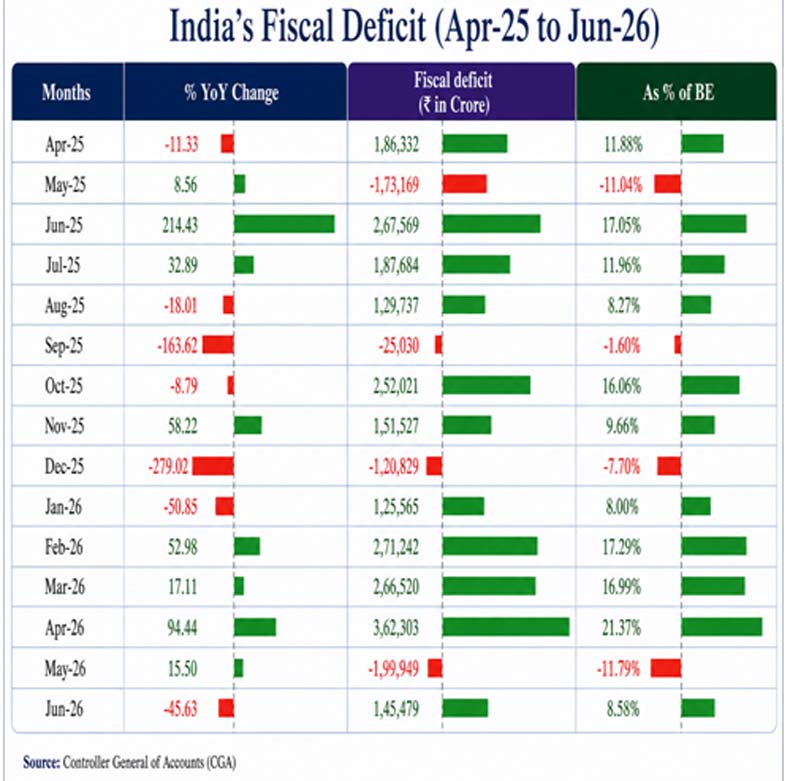
India’s fiscal position is considerably stronger than during the pandemic period, but fiscal space remains limited because of the high public-debt burden and large interest payments. July 2026 GST collections were about ₹2.11 lakh crore, representing 15.4% year-on-year growth.
The sustained buoyancy in GST collections is encouraging. It reflects a combination of formalisation, better compliance and reasonably healthy underlying economic activity, although GST growth, by itself, should not be treated as a complete measure of economic strength. However, weak fiscal performance, high debt and low GDP per capita constrain development. C. Rangarajan and DK Srivastava have succinctly summed up the present situation in The Hindu (“Centre’s fiscal outlook faces geopolitical, revenue risks”, August 21, 2026), “As of now, significant deviations from the budgeted fiscal outcomes appear unlikely. However, an escalation of the war could deliver a major jolt to the economy and central finances”.
The banking and financial system provides another source of strength. Credit growth has remained robust, although the gap between credit and deposit growth requires monitoring. The quality of credit growth will now matter as much as its pace. Banks need to ensure that additional credit increasingly finances productive capacity and viable investment rather than fuelling excessive consumption or speculative increases in asset prices.
Major Challenges
First, employment-intensive growth. High GDP growth has not automatically translated into sufficient high-quality employment. India’s demographic profile is an opportunity only if the economy can create jobs in sufficient numbers. Manufacturing, construction, tourism, logistics, modern services and the care economy will all have to contribute if the growing working-age population is to become an economic asset rather than a source of frustration.
Second, manufacturing competitiveness. The five-year low recorded by the August manufacturing PMI is a warning that India’s manufacturing ambitions require a renewed focus on competitiveness. The agenda is well known, even if implementation remains difficult: logistics costs have to come down, power must be reliable and competitively priced, domestic supplier networks need to deepen, regulation needs to become simpler, and labour productivity must rise.
More importantly, the investment cycle needs stronger private-sector momentum. Despite sustained public investment and higher government capital expenditure, overall fixed investment remains around its decadal average of 32% of GDP, while corporate capex is still only about 10–11% of GDP. Central government capex expanded by around 30% annually during 2020–2023, but its growth subsequently moderated sharply to about 11% in 2024 and just 1.6% in 2025. The slowdown in public-capex growth makes the revival of private investment more important, not less. For corporate investment to accelerate, firms need adequate capacity utilisation, stronger demand, reasonable profitability and greater confidence about the medium-term economic environment.
A meaningful revival in private capex transcends the investment numbers. It would expand productive capacity, strengthen manufacturing, deepen supplier networks and create jobs. It could also make India more attractive to foreign investors and reduce some of the structural weaknesses in the external account.
Somnath Mukherjee has cogently argued in The Times of India (“The Call Before The Capex”, August 18, 2026), “Market pessimists need to look beneath the hood, where both vibe and numbers suggest that India’s on the cusp of a new cycle of growth. Those pristine corporate balance sheets are about to play big”.
Third, external vulnerability. Oil dependence, a large merchandise trade deficit and rupee weakness make India sensitive to geopolitical shocks. The record forex reserves provide protection, but reserves are a buffer, not a substitute for a structurally stronger current account.
Fourth, food and climate risks. Food inflation can quickly undermine real household incomes. Monsoon variability, extreme weather and water stress make agricultural productivity increasingly important.
Fifth, inequality and human capital. Sustained growth requires improvement in education, healthcare, nutrition, female labour-force participation and employability. India’s next phase cannot be based exclusively on infrastructure and capital investment; it must also be human-capital intensive.
Sixth, global trade fragmentation. The world is moving from globalisation towards selective regionalisation, industrial policy and strategic trade. India must compete simultaneously with China, Vietnam, Indonesia, Mexico and other emerging manufacturing centres.
Strategy for the Next Phase -Skills & Outcomes
The next phase of growth must place an accent on productivity and investment. Consumption will remain an important pillar of the economy, but it cannot by itself deliver the scale, competitiveness and employment generation that India needs.
Central capital expenditure reportedly rose 23.7% in the first quarter of FY 27, even as the fiscal deficit was marginally higher than a year earlier. Public investment in roads, railways, ports, urban systems, electricity networks and digital public infrastructure can crowd in private investment, provided project selection, execution quality and maintenance improve. Capital expenditure must not become a substitute for reforms in land, logistics, municipal finance, contract enforcement, predictable taxation, regulatory stability and labour-intensive enterprise development. GDP growth remains necessary, but it is not the final measure of economic progress. What matters ultimately is whether growth raises real incomes, creates productive employment, improves productivity and broadens human development.
Road Map Ahead -From Intuition to Evidence-Based Decisions
Immediate priorities center on liquidity management and energy source diversification to buffer against Middle East supply disruptions. Longer-term structural execution, particularly in logistics efficiency, land-use regulatory clarity, and skill alignment, remains vital to crowding in private capital and moving beyond public capex-led growth. Such issues include reforming logistics, taxation and labour-market implementation; deepening corporate bond markets; strengthening MSME access to finance; increasing female employment; and expanding vocational and technical education. India must move decisively towards a high-productivity economy based on advanced manufacturing, digital services, AI, clean energy, biotechnology, defence production and sophisticated financial services. As I have repeatedly demonstrated, the strategic objective should be not merely to preserve India’s 6–7% growth rate, but to make that growth more employment-intensive, productivity-driven and externally sustainable.
Conclusion
The developments of August 2026 suggest that India’s growth story remains fundamentally resilient. But the period of relatively easy growth appears to be behind us. The country now must contend with a more demanding combination of geopolitical uncertainty, inflation, external vulnerability and the unfinished task of reviving private investment.
Faiz Ahmed Faiz captured the spirit of resilience rather beautifully:
“दिल नाउम्मीद तो नहीं,
नाकाम ही तो है,
लंबी है ग़म की शाम, मगर
शाम ही तो है।”
The heart is not bereft of hope; it has merely known defeat.
The night of sorrow may seem long, but it too shall pass.
Strong domestic demand, public investment, services exports, industrial activity, GST collections, sizeable foreign-exchange reserves and a healthier financial sector provide substantial buffers. The RBI’s 6.7% FY27 growth projection and S&P’s stable sovereign outlook reinforce the positive medium-term assessment. Yet these strengths coexist with significant vulnerabilities—an expanding trade deficit, the rupee approaching ₹95 per dollar, renewed inflationary pressures, a softer manufacturing PMI, muted private investment and heightened geopolitical and energy risks.
Sustaining India’s growth trajectory through the second half of the decade depends less on cyclical buffers and more on systemic productivity gains. While high forex reserves and strong banking balance sheets offer crucial shock absorption, translating these foundations into durable wage growth and industrial scale requires steady, incremental structural reform.
The task now is to consolidate by raising productivity, strengthening competitiveness and creating substantially more productive employment. Let questions do the heavy lifting. This requires reducing dependence on imported energy and critical components, diversifying and deepening exports, creating productive jobs at scale, raising agricultural and urban productivity, strengthening human capital and ensuring that digitalisation and AI translate into economy-wide productivity gains.
India’s demographic advantage, vast domestic market, expanding digital ecosystem, improving infrastructure and strong institutional buffers provide an exceptional foundation. But resilience alone cannot guarantee prosperity. India must move beyond being merely the fastest-growing major economy towards becoming a high-productivity, high-employment and high-income economy. The quality, inclusiveness and sustainability of growth will ultimately determine whether today’s resilience becomes tomorrow’s economic transformation. Towards this end, Amitabh Kant stressed inimitably in The Times of India (“Five Wins and Five Frontiers for India, August 24, 2026), “We’ve hit big sixes with data, entrepreneurship, energy transition, infra and defence. But have to face yorkers on urbanisation, manufacturing, tech sovereignty, space and human capital. India has what it takes to ace this test”. Way to go!
ABOUT THE AUTHOR
 Dr. Manoranjan Sharma is Chief Economist, Infomerics, India. With a brilliant academic record, he has over 250 publications and six books. His views have been cited in the Associated Press, New York; Dow Jones, New York; International Herald Tribune, New York; Wall Street Journal, New York.