Introduction
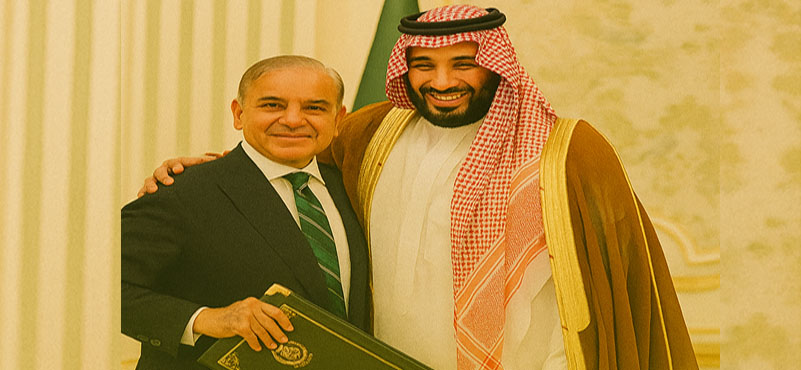
On 05 October 2026 in an emergency meeting, the member states of the Makkah Joint Defence Agreement (MJDA) invoked the joint defence clause and agreed to activate “collective deterrence measures.” A separate joint statement published by Pakistan’s Foreign Ministry said the three countries would “provide the agreed military forces and capabilities and ensure their rapid deployment” to Saudi Arabia.
Recently, the three countries also appointed Lieutenant General Nauman Mahmood (Retd) from Pakistan as the alliance’s first Secretary General and affirmed that “the security of each Party is an integral part of the collective security of the three countries.”
West Asia remains one of the most complex and conflict-prone regions. The decision to operationalise the collective defence clause in less than two months from signing the MJDA suggests that Pakistan might remain embroiled in several layers of West Asian conflicts in future under these security commitments.
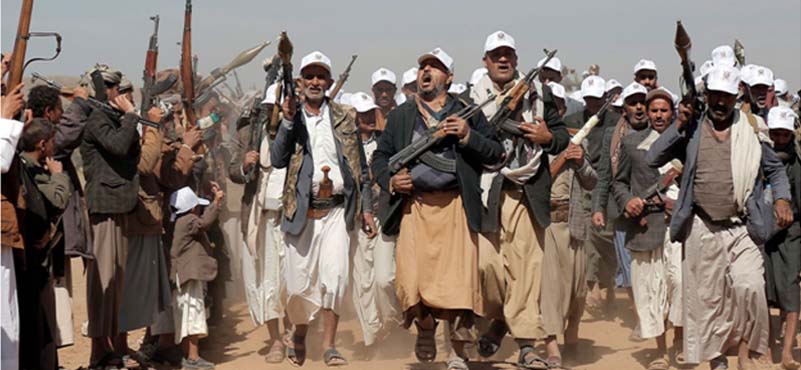
In 2015 Saudi Arabia officially asked Pakistan to join its coalition against Yemen’s Houthis. However, Pakistan chose to remain neutral under the previous PML-N government. On 10 April 2015, the Pakistani Parliament voted unanimously to remain neutral in the Yemen conflict, urging a proactive diplomatic role instead of direct military involvement.
More than a decade after that decision, the Yemen crisis has resurfaced but Pakistan now under a de facto military dictatorship has made security commitments to Saudi Arabia under the MJDA in 2026, and the Strategic Mutual Defence Agreement signed last year.
A Tightrope
Yemen is one of the most complex cases of civil unrest and conflict, illustrating how external actors can complicate regional and domestic conflict dynamics. Following a Saudi-led coalition’s seven-year intervention from 2015 to 2022, the UN brokered a truce. However, a final peace agreement remains pending. Consequently, until a formal Saudi-Houthi accord is finalised, Pakistan alongside Turkey may face prolonged military deployments to bolster Saudi defence forces.
Though Turkey has said that it will not send troops to Yemen to fight the Houthis, and any Turkish contribution under the Mecca Joint Defense Agreement (MJDA) will be defensive and limited to Saudi Arabia’s territory. As per a report in ‘Türkiye Today’; “Fighting in Yemen is one thing, defending Saudi Arabia is another.” “In short, Türkiye will not be a party to the war; but it will be a party to deterrence.”
Pakistan now feels it needs to fulfil its security commitments to Saudi Arabia in spite of its operational challenges. Having formally elevated its bilateral arrangements into the binding, NATO-like collective security framework of the MJDA, it now cannot afford to hesitate when the pact is invoked.
Therefore, Pakistan must fulfil its security obligations wholeheartedly to safeguard its strategic credibility. Furthermore, the economic dimension of this relationship underpins Pakistan’s very survival. Saudi Arabia has historically stood as its economic anchor and rewarded Pakistan with bailouts.
But while Islamabad must deliver on its collective defence commitment to Saudi Arabia, it cannot afford a fallout with its western neighbour, Iran. Pakistan shares a volatile, 900-kilometre border with Iran which is plagued by cross-border militancy and fragile security dynamics. Direct military entanglement with the Iranian ‘Axis of Resistance’ at scale could risk a rupture in their relations with Iran. This could trigger tensions along the Baluchistan border, leading to internal security problems and ruin vital regional trade prospects.
There is also the sectarian dimension. Pakistan has been cautious about becoming militarily entangled in conflicts that could aggravate domestic Sunni-Shia tensions. The Yemen war carries precisely such dangers.
Pakistan’s West Asia call comes at a time when it is fighting its own war with Afghanistan where it has not invoked this Pact, managing its internal security issues in both KP and Baluchistan and mediating in the Iranian War. No doubt Pakistan is walking a perilous geopolitical tightrope.
From the Indian Perspective
India would definitely welcome Pakistan’s involvement elsewhere. It will be an uphill task for Pakistan too, to prove its credibility. It takes years of training to properly integrate sub-units and units to effective integrated fighting detachments. The troops too have to have a reason to fight for the right kind of motivation. There are always more risky and less risky missions, and when dealing with multi-nation detachments, there is always the chance of exposure to subjectivity. In short, such missions would lack the right kind of motivation, the right kind of training, the right kind of integration, and the risk of subjectivity, thus making success all the more difficult. There are unconfirmed reports of some Pakistani soldiers being captured by the Houthis, if that is true, it would be because of the reasons mentioned above.
Thus, for India it’s a win-win situation. With Pakistani troops committed elsewhere, functioning with multi-national forces in difficult circumstances, and complete uncertainty of their period of deployment, Pakistan’s commitment in Kashmir would substantially decrease, bringing peace to the region.
Conclusion
For years, Pakistan has tried to balance its relationship between Saudi Arabia and Iran. The moment has now arrived to test this balancing approach. Pakistan cannot afford to back off from its defence commitments to Riyadh, but equally, it cannot afford to strain its ties with Tehran.
The question today is not about Pakistan standing with Saudi Arabia, it is the depth that commitment extends from defending Saudi territory to participating in a war against the Houthis. There is a difference between defence and offence. The spectrum of the latter can vary from recapturing territory to defeating the Houthis decisively. The difference between these objectives is vast both in terms of resources and time.
For Pakistan the best scenario is ambiguity, honouring its commitment to Saudi Arabia without being dragged into an offensive war against Yemen. Pakistani personnel will probably protect Saudi territory, provide intelligence, operate or support air-defence systems and contribute to logistical and training requirements.
It therefore seems difficult imagine how Pakistan will be able to not make the Pact look hollow whilst simultaneously not creating a rift with Iran.
ABOUT THE AUTHOR
 Maj Gen VK Singh, VSM was commissioned into The Scinde Horse in Dec 1983. The officer has commanded an Independent Recce Sqn in the desert sector, and has the distinction of being the first Armoured Corps Officer to command an Assam Rifles Battalion in Counter Insurgency Operations in Manipur and Nagaland, as well as the first General Cadre Officer to command a Strategic Forces Brigade. He then commanded 12 Infantry Division (RAPID) in Western Sector. The General is a fourth generation army officer.
 Major General Jagatbir Singh was commissioned into 18 Cavalry in December 1981. During his 38 years of service in the Army he has held various command, staff and instructional appointments and served in varied terrains in the country. He has served in a United Nations Peace Keeping Mission as a Military Observer in Iraq and Kuwait. He has been an instructor to Indian Military Academy and the Defence Services Staff College, Wellington. He is a prolific writer in defence & national security and adept at public speaking.