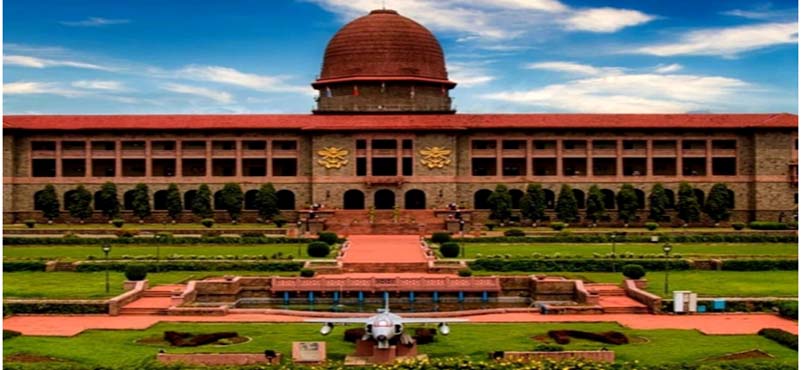
Whenever I look back on my life, I find that memory plays a curious game with me. It quietly erases the things that once appeared monumental. I struggle to remember the dates of promotions, the sequence of appointments, the citations accompanying medals, or the applause that followed professional milestones. Forty years in uniform left me with enough achievements to fill a résumé, yet none of them visits me as often as three unforgettable years spent at National Defence Academy (NDA).
Forty-four years have passed since I marched out of the NDA, and yet, not a week goes by without some forgotten moment from those days returning with astonishing clarity. A voice echoes down the squadron corridor. A bicycle races towards Sudan Block. Someone shouts a nickname that only coursemates know. An angry horse refuses to cooperate. A boxing glove finds its mark. A class erupts in laughter. The memories arrive uninvited, smiling as though they had never left.
It is a strange paradox. The hardest days of our youth became the happiest days of our lives.
When we entered NDA, we thought we had joined a military academy. Looking back, I realise we had unknowingly enrolled in something much rarer. We had joined a brotherhood.
On the first day, we arrived carrying different surnames, different languages, different schools, different dreams and different fears. Some came from bustling cities, others from remote villages. Some spoke flawless English, others struggled through their first conversation. None of that mattered for very long.
NDA was perhaps the most efficient leveller I have ever known.
Within weeks, our hair disappeared, our egos followed close behind, and our identities were reduced to a common condition—we were all perpetually hungry, perpetually sleepy and perpetually being corrected by some bloody senior. It was a remarkable form of equality. Nobody cared how well-off your family was when everyone was equally terrified of inspection, equally exhausted after cross-country, and equally determined to reach the dining hall before breakfast vanished.
If democracy is equality before law, then NDA was equality before punishment.
Looking back now, I suspect the Academy knew a secret that modern education has forgotten. Human beings are rarely united by comfort. They are united by shared hardship. Nothing builds friendship faster than carrying the same load, making the same mistakes and laughing at them afterwards.
Somewhere between blisters and boxing, route marches and ragda, swimming tests and horse riding, drill squares and Camp Torna, strangers quietly became brothers. Nobody announced the transformation. It simply happened.
We learnt to laugh at ourselves long before life had the opportunity to do it for us.
We discovered that falling off a horse was embarrassing only until everyone else had taken their turn. We learnt that the loudest laughter often came from those standing beside you, only because they knew their own turn would arrive tomorrow. Pride never survived very long in NDA. Humility arrived daily, usually before breakfast.
Years later, psychologists would probably explain all this using impressive expressions like “shared adversity” and “collective identity”. We simply called it being coursemates.
The Academy taught us mathematics, physics, military history and countless other subjects. Yet the lessons that shaped our lives were nowhere in the syllabus. There was no period called Loyalty. No lecture on Friendship. No examination in Trust. No practical class on Standing By One Another. Yet somehow these became the subjects in which every cadet graduated with distinction.
Perhaps everything important really was outside the syllabus.
Then came the Passing Out Parade. Parents smiled with pride. Cameras clicked. Shoulders straightened. Young men believed they had completed their education. Only now do I realise that the Academy was smiling quietly at our innocence. It knew something we did not. It knew we would never really leave.
Life scattered us in every direction. Pongos wore olive green. Naval Dopes sailed the oceans. Flyboys took to the skies. A few left uniform altogether. Careers unfolded in different ways. Some reached the highest ranks. Others found success beyond the military. Some retired early. Some never returned from operations. Time, as it always does, wrote different stories for different men.
Yet whenever coursemates meet, something extraordinary happens. The years simply surrender. The wrinkles, ranks and designations disappear. Within minutes, everyone is nineteen again.
The retired General is reminded how he was thrown off by the naughty horse. The successful businessman is prompted how hopeless he was at keeping account of the course eats. Someone still remembers who slept through a class, who gasped in the swimming pool and who invariably attracted trouble with astonishing consistency.
There are very few places in the world where a lifetime of achievement can be defeated by one perfectly timed sentence beginning with, “Do you remember…”
Perhaps that is the greatest gift NDA gives its cadets. It preserves a version of us untouched by ambition. Long before promotions, fame, success or failure, there existed a simpler young man who laughed freely, dreamt recklessly and believed his friends would always be around. Remarkably, they still are.
As age advances, life quietly reduces our circles. Parents leave us. Children build lives of their own. Colleagues retire. Neighbours change. Professional identities fade. The visiting cards stop arriving.
But somewhere, there remains a group of men who still remember your nickname before they remember your rank.
They remember the boy before they acknowledge the officer. That is an extraordinary privilege. Perhaps that is why a single message in a course WhatsApp group can mobilise people across continents for a genuine cause.
Looking back now, I realise the Academy never merely trained officers for the Armed Forces. It quietly demonstrated what India itself could become—a place where language, region, religion and wealth surrendered before a larger identity. We did not become identical; we became inseparable.
There are institutions that produce administrators, technocrats, professionals and managers.
The National Defence Academy produces something much rarer. It produces lifelong witnesses to one another’s lives.
Men who know where you came from, who celebrate where you have reached, who forgive where you stumbled, and who never allow success to make you take yourself too seriously. Whenever I look back now, I no longer measure my life by the ranks I wore or the appointments I held. Those were honours for a season.
The real privilege was spending three unforgettable years among young men who unknowingly became brothers for life. Perhaps that is why the memories refuse to fade. Perhaps that is why every road, however long it has been, eventually seems to lead back to Khadakwasla.
And perhaps that is why, decades after our Passing Out Parade, the National Defence Academy still refuses to let us graduate. And if you ask any coursemate, none of us would have it any other way.
ABOUT THE AUTHOR

Lt Gen Rajeev Chaudhry (Retd) is a social observer and writes on contemporary national and international issues, strategic implications of infrastructure development towards national power, geo-moral dimension of international relations and leadership nuances in changing social construct.