
Introduction
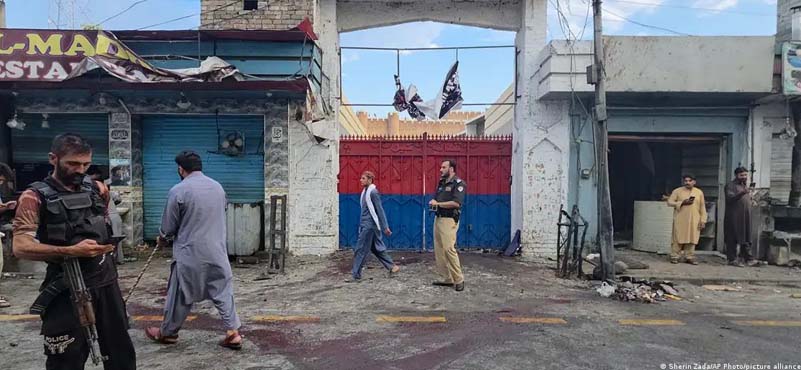
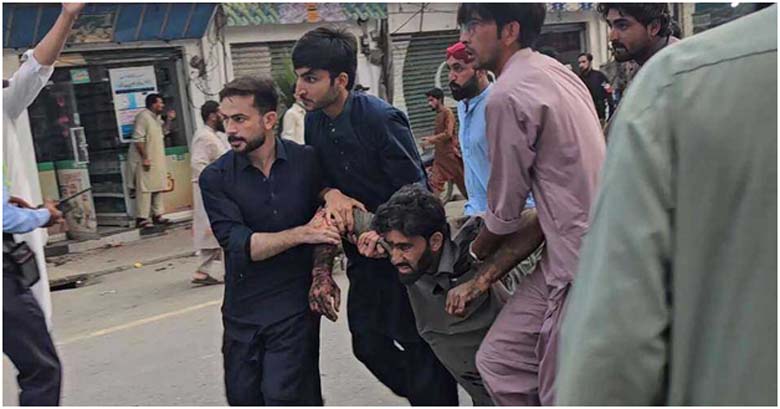
On 02 August fourteen people, including police officials, were killed and twenty-two others injured in a suicide attack on Swat’s Kabal Police Station in Pakistan’s Khyber Pakhtunkhwa after a rally calling for lasting peace in the valley concluded. This figure was confirmed by the Swat police spokesperson Nasir Iqbal.
The Malakand Division Deputy Inspector General of Police Fida Hussain said that police officers were among those martyred and added that the body, suspected to be that of the bomber, had been brought to hospital.
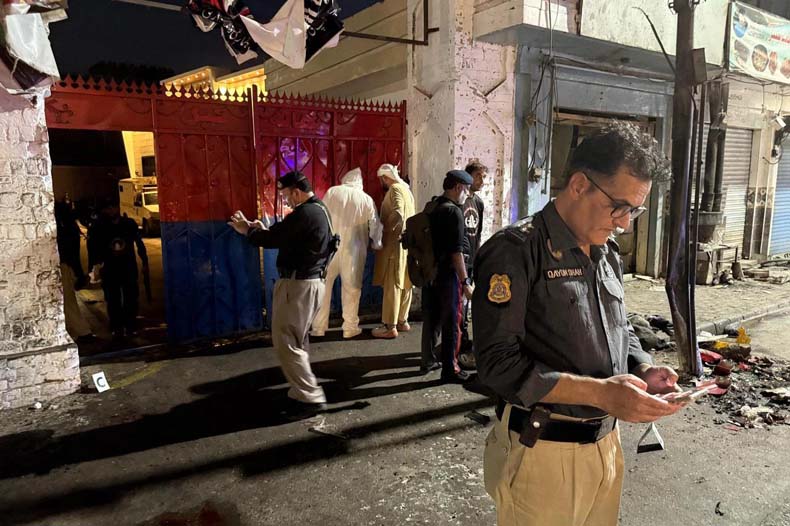
Apparently, the suicide bomber detonated explosives after police personnel attempted to stop and search him at the entrance of the police station. The area has now been cordoned off by Security Forces and an investigation is underway.
Swat, once the epicenter of the Pakistani Taliban insurgency, has witnessed growing public concern over a resurgence of attacks in parts of the District.
President Asif Ali Zardari expressed sorrow over the loss of life and called for a comprehensive investigation into the incident, according to a statement issued by his office on X. He said that “terrorists will never succeed in their nefarious efforts to undermine peace, national unity and the writ of the state.”. He added that the sacrifices of the KP Police were “a source of pride for the entire nation”.
KP Chief Minister Sohail Afridi, condemning the incident, sought a report from the KP Inspector General of Police (IGP) and stated that “the elements hostile to peace will never be allowed to succeed in their nefarious intentions”.
The Incident
The blast occurred outside Kabal Police Station as participants dispersed after the Swat People’s Peace Uprising, a rally organized by local residents and civil society groups to protest against the recent wave of terrorism in the Swat Valley.
The protest had drawn a large crowd from across the District and the attack occurred as the final Speaker was addressing the crowd, triggering panic among participants. No group has claimed responsibility for the attack.
Addressing the gathering before the blast, the Speakers condemned the resurgence of terrorism in Swat and demanded that the government ensure lasting peace. They said their movement had a single agenda: the restoration of peace and the elimination of terrorism from the region.
The Speakers stressed that maintaining law and order and eradicating terrorism were the state’s responsibility, warning that continued insecurity could trigger widespread public unrest.
The Speakers also criticised the authorities for what they described as action against peaceful citizens while terrorists continued to operate in the mountainous areas of Swat. They alleged that terrorists had openly circulated videos on social media and questioned why stronger action had not been taken against them.
“Our children deserve education, and our families deserve to live in peace,” one speaker told the gathering.“We have witnessed years of bloodshed. Our mothers, sisters, and daughters have suffered immensely, and we do not want another generation of widows and orphans.”
The Mounting Toll
Earlier in the day, an IED blast near the Peshawar-Islamabad motorway toll plaza injured two policemen in Peshawar. While on 29 July an attack on a Police Check Post in Khazina Banda area of Hangu District killed nine policemen including DSP Diyar Khan, while 28 others were injured.
That attack marked the third such incident, and all three attacks showed that the heaviest losses were suffered not in the initial strike, but during the subsequent attack on reinforcements.
Pakistan’s security situation remains volatile. According to the Pakistan Institute for Conflict and Security Studies’s monthly security assessment, violence linked to militant attacks and counter-militancy operations intensified sharply in July, making it the deadliest month of 2026, with at least 606 people killed and 232 injured which included 101 security forces personnel and 103 civilians across the country.
Attacks in the last week alone resulted in 54 fatalities and 36 injuries, marking a sharp rise in casualties from the previous week.KP, recorded 154 terrorism related deaths in July, compared with 75 in June, representing an increase of 105 per cent.
According to the report, at least 112 security forces personnel were killed during July, the highest monthly toll since January 2023 and the second-highest recorded in more than a decade. In January 2023, 114 security personnel were killed, including around 102 in the suicide bombing at Peshawar Police Lines.
The institute recorded at least eight suicide attacks during July, including five vehicle-borne suicide attacks. This is the highest number of suicide attacks recorded in a single month during the past decade.
The average death per month among security forces increased from 56 in 2025 to 62 in 2026 while average death of civilians increased from 48 to 66.
Conclusion
These killings reflect the reality in Pakistan who have previously blamed the violence in border provinces on terrorist activity emanating from Afghanistan. The Taliban government in Kabul however denies Afghan involvement. The truth is that Pakistan’s policy of nurturing terrorists is now haunting them.
There are grievances that exist that are context driven but the central issue remains a sense of alienation. The lack of attention on its peripheries and the consequent lack of legitimacy of the core in the eyes of the people of the periphery is telling.
The public frustration therefore stems from a feeling of powerlessness and a perception that they lack control over their social, political and economic issues in the absence of an effective local government system and trustworthy political representatives. Basic rights remain in jeopardy, the media and free expression are restricted, and unemployment is rising.
Economic hardship, political uncertainty, declining public services, governance challenges and growing public frustration have collectively created an environment that demands wisdom rather than confrontation. Internal instability, economic fragility, and hybrid political control are now its hallmark. The conduct of the current elections in PoJK while the concerns of the population are becoming casualties of broader political disputes and are being dealt with as a security rather than political issue show that the leopard cannot change its spots.
The problems of Pakistan persist as it moves from one crisis to another; internal fault lines are widening and violence is increasing within its Provinces of KP, Balochistan and PoJK. The hybrid government nevertheless remains content basking in its newfound role mediating the Iran War while its own house is tearing apart resulting the country being mired in interminable turbulence.
ABOUT THE AUTHOR
 Maj Gen VK Singh, VSM was commissioned into The Scinde Horse in Dec 1983. The officer has commanded an Independent Recce Sqn in the desert sector, and has the distinction of being the first Armoured Corps Officer to command an Assam Rifles Battalion in Counter Insurgency Operations in Manipur and Nagaland, as well as the first General Cadre Officer to command a Strategic Forces Brigade. He then commanded 12 Infantry Division (RAPID) in Western Sector. The General is a fourth generation army officer.
 Major General Jagatbir Singh was commissioned into 18 Cavalry in December 1981. During his 38 years of service in the Army he has held various command, staff and instructional appointments and served in varied terrains in the country. He has served in a United Nations Peace Keeping Mission as a Military Observer in Iraq and Kuwait. He has been an instructor to Indian Military Academy and the Defence Services Staff College, Wellington. He is a prolific writer in defence & national security and adept at public speaking.