Why Great Nations Are Built by Alignment, Not Size
Beyond the Arithmetic of Power
Nations have long been measured by numbers. Gross Domestic Product, defence expenditure, population, territory, foreign exchange reserves, industrial output and technological prowess dominate discussions on national strength. International rankings, strategic assessments and media debates routinely compare countries using these metrics, creating the impression that national power is simply an exercise in arithmetic.
History, however, tells a different story.
The rise and fall of nations has rarely been determined by size alone. Vast empires have collapsed under the weight of their own contradictions, while relatively small states have exercised influence far beyond their geographic or demographic limits. Britain built a global empire from a modest island. Israel has repeatedly demonstrated strategic resilience despite limited territory. Singapore, devoid of natural resources, has become an indispensable global economic hub. Japan transformed itself into an economic giant after suffering total devastation in the Second World War.
These examples reveal a deeper truth. National power is not merely the sum of its individual components. It emerges from the manner in which these components interact, reinforce and complement one another.
Power, therefore, is not arithmetic. It is geometry.
The Seven Angles of National Power
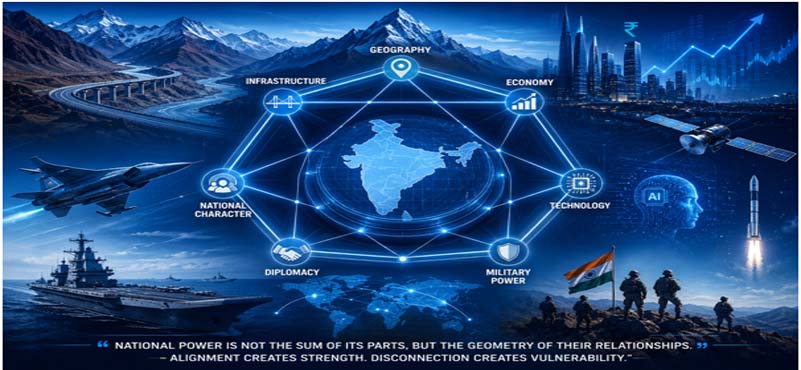
Every nation possesses certain enduring attributes. Individually they contribute to national strength, but collectively they determine strategic outcomes. They form what may be called the seven angles of national power.
- Geography. The stage upon which history unfolds. Mountains, rivers, oceans, climate and location shape opportunities and impose constraints. Geography remains the one strategic asset that cannot be negotiated or imported.
- Infrastructure. Roads, railways, ports, airports, tunnels, digital networks and energy corridors convert geography into mobility and connectivity. Infrastructure is no longer merely a development indicator; it is a strategic enabler.
- Economy. It generates the resources necessary to sustain national ambition. Without economic vitality, military modernisation, scientific innovation and social development eventually become unsustainable.
- Technology. From artificial intelligence and quantum computing to space capabilities and biotechnology, technology multiplies every other element of national power. It enhances productivity, improves military effectiveness and expands diplomatic influence.
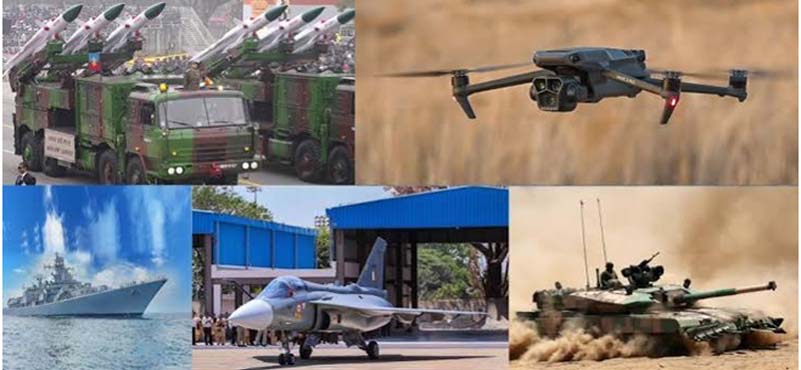
- Military capability. The ultimate guarantor of sovereignty. A credible military deters aggression, protects national interests and provides strategic stability in an uncertain world.
- Diplomacy. Military and economic strength acquire greater value when translated into partnerships, influence and international legitimacy. Diplomacy extends national reach without extending national borders.
- National Character. Most important. Leadership, institutional integrity, social cohesion, civic discipline, resilience and collective purpose constitute the invisible foundation upon which every other element rests. Nations with abundant resources but weak institutions often underperform, while those with modest means but exceptional national character frequently exceed expectations.
Each angle matters. Yet none operates in isolation.
Alignment Creates Power
The true strength of a nation lies not in possessing these seven attributes independently but in aligning them into a coherent strategic system.
Infrastructure enhances military mobility. Efficient logistics enable rapid deployment of forces across difficult terrain. Secure borders inspire investor confidence. Investment fuels economic growth. A stronger economy finances research and innovation. Technological advancement increases industrial competitiveness and military capability. Credible military power strengthens diplomatic leverage. Successful diplomacy opens new markets, attracts capital and builds strategic partnerships. These, in turn, generate further economic opportunities that justify continued investment in infrastructure.
The cycle reinforces itself.
Conversely, weakness in one domain distorts the entire geometry. Advanced technology without industrial capacity remains dependent on foreign supply chains. Economic growth without infrastructure creates bottlenecks. Military strength without economic resilience cannot be sustained indefinitely. Diplomatic ambition unsupported by credible capabilities lacks influence.
Strategic success, therefore, depends less on maximising individual variables than on harmonising their relationships.
Just as a bridge derives its strength not merely from the quality of its steel but from the geometry of its design, nations derive enduring power from the alignment of their strategic assets.
Lessons for India
India enters the twenty-first century with an extraordinary combination of strategic advantages.
Its geographic position places it at the crossroads of the Indian Ocean, connecting East and West. It possesses one of the world’s youngest populations, a rapidly expanding digital ecosystem, a resilient democratic framework, a vibrant entrepreneurial culture and increasing technological capabilities. Its diplomatic profile has grown significantly, enabling constructive engagement across competing geopolitical blocs while preserving strategic autonomy.
The transformation of border infrastructure, expansion of maritime capabilities, emphasis on indigenous defence production, investment in digital public infrastructure and growing manufacturing ambitions all point towards a broader recognition that national power cannot be built in isolated compartments.
Yet significant challenges remain.
Economic growth must consistently translate into technological leadership. Infrastructure development should continue reducing regional disparities while strengthening strategic connectivity. Educational reforms must produce innovators as well as graduates. Institutional efficiency must keep pace with national aspirations. Defence modernisation should increasingly leverage domestic industrial capabilities and emerging technologies.
India’s greatest strategic opportunity lies not merely in accumulating these strengths but in integrating them into a long-term national vision that transcends political cycles and bureaucratic silos.
The question is no longer whether India possesses the ingredients of great power. The real question is whether it can perfect their geometry.
From Geometry to Grand Strategy
Every successful grand strategy is ultimately an exercise in alignment.
States that endure are those that synchronise economic planning with national security, scientific innovation with industrial policy, diplomacy with defence preparedness and infrastructure with strategic geography. They understand that isolated excellence cannot compensate for systemic imbalance.
This requires institutions capable of long-term thinking, policies that reinforce rather than compete with one another, and leadership that recognises the interconnected nature of national power.
In an era defined by technological disruption, supply-chain competition, climate uncertainty and geopolitical rivalry, fragmented policymaking becomes increasingly costly. Nations that coordinate their strategic instruments will enjoy disproportionate influence, while those pursuing disconnected objectives will struggle despite possessing impressive individual capabilities.
Grand strategy is therefore less about predicting the future than about creating durable alignment among the enduring elements of national strength. That is the true geometry of power.
The Architecture of Enduring Power
Engineers understand that geometry determines whether a bridge can withstand enormous loads or collapse under ordinary stress. The same principle applies to nations.
History does not consistently reward the largest economies, the biggest populations or the strongest militaries. It rewards societies that organise their strengths with clarity, discipline and strategic purpose. The architecture of national power depends not only on what a nation possesses, but on how effectively those possessions reinforce one another.
As global competition intensifies, countries will continue to invest in technology, military capability, infrastructure and economic growth. Those investments are essential. But they are not sufficient.
The decisive advantage will belong to nations that align geography with infrastructure, innovation with industry, military capability with diplomacy, and all of these with strong institutions and an enduring national character.
Power is not simply accumulated. It is designed. And the future will belong to those who master the geometry of national power.
ABOUT THE AUTHOR

Lt Gen Rajeev Chaudhry (Retd) is a social observer and writes on contemporary national and international issues, strategic implications of infrastructure development towards national power, geo-moral dimension of international relations and leadership nuances in changing social construct.