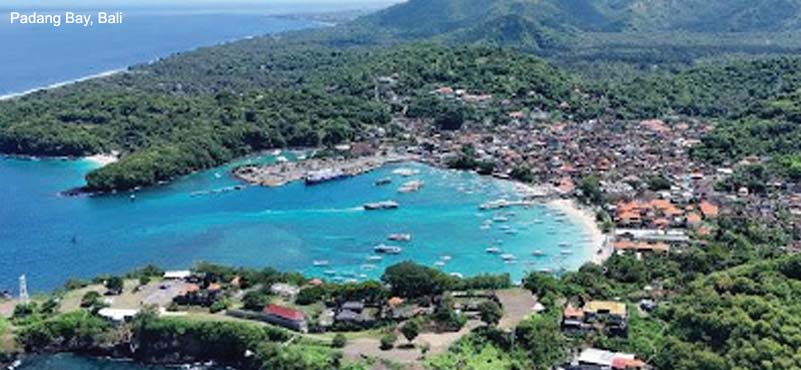
It was during a family wedding in Bali, an island I was visiting again after 15 years, when the aesthetically discernible facelift and upgrading hit me. Right in the face — in a very tasteful, welcoming and pleasant manner!
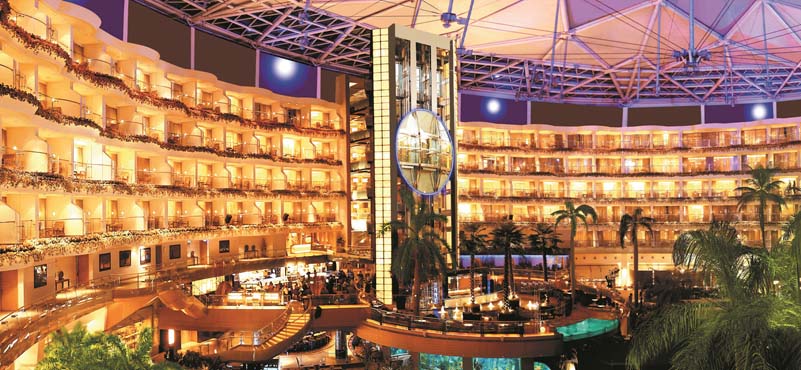
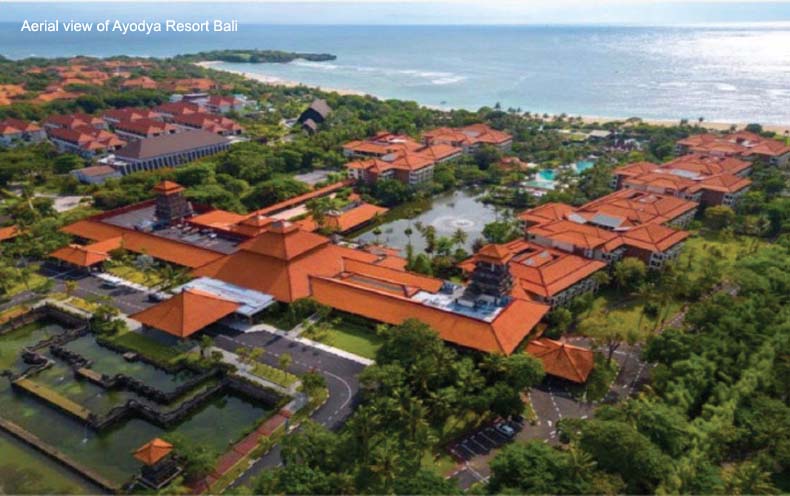
Spending almost a week at Ayodya Bali Resort in Nusa Dua, a property spread over 32 acres with it’s multiple zones of beach fronted lush natural landscaped greenery, water bodies and studded and ancient stone structures, where, besides tourists from Australia and Russia, there were a discernibly large number of Indians. These included three ‘celebratory’ groups, also comprising Indian diaspora residing globally. Two were wedding parties, and the third, partially over-lapping ours, was a couple come to repeat their 25th wedding anniversary vows, with family, friends and children in tow.
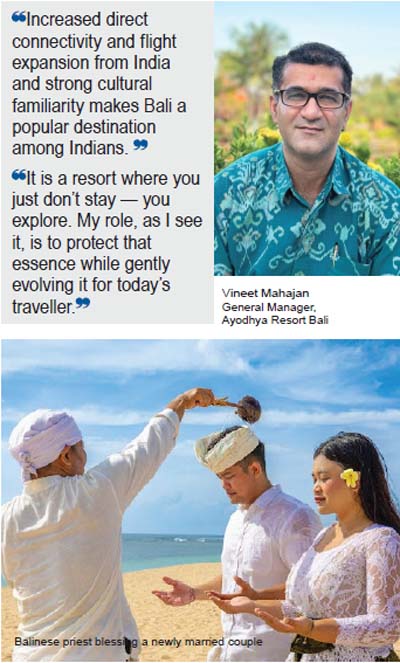 Over a friendly chat with the amiable General Manager, Vineet Mahajan, at the hotel’s Royal Lounge, in response to my query about what has suddenly made Indians throng Bali? As previously, preferred big contender destinations from India were Europe, UAE, Thailand, Sri Lanka, Singapore and Malaysia. His answer was simple. “It’s Vineet an emotional connection between the two countries, especially with Bali the similarity between both cultures is very strong. This corridor will continue to grow through its personal, emotional experience. Bali, a stronghold of Balinese Hinduism, is now among the fastest-growing and most influential tourism markets. This could well be a prime reason.
Introduces himself, “My journey in hospitality spans close to three decades incorporating globally respected luxury brands such as IHG, Oberoi Hotels & Resorts, The Leela, and Hyatt covering multiple markets in Asia, and working across pre-openings, re-openings, and large-scale repositioning projects. Each of these experiences has taught me that hospitality is ultimately about people — about understanding expectations, emotions, and the minute details that shape lasting memories.”
Reason enough for Vineet to opt for Ayodya Resort Bali which felt different from the very beginning. He continues , “More than the extensive scale and a story waiting to be told in a Balinese setting, its soul drew me. It is a resort where you just don’t stay — you explore. My role, as I see it, is to protect that essence while gently evolving it for today’s traveller.”
According to Vineet, the growth of Indian travellers to Bali has been very noticeable over the past five years. He stresses its is no longer an emerging market — it is now one of the most important source markets for Bali. Even at Ayodya, the Indian market is now firmly among the top source markets. It continues to grow stronger year on year, both in leisure and group segments.
“Guests come to Bali looking for character and stay where operational excellence is evident. What stands out is not volume, but diversity — families, honeymooners, weddings, and multi-generational travel. The soul of Bali is non-negotiable. It lies in its architecture, cultural inspiration, and sense of place. We do not try to change Bali — we allow more people to experience it in it substance,” he affirms.
Quoting statistics from Bali Tourism Board (BTB), Badan Pusan Statistik (BPS) and Bali Provincial Tourism Office (BPTO), Mahajan compare an estimates of past recent years. Year 2025 shows 550,000 to 650,000 Indian visitors to Bali. Pre-Covid,2019 benchmark was 375,000–380,000 Indians Growth shown between 2020 →2025 is 5x–6x. In comparison, post covid 2019-2025 it was 1.5x.
According to Vineet, “compared to 5–10 years ago, today’s Indian traveller is far more global in outlook, more experiential in mindset, and more confident in choosing premium travel experiences. They are also more emotionally connected to culture, celebration, and shared family experiences. We find many guests are preferring local cultural properties with international comforts. No longer only branded cookie-cutter properties. Though those too get their share of Indian visitors.”
Naturally, there is a logical explanation for the surge and driving demand for Indians. Mahajan enumerates them, staring with the most obvious one.
“Firstly, increased direct connectivity and flight expansion from India, including from tier-2 cities — Delhi, Mumbai, Ahmedabad, Bangalore, Pune, Amritsar, Hyderabad and Indore to Denpasar — at time of going to press.
Second, as as I mentioned earlier, the strong cultural familiarity and spiritual resonance, such as Hindu heritage, temples, names such as Ramayana, Mahabharata, Hanuman, Ganesha, Garuda and yoga, spas and massage retreats etc feel familiar. This despite the fact that Bali’s Hinduism is not ‘Indian” in practice, yet it shares deep rooted civilisations.
Thirdly, Bali is growing as an in-demand destination weddings and the honeymoon market The segments our property is focusing on is because of strong demand across families, couples, and group travel. Each experiences Ayodya — or any property they chose to stay in — differently, which is what makes their experience very dynamic. Could by beaches (Seminyak), culture (Ubud), cliffs (Uluwatu), volcanoes (Kintama) etc.
Other positively encouraging reasons, are visa-on-arrival; availability of vegetarian and Indian cuisine and value for money as compared going to other destinations. For outdoor lovers, there are international quality beaches, jungles, cliffs, volcanoes, waterfalls, and rice terraces—but without the cultural disharmony Indians often might find elsewhere.
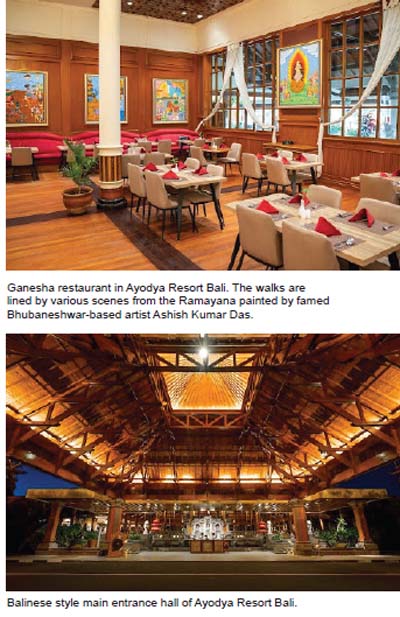 The General Manager, obviously turns to Ayodya’s strategy and positioning of which he says, “we do not ‘target’ Indian travellers — we try to understand them, their needs, their hobbies, their passions. Age and interests play a major factor here as that is the visitors’ deciding factor in which part of Bali they prefer to visit and spend time in. Focus is on comfort, cultural familiarity, flexibility, and emotional warmth, while keeping the authenticity of Bali intact. A mix of various channels and partnerships in the Indian market have worked best for us. Starting with reliable travel agents, wedding planners, digital visibility, and most importantly, word of mouth publicity. We have noted Indian travellers trust experience-based recommendations more than anything else.
The average duration of stay of Indian guests turns out to be longer than of other Australian or Russian and European guests. It is typically about five to seven nights depending upon the occasion like family holiday or weddings or even wellness travel, and slow travel mainly for our senior guests who want both relaxation and meaningful experiences.
What is Ayodya’s mission vis-a-vis the Indian guest? Answers Vineet: “To ensure Ayodya remains true to itself — while continuously evolving as a place where guests truly feel there stay is experiential, meaningful, where they can absorb and preserve the culture and heritage of this island.
My final query to the patient Vineet was, ‘what more needs to be done to woo more Indian visitors to Bali’? “As weddings are a big business, perhaps we could look at: improving wedding infrastructure, simplify permissions for large Indian weddings, baraat processions, late-night music to continue even by lowering decibels, fire rituals. Have more trained wedding priests and planners, mehndi artists, dhol players, ‘pagri tying men, etc. Invite reputed Indian wedding planners for visits to Bali. Sell Bali as a destination where weddings can be celebrated with the blessing of Agni, Varuna, and Vayu in a land that already reveres Ramayana.
Consider senior travellers in mixed groups or even separate men and women groups. The more active spiritual groups could do temple circuits including lesser-known ones, and attend a local Ramayana story telling. Within the hotel hire more Hindi-speaking guides, post signage, and concierge services in key hotels.
With its new roads, highways, bridges, gardens, clean sandy coastal line and numerous branded and boutique hotels, luxury villas, home stays, back-packers hostels, service apartments, Bali is ready to woo and more than appeal as it positions itself as a “value luxury” international destination with it’s natural beauty and caring hospitality.
ABOUT THE AUTHOR
 Amita Sarwal is a prolific writer, author and has delved in a cross section of subjects over her distinguished five plus decades career.