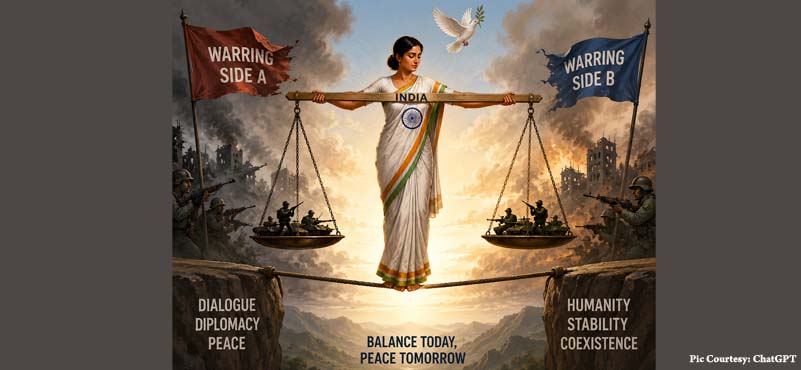
India treads on the tricky path of keeping its balance, as among the leading voices of the Global South; that position should not get lost. In fact, it can be substantiated by ensuring that we keep our engagement going with all sides in the conflict.
Unquestionably, the world today stands at an inflection point of existence and its road ahead. Never since the end of World War 2 in 1945 has the world witnessed, in these five years or so, an alarming increase in both the kinetic and non-kinetic variety of conflicts. As if the two years of an apocalyptic period was not enough for the world between 2020-2022, when millions all over the world perished owing to the disastrous COVID 19 pandemic which too crippled many economies of the world, out of the blue, unwarranted and avoidable serious kinetic conflicts have emerged. Meanwhile, the previous ones continue to rage on, with undying ferocity.
Worth recapping, the Israeli-Hamas armed altercation in Gaza since Oct 2024, resulting in nearly the entire Gaza Strip being devastated with over 70000 fatalities, the Russian invasion of eastern Ukraine since February 2022, the continuing on-off Afghanistan-Pakistan border skirmishes and their artillery duels, the Myanmar civil war, besides internal conflicts in many parts of the world, especially in the African continent, continue. India’s own launching of Operation Sindoor in May 2025, in retaliation to Pakistan’s terror strike against innocent tourists in Pahalgam, is also of operational significance.
The above conflicts have all paled into relative insignificance with a full breakout of the current West Asian conflagration since end February this year. That this War is gradually assuming the contours of a World War, if not halted soonest, is well on the cards. That this conflict in the Middle East has plunged the world into an unprecedented and alarming energy crisis will be stating the obvious. The flip-flop of the US and Israeli combine’s overall strategic strategy against a weaker but highly determined Iran and the humungous devastation of both military and civil targets in this region, including those inflicted by Israel in Lebanon, have engulfed West Asia in flames. Iran’s nuclear ambitions combined with the blockade and counter blockade of the strategic waterway, The Strait of Hormuz, by Iran and the US respectively threatens not only the fast-dwindling oil and gas supplies to many nations but could be the final trigger to usher in a global war which the world could do without.
In the emerging global order what is likely will be the dilution of American supremacy, the continuing rise of nations like China, Russia, Brazil, France, Japan and India. While oil rich nations will pursue independent avenues for their economic rise, shedding the ineffective security umbrella of the US. For Israel, it is pertinent here to mention, the Iranian long term nuclear threat is of concern. Yet for the US, this War has in reality been, to block China’s economy and rise in mind with Iran as just the battlefield! In addition, whimsical leaders in the long run take their countries to ruin and there are enough examples in the world for nations to learn with President Donald Trump leading this fraternity!
Notwithstanding its emerging global status as a rising power, India appears to have taken or, according to some analysts, given a backseat in diplomatic efforts underway to bring in peace between the US and Israel combine with Iran. Nevertheless, India with its otherwise friendly relations with Israel, Iran, the Gulf nations must endeavour working for peace. India’s so-called strategic ally, the US under its mercurial President Trump, has not appeared to be conscious of Indian interests since the past year and has been leaning heavily on Pakistan and his “favourite Field Marshal” Asim Munir especially for the current negotiations between the US and Iran! Be that as it may, India does not have to be unnecessary pliant to the US as it will damage our reputation as one of the leaders of the Global South. India has a unique record from being a leader of the non-aligned movement since the mid-50s to advocating multipolarity and practising strategic autonomy in our larger national interests.
Global events of the last five years have clearly brought forth many lessons for India to adopt for its overall well-being in the coming years. That there is a new geo-political global order in the offing is more than apparent. India must analyse with unforgiving deliberation her interests in the strategic fields of security, economics, industry, technology, agriculture and the like.
The current geopolitical system and the likely stressed economic ecosystem of the future points out vividly to some steps which are imperative for India to adopt in her larger national interests.
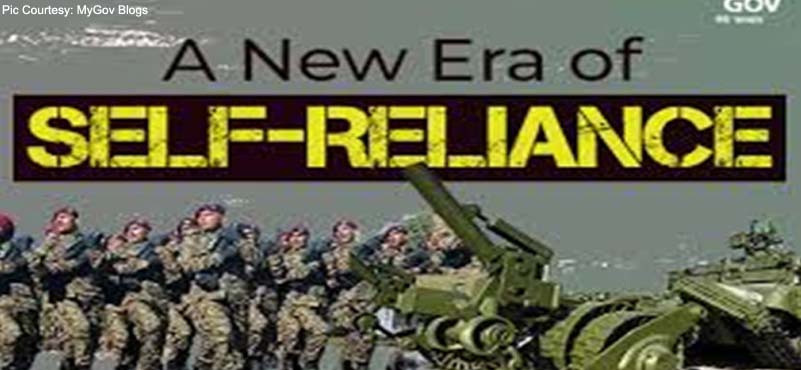
It is indeed a truism that global crises can spring up without much notice and nations must prepare themselves for it on a regular basis so as not to be caught napping. Thus, this is not the time to get distracted by short term problems or self-created internal differences. Accordingly, India must zealously prepare to improve all the constituents of Comprehensive National Power with vision and alacrity. Whether it is overall military power—adequate to face a two-front threat from China and Pakistan individually or combined – or in industrial or energy production and other fields of human endeavour— self-reliance has to be the cardinal pursuit.
In the field of diplomacy, India must continue to be far more active than it appears! To assist in resolving the current West Asian imbroglio, India must reach out to most, if not all, stakeholders of this Middle East crisis and seek a broad-based solution which provides security and economic well-being to most of the Gulf nations, Iran and Israel. India can explore cooperation among Russia, Iran, Oman, UAE, EU, UK, Japan, ROK and other nations who appear neutral and thus useful in helping resolve the current crisis. Though President Trump himself is unpredictable, the US Ambassador to India Sergei Gor can be suitably sounded to adequately inform Washington regards India’s views on resolving the Gulf conundrum.
Come what may, India must adhere to its post-independence values in the pursuit of its foreign policies and measures seeking economic self-reliance to the extent possible. A long-term vision and flexibility in approach is essential for managing the emerging geopolitical order where multipolarity, independence in a nation’s policies will transcend traditional alliances and over-dependence on big powers in the years ahead. India must take the lead to be an example, for not only the Global South but also the developed world.
As India strives for diversifying her sources of procurement for its energy needs and energizing its own production, we need to deepen and sustain our diplomatic and economic engagement with the oil producing Gulf nations and just as importantly, Russia and Iran. Which indeed we are doing already!
ABOUT THE AUTHOR
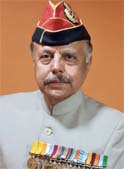 Lt Gen Kamal Davar is a veteran of the 1965 and 1971 wars and was wounded in action in the 1965 ops. In his 41 years of distinguished service has served in NEFA, Nagaland,Assam, Punjab and J&K. Was a member of the Indian Training Team in Iraq. Commanded the entire Ladakh sector, was Chief of Staff in Nagrota ( J&K) and later commanded the Corps in Punjab. After a short stint as DG Mech Forces was selected by the Government to raise India’s Defence Intelligence Agency. Is a prolific writer and a sought after speaker on strategic matters.