

Morning of Reckoning: When Time Paused and Truth Arrived
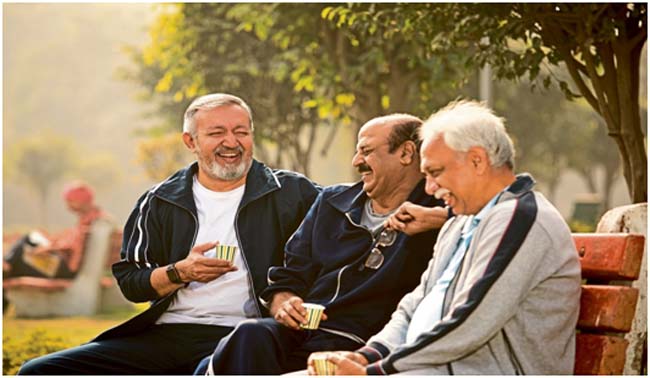
One morning, as I quietly stepped from sixty-two into sixty-three, a warm cup of tea brought with it an unusual clarity. Not the kind that arrives with urgency, but the kind that settles—softly, like sunlight entering a silent room.
For decades, life had been a procession of roles. A son. A brother. A husband. A father. A mentor. Each role worn with sincerity, sometimes with struggle, often without pause. And then, almost unexpectedly, there was space. A pause. A moment where the roles receded, and I found myself meeting the one person who had patiently waited through it all—myself.
What emerged were not grand revelations, but gentle truths. Beneath this personal realisation, another, more profound awareness began to take shape—one that extended beyond the self, into the fabric of family, society, and civilisation itself. Parenting, I realised, does not end when children grow up. It transforms. And in that transformation lies an unsettling truth: our children now belong to a world that does not fully understand the one we built. This is not merely a generational shift. It is something deeper. A quiet but undeniable transition from one civilisational framework to another.
Parenting as Dharma, Not Design
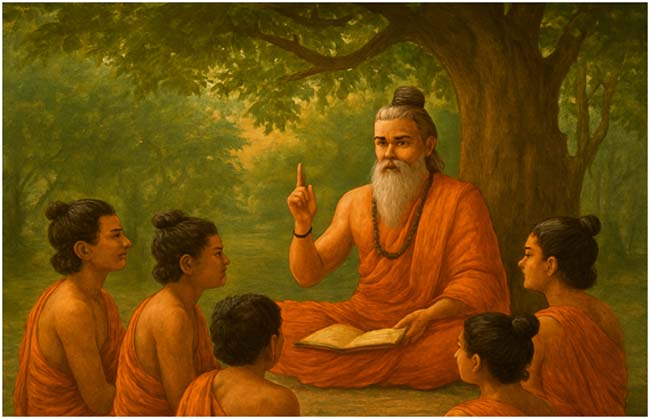
In the India we grew up in, parenting was never a subject of debate. It was not studied, theorised, or optimised. It was lived. Our parents did not speak of “boundaries.” They did not negotiate “space.” They did not seek permission to guide or correct. Parenting was not a design problem to be solved. It was a dharma to be fulfilled.
Texts like the Chanakya Niti offered practical wisdom: “Treat your child like a king till five, a servant till fifteen, and a friend thereafter.” Discipline was not cruelty. It was preparation. Affection was not indulgence. It was grounding. Parenting, in that world, was not about shaping a child’s preferences. It was about preparing a child for reality. There were no manuals. No podcasts. No expert advice columns.
There was only:
- Duty without applause.
- Sacrifice without announcement.
- Love without articulation.
And yet, it worked—not perfectly, but meaningfully.
A Life Lived in Persistence, Not in Pause
For decades, life had been defined by responsibility. We lived as most of our generation did—guided not by constant introspection, but by a steady and unquestioned sense of duty. There were bills to pay, futures to secure, families to support, and children to raise. And we did it—not with perfection, but with persistence.
What stands out in hindsight is not the absence of struggle, but the absence of hesitation. We did not ask whether we were ready; we stepped forward because life required it. Responsibility was not a burden we debated; it was a reality we accepted. There were no elaborate frameworks, no manuals, no external validations. Just an internal compass that pointed consistently towards doing what needed to be done. Years passed in this rhythm—not in dramatic leaps, but in steady, purposeful movement. It is only now, when that intensity begins to soften, that the full weight and quiet dignity of those years become visible.
The Architecture of Sacrifice
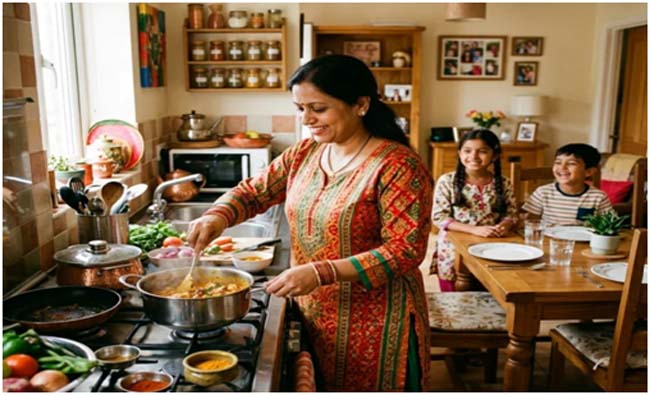
If there was a single thread that held that entire system together, it was sacrifice. One salary supported many dreams. Personal desires were quietly postponed. Vacations were rare, luxuries even rarer. A new shirt for the child often meant an old one for the parent. Education was prioritised over comfort. Stability over indulgence.
We did not raise children with theories. We raised them with trade-offs. And we did so without expectation of recognition. There were no social media posts celebrating parental effort. No language of “emotional labour.” No vocabulary for burnout. There was simply an understanding: this is what must be done.
Yet today, something subtle but significant has changed. The tragedy is not that sacrifices were made. The tragedy is that they have become invisible. Not intentionally dismissed, perhaps—but quietly unacknowledged. What we expressed through endurance, the next generation often seeks through articulation. What we considered natural, they consider optional. And in that shift lies the beginning of a deeper misunderstanding.
Turning of the Tide
Somewhere along the way, parenting stopped being an inheritance—and became an experiment. A new vocabulary entered our homes:
- Boundaries.
- Safe spaces.
- Emotional validation.
- Personal autonomy.
At first glance, these seem like signs of progress. And in many ways, they are. A more emotionally aware generation is, undoubtedly, a step forward. But every shift carries its shadow.
As noted in The Anxious Generation, modern childhood has become paradoxical—overprotected in the physical world, yet underprepared in the real one. In trying to shield children from pressure, we may have unintentionally reduced their capacity to withstand it. In India, this shift is even more complex. These ideas are not organically rooted in our cultural soil. They are often imported—adapted from societies with different histories, different family structures, and different philosophical foundations.
And so, we find ourselves in a peculiar situation: Applying modern frameworks to traditional relationships, without fully understanding either.
The Fracture of Generations
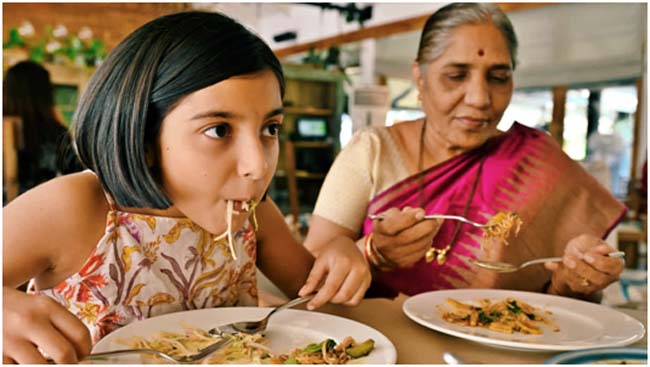
What we are witnessing today is not merely a difference in age. It is a difference in worldview—structured by entirely different realities. For the first time in history, multiple generations are not just coexisting—they are evolving at different speeds.
- Boomers built stability through sacrifice.
- Gen X absorbed pressure without protest.
- Millennials began questioning structure.
- Gen Z questions authority itself.
- Gen Alpha is born into digital immersion.
- Gen Beta will inherit an AI-shaped world.
This is not a generation gap. This is a value system rupture.
- We were shaped by scarcity. They are shaped by choice.
- We were taught to adjust. They are taught to assert.
- We endured. They articulate.
Neither is entirely right. Neither entirely wrong. But the distance between these two languages is widening.
A Quiet Question
As I sat with my tea that morning, a question lingered—not with accusation, but with curiosity:
- When did love begin to require explanation?
- When did guidance begin to feel like imposition?
- When did closeness begin to be negotiated as space?
These are not questions of right or wrong. They are questions of transition. And transitions, especially civilisational ones, are rarely comfortable.
The New Vocabulary of Distance
“Give me space.”
“Respect my boundaries.”
“Don’t impose.”
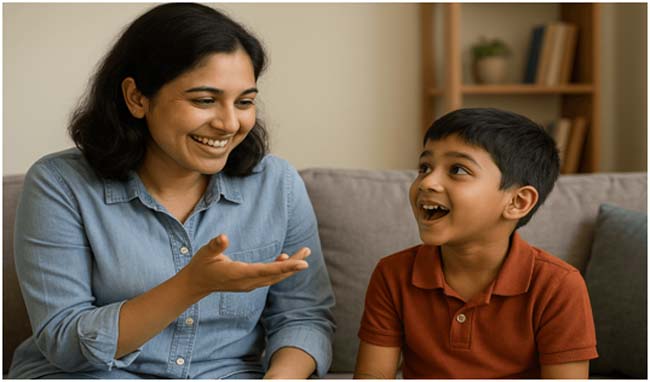
These are not rebellious phrases. They are expressions of a new emotional framework. And yet, for many parents, they land differently. In our time, closeness was survival. Families were not optional—they were foundational. Privacy was limited, but belonging was absolute.
Today, distance is often interpreted as emotional maturity. And somewhere between these two interpretations, a quiet discomfort emerges.
When did love begin to require disclaimers?
When did presence begin to feel like pressure?
Scripture and Structure: Freedom Was Never Absent
It would be incorrect to assume that Indian tradition suppressed individuality. The Bhagavad Gita itself is a dialogue—a conversation between confusion and clarity. Arjuna questions. Krishna responds. Inquiry is not discouraged; it is guided.
The Upanishadic tradition thrives on questioning. But it places questioning within a framework of discipline. Freedom, in Indic thought, was never the absence of structure. It was the mastery of self within structure.
The Gurukul system did not eliminate individuality. It delayed its expression until the individual was prepared to handle it responsibly. This is where the tension lies today. Modern frameworks often prioritise expression before preparation.
The Silent Hurt of Parents
There is a truth that is rarely spoken—not because it is unimportant, but because it is uncomfortable. Parents wait. Not for money. Not for support. But for acknowledgment.
A simple recognition: That what was done, was not easy.
Instead, what often arrives is correction.
- “You should have expressed more.”
- “You should have listened better.”
- “You should have understood our emotions.”
And perhaps, in some cases, that is true. But another truth also exists:
What we expressed through sacrifice, they now seek through language.
Gratitude has, in many cases, been replaced—not by ingratitude—but by expectation. And expectations, unlike gratitude, are never fully satisfied.
The Reversal: Parenting the Parents
For the first time in history, something subtle but profound is happening. Parents are being re-educated. Not through books. Not through institutions. But through their own children.
We are learning:
- New emotional vocabularies.
- New boundaries of interaction.
- New definitions of respect.
This is not entirely negative. In many ways, it is necessary. But it comes with a risk. Adaptation must not become surrender. If every inherited value is questioned, and nothing is preserved, what exactly are we passing forward?
Beyond Extremes: The Middle Path
Every age is tempted by extremes. One clings to the past with rigidity, fearing that any change will dilute values. The other rushes toward the new with unquestioned enthusiasm, assuming that modernity is inherently superior. But civilisations that endure are not those that choose sides—they are those that learn to integrate. India has, for centuries, followed this quiet principle of balance. The idea of dharma was never about blind obedience, nor about unchecked freedom; it was about harmony between the individual and the larger order of life.
In the context of parenting, this balance becomes even more critical today. To reject traditional values entirely is to sever ourselves from a deep reservoir of lived wisdom—resilience, patience, and a sense of responsibility that sustained generations through hardship. Yet, to dismiss modern insights into emotional well-being and individuality is equally limiting. The middle path, therefore, is not a compromise of weakness but a position of strength. It asks us:
- to retain discipline without becoming authoritarian.
- to allow freedom without losing direction.
- to embrace change without forgetting continuity.
Children do need wings—but wings must grow from roots that are nourished, not denied. And roots must not become weights that prevent flight. When both coexist, parenting transforms from control into guidance, and from expectation into understanding.
From the past, we must retain:
- Resilience.
- Responsibility.
- Depth of commitment.
From the present, we must embrace:
- Emotional awareness.
- Open communication.
- Respect for individuality.
Discipline without empathy becomes rigidity. Empathy without discipline becomes fragility. The future demands both.
Reframing Parenting

To move forward meaningfully, parenting itself must be gently reframed—not abandoned, not overhauled, but refined. The authority that once defined parenthood can no longer operate in isolation; it must now coexist with dialogue. This does not diminish the role of the parent—it deepens it. To guide without listening is no longer effective, just as to listen without guiding is incomplete.
Parents of today are being called to learn a new language—one of emotional articulation, of expressing care not only through sacrifice but also through words. This may feel unfamiliar, even uncomfortable, to a generation that equated love with provision and endurance. Yet, it is a language worth learning, not because the past was inadequate, but because the present demands a broader expression of the same sincerity.
At the same time, the younger generation must come to recognise that the freedoms they exercise are not self-created; they are inherited. The stability they enjoy was built through years of unseen effort, and that legacy deserves acknowledgment, not dismissal. Respect, therefore, must evolve—not as unquestioned obedience, but as conscious appreciation. Families must begin to function less as hierarchies and more as ecosystems of mutual learning. Parents will adapt, children will question, but both must remain anchored in a shared understanding that relationships are not transactions to be negotiated, but bonds to be nurtured. In this reframing lies the possibility of restoring both connection and continuity.
Every generation believes it is right. But wisdom lies in recognising that each generation is incomplete without the other.
The future of parenting in India will not be shaped by choosing between:
- Tradition or modernity.
- Authority or freedom.
It will be shaped by combining them meaningfully. Let:
- Technology guide the mind.
- Ancient spiritual wisdom anchor the soul.
- Practical societal values nurture the heart.
This is not compromise. This is completion.
Final Reflection
There comes a stage in life when roles begin to soften, and identities that once felt permanent reveal themselves to be temporary. Parenting, perhaps the most defining of these roles, gradually steps back, leaving behind not emptiness, but a quiet fullness. In that stillness, one begins to see life with a different clarity—not as a series of achievements or responsibilities fulfilled, but as a journey of becoming. We did what we could, with what we knew, in the circumstances we were given. There were imperfections, certainly, and moments we might revisit if we could. But there was also intention, sincerity, and a steadfast commitment to those we loved. As we stand at this intersection of past and future, the way ahead does not demand certainty; it asks for balance.
Let the mind remain open to technology and the evolving world it brings. Let the soul remain anchored in the timeless depth of spiritual wisdom that reminds us who we are beyond roles and expectations. And let the heart remain guided by simple, practical values—kindness, responsibility, and respect. If these three can walk together, then the apparent conflict between generations need not divide us. It can, instead, refine us. We spent our lives raising our children. In the quiet that follows, life offers us a final, profound invitation—to raise our own understanding, to deepen our awareness, and to walk forward not as defenders of one way or another, but as bridges between them.
ABOUT THE AUTHOR

Lt Gen Rajeev Chaudhry (Retd) is a social observer and writes on contemporary national and international issues, strategic implications of infrastructure development towards national power, geo-moral dimension of international relations and leadership nuances in changing social construct.