

Two people walk away from the same conversation. One feels insulted; the other believes they spoke honestly. One remembers a necessary correction; the other remembers public humiliation. Each retells the incident with conviction, and each wonders how the other could possibly see it differently. Neither may be lying. They may simply be carrying different truths from the same moment.
We are so certain of what we have seen, felt and understood that we mistake our viewpoint for the whole picture. We defend our truth as though listening to another must diminish our own. Disagreement becomes a battle for victory.
Hindu wisdom offers an alternative. It does not ask us to abandon discernment; it asks us to approach life with a larger mind. The Rig Veda declares, “Ekam sat vipra bahudha vadanti”—Truth is one; the wise speak of it in many ways. This is not a licence to treat every assertion as fact. It is an invitation to humility: what we comprehend may be genuine, yet incomplete; what another sees may reveal a dimension we have missed.
Swami Vivekananda carried this spirit to the Parliament of Religions in Chicago in 1893. He said, “We believe not only in universal toleration, but we accept all religions as true.” His choice of words matters. Toleration can imply that we merely put up with another person’s belief. Acceptance asks more of us: to recognise that another path may hold meaning and dignity, even when it differs from our own. Vivekananda was not asking people to erase their convictions, but to rise above the arrogance that makes conviction hostile.
This spirit also echoes in Vasudhaiva Kutumbakam—the world is one family. A family is not made harmonious because every member thinks alike; it endures when difference is held within mutual regard. The ideal asks us to widen belonging beyond our own circle, and to see humanity not as rival camps, but as neighbours sharing one home.
The Bhagavad Gita offers an insight. In Chapter 4, Verse 11, Krishna says that people approach the Divine in different ways and are met accordingly; human beings follow different paths. People arrive at their beliefs through temperaments, histories, questions and experiences. Understanding those journeys can be more fruitful than ridiculing their destinations.
Consider two siblings recalling their father. One remembers discipline, strict rules and expectations that felt impossible to satisfy. The other remembers sacrifice, long working hours and a man who quietly secured his family’s future. Their memories do not necessarily cancel each other out. One may be describing the cost of the father’s methods; the other, the love behind his efforts. To hear both is not to pronounce every action right. It is to see a fuller human picture.
This distinction matters because not every “truth” is the same kind of truth. A verifiable fact must answer to evidence. A personal experience must be heard with respect, even if another person experienced the event differently. An interpretation can be examined, questioned and revised. Confusion arises when we treat a feeling as proof of every factual claim, or dismiss a person’s pain simply because our intentions were different. We need both intellectual honesty and emotional generosity.
Political opponents are branded enemies; religious difference becomes suspicion; generational disagreement is reduced to accusations of ignorance or decline. Online, the quickest insult often travels farther than the most thoughtful question. We enter conversations armed with rebuttals, listening only for the weakness we can expose. Yet democracy, science and family life all depend on the ability to disagree without denying the other person’s dignity. Progress requires challenge; society requires respect.
The Hindu idea of anekāntavāda, especially associated with Jain philosophy, adds another valuable lens: reality is complex, and a single standpoint may not capture all of it. One feels the trunk and describes a snake; another touches a leg and describes a pillar. Each reports something real, but neither has grasped the whole animal. The lesson is not that all descriptions are equally complete. It is that perspective should make us curious before it makes us certain.
Respect, therefore, is not surrender. We must challenge falsehood, resist injustice and refuse to excuse cruelty merely because someone calls it their truth. Compassion does not require moral confusion. We can say, “I understand that this is how you experienced it,” without agreeing with every conclusion drawn from that experience. We can hold our ground while leaving the door open to evidence, reflection and change.
The test begins in intimate relationships. A spouse may hear criticism where the other intended concern. A parent may call a restriction protection while a child experiences control. A colleague may believe a blunt remark was efficient, while its recipient carries the sting for years. Intent matters, but so does impact. The moral response is not to insist, “You misunderstood me,” and end the discussion. It is to ask, “What did my words feel like to you?” That question can open a door that argument keeps shut.
This is the moral pivot: from proving ourselves right to becoming willing to understand; from certainty without listening to conviction tempered by humility. We need not agree on everything to live together. We need only recognise that another person’s dignity is not conditional on their agreeing with us.
Wisdom begins when we hold two thoughts at once: I may have good reasons for seeing the world as I do, and another person may have good reasons for seeing it differently. I must examine evidence, remain faithful to conscience and still make room for what I do not know.
The world does not need a truth stripped of courage, nor a compassion stripped of discernment. It needs people strong enough to defend what is right and humble enough to keep learning. Our own truth may be sincere, even profound; it is not always the whole truth.
The highest measure of wisdom is not how fiercely we defend our truth, but how generously we make room for another’s.
ABOUT THE AUTHOR
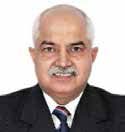
Lt Gen Rajeev Chaudhry (Retd) is a social observer and writes on contemporary national and international issues, strategic implications of infrastructure development towards national power, geo-moral dimension of international relations and leadership nuances in changing social construct.