The Human Cost of War Beyond the Battlefield
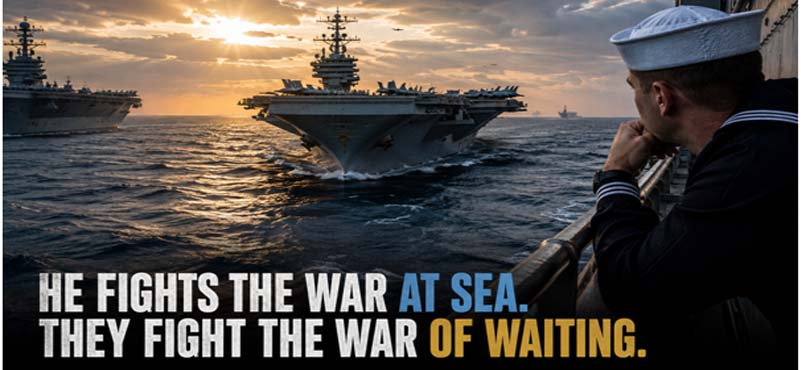
A warship can carry thousands of men and women across oceans, sustain itself for months and remain ready to fight. What it cannot replenish indefinitely is the human capacity to endure. The recent reports of sailors aboard the USS Abraham Lincoln attempting to jump overboard after more than 250 consecutive days at sea are therefore disturbing not merely as a story of military stress, but as a reminder of the human being hidden behind every deployment statistic.
Yet the more important question is not whether a soldier or sailor can endure hardship. Of course he can. Military service has always demanded extraordinary endurance. A professional soldier does not choose his battlefield according to convenience. Once a legitimate government has decided that military force is necessary and the order is given, the soldier’s duty is to fight—without hesitation, without bargaining and without allowing personal discomfort to dilute professional responsibility.
That is precisely what makes the question of war so morally serious. The soldier is expected to obey the mission. The political leadership is responsible for justifying the mission. The distinction is fundamental. A soldier should not be required to decide, in the middle of a battle, whether the war is worth fighting. That decision belongs to those who send him there.
And there is someone else who pays for that decision. The family. The soldier goes to war. The family goes to waiting.
A wife keeps the telephone beside her bed. A mother watches the news without admitting why. A father learns to read military maps and casualty reports without ever having been taught how. A child asks when the absent parent will return and gradually learns that adults sometimes answer questions they cannot really answer.
The family does not know the operational plan. It does not know the threat assessment, the commander’s intent or the probability of escalation. It knows only that someone it loves is somewhere in dangerous conditions. The soldier may know where the bullets are coming from. The family does not. This is the invisible battlefield of war.
We measure war in kilometres of territory captured, sorties flown, missiles fired, ships sunk and soldiers killed. We count destroyed buildings, displaced populations and economic losses. We rightly remember civilians who lose their homes, children who become orphans overnight, schools and hospitals reduced to rubble, and communities torn apart by violence. War can redraw borders and shatter economies for generations.
But there is another casualty figure that never appears on the military balance sheet: the number of people who continue living with the consequences. A birthday missed. A child’s first day at school. A wedding attended through a screen. A parent growing old alone. A festival celebrated with an empty chair. A spouse making every family decision without the person with whom those decisions were meant to be shared. And when the soldier does not return, waiting does not end. It changes its character.
For the nation, the war eventually becomes history. For the family, it becomes biography. The photograph remains. The uniform remains. The medals remain. The memories become more vivid with time. A mother may still instinctively look towards the gate. A child grows up knowing a parent through photographs and stories. A spouse builds a life around an absence that cannot be repaired.
This is why the families of soldiers are not merely spectators of military service. In a very real sense, they serve too. The uniform may belong to one person, but the sacrifice rarely does.
Yet none of this should become an argument against war or against the soldier’s willingness to fight. Some wars are necessary. Some wars are just. There are moments when a nation has no responsible alternative to the use of force. When that moment comes, the soldier must be able to fight with complete conviction. His courage should never be diluted by the fear that the nation itself is uncertain about the purpose of his sacrifice.
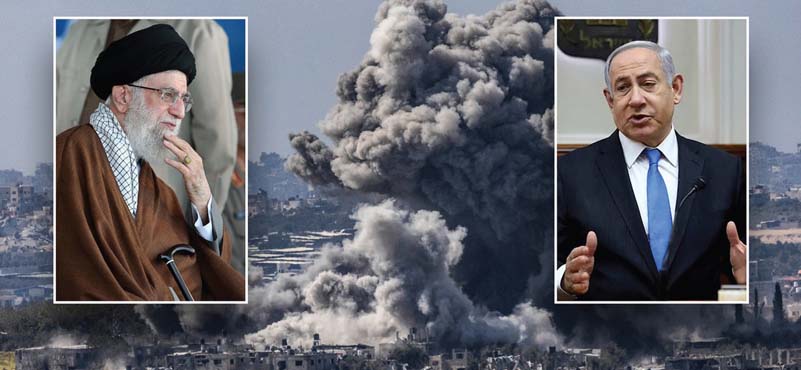
The difficult question therefore lies not with the soldier, but with those who decide where he must go. The USS Abraham Lincoln brings that question into sharp focus. The carrier was originally destined for the Pacific but was diverted to the Middle East, and its deployment was repeatedly extended. The conflict has now entered its sixth month, while the Strait of Hormuz has become one of its central strategic flashpoints.
Why, therefore, is an American sailor being asked to remain for so long in the waters around Hormuz? Is the objective the protection of freedom of navigation? Deterrence? The destruction of Iranian military capabilities? Preventing Iran from acquiring a nuclear weapon? Protecting regional allies? Or some combination of these?
There may be legitimate strategic reasons for every one of these objectives. But a democracy that sends its young men and women into war must be able to articulate not merely why the fighting began, but what success looks like and where the fighting ends.
That is where the experience of Vietnam, Iraq and Afghanistan remains relevant. The lesson is not that those wars had no purpose at all. It is that military operations become morally and strategically corrosive when the original objective becomes blurred, expands beyond its initial purpose or loses connection with a clearly achievable political end state. A soldier can endure extraordinary hardship when he knows what he is fighting for. What becomes corrosive is hardship without purpose, sacrifice without closure.
The emerging debate around the Iran war illustrates why candid military advice matters. General Dan Caine, Chairman of the Joint Chiefs of Staff, has reportedly expressed concern about the limitations and risks of further escalation and the need for an eventual off-ramp. The very existence of such reporting highlights an essential principle of civil-military relations: military professionals must be able to tell political leaders not only what can be done, but what it may cost, what may go wrong and what cannot realistically be achieved.
The earlier removal of Army Chief of Staff General Randy George adds another, different dimension to that principle. George was asked by Secretary of War Pete Hegseth to retire immediately on 02 April 2026, cutting short his normal term. The Pentagon did not publicly give a detailed reason for the decision; reporting has pointed to broader disagreements over Army leadership and senior-officer issues.
But the episode raises a larger institutional question. Civilian control of the military is indispensable to democracy. So is professional military candour. The military must ultimately obey civilian authority; civilian authority, in turn, must have the confidence and humility to hear uncomfortable professional advice before committing its soldiers to prolonged danger.
This is where the ancient idea of Just War acquires contemporary relevance. A just war requires more than military capability. It requires just cause, legitimate authority, right intention, proportionality and reasonable prospects of success. In modern strategic terms, one more question is indispensable: What is the end state?
Just War is not an argument against war. It is an argument against unjustified war.
Indeed, the courage of soldiers should make political leaders more careful about war, not less. The soldier’s willingness to sacrifice cannot become a blank cheque for political decision-makers. We should never ask the soldier to doubt his duty once he has been sent to fight. We should ask ourselves to question the mission before we send him. Because the soldier is not the only one who bears the consequences of the decision.
The soldier’s duty is to fight without hesitation once the nation has decided. The family’s burden is to wait without knowing what tomorrow will bring. But the political leadership carries a duty that comes before both: to ensure that the war is necessary, that its purpose is just, that its costs are understood and that its end is visible.
For the soldier fights the war at the front. His family fights the war of waiting. And if a nation asks either to make that sacrifice, the least it owes them is to know why.
ABOUT THE AUTHOR

Lt Gen Rajeev Chaudhry (Retd) is a social observer and writes on contemporary national and international issues, strategic implications of infrastructure development towards national power, geo-moral dimension of international relations and leadership nuances in changing social construct.