

India enters the second half of FY 2026–27 with a combination of strong headline growth, substantial macroeconomic buffers and a more difficult external environment. Real GDP growth of 7.8% in the first quarter exceeded most expectations; high-frequency indicators have improved in September; the financial system is sounder than in previous cycles; and foreign-exchange reserves provide a meaningful shield against volatility. Yet the economy cannot be assessed through headline growth alone.
India certainly can post strong growth numbers. The harder job is making that growth durable, and that means raising productivity, getting private firms to invest, building manufacturing that creates jobs, broadening what we export, and investing in skills and technology. Policy will be judged on how well it does that.
While the recent data is promising, we shouldn’t take our foot off the gas. Growth has strengthened; inflation has edged higher; the trade deficit remains large; the rupee is exposed to global developments; and geopolitical fragmentation has made imported energy, strategic components, finance and market access less predictable. India’s economic story remains positive, but its next phase will be more demanding than the previous one.
Global Economy: Growth Amid Disorder
The global economy has held up better than expected, but the underlying picture remains fragile and uneven. The International Monetary Fund’s July 2026 World Economic Outlook Update projects global growth at 3.0% in 2026 and 3.4% in 2027, compared with an average of 3.5% in 2024 and 2025. It expects global headline inflation to rise from 4.1% in 2025 to 4.7% in 2026 before moderating to 3.9% in 2027. It isn’t a full-blown recession, but calling it a healthy expansion would be a stretch.
The world economy is operating under the shadow of several interconnected risks: continuing conflict in West Asia, with implications for energy supplies, maritime trade and freight costs; growing tariff uncertainty, trade restrictions and strategic industrial policies; and heightened financial-market volatility driven by interest-rate expectations, currency movements and elevated public debt. Supply chains are being reorganised by national security, resilience and strategic technologies, while recoveries remain uneven, particularly across manufacturing-intensive and export-dependent economies. There is also a risk that investment in artificial intelligence (AI), semiconductors and digital infrastructure remains geographically concentrated, limiting its ability to generate a broad-based productivity revival.
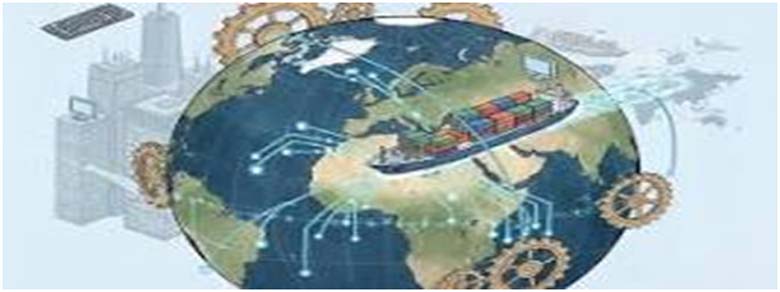
The IMF’s diagnosis is appropriately nuanced: technological investment and economies’ ability to adapt to shocks are supporting global growth, but war, higher energy costs, trade fragmentation, and policy uncertainty are constraining it. The global trade cycle has also become more uncertain. The IMF projects volume growth in global trade to slow from 5.0% in 2025 to 3.5% in 2026, before recovering to 4.3% in 2027.
For India, the global environment is a mixed bag. Its dependence on imported crude, electronics, intermediate inputs, capital goods and critical minerals remains a vulnerability. A sharp rise in oil prices, disruption in shipping or a stronger dollar can quickly raise the import bill, put pressure on the rupee and make inflation management more difficult.
The era of easy globalisation is clearly giving way to a more fragmented world economy. Trade and investment are increasingly being shaped by geography, strategic interests and technology. For India, the answer cannot be either excessive dependence or isolation. It must build strength in critical sectors while remaining closely integrated with global markets, technology and supply chains.
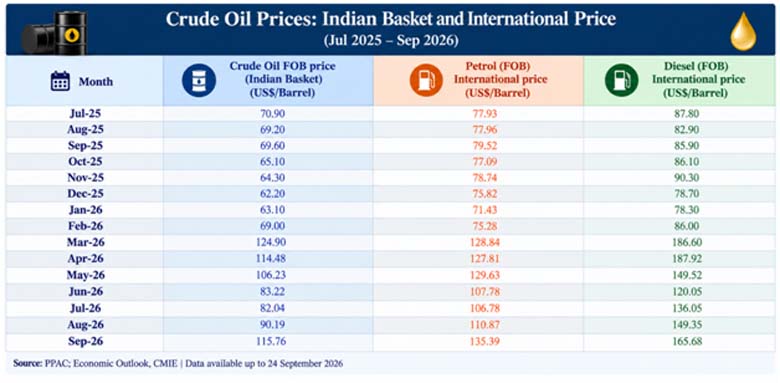
Note: The official Index of Industrial Production (IIP) data for August 2026 will be released by the Ministry of Statistics and Programme Implementation (MoSPI) on October 12, 2026, adhering to the standard six-week reporting lag.
India’s Growth: Strong But Uneven
India’s real GDP expanded by 7.8% year-on-year in the April–June quarter of FY 27, compared with 6.9% in the corresponding quarter of the previous financial year. Real GDP at constant prices was estimated at ₹81.36 lakh crore, against ₹75.46 lakh crore a year earlier. Thus, India remains one of the fastest-growing large economies. It also underscores the role played by domestic demand, public investment, services, construction, financial intermediation and improving industrial activity. While retaining a cautious policy stance, the RBI projects real GDP growth at 6.7% for FY 27. Its quarterly growth projections are 7.0% for Q1, 6.4% for Q 2, 6.5% for Q 3 and 6.8% for Q 4. The difference between the realised Q1 rate of 7.8% and the RBI’s full-year forecast of 6.7% suggests some expected moderation in the remaining quarters, reflecting base effects, external headwinds, inflation risks and uncertain global demand. The RBI is right to be wary. A 7.8% quarter is welcome, but one strong number doesn’t make a trend.
The September flash Purchasing Managers’ Index provides additional grounds for cautious optimism. The HSBC Flash India Composite PMI rose to 56.5 in September from 54.3 in August, indicating an acceleration in private-sector activity. Manufacturing improved sharply, with the flash manufacturing PMI rising to 55.7 from 52.8, while the services business-activity index rose to 55.8 from 54.1. This rebound assumes significance because August had raised concerns about manufacturing momentum. The August manufacturing PMI had slipped to 52.8, its weakest reading in around five years, even as the services sector continued to expand. The September recovery suggests that the August weakness may have been temporary rather than the beginning of a sustained manufacturing slowdown.
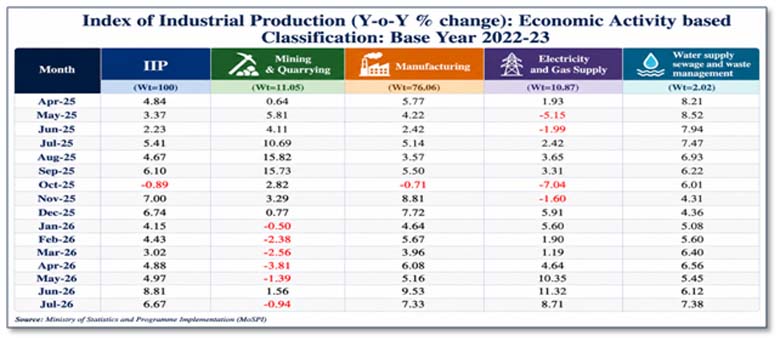
Industrial activity remains reasonably healthy. The Index of Industrial Production (IIP) grew by 6.7% year-on-year in July 2026, led by 7.3% growth in manufacturing and 8.7% growth in electricity and gas supply. This is not evidence of industrial distress. Rather, it points to a recovery that remains uneven across industries, months and demand segments. Policy should prioritise broad-based growth driven by capital investment, expanded domestic manufacturing, and large-scale job creation.
Employment Challenge
India’s employment challenge is not simply about creating more jobs; it is about creating the right kind of jobs at sufficient scale. High-productivity sectors, such as IT, finance, pharmaceuticals and advanced manufacturing, can generate well-paid employment, but they cannot absorb the millions of workers entering the labour market each year. A large part of the workforce still needs opportunities in labour-intensive manufacturing, construction, logistics, tourism, food processing, retail and other formal services to drive economic growth and structural transformation. Labour-intensive industries can create jobs for workers with varying levels of education and skill. But this requires competitive industrial clusters, reliable power and transport, easier access to finance, better skilling and apprenticeship systems, and a regulatory environment that allows smaller firms to grow.
The composition, quality, visibility and perceived status of employment are also important. India needs to move workers gradually from low-productivity informal activities into more productive and better-paid work. This means expanding formal employment, improving social security, raising worker productivity and giving MSMEs the conditions to scale up. The challenge is therefore not just to sustain a high GDP growth rate, but to ensure that growth translates into productive work and rising incomes for a much larger share of the population.
India’s Jobs Story
In his Times of India article (September 23, 2026), “India’s Good Jobs Story Is Better Than It Looks,” Professor Neeraj Kaushal challenges the near consensus that India is failing to create “good jobs.” She argues that this pessimism is more qualified than it is often presented to be: several data sources tell a more encouraging story about employment creation and economic opportunity. Yet the improvement should not obscure an important shortfall. The growth of formal-sector jobs has not kept pace with the rising expectations of India’s young, increasingly educated population.
The deeper problem is therefore not merely unemployment, but aspiration. Many young Indians seek stable, white-collar, urban and secure employment, especially government jobs, even though the private sector offers a larger pool of opportunities. Government employment retains an exceptional attraction because it promises security, predictable income, pensions or benefits, social status and protection from arbitrary job loss. Private employment, by contrast, is often seen as uncertain, demanding and insufficiently rewarding.
India needs to broaden the definition of a “good job.” Productive work in manufacturing, construction, logistics, retail, care services, tourism, repair, digital platforms and modern services must acquire greater dignity, better wages, social protection and credible career progression. The policy task is not only to create more jobs, but to make non-government employment more secure, skilled, formal and aspirational. A growing economy cannot rely indefinitely on a narrow queue for government vacancies; it must build many pathways to respectable livelihoods
Stock Market Conundrum
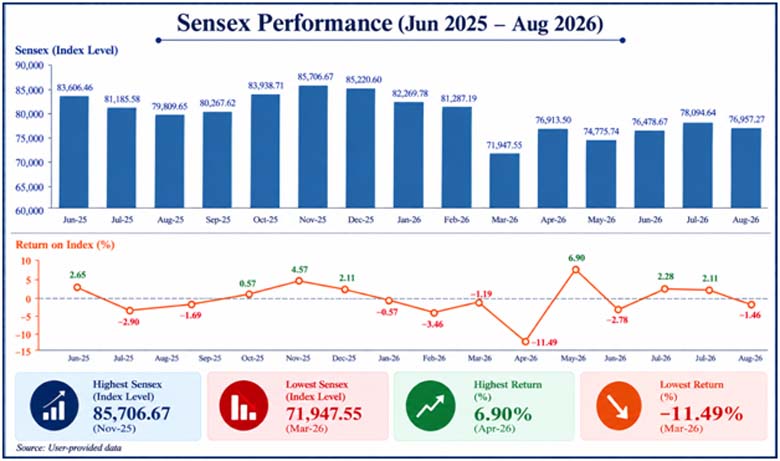
The stock market return is a function of earnings, valuation, interest rates, liquidity and investor expectations. In an excellent Times of India article, “India to China, Why Fast Growth Doesn’t Mean Roaring Markets” (September 28, 2026), Somnath Mukherjee brings out that rapid economic growth does not automatically translate into spectacular or sustained stock-market returns.
The intuition that “a fast-growing economy must have a booming market” is appealing, but incomplete. Equity investors do not buy GDP; they buy claims on the future cash flows of listed companies. The relationship between the two can be weak, delayed, or even negative over substantial periods.
First, the listed corporate universe represents only a limited and uneven slice of the economy, and much of the economy may be unlisted, low-margin or outside the corporate sector. In India, a large part of output and employment lies in agriculture, informal activity, unlisted enterprises, public services and small businesses. Even within the formal economy, rapidly expanding sectors may not necessarily generate proportionate profits for shareholders. A country can grow because more people are working, investment is rising, infrastructure is being built, or services are expanding—without that growth accruing meaningfully to the shareholders of listed firms.
Second, markets are forward-looking. By the time high growth appears in official data, investors may have already priced in several years of optimistic assumptions. Strong growth, then, ceases to be a surprise; it becomes the baseline against which companies are judged. If actual earnings growth merely meets expectations, rather than exceeding them, share prices may stagnate despite impressive GDP numbers. Profits may be concentrated in a few firms or affected by costs, competition and policy. Markets rise not simply when conditions are good, but when they turn out to be better than what investors had already assumed.
Third, the composition of growth matters. Economic expansion driven by competitive intensity, low-margin manufacturing, government capital expenditure, or large infrastructure outlays may enlarge national output without immediately lifting corporate profitability. In some sectors, rapid demand growth brings new capacity, more competitors and pressure on prices. Revenue may rise, but margins can narrow. For an equity investor, growth in sales is not the same thing as growth in earnings, and growth in earnings is not necessarily the same thing as growth in per-share earnings. Dilution from fresh issuance can reduce per-share gains.
That final distinction is especially important. New equity issuance—whether through initial public offerings, qualified institutional placements, rights issues or promoter stake sales—can broaden the market and finance expansion, but it can also dilute the claims of existing shareholders. If profits do not rise faster than the share count, earnings per share can disappoint even when the company itself becomes larger. A vibrant primary market, therefore, is not automatically synonymous with high returns in the secondary market.
Valuation, Rates and Risk
Valuation is another decisive variable. A company can be excellent, an economy can be expanding rapidly, and yet the stock could deliver modest returns if investors paid too much at the outset. When price-to-earnings multiples are already elevated, future returns depend heavily on continued earnings upgrades and on the willingness of investors to accept still higher valuations. Both are difficult to sustain indefinitely.
Higher global interest rates compound this challenge. They raise the discount rate applied to future corporate earnings, make bonds relatively more attractive, increase borrowing costs and can reduce the appetite for risk assets across emerging markets. India’s domestic economic fundamentals may remain resilient, but its equity market is not insulated from global liquidity cycles, US bond yields, currency movements, commodity prices or episodes of geopolitical stress. The result is a market environment in which there may be fewer positive surprises available. When investors already expect robust GDP growth, improving profits, continuing reforms, strong retail inflows and resilient domestic demand, the scope for further upside narrows. By contrast, the downside from earnings misses, a crude-oil shock, a global slowdown, an abrupt shift in monetary conditions or a stretch in valuations can be considerable.
A surging economy can thus coexist with a flat market if growth is already priced in, earnings fail to exceed ambitious expectations, valuations compress or global conditions turn less favourable. Conversely, markets can perform well even during moderate economic growth if earnings recover from a low base, inflation moderates, interest rates fall or investors become more optimistic than they had previously been.
Investor’s Question
For investors, the relevant question is not simply: How fast is India growing? Some contextually significant questions are: Which listed companies will capture that growth? Can they protect margins amid rising competition and input costs? Will profits grow faster than the number of shares outstanding? Are current valuations already discounting the favourable scenario? What is the likely path of interest rates, liquidity and global risk appetite? Are earnings expectations realistic or excessively optimistic?
As I have repeatedly argued, these are valid concerns and must be factored into a holistic assessment of the stock market. It, however, needs no clairvoyance to perceive that the stock market is not a referendum on national progress; it is not a microcosm of India’s development. The stock market is a constantly revised estimate of future per-share corporate cash flows, discounted for risk and compared with the expectations already embedded in prices.
Inflation and Monetary Policy
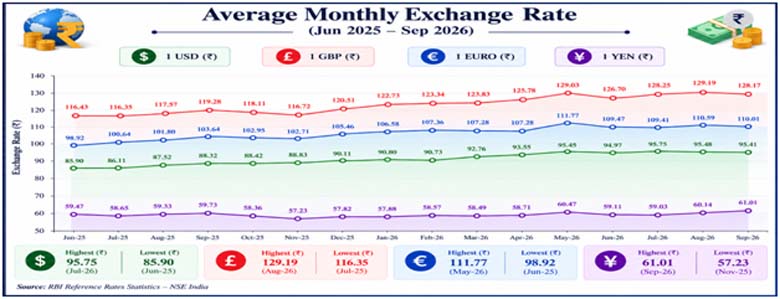
Inflation has re-emerged as the principal macroeconomic constraint. The all-India consumer price index rose by 4.82% year-on-year in August 2026, up from 4.45% in July. Rural inflation was 5.23%, compared with 4.31% in urban areas. This rural-urban divergence is especially relevant because food prices, fuel costs and income insecurity affect rural households more sharply. The inflationary pressures reflect familiar vulnerabilities in the Indian economy: weather-related food shocks, supply-chain bottlenecks, higher global energy and transport costs, rupee depreciation and costlier imported inputs. Geopolitical tensions add another layer of uncertainty, particularly through their impact on crude oil, freight rates and other internationally traded commodities.
The RBI has accordingly adopted a cautious posture. In its August 2026 policy review, the Monetary Policy Committee unanimously retained the policy repo rate at 5.25% and maintained a neutral stance. It projected CPI inflation at 5.0% for FY 2026–27, with inflation expected at 4.7% in the second quarter, 5.9% in the third quarter and 5.5% in the fourth quarter. Core inflation is projected at 4.3% for the year.
This projection is revealing. The RBI expects inflation to become more uncomfortable later in the year, not less. The forecast of 5.9% for the third quarter is significantly above the midpoint of the inflation target and reflects concern about food prices, energy costs, global disruptions and the potential effects of liquidity conditions.
The RBI’s decision to hold the repo rate should be read not as a lack of confidence in growth but as a recognition of policy asymmetry. If the central bank eases too aggressively and inflation accelerates, the eventual policy correction could be more disruptive. If it keeps rates unchanged while growth remains above 6%, the cost of caution is comparatively smaller. Monetary policy must protect the purchasing power of households, especially lower-income households for whom food and fuel constitute a larger proportion of expenditure. Yet monetary policy alone cannot manage food inflation. The response requires broad-spectrum measures, viz., better crop planning, improved storage, modernised agricultural markets, timely imports where necessary, rational export restrictions, cold-chain investment and more reliable agricultural data. Inflation management in India is, ultimately, as much a supply-side challenge as a monetary one.
External Sector: Strengths and Strains
India’s external sector offers a mixed picture. Services exports remain a major source of strength, but merchandise trade continues to reveal the country’s structural import dependence.
In July 2026, merchandise exports reached a record US$44.24 billion, while merchandise imports were US$76.22 billion. The merchandise trade deficit was therefore close to US$32 billion. Services exports were estimated at US$35.89 billion and services imports at US$18.94 billion, yielding a services surplus of about US$16.95 billion. Combined merchandise and services exports stood at US$80.14 billion, while total imports amounted to US$95.16 billion, leaving an overall trade deficit of US$15.03 billion.
The export performance is encouraging. Merchandise exports rose from US$36.98 billion in July 2025 to US$44.24 billion in July 2026. But the import rise is equally significant, from US$64.86 billion to US$76.22 billion. The April–July merchandise trade deficit widened to US$118.60 billion, compared with US$96.66 billion in the corresponding period of the previous year. This development should be interpreted carefully. Not all import growth is undesirable. Higher imports of capital goods, machinery, electronics, industrial inputs and technology components can raise future productive capacity. Imports of equipment for renewable energy, electronic manufacturing, telecommunications and infrastructure may support long-term industrial transformation.
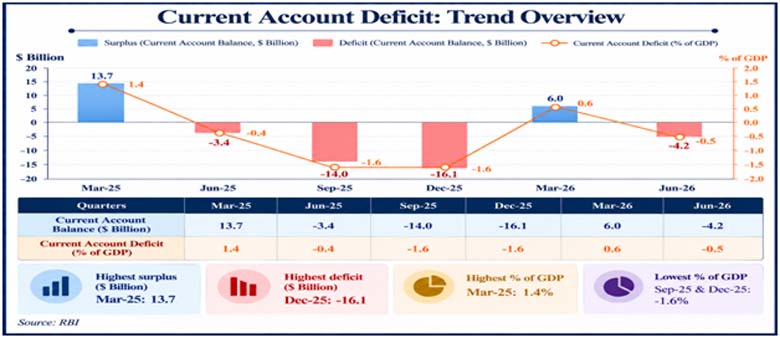
However, India’s import basket remains a source of vulnerability. Crude oil and petroleum products dominate essential imports, while electronics, semiconductors, advanced machinery and capital goods remain dependent on foreign suppliers. Gold imports can widen the trade deficit, while imported intermediates are crucial for manufacturing and exports. This dependence leaves external balances exposed to global price and supply shocks. The services surplus partly offsets the merchandise deficit, but it cannot be the sole long-term answer. India must aim to build an external sector in which competitive manufacturing complements, rather than depends upon, high-value services exports.
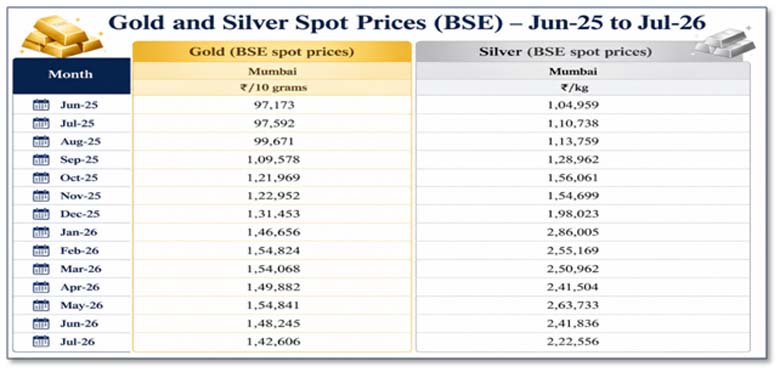
Foreign-exchange reserves, however, remain a substantial national asset. They give the RBI room to manage excessive volatility, reassure investors and cover external-payment obligations during difficult periods. Forex reserves are a safety net, not a substitute for a competitive economy. Real protection against global shocks requires greater exports, reduced energy imports, strengthened local manufacturing, and infusion of steady, long-term investment.
Fiscal Policy and Investment
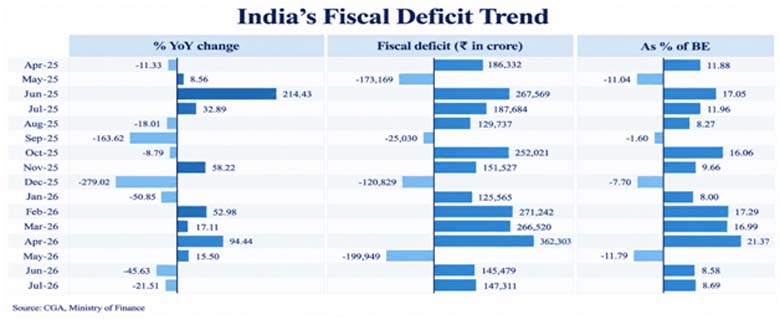
India’s fiscal position has improved substantially from the pandemic years, and the quality of expenditure has also improved because of the sustained emphasis on public capital formation. Roads, railways, ports, airports, power transmission, urban infrastructure, digital public infrastructure and defence manufacturing have received greater policy attention.
Public capital expenditure has played an important counter-cyclical and developmental role. It has helped sustain construction activity, crowd in private investment in some sectors, improve logistics and create confidence in long-term demand. In an economy with large infrastructure gaps, this strategy has been justified. But public investment has limits; it cannot permanently substitute for a broad-based private investment cycle. The next stage of growth requires corporate investment to expand across sectors, regions and firm sizes. Private capital expenditure must move beyond a narrow set of large corporates, renewable-energy firms, infrastructure companies and digital businesses. This requires sustained demand growth, greater certainty over market access, lower logistics and compliance costs, and easier access to long-term finance, particularly for MSMEs and mid-sized firms. Equally important is a stable policy environment covering taxation, land, labour, energy, regulation and contract enforcement, enabling businesses to invest confidently.
The quality of credit expansion is important. India’s banking system is far healthier than during the period of high non-performing assets (NPAs). Improved balance sheets, recapitalisation, stronger provisioning, digitalisation and better recovery mechanisms have increased resilience. However, credit growth should increasingly finance productive investment, viable working capital and technology upgradation, rather than disproportionately supporting consumption, speculative real-estate activity or unsecured household borrowing.
India also needs to deepen its corporate bond market, so that companies have access to a wider and more reliable source of long-term finance. Banks remain central to India’s financial system, but long-gestation infrastructure, urban-development and industrial projects require deeper pools of patient capital. A more liquid and inclusive corporate bond market could lower funding costs, improve risk allocation and reduce excessive reliance on bank credit.
Growth Must Eventually Produce Jobs
The economy needs jobs across multiple skill sets, viz., sophisticated jobs in artificial intelligence, finance, pharmaceuticals, biotechnology, semiconductor design, advanced manufacturing and research. But it also needs large-scale employment. Given the large and growing size of India’s workforce, growth cannot depend mainly on capital-intensive industries. Labour-intensive sectors such as textiles, apparel, footwear, food processing, furniture, toys, electronics assembly, construction, tourism and logistics can generate employment on a much larger scale. Medical devices, chemicals, light engineering and consumer durables also offer significant potential. The policy focus should therefore extend beyond national champions to competitive MSME clusters, better skills, easier finance and reliable infrastructure, enabling smaller firms to expand, invest and create productive jobs.
Women’s labour-force participation deserves particular attention. Greater female employment (LFPR) would raise household incomes, improve social outcomes and expand the productive capacity of the economy. This requires safe transport, workplace facilities, flexible work opportunities, childcare support, skilling, legal protection and social acceptance of women’s paid work.
Human capital is fundamental to the process and pattern of growth. India must strengthen foundational learning, vocational education, apprenticeship systems, digital literacy, research universities and industry-academia collaboration.
India’s demographic advantage will depend less on the size of its workforce and more on whether workers have the skills to adapt to changing technologies and new forms of work. If education, vocational training and apprenticeships keep pace with industry needs, the country can turn its large workforce into a lasting economic advantage.
Road Ahead: From Resilience to Transformation
India has strengthened its macroeconomic buffers considerably. Growth is strong. Inflation remains manageable, though rising. The financial system is healthier. Digital public infrastructure has expanded the reach of payments, welfare and formalisation. Public investment has improved infrastructure. Services exports remain globally competitive. India’s geopolitical weight has increased. But the road ahead, as repeatedly demonstrated in my papers, policy notes, newspaper articles and interviews, requires a more rigorous reform agenda.
First, India must reduce its energy vulnerability. This means diversifying crude sources, expanding renewable energy, modernising electricity grids, strengthening battery and storage capacity, accelerating electric mobility where commercially viable and improving energy efficiency across industry, transport and housing.
Second, the manufacturing strategy must become more ecosystem oriented. Incentives matter, but supply chains, component makers, tooling, testing, design, skilled labour, ports, customs administration and reliable power matter even more. Production-linked incentives should evolve into a broader industrial-capability strategy.
Third, India needs an export strategy that is market-specific, product-specific and technology-sensitive. It should use trade agreements strategically, support standards compliance, strengthen export finance, improve port efficiency and help smaller firms enter global markets.
Fourth, urban reform has become indispensable. India’s future growth will be increasingly urban. Cities need better municipal finance, affordable housing, mass transit, water systems, waste management, land-use planning and accountable urban governance. Congested and poorly planned cities raise the cost of doing business and diminish the quality of life.
Fifth, the gains from artificial intelligence and digitalisation must become broad-based. India has an opportunity to deploy AI in agriculture, education, healthcare, language services, legal processes, public administration, finance and manufacturing. But it must also prepare for disruptions in routine service employment. Skill development, responsible data governance and domestic computing capacity will matter.
The Indian economy is well poised to “take-off into sustained growth”, as W. W. Rostow cogently argued in his book The Stages of Economic Growth: A Non-Communist Manifesto (1960). But this take-off necessitates converting the potential into durable capability.
Conclusion
India’s economy remains resilient, when much of the world is experiencing slower growth, geopolitical anxiety and policy uncertainty. The 7.8% growth rate in the first quarter of FY 2026–27, the September recovery in private-sector activity, the continuing strength of services exports and the stability of the banking system confirm that India possesses significant momentum. But the economy now faces a more complex task. It must prevent inflation from eroding household purchasing power. It must manage a large merchandise trade deficit without discouraging productive imports. It must revive private investment without weakening fiscal discipline. It must build manufacturing capability without turning inward. And it must create productive employment at a scale commensurate with its demographic aspirations.
The immediate outlook is favourable, but favourable conditions cannot persist indefinitely. India’s macroeconomic buffers—foreign-exchange reserves, a healthier banking system, public infrastructure, domestic demand and globally competitive services—provide valuable protection. Yet the country’s long-term success will depend on whether it can convert this protection into productivity gains, technological depth, industrial scale and human development. In the inimitable words of Faiz Ahmed Faiz:
“दिल नाउम्मीद तो नहीं,
नाकाम ही तो है,
लंबी है ग़म की शाम, मगर
शाम ही तो है।”
English translation: The heart is not without hope; it has merely encountered failure. The evening of sorrow may be long, but it is still only an evening.
India’s ambition cannot stop at being the fastest-growing large economy. The real test is whether that growth creates productive jobs, builds technological capability, strengthens competitiveness and can be sustained without repeated external vulnerabilities. As Robert Frost wrote powerfully in his poem Stopping by Woods on a Snowy Evening (1922),
“The woods are lovely, dark and deep,
But I have promises to keep,
And miles to go before I sleep,
And miles to go before I sleep”.
ABOUT THE AUTHOR
 Dr. Manoranjan Sharma has been the Chief Economist for 25 years with Canara Bank and Infomerics Ratings.
Globally recognised as an expert in global economy, Indian economy, banking, finance, MSMEs, sustainable development and financial inclusion, he has chaired sessions at national and international conferences and is recognised as one of the 30 global experts by the UN Virtual University (UNVU) for SDGs.
He has been on over a dozen Advisory Councils in seven states, viz. Member, Rajasthan Governor’s Advisory Council; Governor’s Senate Nominee on Rajasthan University; Governor’s Senate Nominee on SNDT University, Mumbai; and Expert on selection panels for IIMs, Vijay Patil School of Management, SAIL, IDBI Bank, Canara Bank, Bank of India, Union Bank of India.
He has been published widely and quoted extensively in major Indian and international media and publications.