
India Risks Being Repetitive and Less Competitive
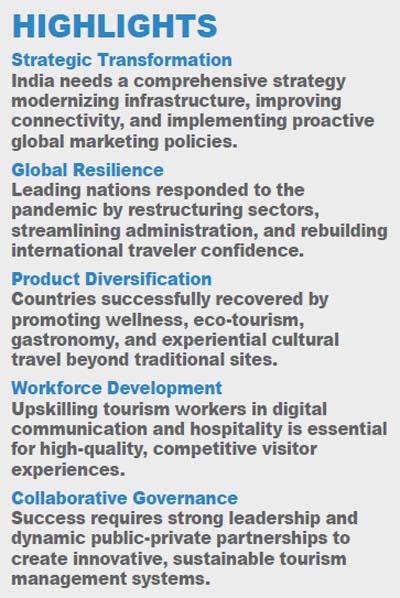 India possesses enormous tourism potential, including cultural diversity, natural landscapes, and a rich historical heritage. To catch up with global competitors, India needs to adopt a comprehensive tourism transformation strategy. This strategy should focus on modernizing tourism infrastructure, improving international connectivity, formulating and implementing a proactive marketing policy and strategies, and strengthening destination management systems. Equally important is the development of new tourism products such as eco-tourism, rural tourism, wellness tourism, and experiential cultural tourism. Possibly, these exist but need to be identified and brought into mainstream consciousness.
The global tourism industry, like several other goods and service industries, experienced an unprecedented collapse during the COVID-19 Pandemic, which brought international travel to a near standstill between 2020 and 2021. As borders closed, airlines grounded fleets and hotels shut their doors, tourism-dependent economies faced severe losses. However, the period that followed also revealed remarkable resilience. Many of the world’s leading tourism destinations – France, Spain, the United States, Italy, Turkey, Mexico, the United Kingdom, Thailand and Vietnam – responded to the crisis with strategic reforms, creative marketing, and significant restructuring of their tourism sectors.
 These countries treated the pandemic not only as a crisis but also as an opportunity to modernize their tourism management including streamlining their administrative and financial structures, and strengthen competitiveness in the global travel market.
- Governments and private sector stakeholders collaborated to reorganize tourism institutions, upgrade health and safety standards, and rebuild traveller confidence.
- Digital marketing campaigns, sustainability initiatives, and new destination branding strategies were introduced to attract international visitors once travel resumed.
- At the same time, destinations diversified tourism products by promoting wellness tourism, nature-based travel, gastronomy, cultural heritage experiences, and rural tourism.
- Another key focus of the recovery process involved upskilling human resources. With a view to adding quality to their overall product image, training programmes were launched to upgrade the skills of tourism workers in areas such as digital communication, hospitality management, sustainability practices, and customer service.
- Investments in infrastructure, including airports, transport systems, smart tourism technologies, and high-quality accommodation, also helped strengthen the tourism ecosystem.
These changes enhanced the overall quality of tourism experiences while reinforcing the global image of these destinations as safe, innovative and welcoming places to visit.
As international travel gradually resumed, these strategic responses helped several destinations regain visitor numbers faster than expected. The experience of these countries demonstrates that adaptability, forward-looking leadership, and strong collaboration between government and industry, are essential for rebuilding tourism in a rapidly changing global environment.
Country-Specific Tourism Recovery Strategies
 France
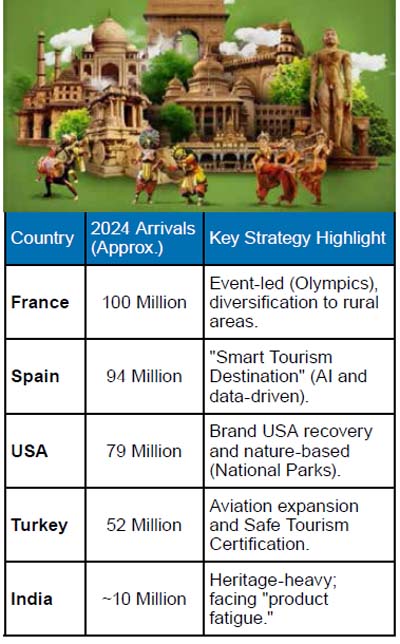
France remains the world’s most visited country, receiving around 100 million international tourists in 2024. After COVID-19, the country revitalized tourism through event-led marketing and destination diversification. Major global events such as the 2024 Paris Olympics were leveraged as catalysts to revive visitor confidence and stimulate demand. France responded to the pandemic with a comprehensive tourism recovery strategy focused on sustainability, digital transformation, and destination diversification. The French government launched programmes encouraging domestic and regional tourism while international travel slowly resumed. Marketing campaigns emphasized cultural heritage, gastronomy, and rural experiences to reduce overcrowding in major cities such as Paris. Investments were directed toward sustainable tourism infrastructure, including eco-friendly accommodation and improved rail connectivity. France also upgraded workforce training through hospitality education initiatives and digital skills programmes. Tourism authorities promoted lesser-known regions such as Provence and Normandy to encourage longer stays and wider regional economic benefits. Through coordinated government-industry partnerships and strong branding campaigns, France successfully strengthened its tourism image as a safe, high-quality, and sustainable destination.
 Spain
Spain
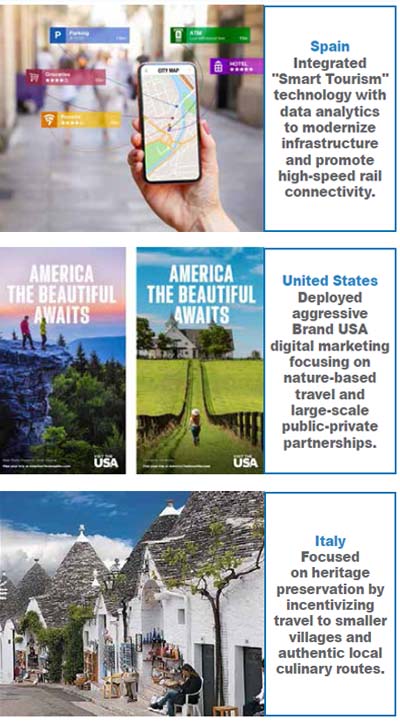
Spain recorded about 94 million international tourists in 2024, making it the second most visited country globally. It implemented one of Europe’s most ambitious tourism recovery plans by focusing on modernization, sustainability, and digital innovation. The government introduced the “Smart Tourism Destination” programme, integrating technology into visitor management, data analytics, and digital marketing. Spain diversified its tourism offerings by promoting rural tourism, gastronomy and wine tourism, and cultural heritage beyond traditional coastal resorts. Regions such as Andalusia and Catalonia launched targeted campaigns to attract new international markets. The country also invested heavily in workforce training and sustainability certification programmes for hotels and tourism businesses. Infrastructure improvements, including upgraded airports and high-speed rail networks, enhanced accessibility, and cut down on time and travel costs. Through these reforms Spain repositioned itself as a modern, technologically advanced tourism destination committed to sustainability and quality visitor experiences.
United States
The United States welcomed about 79 million international visitors in 2024, maintaining its position as a leading global destination. Its responded to the pandemic by revitalizing tourism through well-focused and aggressive marketing campaigns based on research in established and potential markets, domestic travel promotion, and major infrastructure investments. The establishment of the Brand USA recovery campaign helped rebuild international demand through digital marketing and global partnerships. The government also launched initiatives to improve airport infrastructure, national parks, and cultural tourism facilities. Destinations such as New York City, Las Vegas, and Orlando introduced enhanced safety protocols and innovative visitor experiences. The tourism industry also emphasized outdoor travel, road trips, and nature-based tourism in locations such as Yellowstone National Park and Grand Canyon National Park. Intensive workforce recovery programmes focused on hospitality training and employment incentives. Through strategic public-private partnerships and large-scale marketing initiatives, the United States quickly restored its global tourism competitiveness.
Italy
Italy attracted about 65 million international tourists in 2024, driven by its rich cultural and heritage assets. The country adopted a recovery strategy centred on heritage preservation, regional tourism promotion, and sustainable development. Tourism authorities encouraged visitors to explore smaller towns and cultural landscapes beyond traditional hotspots such as Rome, Venice, and Florence. Initiatives like the “Villages of Italy” campaign promoted lesser-known destinations in rural areas. Italy invested in restoring historical sites, upgrading transportation networks, and improving digital tourism services. The government also supported hospitality businesses through financial incentives and workforce training programmes. Culinary tourism, wine tourism, and cultural heritage routes became central elements of Italy’s tourism diversification strategy. By combining strong branding with cultural authenticity and sustainability initiatives, Italy strengthened its global reputation as a unique and culturally rich tourism destination.
 Turkey
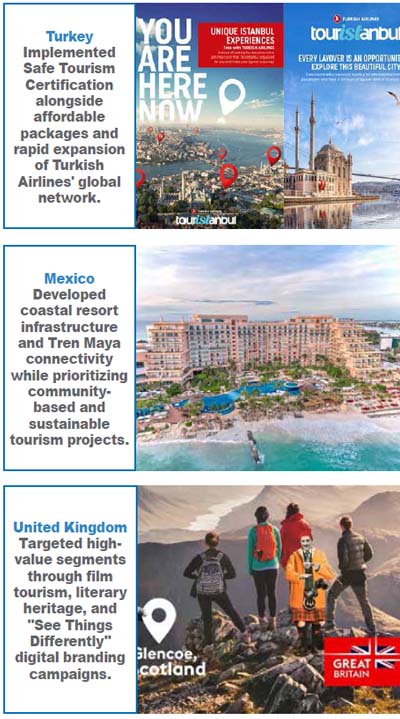
Turkey welcomed about 52 million international tourists in 2024, making it one of the fastest-recovering tourism destinations. Government incentives widely supported hotel and other service establishment investments, and aviation expansion, particularly through Turkish Airlines’ global network. Its recovery strategy relied heavily on aggressive international marketing, affordable packages, and diversified tourism products. The country focused on health safety certification, digital marketing, and product diversification to accelerate tourism recovery. The government launched the Safe Tourism Certification Programme, which established strict hygiene and service standards for hotels, restaurants, and transport providers. Major destinations such as Istanbul and Antalya introduced upgraded tourism infrastructure and modern visitor facilities. Turkey also promoted new tourism segments including wellness tourism, medical tourism, coastal areas development, cultural heritage routes, and adventure travel. Marketing campaigns targeted emerging markets and specific segments within these markets, in Europe, the Middle East, and Asia. Workforce training programmes improved hospitality standards and service quality across the tourism sector. By combining strong government leadership with proactive marketing strategies, Turkey succeeded in restoring international confidence and rapidly increasing visitor arrivals.
Mexico
Mexico received around 48 million international tourists in 2024, recovering strongly after the pandemic.
The key to recovery was infrastructure development in resorts and further development of cruise tourism in collaboration with Caribbean countries. Mexico invested heavily in community-based tourism projects to support rural economies and promote sustainable tourism. The country adopted a flexible tourism recovery strategy emphasizing open borders, strong health protocols, and destination diversification. Tourism authorities promoted beach destinations such as Cancún and Los Cabos while also highlighting cultural heritage cities like Oaxaca and Mérida. The government invested in major infrastructure projects such as the Tren Maya to improve connectivity across tourism regions. Marketing campaigns focused specifically on experiential tourism, gastronomy, and cultural authenticity. Mexico also supported tourism workers through training and employment programmes aimed at improving service quality. By deploying a balanced combination of both coastal and cultural tourism products, Mexico strengthened its wide global tourism brand, and maintained strong visitor numbers during the recovery phase.
United Kingdom
The United Kingdom welcomed about 40 million international tourists in 2024, with tourism revenue rising 40% compared to pre-pandemic levels, and a recovery strategy focused on high-value tourism segments, including cultural tourism, heritage tourism, film tourism, and major events. Campaigns such as “See Things Differently” promoted Britain’s culture, landscapes, and heritage. Investment in museums, historic sites, and creative industries strengthened the tourism experience. The UK also emphasized digital tourism services, visitor data analytics, and workforce training in hospitality and tourism management. Tourism authorities led campaigns encouraging visitors to explore historic destinations such as London, Edinburgh, and Bath. Marketing initiatives led by Visit Britain targeted international travellers with campaigns highlighting British culture, history, and countryside experiences. The UK also promoted film tourism, literary tourism, and cultural festivals. Workforce development programmes supported hospitality employees with digital and customer service training. Through strategic branding and infrastructure improvements, the United Kingdom revitalized its tourism sector and strengthened its global tourism appeal.
 Thailand
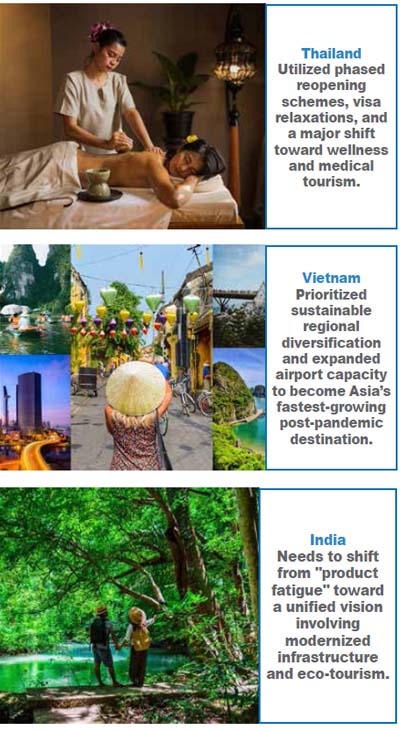
Thailand received around 39 million international tourists in 2024, demonstrating strong recovery in Asia. The country’s recovery strategy relied heavily on aggressive global marketing, visa relaxations, and diversified tourism products.
Thailand introduced innovative policies to restart international tourism, including phased reopening programmes and targeted travel initiatives. Destinations such as Phuket and Bangkok were among the first to reopen under controlled tourism schemes. In addition to traditional beach tourism, the country diversified tourism products by promoting wellness tourism, medical tourism, eco-tourism and. community-based tourism in rural areas. Marketing campaigns highlighted Thai culture, cuisine, and hospitality traditions of the country. Infrastructure improvements included airport expansion and upgraded transport and accessibility systems. Tourism workforce training programmes focused on enhanced language skills, digital capabilities, and service quality. These efforts helped Thailand quickly regain its status as one of Asia’s leading tourism destinations.
Vietnam
Vietnam welcomed nearly 17.7 million international arrivals in 2024, a significant 39.5% increase over 2023. This total almost reached the pre-pandemic peak of 2019, the first country in the Asia-Pacific region to reach this landmark. Vietnam focused on sustainable tourism development, digital marketing, and regional diversification to rebuild its tourism sector. Popular destinations such as Hanoi, Ho Chi Minh City, Ha Long Bay and Phu Quoc, introduced improved visitor services and infrastructure upgrades. The government launched national campaigns promoting Vietnam as a safe and culturally vibrant destination. Tourism authorities diversified the country’s tourism product by adding nature-based tourism, heritage tourism, and coastal travel experiences. Intensive training programmes contributed significantly to hospitality standards and tourism management skills of the tourism work force. Vietnam also expanded airport capacity and transportation networks to increase accessibility, particularly to new destinations. These combined efforts strengthened Vietnam’s position as one of Southeast Asia’s fastest-growing tourism destinations.
India in Comparison: Challenges and the Way Forward
 India has struggled to match the pace of recovery achieved by countries such as France, Spain, Thailand, and Vietnam. Several structural challenges have slowed India’s tourism resurgence.
- One major factor is the absence of a unified long-term vision for tourism development and promotion.
- Fragmented governance and limited coordination between central and state governments on one hand, and between public and private sector on the other, have weakened strategic policy, planning and implementation processes.
- India’s tourism marketing strategies also remain relatively outdated when compared with the innovative digital campaigns adopted by many competing destinations.
- In addition, the country has not sufficiently invested in building a strong international tourism brand that communicates a consistent and high-quality visitor experience.
- Infrastructure gaps, including transportation networks, urban facilities, and destination management continue to affect the overall tourism experience.
- Human resource development is another major challenge, as many tourism workers lack advanced training in hospitality management, languages, and customer service.
- Another concern is the over-reliance on a limited number of traditional tourism products such as heritage monuments and pilgrimage tourism which are now clearly showing signs of “product fatigue”. Unlike countries that diversified into wellness tourism, adventure tourism, rural tourism, and experiential travel, India has been slower to innovate and develop new tourism products. A tour operator recently remarked at a major tourism trade fair, “India needs new wine in a new bottle”, implying that the country not only needs new products but also a new brand and a new image. Without new product development and diversification, destinations risk becoming repetitive and less competitive in international markets.
Nevertheless, India possesses enormous tourism potential, including cultural diversity, natural landscapes, and a rich historical heritage. To catch up with global competitors, India needs to adopt a comprehensive tourism transformation strategy. This strategy should focus on modernizing tourism infrastructure, improving international connectivity, formulating and implementing a proactive marketing policy and strategies, and strengthening destination management systems. Equally important is the development of new tourism products such as eco-tourism, rural tourism, wellness tourism, and experiential cultural tourism.
Public-private partnerships should play a central role in tourism development. Governments, industry leaders, and local communities must collaborate to design innovative tourism experiences and improve service quality. Large-scale training programmes are also needed to upgrade the skills of tourism workers and raise hospitality standards to international levels. Finally, India must invest in strong destination branding and modern digital marketing strategies to reposition itself in global tourism markets.
Conclusion
The post-pandemic recovery of global tourism highlights the importance of adaptability, innovation, flexibility, and collaboration. Countries such as France, Spain, the United States, Italy, Turkey, Mexico, the United Kingdom, Thailand, and Vietnam demonstrated remarkable resilience by reorganizing their tourism sectors, investing in extensive market research, embracing digital marketing, diversifying tourism products, upgrading infrastructure, and investing in human resource development. Their experience shows that successful tourism recovery requires strong leadership, clear strategic vision, and dynamic collaboration between governments and private stakeholders.
For India, this situation should serve as a wake-up call. With visionary leadership, bold reforms, innovative marketing, improved infrastructure, and a highly skilled tourism work force, India can transform its tourism sector and claim a strong position in the global travel industry. The future of tourism will belong to destinations that are flexible, creative, and forward-looking. If India embraces these qualities and invests in sustainable and high-quality tourism development, it can unlock its immense potential and emerge as one of the world’s most compelling travel destinations in the years ahead.
ABOUT THE AUTHOR
 Dr. Harsh Varma is Former Director, United Nations World Tourism Organization (UNWTO). Based in Madrid, he is consulted by NTOs globally; has formerly been a director, Ministry of Tourism, GOI.