

From the poetry of separation to the pursuit of happiness, an exploration of suffering, human resilience and the meaning of life
“सङ्गमविरहविकल्पे
वरमिह विरहो न तु सङ्गमस्तस्य।
एकः स एव सङ्गे
त्रिभुवनमपि तन्मयं विरहे॥”
— Padyāvalī, Verse 239, compiled by Rūpa Gosvāmī
Translation: When faced with the choice between union and separation, separation from the beloved may be preferable. In union, one sees only the beloved; in separation, however, the beloved pervades the entire universe, and all three worlds become suffused with their presence.
Physical absence often deepens love rather than diminishing it. Memory, imagination, and longing replace physical presence, turning loss into a defining presence within our inner lives.
This reflects sorrow’s central role in human thought. While happiness makes life pleasant, sorrow gives it depth by forcing us to confront fundamental questions about suffering, purpose, and meaning when certainties collapse. However, suffering does not automatically yield wisdom; loss enriches some while devastating others. Ultimately, the journey through sorrow is an active process—an inquiry into how pain can be transformed into understanding, compassion, creativity, and hope.
First Song: Sorrow as mother of Poetry
P.B. Shelley, the celebrated English Romantic poet, captured the paradox of artistic expression in his poem To a Skylark (1820):
“Our sweetest songs are those that tell of saddest thought.”
The sentiment finds an equally profound expression in Hindi literature through Sumitranandan Pant (1920):
वियोगी होगा पहला कवि, आह से उपजा होगा गान।
उमड़कर आँखों से चुपचाप, बही होगी कविता अनजान॥
Translation: The first poet must have been one who experienced separation; the first song must have emerged from a sigh. And silently, overflowing from tear-filled eyes, an unknown poem must have found its way into the world.
Pant’s verse takes us back to the origins of poetry. Perhaps the first poet was not merely an admirer of nature’s beauty, but someone overwhelmed by the anguish of separation, whose unspoken emotions sought an outlet. A sigh found expression in song, and tears took the form of poetry. An intense personal experience thus acquired a universal language, enabling others to recognise and articulate emotions they had perhaps never been able to express. This is one of literature’s remarkable achievements: a reader who has never experienced the precise circumstances of a poet’s grief can nevertheless recognise the loneliness, longing or helplessness expressed in the poem.

The same tragic sensibility occurs in Thomas Hardy’s The Mayor of Casterbridge (1886), where he observes: “Happiness was but the occasional episode in a general drama of pain.” Hardy’s observation is deliberately bleak, reflecting his preoccupation with chance, circumstance, human frailty and the often-indifferent forces that shape individual destinies. Yet its power lies in its recognition that happiness is impermanent or insecure. Human beings live with the possibility of disappointment, separation, illness, failure and death. Human life is, however, not merely a drama of pain punctuated by occasional happiness. It is a more complicated interplay of affection, achievement, disappointment, renewal and uncertainty.
Sorrow, Memory and Psychology of Human Experience
Why does sorrow often remain with us long after happiness has faded? Why can a separation experienced decades earlier still evoke an emotional response, while the details of an equally distant happy occasion become indistinct?
Psychology offers part of the explanation through the concept of negativity bias. Human beings tend to pay greater attention to adverse experiences and often respond more strongly to threats, criticism, rejection and loss than to comparable positive events. This tendency has evolutionary origins. For our ancestors, overlooking danger could have fatal consequences, whereas failing to notice an opportunity for pleasure was generally less consequential. The mind consequently developed an asymmetry in processing positive and negative experiences.
Yet persistent sorrow cannot be explained by biology alone. Memory is not a passive recording of events. It is reconstructed through emotion, personal circumstances and subsequent experience. A relationship that ends, a person who dies or an opportunity that disappears may acquire meanings that change over time. We remember not merely what happened, but what might have been. Regret is often the sorrow of an unrealised possibility.
Separation is particularly revealing in this regard. When someone is physically present, everyday routines and ordinary disagreements inevitably become part of the relationship. Absence removes these distractions. Memory selectively preserves gestures, conversations, affection and shared experiences. The absent person can become an idealised presence, sometimes more powerful in imagination than in reality.
There is, however, a danger in romanticising this experience. Persistent grief, depression and emotional trauma can seriously impair human functioning. Not everyone emerges stronger from adversity, and not every wound leads to wisdom. The popular expression that what does not kill you makes you stronger is not an immutable law. A systematic review and meta-analysis by Mangelsdorf, Eid and Luhmann, published in Psychological Bulletin in 2019, examined 122 longitudinal studies involving nearly 98,500 participants. It found no general evidence that negative life events produce greater psychological growth than positive ones. The authors also questioned the assumption that suffering is a prerequisite to personal development. This is an important corrective to the tendency to glorify suffering. Adversity may create an opportunity for reflection, but growth depends on personal resources, social support, circumstances and the ability to make sense of what has happened.
Indian Philosophical Tradition: Sorrow, Attachment and Equanimity
Few civilisations have examined suffering as extensively as India. Its religious and philosophical traditions defy a single interpretation; rather, they approach the problem from different, sometimes complementary, perspectives.
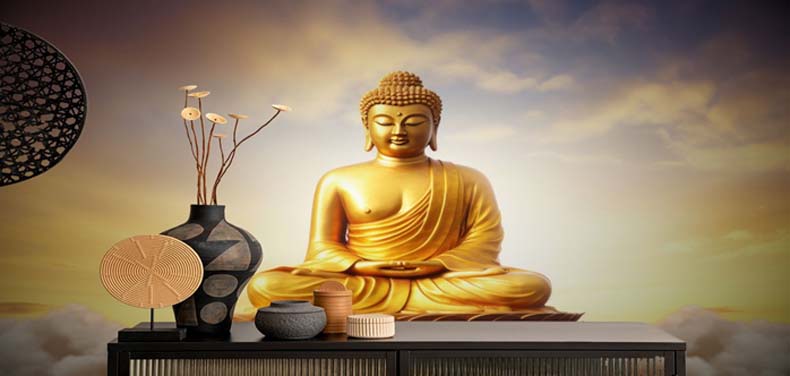
In Buddhism, suffering is central to Buddha’s teaching. The First Noble Truth, Dukkha, recognises that human existence involves suffering, dissatisfaction and impermanence. Birth, ageing, illness, death, separation from those we love and association with what we dislike are all sources of dukkha. The Second Noble Truth traces its origins principally to craving, attachment and ignorance. The Third suggests the possibility of its cessation, while the Fourth identifies the Noble Eightfold Path as the way towards liberation.
The Buddhist insight is subtle. Sorrow is not simply the result of unfortunate external circumstances; it is also intensified by our insistence that people, relationships, possessions and experiences should remain unchanged. We suffer not only because we lose what we love, but because we struggle against the impermanence that governs all existence. This does not mean withdrawing from affection or human relationships. Buddhism distinguishes compassion from possessiveness, and love from attachment. It’s ideal is not emotional coldness, but the ability to care deeply without clinging—attachment with detachment, a more balanced way of relating to others and the world.
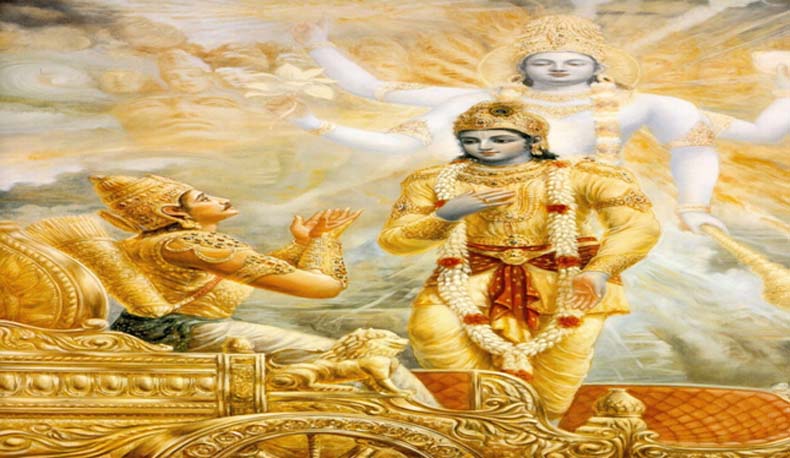
The Bhagavad Gita approaches the problem through the concept of Samatva, or equanimity. In Chapter 2, Verse 14, Krishna reminds Arjuna that pleasure and pain, heat and cold, are transitory and should be endured with patience. Verse 48 advises him to approach pleasure and pain, gain and loss, victory and defeat with equanimity:
योगस्थः कुरु कर्माणि सङ्गं त्यक्त्वा धनञ्जय।
सिद्ध्यसिद्ध्योः समो भूत्वा समत्वं योग उच्यते॥
Translation: Established in yoga, perform your duties, abandoning attachment, and remaining balanced in success and failure.
Krishna’s message is not to deny suffering or accept injustice passively, but to confront both without losing inner balance. He urges human beings to discharge their duties with commitment while remaining detached from the outcomes. Neither the fear of failure nor the elation of success should cloud judgement or weaken the resolve to act. This teaching is particularly relevant today, when much of our anxiety stems from worrying about things beyond our control, whether professional recognition, financial success, social acceptance, personal relationships or an uncertain future. The Gita reminds us to focus on the sincerity and quality of our actions rather than become preoccupied with outcomes. It is the commitment to action, not the obsession with its rewards, that ultimately brings inner freedom, as inimitably expressed in the Gita:
“कर्मण्येवाधिकारस्ते मा फलेषु कदाचन. मा कर्मफलहेतुर्भूर्मा ते सङ्गोऽस्त्वकर्मणि ॥“
The Indian philosophical tradition also makes an important distinction between Sukha, ordinary happiness or pleasure, and Ānanda, a deeper sense of bliss or spiritual fulfilment. The latter is not necessarily dependent on favourable external circumstances. In the Upanishadic tradition, Ānanda is associated with the deepest dimension of existence and the realisation of the self. The search is, therefore, not merely for a succession of pleasurable experiences but for a more enduring state of inner freedom.
Literature Across Civilisations: The Universality of Grief
Sorrow transcends geographical and cultural boundaries, finding profound expression in global literary traditions. In the Ramayana, the separation of Rama and Sita is not just a narrative device; it reveals the emotional consequences of love, duty, exile and loss. In the Mahabharata, the grief of Gandhari, Kunti, Draupadi and the bereaved families of Kurukshetra exposes the devastating human cost of war. Even victory becomes morally complicated when it occurs with huge loss, As Ram Dhari Singh wrote powerfully in Kurukshetra:
“वह कौन रोता है वहाँ– इतिहास के अध्याय पर, जिसमें लिखा है, नौजवानों के लहु का मोल है प्रत्यय किसी बूढे, कुटिल नीतिज्ञ के व्याहार का; जिसका हृदय उतना मलिन जितना कि शीर्ष वलक्ष है; जो आप तो लड़ता नहीं, कटवा किशोरों को मगर, आश्वस्त होकर सोचता, शोणित बहा, लेकिन, गयी बच लाज सारे देश की ?”
English Translation:
Who is it that weeps there over that page of history,
On which is written that the lives of young men
Are the price paid for the policies of some old, crafty statesman;
Whose heart is as impure as his head is white with age;
Who does not fight himself, but sends young boys to be slaughtered; And then, with a sense of relief, consoles himself,
Thinking: “Blood has been shed, indeed, but the honour of the entire nation has been saved!
Dinkar forcefully questions the morality of those in power who sacrifice the lives of the young in the name of national honour, while remaining safely removed from the battlefield themselves. The passage is not simply an expression of grief over wartime deaths; it is an indictment of the political hypocrisy that justifies them.
Kalidasa’s Meghaduta offers perhaps one of the finest literary treatments of separation. An exiled Yaksha, separated from his beloved, entrusts a cloud with a message to her. The physical distance between the lovers becomes the occasion for a remarkable poetic journey through landscapes, memories and imagined reunion. Nature itself becomes the messenger of longing. The cloud does not merely carry words; it carries the emotional burden of absence.
Mirza Ghalib gives this experience a different, more introspective expression. His poetry frequently explores loss, unfulfilled desire, the uncertainties of love and the contradictions of human existence. His famous couplet captures the peculiar endurance of longing:
“इश्क़ पर ज़ोर नहीं है ये वो आतिश ग़ालिब
कि लगाए न लगे और बुझाए न बने।”
Love, in Ghalib’s imagination, is an elemental force beyond the control of reason. It cannot simply be summoned or extinguished at will.
In Persian literature, Rumi frequently treats separation as the beginning of spiritual longing. The opening of the Masnavi, with its image of the reed flute lamenting its separation from the reed bed, suggests that the human soul itself experiences a profound yearning for its origin. The pain of separation becomes a metaphor for the spiritual quest.
Western literature is equally rich in such reflections. Shakespeare’s tragedies examine the consequences of jealousy, ambition, betrayal and the fragility of human relationships. In King Lear, the destruction of familial affection leads to an overwhelming confrontation with suffering, mortality and human vulnerability. In Hamlet, grief becomes entangled with uncertainty, moral responsibility and the difficulty of action.
Victor Hugo’s Les Misérables demonstrates how suffering can expose the cruelty of social institutions while also revealing the possibilities of compassion and redemption. Fyodor Dostoevsky, particularly in The Brothers Karamazov and Crime and Punishment, explores the moral and spiritual dimensions of suffering. His characters struggle with guilt, faith, freedom and the possibility of redemption.
Separated by centuries, languages and civilisations, these works return to essentially the same human predicament: how does one live without allowing it to consume the rest of life? They raise questions about the nature of love, justice, responsibility, mortality and the human condition itself.
Religion and the Meaning of Suffering
Religious traditions have also grappled with the difficult question of why suffering exists, particularly when it appears undeserved. In Christianity, the suffering of Christ occupies a central place in the understanding of sacrifice, forgiveness and redemption. The Book of Job in the Old Testament raises an especially challenging question: why should a righteous person suffer? Job’s anguish unsettles a simplistic assumption that suffering is necessarily punishment for wrongdoing. It challenges the belief that virtue always brings prosperity and that adversity must reflect moral failure.
In Islam, suffering is frequently understood in relation to Sabr (patience and perseverance), Shukr (gratitude) and Tawakkul (trust in God). The emphasis is not merely on enduring hardship but on maintaining faith, dignity and moral responsibility through adversity. Sufi thought often interprets longing and separation as stages in the search for divine love.
The Hindu tradition, meanwhile, offers multiple pathways—Karma Yoga, Bhakti Yoga and Jnana Yoga—through which individuals may respond to suffering and seek liberation. Devotion, selfless action and knowledge are presented as different approaches to transcending the limitations of ordinary existence.
Despite their theological differences, these traditions share a common insight: suffering is inevitable, but it need not diminish our moral strength, faith or compassion. Each offers a way to confront adversity with dignity and inner balance. Yet faith must be tempered with sensitivity. To tell someone grieving a child, enduring violence or battling serious illness that their suffering is a divine test can be deeply insensitive. Faith should offer comfort, never trivialise pain or substitute for efforts to alleviate it.
Sorrow and Creativity: Transforming Private Pain into Universal Art
Suffering and creativity constitute a fascinating relationship in human experience. Literature, music, painting and philosophy turn difficult emotions into art. Beethoven’s compositions, particularly his late works, are often discussed in the context of his personal struggles and progressive deafness. Vincent van Gogh’s paintings have been examined in relation to his troubled life and emotional difficulties. Frédéric Chopin’s music frequently evokes longing, melancholy and nostalgia. These examples should not lead us to reduce artistic achievement to personal suffering. Art’s enduring power lies in its ability to transform an individual’s emotions into experiences that resonate across time, cultures and generations.
In India, the devotional traditions of Mirabai, Surdas, Kabir and Tulsidas offer similar insights. Mirabai’s poetry of longing for Krishna transforms personal devotion into an experience of spiritual separation. Surdas explores the emotional world of Krishna’s childhood and the anguish of separation through the voices of Yashoda and the Gopis. The Bhramar Geet captures the intensity of the Gopis’ longing after Krishna leaves Vrindavan, with blurred boundaries between human and divine love.
Separation is no longer merely a painful pause in companionship; it evolves into a profound act of devotion, keeping the beloved vividly alive in the devotee’s mind despite physical distance. However, artistic transformation should not be confused with the romanticisation of distress. While creative outlets allow individuals to express complex feelings, gain clarity, and foster connection, they cannot replace professional therapy or ensure healing. Ultimately, an artist’s triumph stems not from the pain endured, but from their ability to translate that suffering into meaningful art. This is why literature endures long after its origin. A single person’s grief becomes part of our collective heritage, allowing a centuries-old poem to speak directly to modern heartbreak. While time reshapes the world, human emotions remain virtually unchanged.
The Pursuit of Happiness: From Osho to Bhutan and Harvard
Against this overarching canvas, it’s not difficult to understand why the study and practice of happiness have attracted increasing attention across the world. The subject has moved beyond the traditional domains of religion and philosophy into psychology, economics, public policy, management studies and institutional education.
In India, the teachings of Osho (Bhagwan Shri Rajneesh) stressed awareness, meditation, freedom from psychological conditioning and the ability to experience the present moment. Whatever one’s assessment of his wider philosophy, his popularity reflected a widespread desire to look beyond material achievement for a more satisfying inner life. His emphasis on meditation and self-awareness also contributed to the broader contemporary conversation about emotional well-being.
At the national policy level, Bhutan’s Gross National Happiness (GNH), propounded by its Fourth King, Jigme Singye Wangchuck, in the 1970s, profoundly challenges conventional notions of development. Its central tenet is that economic growth, however impressive, cannot by itself constitute national progress. As I have repeatedly argued, Bhutan’s four pillars—sustainable and equitable socio-economic development, environmental conservation, preservation and promotion of culture, and good governance—require close attention in development policymaking. The nine domains of GNH extend this philosophy to psychological well-being, health, education, living standards, community vitality and ecological resilience. The fundamental distinction is between measuring a rising economy and improving human lives.

GDP counts output, but it is silent on who gains, what the environment loses, and whether people’s lives are secure and meaningful. Growth that widens inequality, degrades the ecosystem and deepens psychological distress cannot be celebrated as unqualified development. Yet GNH should neither romanticise Bhutan nor diminish the importance of economic growth. Employment, incomes, material security and institutional accountability remain indispensable. The larger lesson is that GDP must inform development policy, not define its ultimate purpose. An economy should ultimately be judged not merely by the wealth it generates, but by the quality of life it enables its people to lead.
Surging academic interest is reflected in Harvard University’s courses on Happiness and Managing Happiness, examining the subject through philosophy, psychology, economics and behavioural science. Harvard’s Happiness course, for example, draws upon traditions ranging from Stoicism and Epicureanism to Buddhism and Daoism, while Managing Happiness explores the relationship between well-being, social circumstances and personal choices. The growing academic interest in happiness reflects a recognition that prosperity and well-being are related, but hardly synonymous.
Happiness is no longer regarded simply as an elusive personal emotion or a by-product of material success but as a subject that can be studied, understood and, to some extent, cultivated.

Positive psychology has contributed to this change by examining not only mental illness and psychological distress but also the conditions that enable individuals to flourish. Research has highlighted the significance of meaningful relationships, social connections, gratitude, purposeful activity, physical well-being and a sense of belonging.
During my tenure as General Manager and Chief Learning Officer (CLO) of Canara Bank (2015–2019), I substantially expanded the scale, content and reach of training programmes, covering well over 400,000 employees. Despite institutional constraints, I emphasised holistic development and the elusive pursuit of happiness. Yet happiness has its paradoxes: an obsession with being happy can make the pressure to remain cheerful a source of unhappiness. Social media compounds this dilemma by showcasing curated images of successful careers, luxurious holidays, happy families and seemingly perfect relationships. Such constant comparisons often breed inadequacy, even among those leading reasonably fulfilling lives.
The pursuit of happiness differs from demanding that all life moments must be happy. The latter is an unrealistic expectation. Human beings need room for grief, disappointment, reflection and silence. An inability to acknowledge sadness may be as damaging as an inability to experience happiness.
Happiness, Material Prosperity and the Indian Reality
Material deprivation and psychological well-being are inextricably linked. A person struggling to secure food, housing, healthcare or education cannot reasonably be expected to find fulfilment through meditation or philosophical reflection alone. Poverty, unemployment, indebtedness, social discrimination and inadequate public services impose real constraints on human happiness. The pursuit of happiness must not become an excuse for accepting economic deprivation or social injustice. Spiritual resilience is valuable, but it cannot replace effective governance or genuine economic opportunity.
India’s development priorities must, therefore, encompass both material advancement and the quality of human relationships and institutions. Better schools, accessible healthcare, dignified employment, financial security, gender equality, cleaner surroundings and stronger community networks are not merely economic objectives but necessary for a fulfilling life.
The growing challenge of loneliness and social fragmentation is also important. Urbanisation, migration, nuclear families, demanding professional schedules and the increasing dominance of digital communication have altered the nature of human relationships. We may be more connected technologically, but not necessarily more connected emotionally. A thousand online contacts cannot always replace one dependable friend. A large professional network may not provide the comfort of a meaningful personal relationship.
The traditional Indian expression “khush raho” (may you always remain happy) assumes a deeper and more enduring significance in this context. It is more than a conventional farewell or an expression of goodwill. It conveys a wish for another person’s well-being, peace and contentment. In a society where relationships and family bonds have historically been important, such expressions retain considerable emotional value.
Happiness, in this sense, is not merely an individual achievement; it is also a social responsibility. Our capacity to make another person’s life less difficult, to listen without judgement, to help and to be considerate of those who are vulnerable, contributes to collective well-being.
Pollution and Purity in Hinduism
The concepts of pollution (ashuddhi) and purity (shuddhi) in Hinduism extend beyond physical cleanliness to encompass a broader religious, social and cosmological worldview. Drawing on Émile Durkheim’s distinction between the sacred and the profane, the sacred represents what is set apart and imbued with religious significance, while the profane belongs to the everyday material world. Purity is associated with sacredness, auspiciousness and spiritual merit, whereas pollution is linked to death, bodily fluids, menstruation and certain occupations. Mary Douglas, in Purity and Danger (1966), examines how such classifications establish social boundaries, while Louis Dumont demonstrates how ritual purity historically reinforced caste hierarchies and untouchability. An intriguing distinction emerges between spiritual purity and material cleanliness. The Ganges, personified as the goddess Ganga, is considered inherently sacred and purifying; a ritual dip is believed to cleanse sins and facilitate spiritual liberation. Its sacred status seemingly transcends its physical condition. Indeed, despite scientific evidence of severe bacterial contamination, believers continue to regard its waters as spiritually pure. This paradox illustrates how the sacred and profane operate through different systems of meaning: what is physically polluted can remain ritually pure, exposing the complex relationship between religious belief, social structures and scientific understandings of pollution.
Living with Sorrow: Hope and Resilience
No philosophy, religion or literary tradition has discovered a way of eliminating sorrow. The more realistic question is how we live with it. Developing the emotional and intellectual resources to confront adversity without losing the capacity to appreciate life is important.
Resilience and endurance are different. Resilience involves acknowledging pain, allowing oneself time to recover, seeking support when necessary, and gradually rediscovering a sense of purpose.
It also requires recognising that different individuals experience sorrow differently. The loss of a loved one, the breakdown of a relationship, professional disappointment, financial distress, illness and the experience of growing old are not interchangeable. Nor can they be addressed through a single philosophical prescription. Compassion requires us to respect individual circumstances.
Ageing and the passage of time introduce another dimension to this discussion. As life progresses, memories accumulate; the loss of friends and relatives, changing family circumstances and the realisation of unfulfilled aspirations can create a distinctive melancholy. Yet advancing years can also bring perspective. The importance of professional status, material possessions and external recognition may diminish, while companionship, affection, intellectual curiosity and the simple pleasure of everyday life acquire greater significance.
One learns, perhaps belatedly, that not every battle needs to be fought, not every disagreement requires a response and not every disappointment deserves a permanent place in one’s consciousness. The ability to forgive, accept limitations and move forward is an achievement.
The traditional blessing khush raho becomes contextually meaningful in that another person may find happiness despite vicissitudes of life. It does not promise freedom from suffering; it hopes that life’s essential joys will not elude.
Beyond Sorrow and Happiness: Quest for a Meaningful Life
We return, finally, to Rūpa Gosvāmī’s remarkable Sanskrit verse, which captures the paradox that separation can sometimes intensify love more profoundly than physical union. Distance does not necessarily diminish affection; it can deepen its emotional and spiritual dimensions. The beloved, though physically absent, remains alive in memory, thought and imagination, until the entire world seems imbued with their presence.
The verse is about love, but its insight is incisive. The things that matter most to us are rarely just things within our grasp. They are the people and moments we carry in memory, the ones we cherish, the futures we reach for, and the bonds that hold even across distance.
Shelley’s observation that our sweetest songs express saddest thoughts, Pant’s imaginative reconstruction of the first poet and Hardy’s sombre reflection on happiness all suggest the strong influence of sorrow on human consciousness. Buddhism, the Bhagavad Gita, Christianity, Islam and the Sufi tradition approach suffering from different philosophical and theological perspectives, but each attempts to help human beings transcend its debilitating effects. Perhaps fulfilment lies neither in the endless pursuit of pleasure nor in an exaggerated celebration of suffering, but in retaining our humanity through both. We must cherish happiness without taking it for granted, endure sorrow without yielding to despair, and accept life’s impermanence without becoming indifferent to it.
The Indian philosophical tradition views life as a journey from darkness towards light. The Brihadaranyaka Upanishad captures this aspiration in its timeless prayer:
“असतो मा सद्गमय।
तमसो मा ज्योतिर्गमय।
मृत्योर्मा अमृतं गमय॥“
Lead me from the unreal to the real, from darkness to light, and from death to immortality.
Joy lends life its brightness, sorrow its depth, and hope its direction. Loss may deepen love, disappointment sharpen understanding, and suffering awaken compassion. Ultimately, life’s beauty lies in our capacity to love, forgive, create, serve and begin anew. The Biblical expression, “This too shall pass”, offers courage in moments of adversity and reminds us that neither sorrow nor happiness is permanent.
Sorrow may begin the poem, but hope must bring it to completion. Happiness is not the absence of grief; it is the capacity to retain wonder, gratitude and affection despite it. Perhaps this is the enduring lesson of literature, philosophy and religion: not merely to endure life, but to embrace it, warts and all, with its contradictions, imperfections and possibilities.
Amen. I rest my case.
ABOUT THE AUTHOR
 Dr. Manoranjan Sharma has been the Chief Economist for 25 years with Canara Bank and Infomerics Ratings.
Globally recognised as an expert in global economy, Indian economy, banking, finance, MSMEs, sustainable development and financial inclusion, he has chaired sessions at national and international conferences and is recognised as one of the 30 global experts by the UN Virtual University (UNVU) for SDGs.
He has been on over a dozen Advisory Councils in seven states, viz. Member, Rajasthan Governor’s Advisory Council; Governor’s Senate Nominee on Rajasthan University; Governor’s Senate Nominee on SNDT University, Mumbai; and Expert on selection panels for IIMs, Vijay Patil School of Management, SAIL, IDBI Bank, Canara Bank, Bank of India, Union Bank of India.
He has been published widely and quoted extensively in major Indian and international media and publications.