Reimagining India’s Diaspora Diplomacy in an Age of Ultra Nationalism and Transactional Geopolitics
A Diaspora Under Sustained Pressure
The Trump administration has recently suspended eight major technology companies, among them leading Indian IT firms, from the Permanent Labour Certification (PERM) programme. PERM is the first step in the employer-sponsored route to permanent residence in the United States, and the move could affect thousands of Indian professionals. The move follows closely on a Oct 07 proposal for a US$70,000 fee for F1 international students seeking Optional Practical Training (OPT) following studies, ostensibly to protect US workers and strengthen oversight of the employment programme. This is financially draining for Indian students who aspire to pursue their “American dream”. India has a diaspora of nearly 37 million all across the world, with around 6 million in the US1, many of whom occupy top positions in government and the corporate sectors. Yet the pressure on this community has been relentless. This raises a larger question: has a decade of high-profile and high visibility diaspora diplomacy by PM Modi given India real strategic leverage?
From Remittances to Soft Power: The Diaspora as an Instrument of Diplomacy
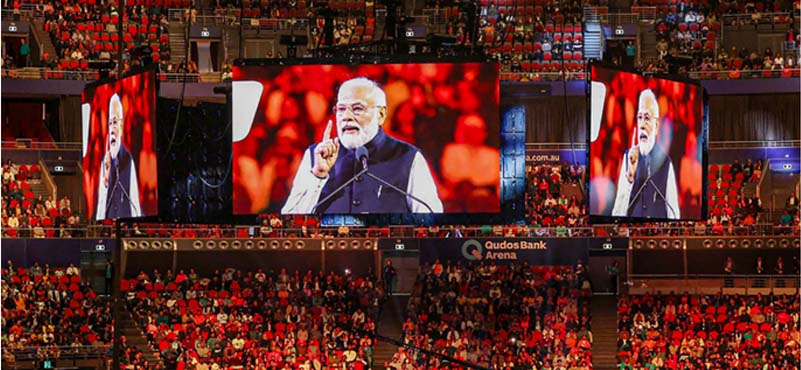
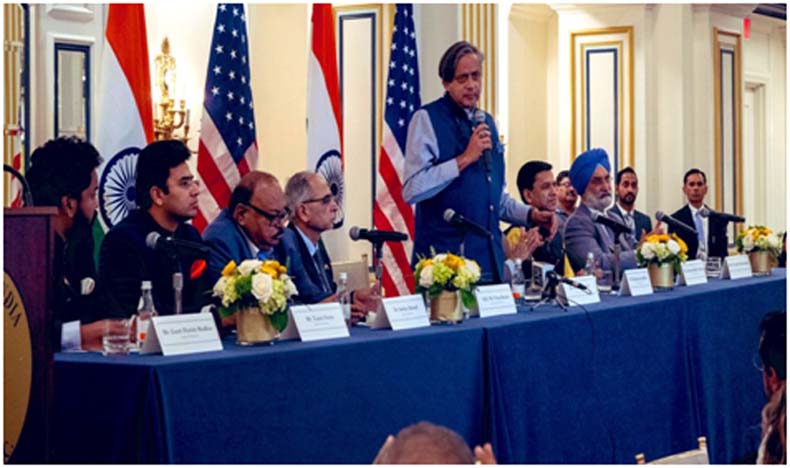
One discernible feature of Prime Minister Narendra Modi’s foreign policy since he assumed office in 2014 has been engagement with the diaspora during his foreign visits. Once a community associated primarily with remittances and cultural links, it has become a more robust instrument of public diplomacy and international engagement. Building on the Pravasi Bharatiya Divas, instituted in 2003 under Prime Minister Atal Bihari Vajpayee, Mr Modi’s initiatives have included high-profile diaspora rallies across the globe. The prominent ones being :-
- Madison Square Garden, New York (September 2014): 18,000–20,000 attendees2.
- Allphones / Qudos Bank Arena, Sydney, Australia (November 2014/ May 2023): 15,000-20,000 attendees3.
- Dubai Cricket Stadium, UAE (August 2015): over 50,000 attendees.
- Wembley Stadium, London (November 2015): 55,000–60,000 attendees.
- ‘Howdy, Modi!’, Houston (September 2019): over 50,000 attendees.
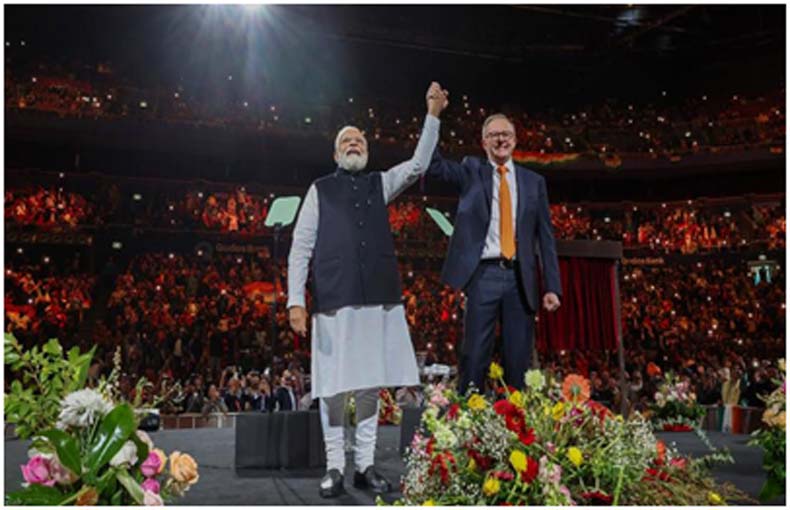
There were numerous other diaspora related events in Paris, Berlin, Kuala Lumpur, Singapore and Toronto. These gatherings progressively extended to heart-warming airport reception spectacles in which members of the diaspora travelled long distances just to catch a glimpse of the leader of their country of origin.
The Strategic Intent
The strategy appeared aimed at transforming the diaspora into a strategic asset and a bridge between India and its host countries4. The intended gains were several: to facilitate conducive and favourable bilateral diplomacy; mobilise investment and promote initiatives such as ‘Make in India’ and ‘Digital India’; improve relations between the Indian state and its overseas citizens; and to burnish India’s image as a confident, developing and globally connected nation. The outreach also gave India greater diplomatic visibility and displayed its soft power and cultural heritage. These events built an emotional connection with overseas Indians and their extended families back home, and they projected India’s rising international profile5. In retrospect, however, they have been largely symbolic rather than substantive. They did not transform the diaspora into a visible instrument of policy influence in host countries in favour of India’s national interests. While the diaspora is celebrated for sending record remittances ($136bn in FY 2025-26), and for its unmatched corporate (25 Indian origin CEOs leading S&P 500 companies and 11 leading Fortune 500 corporations) and political standing(around 261 elected representatives) globally, its capacity to communicate the ‘India story’ and shape foreign policies has since been called into question6.
The Reality Check: Diaspora Diplomacy Meets Transactional Geopolitics
The reality has become starkly clear under Trump 2.0. Its policies have included a 50 per cent tariff on Indian goods( including an additional tariff of 25 percent for purchasing Russian oil, even though China, much of EU and even US continued to depend on the same oil) and the ongoing restrictions on H-1B visas despite court interventions. President Trump also claimed credit for ending the 88-hour conflict between India and Pakistan, an Issue India consistently rebuffed. The trade negotiations have meandered to a plateau making further “give-and take” or concessions difficult7.
India’s experience in the narrative formulation and communication is equally telling. Despite being a victim of terrorism for decades, India saw its response to Pakistan-sponsored terror, Operation Sindoor, receive only lukewarm international recognition. The government was constrained to send seven all-party delegations to nearly 33 countries to explain India’s position . Many international analysts concluded that India had lost the narrative game, which diluted the monumental operational success it had achieved. In a recent interaction with members of the Canadian diaspora, I was astonished to discern that the Pakistani narrative carried significant weight than the undeniable and credible Indian military success.
Why Has Diaspora Mobilisation Not Delivered Strategic Advantage
Why, then, has the strategy of diaspora mobilisation not translated into strategic advantage for India? There may be several reasons.
- A Heterogeneous, Not Monolithic, Constituency. Indian-origin communities abroad are not a homogeneous constituency. They differ by generation, religion, region, political preference and relationship with India. The large crowds at the Prime Minister’s rallies abroad do not necessarily signify approval of his political ideology. Many amongst the younger generation migrated because of limited opportunities at home, economic compulsions, the employment environment, reservation policies, quality of life and partisan politics. Their impressions of India may be bitter, and such perceptions cannot be changed overnight. The diaspora may support strong India–US relations while differing over tariffs, immigration and domestic policies. India, for its part, has non-negotiable positions on agriculture, energy security and strategic autonomy that are not in tune with US interests, and the diaspora is in no position to reconcile them.
- Visibility Is Not Influence. Diaspora outreach represented a shift in political priority. It succeeded in mobilising public attention, raising the profile of diaspora communities and creating highly visible diplomatic moments. It would be naive, however, to expect these to make foreign governments subordinate their national interests to India’s preferences. The clearest example is the US itself. Its policies have directly affected Indian interests even as the defence strategic partnership has been extended, joint exercises have continued, and the supply of GE F404 engines for the Tejas Mk1A has recently been fast-tracked. Rallies demonstrate organisational capacity, but they cannot persuade a president to abandon a long-nurtured trade policy backed by domestic industries and an electoral constituency that includes American farmers, manufacturers and technology companies, all of which can exert pressure on trade policy. The relationship is thus compartmentalised: strategic cooperation endures while commercial interests are bargained hard. Diaspora enthusiasm does not automatically convert strategic warmth into economic accommodation.
- Contested Narratives Related to Operation Sindoor. India’s response to the Pakistan-sponsored terror attack at Pahalgam, in the form of Operation Sindoor, was an inalienable sovereign decision to thwart terrorism emanating from a hostile neighbour. It was India’s right to respond, and the military action was rational. The seven all-party delegations, however, were meant more for damage control of a narrative that had already slipped rather than pre-emptively shaping the environment. Foreign governments may condemn terrorism in multilateral forums yet decline to endorse every element of a military response. They cite their own interpretation of international law, the risk of escalation between two nuclear-armed neighbours, and the credibility of the evidence offered to substantiate a potentially escalatory response. Treating these differing responses as a single measure of diplomatic success can be misleading. Foreign governments also have their own transactional economic, security and diplomatic ties with India’s rivals, which they may not risk without commensurate strategic dividends.
- Differential Vulnerability of the Diaspora. The diaspora is vulnerable to host governments’ domestic policies on security, immigration and employment, and to their wider foreign policy postulation. Diaspora constitutes citizens, permanent residents/ green card holders and H-1B visa holders, each of whom is differently vulnerable depending on immigration status, profession and generation. A corporate executive may be sensitive to market access and commercial relationships. A naturalised citizen may be vulnerable to electoral pressures and discrimination. A temporary visa holder may be vulnerable to employment insecurity and immigration enforcement. The recent PERM suspension shows how quickly such exposure can turn into hardship, and a community so exposed is understandably wary of being seen as an instrument of a foreign government8.
- Racism and Social Acceptability. Indians who moved abroad cultivated the image of a model migrant. That image is under strain. Racial and xenophobic attacks on the Indian diaspora across the globe have increased sharply, with a reported sevenfold rise in five years across 36 countries. From 15 incidents in 2021, it has risen to 104 in 20259. Anti-South Asian hate in the US has risen by 115 per cent in the last two years. Elsewhere the situation has been compounded by the overt public flirtation of cultural preferences by some Indian tourists abroad, which can infuriate local sensitivities.
- The Gen Z Connect. The younger generation of the diaspora is also influenced by the Gen Z movement in India. Similar educational backgrounds, friendships and community WhatsApp groups shape their perception of the situation back home. The resignation of the Union Education Minister in July 2026, under pressure from the Gen Z protests over the NEET paper leaks, was instantly celebrated across the diaspora in faraway lands. This is not to justify the opacity and culpability of the hierarchy in the much-maligned National Testing Agency (NTA). The same, however cannot be said, of every crowd mobilisation in India, many of which may be politically oriented and even foreign-funded. The larger point is that the younger diaspora follows Indian domestic politics in real time and is not a passive audience for official narratives.
- The Constraints of Dual Identity. Indian-origin citizens are generally proud of their heritage, but their country of citizenship is regarded as their primary political and social community. They need not support every Indian government policy, especially where it conflicts with the ideological, political and social leanings of the host country10. All immigrant communities in the US grapple with the problem of dual identity, and any attempt to mobilise them as a bloc risks raising questions about divided loyalties11.
- An Evolving and Less Hospitable Geopolitical Environment. The rise of hard-right parties particularly in the European Union is likely to keep migration in the political crosshairs. The rise of AfD in Germany and similar parties in UK, Austria, Italy, the Netherlands, Sweden and Finland are indicative of resurgent nationalism, anti-immigrant rhetoric and competing narratives grounded in cultivated interpretation by rival diplomatic networks. The host-country’s wariness towards diaspora outreach that appears to treat the community as a centrally directed political instrument of a foreign state may be counterproductive12.
From Spectacle to Strategy: Building Institutional Diaspora Connectivity
How, then, should India mobilise its huge diaspora to its strategic advantage? It ought to transit from episodic visibility, with mass mobilisation during a leader’s visit, towards a more institutional mechanism of diaspora inclusiveness. The following measures would help.
- A Professional Network of Diaspora. India must create a voluntary, professionally managed network of Indian-origin senior government servants; both civil and military, together with business executives, academics, journalists and strategic affairs experts. This body must engage simultaneously with academia, universities, decision-makers and the young diaspora on a regular basis. Its purpose would be to mobilise public opinion in favour of India’s national interests through credible and defensible narratives, rather than defending every government policy. Many retired government servants and senior citizens have settled abroad, and they are a huge reserve of talent to articulate the ‘India story’.
- Missions as Hubs of Public Diplomacy. Indian missions abroad must act as the fulcrum of such public diplomacy rather than serving only as consular facilitators. Many missions have, in fact, alienated the diaspora through inefficient handling of consular business outsourced to private entities. Fixing consular delivery is the foundation on which any wider goodwill must be built.
- Shaping Opinion before Policy, Not After. It would be more appropriate to shape public opinion well before rolling out a policy or response. A deliberate effort to communicate India’s economic, technological, cultural and security strategy through a coherent and credible narrative would be far more beneficial than a reactive response, as in the case of Operation Sindoor.
- Respecting Host-Country Laws and Sensitivities. Every effort must be made to respect the laws and sensitivities of host countries and avoid overt displays of Indian cultural extravagance, especially when it constitutes inconvenience to the local population. Episodes such as Indian tourists dancing at a Vietnamese airport are precisely the kind of conduct that must be avoided.
- Pluralism, Transparency and Bipartisan Engagement. India must maintain pluralism and transparency by engaging with both supporters and critics, as well as with political parties across the spectrum in the host country. Identification with a single political camp abroad is a strategic liability.
- Protecting and Assisting the Diaspora. India should provide dedicated legal, consular and welfare support to members of the diaspora affected by visa and immigration actions, and to victims of hate crimes. Visible assistance in times of distress builds more durable trust than any rally.
- Engaging the Next Generation/ Tangible Outcomes. Students and young professionals should be engaged through digital platforms, alumni networks and youth exchange programmes. This generation forms its own views, and outreach must respect that independence rather than assume loyalty. Diaspora engagement should be assessed by outcomes such as investment, research collaboration, technology partnerships and advocacy results, not by the size of crowds. Periodic review would keep the effort accountable and focused13.
Conclusion
The Indian government has cultivated the diaspora through visible rallies as a component of its international presence, but this has not yielded strategic dividends in the economic, security or diplomatic domain. It cannot, however, be termed an entirely failed exercise. In the past, the Indo-US civil nuclear initiative of 2005–08, which required significant changes to US non-proliferation laws, and the waiver of CAATSA sanctions despite India’s acquisition of the S-400 air defence system from Russia, can be cited as instances in which the relationship, aided by diaspora goodwill, delivered tangible results. Even so, the recent initiative has produced symbolic networking achievements rather than the ability to shape foreign policy outcomes. There is therefore a need to re-engineer a structured mechanism to mobilise the enormous potential of the 37-million-strong diaspora, in consonance with its peculiar characteristics of generational composition, political leanings and institutional access. Soft power must be supported by hard capabilities and credible diplomacy, delivered through institutional relationships and persuasive narratives.
Notes
- “Population of Overseas Indians (as of January 2026)”, Ministry of External Affairs, Government of India; https://www.mea.gov.in/population-of-overseas-indians.
- “PM’s address to Indian community at Madison Square Garden, New York”, Government of India, PM India, 28 September 2014; “Highlights: Narendra Modi’s Speech at Madison Square” The Indian Express, 28 September 2014.
- “PM’s address to Indian community at Allphones Arena, Sydney, Australia”, PM’s Office, Government of India, 17 November 2014; “Narendra Modi: Thousands of Supporters attend Indian PM’s Sydney speaking event”, ABC News, 17 November 2014.
- Ian Hall, “Howdy Modi in Houston: Why India’s Narendra Modi puts so much effort in wooing the Diaspora”, Griffith University Blogs, Griffith Asia Insights, 25 September 2019.
- “A year of Smart Diplomacy: Milestones 2015”, PIB, Ministry of External Affairs, Government of India.
- Dr Ivy Handique, “Indian Diaspora and Remittances Flows: Trends, Impacts and Perspectives”, VIF, 04 August 2025; “Indian-origin CEOs leading global companies in 2026: Kunal Shah, Sundar Pichai, Satya Nadella, Neal Mohan and more”, The Indian Express, 24 June 2026.
- Ishaan Thakker, “Trump’s Tariffs on India Could Unravel decades of Strategic Partnership”, Council of Foreign Relations, 25 September 2025.
- “The Limits of India’s Diaspora Power”, The Economist, 11 October 2026.
- “Question No. 3127 Racial Assaults On Indian Nationals Abroad”, Rajya Sabha unstarred question, Ministry of External Affairs, Government of India, 19 March 2026; “Why Indians Abroad are Being Outsiders Again”, The Times of India, 13 October 2026.
- Amit Kapoor, “Let’s Stop Obsessing about the Diaspora”, Institute for Competitiveness, 16 September 2025.
- Suhag Shukla, “Why Do You Expect? Hindu American Foundation Chief Reads to Shashi Tharoor’s Jibe Over Diaspora’s silence on H1B, Tariff”, The Times of India, 26 September 2025.
- C Raja Mohan, “American Diaspora Debate in India: Between Influence, Identity and Interests”, Institute of South Asian Studies, 10 October 2025.
- Nicolas Blarel, “India’s Tryst with Its Diaspora: From Estrangement to Re-engagement”, Part III, 7, Rethinking the Political Economy of Non Western Migration Governance, (Palgrave Macmillan, July 2026),161-183.
- Ajaya K Sahoo, Indian Diaspora, Transnationalism and Identity, (Routlege June 2026).
ABOUT THE AUTHOR
 Major General SC Mohanty, AVSM (Retd), was commissioned in June 1983. The officer commanded a Mechanised Infantry Battalion, a Mechanised Brigade and an Infantry Division (RAPID Strike) in the Western Sector. As a Brigade Major, he took active part in the Kargil Operations while located at Drass. As part of Military Operations Directorate, he headed the Information Warfare, Cyber and Electronic Warfare branches. Post retirement, he was the Security Advisor to Government of Arunachal Pradesh from July 2020 to May 2023.