Prolonged war is pushing regional powers to build their own security arrangements. India needs to be ready
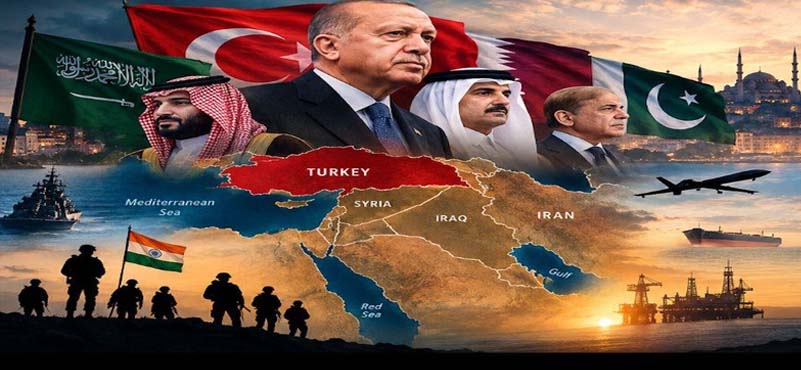
The standard picture of West Asia still shows Iran as the main challenger to Israel and the Western order. The events of 2026 have rendered that picture incomplete. The answer may increasingly lie not in Tehran, but in Ankara. Turkey is emerging as a pivotal power in the region’s next security equation, combining military weight, geographical reach and political leverage with a willingness to act independently of the traditional Western security framework.
The US and Israel began striking Iran on 28 February. Within days, Iran declared the Strait of Hormuz closed, and traffic largely halted. A ceasefire in April did not restore normal shipping. Brinkmanship over the strait replaced open war, and by July Houthi attacks on Red Sea shipping added a second chokepoint to the crisis. On 30 September, Iran said it had received Washington’s reply to its Hormuz proposal via Qatari mediators. That detail matters. Qatar is talking to both sides, and few others can.
Hedging, Not A Bloc
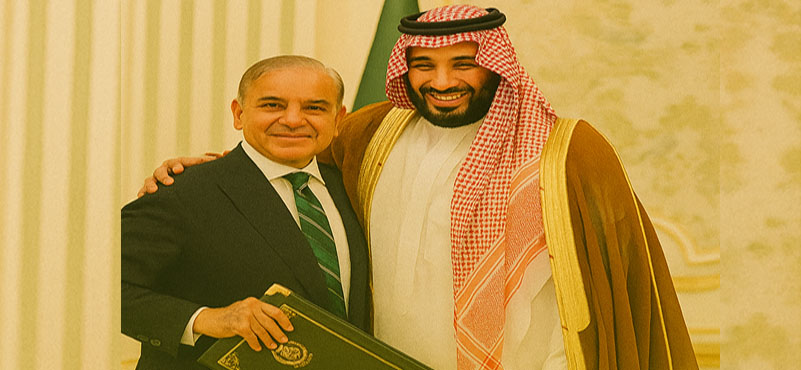
The clearest sign of change is the Makkah Joint Defence Agreement. Saudi Arabia, Turkey and Pakistan signed it on 7 August, declaring that an attack on one is an attack on all three. Their first committee met in Istanbul on 31 August, and Pakistan was assigned the secretariat in Riyadh. On 25 September, their military chiefs met in Riyadh to discuss intelligence sharing, coordination and capability integration.
Two points help keep this in perspective. First, Israel was not the trigger. The chiefs met because Houthi missiles and drones were striking Saudi territory, including the area around Makkah. Second, independent analysts note that the pact lacks an integrated command or standing force, so the comparison with NATO’s Article 5 is strained. Some regional commentators argue it is not inherently anti-Israel, and the facts so far support that reading.
It is best read as hedging. Gulf capitals saw that American guarantees did not shield them from exposure during the Iran war. They are adding options without dropping Washington. The result is a region with more layers of security and less dependence on a single patron.
Why Turkey Is The Pivot
Turkey gives this emerging arrangement what it lacked: a large army, a defence industry and reach across several theatres. Qatar offers a different asset, namely access. It can reach Tehran, Hamas and Washington, and its ties with Ankara run through defence, energy and finance. Turkey supplies weight, while Qatar supplies channels.
Israel has taken notice. Its friction with Turkey has shifted from Gaza rhetoric to a concrete dispute over Syria. On 18 August, Israeli jets struck the Abu al-Duhur airbase in northwest Syria. Israel’s prime minister’s office said the strike was intended to prevent a Turkish deployment to an airbase near Aleppo. Tom Barrack, the US ambassador to Turkey and envoy to Syria, called it an “unnecessary escalation” and said Israel was “baiting the Turks.” When a US envoy says that about Israel, the alliance system is under strain.
The strategic logic behind the confrontation is easier to grasp than its consequences. Israel has strong reasons to resist any Turkish military presence that could shift the balance in Syria. Ankara, by contrast, has invested heavily in building a functioning Syrian state with credible security institutions. These competing preferences can bring the two militaries into dangerous proximity even when neither side seeks a direct war. Neither side needs a war for this to go wrong. Turkish forces in Syria, Israeli aircraft overhead, and a NATO treaty behind Ankara are enough. Israel also votes on 27 October, and campaign season rewards toughness.
The Danger Is Misreading
A deliberate Israel-Turkey war is unlikely. Both sides have too much to lose, and Washington is working to keep them apart. The real risk is a miscalculation in a crowded space. Syria is the sharpest case, with competing militaries, armed groups and external sponsors in close quarters. The eastern Mediterranean is the next, where energy claims and naval ambitions overlap.
The wider region now functions as a connected system. A drone in the Red Sea moves oil prices. A naval incident in the Gulf moves shipping insurance in Mumbai. A strike in northern Syria becomes a NATO question. The old habit of treating Iran, Syria, Gaza, Yemen and the Mediterranean as separate files no longer holds.
What this means for India
India need not imagine a Hormuz disruption. It has already lived through one, and fuel shortages have spread across Asia. India’s diversified diplomacy has kept it in touch with everyone: Israel on defence and technology, Iran on connectivity, Saudi Arabia and the UAE on energy and investment, and Qatar on gas and mediation. That is an asset, but it is not automatic protection. Three things follow.
Watch the new Saudi-Turkey-Pakistan axis closely. Pakistan now sits within a formal defence arrangement with Saudi Arabia, a major energy and diaspora partner for India, and with Turkey. Delhi should not assume this is a threat by default, but it should test how far the arrangement extends and how Riyadh views its obligations to Islamabad.
Build Gulf-to-Mediterranean awareness. India’s maritime monitoring has to treat the Arabian Sea, Red Sea, Bab el-Mandeb and the eastern Mediterranean as a single picture. Houthi gains near Bab el-Mandeb matter as much as anything at Hormuz.
Keep channels open with Ankara and Doha. Turkey and Qatar are not natural partners for India on every issue, and Turkey’s positions on Pakistan have caused friction before. However, Qatar’s mediation and Turkey’s leverage over Syria and the Mediterranean mean both will influence outcomes that affect Indian trade and energy. Engagement should be practical and unsentimental.
Strategic autonomy works only if it is backed by capability: stockpiles, alternative supply lines, naval reach and timely intelligence. Without these, it is just a slogan.
The Contest That Remains
The region is not becoming bipolar again. It is evolving into a system of overlapping arrangements in which middle powers make their own bets. The emerging contest will be decided less by formal alliances than by the ability to preserve strategic options. That is the lesson India should draw from West Asia’s changing security map. New alignments will emerge, old partnerships will be tested, and crises will spread rapidly across borders and domains. India’s answer should be neither alignment with one camp nor strategic distance from the others. It should be the ability to engage all sides, anticipate disruption, and remain resilient when the regional balance shifts.
For India, strategic autonomy will mean little unless backed by capability. The objective must be simple: remain useful to all, be dependent on no single partner, and be vulnerable to no single chokepoint.
ABOUT THE AUTHOR
 Lieutenant General A B Shivane, is the former Strike Corps Commander and Director General of Mechanised Forces. As a scholar warrior, he has authored over 200 publications on national security and matters defence, besides four books and is an internationally renowned keynote speaker. The General was a Consultant to the Ministry of Defence (Ordnance Factory Board) post-superannuation. He was the Distinguished Fellow and held COAS Chair of Excellence at the Centre for Land Warfare Studies 2021 2022. He is also the Senior Advisor Board Member to several organisations and Think Tanks.